Before you start
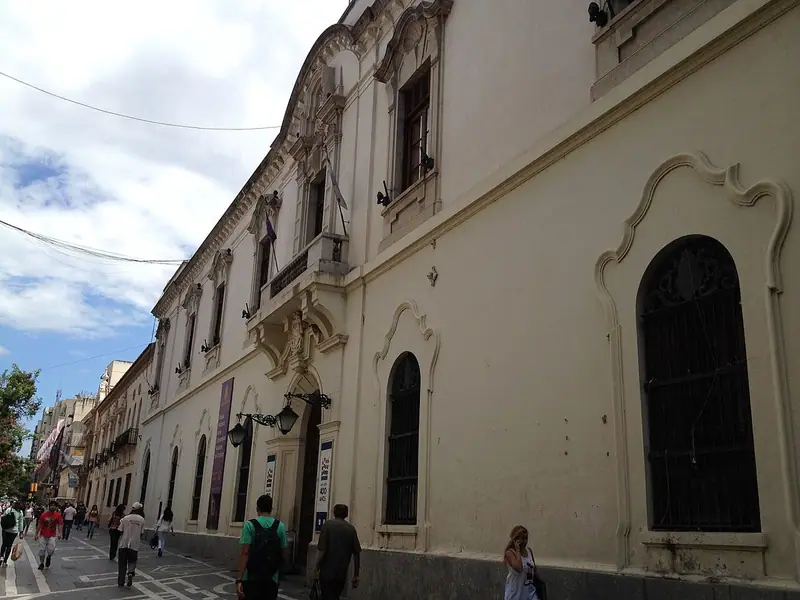
Córdoba, Argentina’s second city, lies at the foot of the hills of central Argentina, about seven hundred kilometres north-west of Buenos Aires. At its heart is the Jesuit Block, the Manzana Jesuítica, a single city block of churches, colleges and cloisters built by the Society of Jesus in the seventeenth and eighteenth centuries, and named a World Heritage Site in 2000. This guide begins in the old main square, with the Cabildo and the cathedral, then crosses to the Jesuit Block to visit its church, its private chapel, the old university and the Colegio de Monserrat. The route is short and flat. Allow two to three hours, including the museum.
Use it as a self-guided tour of the Jesuit Block of Córdoba: 7 stops in visit order, each played when you’re ready, at your own pace.
 Free preview · Stop 1
Plaza San Martín
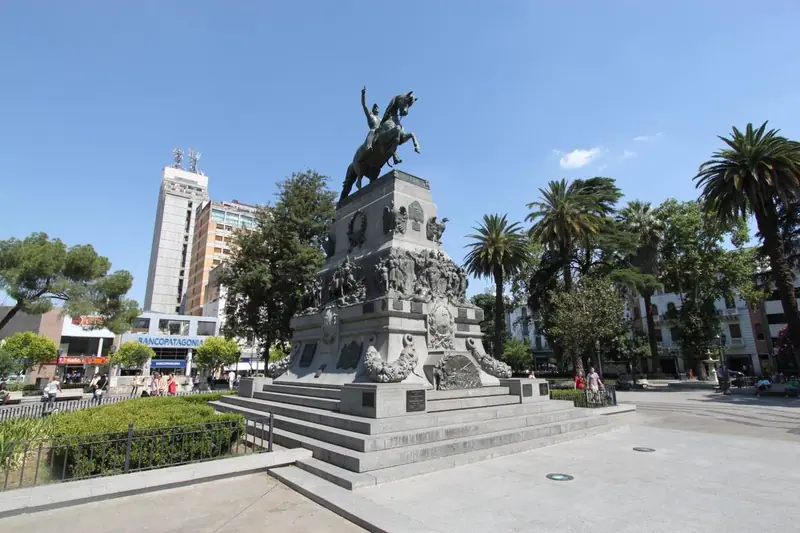
Begin in Plaza San Martín, the old Plaza Mayor, laid out when the city was founded in 1573. Stand in the middle, among the trees and fountains, and turn slowly. On the west side rises the cathedral, and beside it the long arcades of the Cabildo, the old town hall. In the centre stands the monument to General José de San Martín, the hero of Argentine independence, after whom the square is now named. For centuries this was the stage of city life. Here the colonial authorities proclaimed new laws and new kings, markets were held, and religious processions began and ended. The Jesuit Block lies only a few streets to the south-west, along Obispo Trejo street, named after the bishop who helped found the university. Notice the mix of colonial buildings and modern blocks around you, a reminder of how much the city has grown.
Photo: Jarod Burns · CC BY-SA 2.0 · Wikimedia Commons
What to see at the Jesuit Block of Córdoba: 7 stops, in visit order
- 01
 Plaza San MartínThe old main squareFree preview
- 02
 The CabildoTown hall and prisonIn the guide
- 03
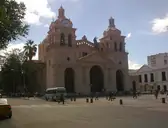 The CathedralOur Lady of the AssumptionIn the guide
- 04
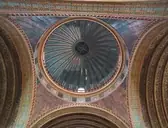 Church of the Society of JesusA ship’s hull upside downIn the guide
- 05
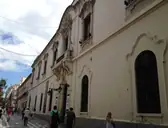 The Domestic ChapelThe novices’ chapelIn the guide
- 06
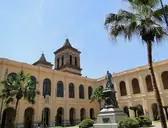 The Old UniversityThe House of TrejoIn the guide
- 07
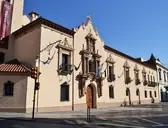 Colegio de MonserratThe oldest schoolIn the guide
Site map of the Jesuit Block of Córdoba
History of the Jesuit Block of Córdoba
The Spanish captain Jerónimo Luis de Cabrera founded Córdoba in 1573, on land long home to the Comechingón and Sanavirón peoples. The first Jesuits arrived around 1589, and in 1599 they were given the land on which the Jesuit Block stands. Córdoba became the centre of the Jesuit province of Paraguay, with a college from 1610 and a university from 1613. To pay for it all, the Jesuits ran large country estates, worked by Indigenous labourers and enslaved Africans. In 1767 King Charles III expelled the Jesuits from the Spanish empire, and their buildings passed to the Franciscans and later to the state.
The Jesuit Block of Córdoba guide: questions
How many stops does the Jesuit Block of Córdoba guide have?
7 stops, in visit order: 1. Plaza San Martín; 2. The Cabildo; 3. The Cathedral; 4. Church of the Society of Jesus; 5. The Domestic Chapel; 6. The Old University; 7. Colegio de Monserrat.
Can I do a self-guided tour of the Jesuit Block of Córdoba with this guide?
Yes. The guide is made for a self-guided tour: 7 stops in visit order, each with a photo, a story and a voice, so you can explore the Jesuit Block of Córdoba at your own pace, without joining a group. Download it before you go and it works offline.
How long is each guide?
The 7 stops add up to about 5 minutes of listening in total. You play each stop when you’re ready, so you can go at your own pace.
Does the guide work offline?
Yes, once it’s downloaded. The guide is a single self-contained web page (about 6.4 MB) with the photos, text and audio built in. Download it to your phone before you go (Wi-Fi is best); after that it opens in any modern browser on iPhone or Android, with no app, account or mobile signal needed.
Does it use GPS or need my location?
No. The guide doesn’t use GPS and doesn’t know where you are: you play each stop when you reach it. It works on iPhone and Android in any modern browser, and it’s in English.
What’s included?
One self-contained HTML guide: 7 stops in visit order, each with a photo, text and a voice, plus the story of who built the site.
Who built the Jesuit Block of Córdoba?
The Spanish captain Jerónimo Luis de Cabrera founded Córdoba in 1573, on land long home to the Comechingón and Sanavirón peoples. The first Jesuits arrived around 1589, and in 1599 they were given the land on which the Jesuit Block stands.
Where is the Jesuit Block of Córdoba?
Córdoba, Argentina’s second city, lies at the foot of the hills of central Argentina, about seven hundred kilometres north-west of Buenos Aires.
Is there a free audio guide to the Jesuit Block of Córdoba?
The first stop, Plaza San Martín, is free to read and hear on this page, so you can try the Jesuit Block of Córdoba audio tour before you buy. The full guide, with all 7 stops, is a one-off purchase: download it once and it’s yours to keep, working offline.
Is the Jesuit Block of Córdoba guide worth it?
If you’d like to know what you’re looking at, yes. For $10 you get 7 stops in visit order, each with a photo, a short history and a voice you play when you’re ready, plus a site map of the stops, and about 5 minutes of listening in all. It’s short on purpose, so you spend your time looking, not listening. It’s yours to keep, works offline and needs no app. The first stop is free on this page, so you can try it before you buy. If you’d like hours of detail, a guided tour will go deeper.
Audio guide or guided tour?
It depends how you like to visit. This guide lets you explore the Jesuit Block of Córdoba at your own pace, at any time, for a one-off price. A guided tour gives you a live expert you can ask questions, but at fixed times and usually for a higher price. Many people use both: a tour for the big picture, and the guide to read beforehand or to revisit the stops in their own time.
Is this the official Jesuit Block of Córdoba guide?
No. It’s an independent guide by The Historian Guide, not affiliated with or endorsed by the operator of the Jesuit Block of Córdoba. For tickets and opening hours, check the official site operator before you go.
Does the guide include entry tickets or opening hours?
No. The guide is a digital companion only. Admission to the Jesuit Block of Córdoba is separate, so check the official site operator for current tickets and opening hours before you go.
- Stop 1 · Plaza San Martín: Jarod Burns · CC BY-SA 2.0 · Wikimedia Commons · resized
- Stop 2 · The Cabildo: Pablo D. Flores · CC BY-SA 2.5 · Wikimedia Commons · resized
- Stop 3 · The Cathedral: Alakasam. · CC BY-SA 3.0 · Wikimedia Commons · resized
- Stop 4 · Church of the Society of Jesus: Laura Fiorucci · CC BY-SA 4.0 · Wikimedia Commons · resized
- Stop 5 · The Domestic Chapel (also the cover): Lcsrns · CC BY-SA 3.0 · Wikimedia Commons · resized
- Stop 6 · The Old University: Albano Azarian · CC BY-SA 3.0 · Wikimedia Commons · resized
- Stop 7 · Colegio de Monserrat: Nadiapicco · CC BY-SA 3.0 · Wikimedia Commons · resized


All photographs from Wikimedia Commons under the licences shown.
More guides in Argentina
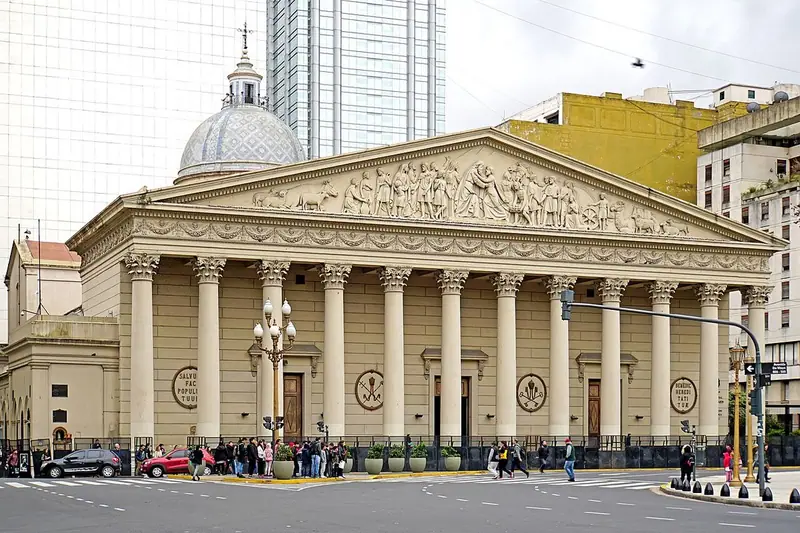 Spanish Colonial7 stops · 1580 – early 20th century
Plaza de Mayo audio guide
Cross the square where Buenos Aires was laid out in 1580, past the Casa Rosada and the Cabildo, then follow the Avenida de Mayo to Congress.
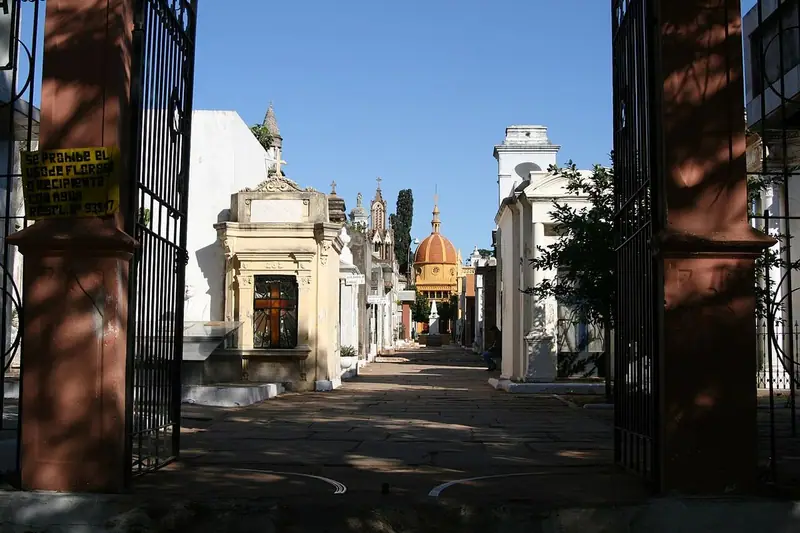 Argentine Republic7 stops · 1732–20th century
Recoleta Cemetery audio guide
The marble avenues of Buenos Aires’s city of the dead, and the tombs of presidents, generals and Eva Perón.
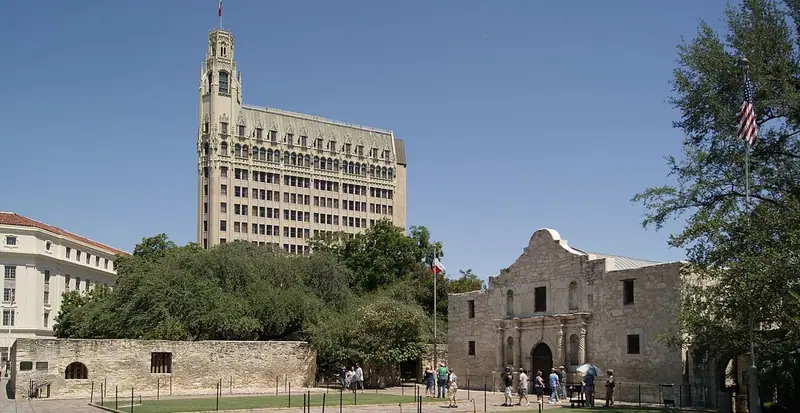 Spanish Colonial7 stops · 1718–1782
Alamo and San Antonio Missions audio guide
From the battle-scarred Alamo to Mission San José and the Espada Aqueduct, the five missions that made San Antonio.
Every guide, in every country
The Jesuit Block of Córdoba and every other guide we publish, including future ones. One payment, no subscription.