
Guides
LaosGuides to 4 historic sites
4 guides availableIron AgeKhmerLao
Luang Prabang. Photo: Basile Morin · CC BY-SA 4.0 · Wikimedia Commons
Guides to 4 historic sites in Laos: Luang Prabang, Plain of Jars, Vat Phou and Vientiane. Each guide is one file with a photo, text and a voice at every stop; download it before you go and it works offline.
The age of iron tools and weapons; in Laos, the people who carved the great stone jars of Xieng Khouang between about 500 BCE and 500 CE.
The empire of Angkor, which dominated mainland South-East Asia for six centuries from 802.
Lan Xang, the kingdom of the million elephants, and the Lao kingdoms that followed.
The 4 Laos guides, plus every guide in our other countries and every one we add later. One payment, no subscription.
World Pass holders may also request a site they’d love to see covered: simply write to hello@thehistorianguide.com.
Lao8 stops · 14th–20th centuryA peninsula of gilded temples and saffron-robed monks where the Nam Khan meets the Mekong, from Mount Phousi to Wat Xieng Thong.
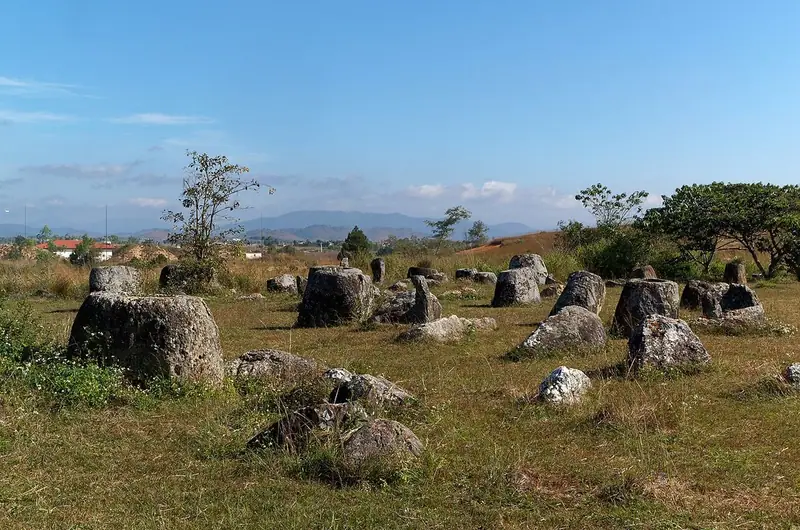 Iron Age7 stops · c. 500 BCE – 500 CE
Thousands of Iron Age stone jars on the hills of the Xiangkhouang Plateau: the great jar field of Site 1, Colani’s crematorium cave, the wooded Site 2 and Site 3 above the rice fields.
 Khmer7 stops · 7th–12th century
Follow the long processional way from the great reservoir up the stairway to a Khmer sanctuary and its sacred spring, older than Angkor Wat.
 Lao7 stops · 1560–1828
From the Mekong riverbank to the royal temples of Lan Xang, the Black Stupa and the Victory Gate, ending at the golden That Luang.
The Historian Guide
We’re putting the finishing touches to secure checkout. If you’d like to hear the moment it opens, email hello@thehistorianguide.com and we’ll let you know at launch.
In the meantime, every guide page has a free preview: the first stop, with its audio.
When you buy, you agree to our Terms of Sale and Refund Policy. Because guides are delivered instantly, change-of-mind refunds aren’t available once a guide has been downloaded or accessed.