Before you start
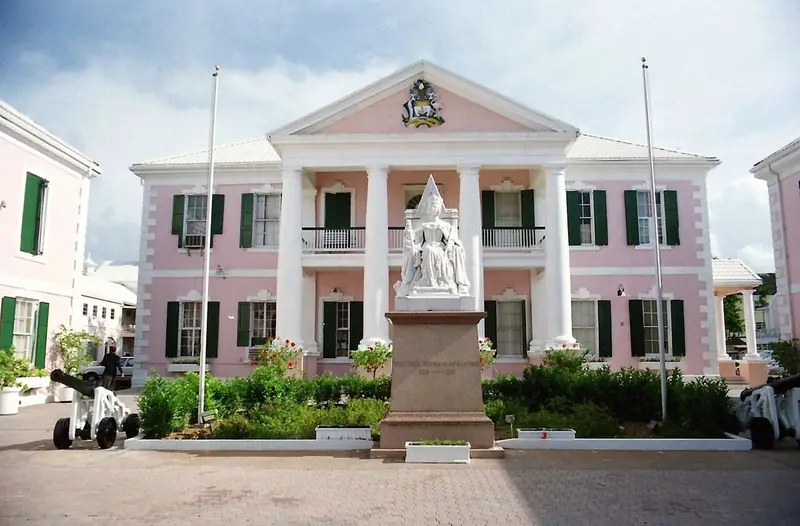
Nassau, the capital of The Bahamas, lies on the north shore of the island of New Providence, looking across its harbour to Paradise Island. Founded as Charles Town in the 1670s and renamed in 1695, it has been a pirate haven, a refuge for Loyalists, a colonial port built on slavery and, since 1973, the capital of an independent nation. This guide runs west to east across the old town, from Fort Charlotte above the western harbour, through the government quarter around Bay Street, to the Queen’s Staircase and Fort Fincastle on the ridge above. Fort Charlotte lies a little over a kilometre west of the centre, so if your time is short, begin at Stop 2. The streets are busy and the pavements are narrow in places, so take care when crossing. Carry water and a hat, for the sun is strong all year.
Use it as a self-guided tour of Historic Nassau: 9 stops in visit order, each played when you’re ready, at your own pace.
 Free preview · Stop 1
Fort Charlotte
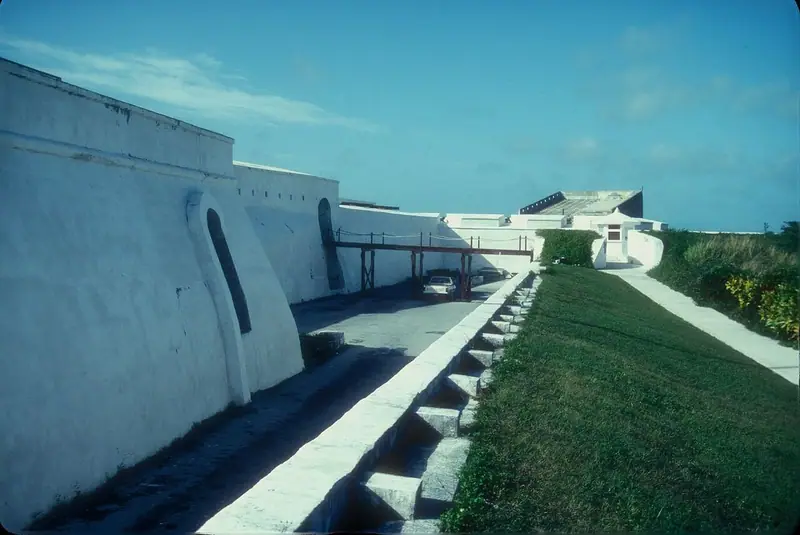
Begin at Fort Charlotte, on the ridge above the western end of Nassau Harbour. Lord Dunmore, a former Governor of Virginia, arrived as Governor of The Bahamas at the end of 1787 and began the fort almost at once, naming it after Queen Charlotte, wife of King George III. By April 1789 the main part was nearly finished, and the works were later extended westward as Fort Stanley and Fort D’Arcy. Much of the fort was cut straight out of the limestone, and the cost so alarmed the government in London that it ordered the work to stop, yet building went on in stages for years. Look at the deep dry moat, and go below to the passages and chambers carved into the rock. The fort was built by enslaved and free Black labourers, and for much of its life it was manned by the West India Regiment, Black soldiers of the British Army. It never saw battle.
Photo: JERRYE AND ROY KLOTZ MD · CC BY-SA 3.0 · Wikimedia Commons
What to see at Historic Nassau: 9 stops, in visit order
- 01
 Fort CharlotteThe Fort Above the HarbourFree preview
- 02
 GraycliffA House of LegendsIn the guide
- 03
 Government HouseThe Residence on the HillIn the guide
- 04
 Christ Church CathedralFive Churches on One SiteIn the guide
- 05
 The Pompey MuseumVendue House and the Fight for FreedomIn the guide
- 06
 Rawson Square and Parliament SquareThe Heart of GovernmentIn the guide
- 07
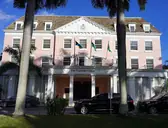 The Supreme CourtLaw, Books and RemembranceIn the guide
- 08
 The Queen’s StaircaseCut from the RockIn the guide
- 09
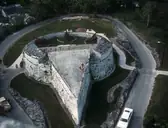 Fort Fincastle and the Water TowerWatch over the HarbourIn the guide
Site map of Historic Nassau
History of Historic Nassau
The first people of these islands were the Lucayans, a Taíno people who settled here from about 800 CE and lived by fishing and farming. In 1492 Christopher Columbus made his first landfall in the Americas in The Bahamas, probably on San Salvador, and within about thirty years the Spanish had carried the Lucayans away as forced labour, while disease and enslavement destroyed them. English settlers, the Eleutheran Adventurers from Bermuda, arrived in 1648, and by the 1670s a settlement called Charles Town stood on this harbour. It was renamed Nassau in 1695, after King William the Third. Sacked by Spanish and French raiders, it became a haven for pirates in the early 1700s, until Woodes Rogers, the first Royal Governor, arrived in 1718. After the American Revolution, Loyalists from the southern colonies came with the people they held in slavery, and the islands gained a Black majority.
The full history continues in the guide.
Historic Nassau guide: questions
How many stops does the Historic Nassau guide have?
9 stops, in visit order: 1. Fort Charlotte; 2. Graycliff; 3. Government House; 4. Christ Church Cathedral; 5. The Pompey Museum; 6. Rawson Square and Parliament Square; 7. The Supreme Court; 8. The Queen’s Staircase; 9. Fort Fincastle and the Water Tower.
Can I do a self-guided tour of Historic Nassau with this guide?
Yes. The guide is made for a self-guided tour: 9 stops in visit order, each with a photo, a story and a voice, so you can explore Historic Nassau at your own pace, without joining a group. Download it before you go and it works offline.
How long is each guide?
The 9 stops add up to about 10 minutes of listening in total. You play each stop when you’re ready, so you can go at your own pace.
Does the guide work offline?
Yes, once it’s downloaded. The guide is a single self-contained web page (about 8.3 MB) with the photos, text and audio built in. Download it to your phone before you go (Wi-Fi is best); after that it opens in any modern browser on iPhone or Android, with no app, account or mobile signal needed.
Does it use GPS or need my location?
No. The guide doesn’t use GPS and doesn’t know where you are: you play each stop when you reach it. It works on iPhone and Android in any modern browser, and it’s in English.
What’s included?
One self-contained HTML guide: 9 stops in visit order, each with a photo, text and a voice, plus the story of who built the site.
Who built Historic Nassau?
The first people of these islands were the Lucayans, a Taíno people who settled here from about 800 CE and lived by fishing and farming. In 1492 Christopher Columbus made his first landfall in the Americas in The Bahamas, probably on San Salvador, and within about thirty years the Spanish had carried the Lucayans away as forced labour, while disease and enslavement destroyed them.
Where is Historic Nassau?
Nassau, the capital of The Bahamas, lies on the north shore of the island of New Providence, looking across its harbour to Paradise Island.
Is there a free audio guide to Historic Nassau?
The first stop, Fort Charlotte, is free to read and hear on this page, so you can try the Historic Nassau audio tour before you buy. The full guide, with all 9 stops, is a one-off purchase: download it once and it’s yours to keep, working offline.
Is the Historic Nassau guide worth it?
If you’d like to know what you’re looking at, yes. For $10 you get 9 stops in visit order, each with a photo, a short history and a voice you play when you’re ready, plus a site map of the stops, and about 10 minutes of listening in all. It’s short on purpose, so you spend your time looking, not listening. It’s yours to keep, works offline and needs no app. The first stop is free on this page, so you can try it before you buy. If you’d like hours of detail, a guided tour will go deeper.
Audio guide or guided tour?
It depends how you like to visit. This guide lets you explore Historic Nassau at your own pace, at any time, for a one-off price. A guided tour gives you a live expert you can ask questions, but at fixed times and usually for a higher price. Many people use both: a tour for the big picture, and the guide to read beforehand or to revisit the stops in their own time.
Is this the official Historic Nassau guide?
No. It’s an independent guide by The Historian Guide, not affiliated with or endorsed by the operator of Historic Nassau. For tickets and opening hours, check the official site operator before you go.
Does the guide include entry tickets or opening hours?
No. The guide is a digital companion only. Admission to Historic Nassau is separate, so check the official site operator for current tickets and opening hours before you go.
- Stop 1 · Fort Charlotte: JERRYE AND ROY KLOTZ MD · CC BY-SA 3.0 · Wikimedia Commons · resized
- Stop 2 · Graycliff: Bluerasberry · CC BY 4.0 · Wikimedia Commons · resized
- Stop 3 · Government House: P. Hughes · CC BY 4.0 · Wikimedia Commons · resized
- Stop 4 · Christ Church Cathedral: Bluerasberry · CC BY 4.0 · Wikimedia Commons · resized
- Stop 5 · The Pompey Museum: Bluerasberry · CC BY 4.0 · Wikimedia Commons · resized
- Stop 6 · Rawson Square and Parliament Square (also the cover): Larry Syverson from Richmond, VA, USA · CC BY-SA 2.0 · Wikimedia Commons · resized
- Stop 7 · The Supreme Court: Bluerasberry · CC BY 4.0 · Wikimedia Commons · resized
- Stop 8 · The Queen’s Staircase: Banja-Frans Mulder · CC BY 3.0 · Wikimedia Commons · resized
- Stop 9 · Fort Fincastle and the Water Tower: JERRYE & ROY KLOTZ MD · CC BY-SA 3.0 · Wikimedia Commons · resized


All photographs from Wikimedia Commons under the licences shown.
More guides
 British Colonial7 stops · 1822–1965
Chinatown audio guide
The shophouses of Pagoda Street, the Sri Mariamman Temple, the Jamae Mosque and the Buddha Tooth Relic Temple.
 British Colonial7 stops · 1850–1991
Fremantle Prison audio guide
Pass through the gatehouse of the convict-built prison above Fremantle, from the main cell block and the gallows to the tunnels beneath.
 British Colonial8 stops · 1786–1957
George Town audio guide
From Fort Cornwallis past mosques, temples, churches and the Khoo Kongsi clan house to the clan jetties of George Town.
Every guide, in every country
Historic Nassau and every other guide we publish, including future ones. One payment, no subscription.