Before you start
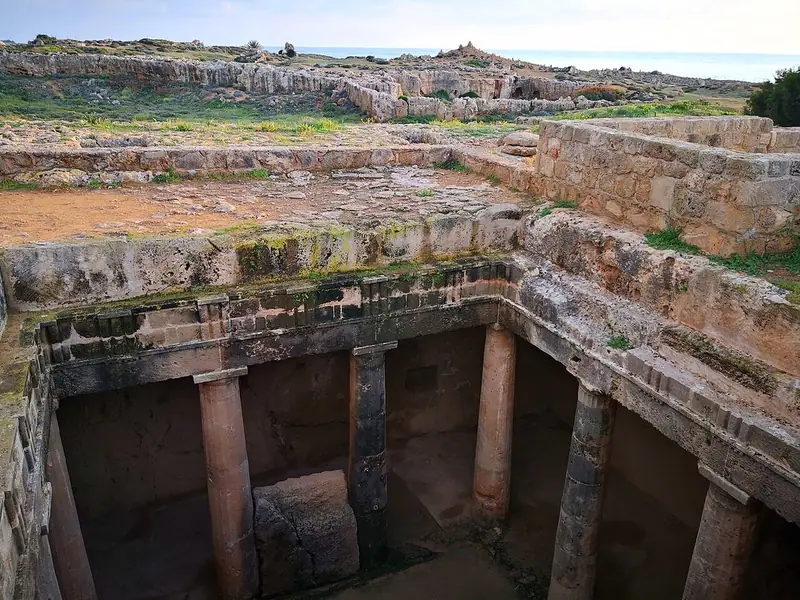
Just north of Paphos harbour, on a rocky plain beside the sea, lies the great ancient cemetery known as the Tombs of the Kings. Here the leading families of Nea Paphos were buried in tombs cut deep into the rock, some of them built like houses, with courtyards surrounded by columns. Despite the name, no kings are known to have been buried here; the name comes from the grandeur of the tombs. With Nea Paphos and Kouklia, the site is part of a World Heritage Site. This guide leads across the cemetery from the simpler tombs to the great peristyle tombs, ending with a view along the coast. Please treat this place of burial with respect, and take care on the steep, uneven steps.
Use it as a self-guided tour of the Tombs of the Kings: 7 stops in visit order, each played when you’re ready, at your own pace.
 Free preview · Stop 1
The Necropolis
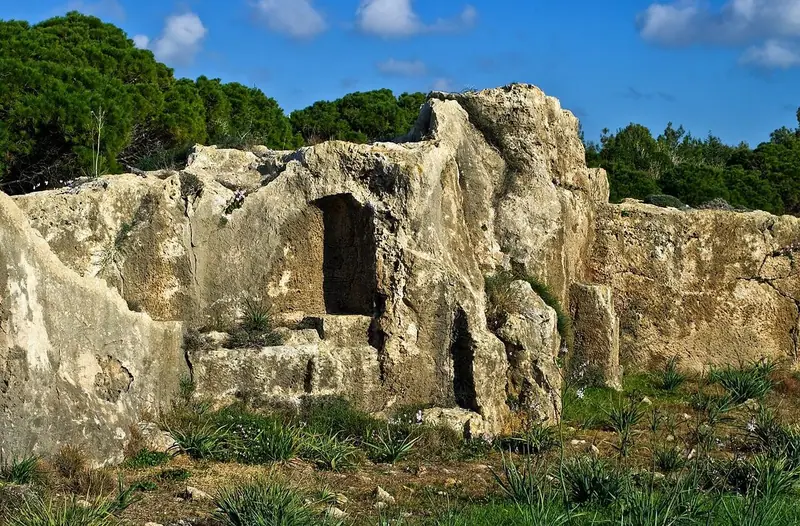
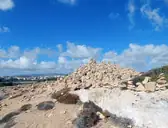
Begin by looking out across the necropolis, the city of the dead, spread over a wide area of rocky ground beside the sea. Look at the rock outcrops around you, cut with openings, steps and niches. Many of the tombs here are simple chambers, dug into the rock, with narrow niches in their walls, called loculi, where the bodies of the dead were laid, before the openings were sealed with stone slabs. Notice how the rock is soft enough to cut easily, but strong enough to hold its shape for more than two thousand years. The cemetery lay outside the walls of the ancient city, as was the custom in the Greek and Roman world, where the dead were buried away from the living. Imagine funeral processions making their way out here from the city, to lay their dead to rest.
Photo: Nikodem Nijaki · CC BY-SA 3.0 · Wikimedia Commons
What to see at the Tombs of the Kings: 7 stops, in visit order
- 01
 The NecropolisA City of the DeadFree preview
- 02
 Tomb ThreeA House for the DeadIn the guide
- 03
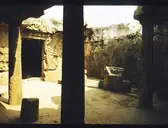 The PeristyleBeneath the ColumnsIn the guide
- 04
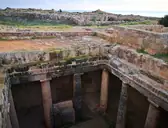 The Great CourtyardsTombs of the WealthyIn the guide
- 05
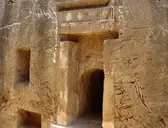 Tomb EightA Royal Connection?In the guide
- 06
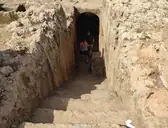 Into the RockThe StairwaysIn the guide
- 07
 By the SeaLooking out over PaphosIn the guide
Site map of the Tombs of the Kings
History of the Tombs of the Kings
The tombs were cut into the soft rock from the late fourth century BCE, soon after Nea Paphos was founded, and were used until the third century CE, under the Ptolemies of Egypt and the Romans. The richest of them imitate the houses of the living, a style of tomb also found in Alexandria, the capital of the Ptolemies. Over the centuries, most of the tombs were robbed of their treasures. They were explored in the nineteenth century, and the first scientific excavations took place in 1915. Systematic excavations from the late 1970s, led by the Cypriot archaeologist Sophocles Hadjisavvas, revealed much of what you see today.
Tombs of the Kings guide: questions
How many stops does the Tombs of the Kings guide have?
7 stops, in visit order: 1. The Necropolis; 2. Tomb Three; 3. The Peristyle; 4. The Great Courtyards; 5. Tomb Eight; 6. Into the Rock; 7. By the Sea.
Can I do a self-guided tour of the Tombs of the Kings with this guide?
Yes. The guide is made for a self-guided tour: 7 stops in visit order, each with a photo, a story and a voice, so you can explore the Tombs of the Kings at your own pace, without joining a group. Download it before you go and it works offline.
How long is each guide?
The 7 stops add up to about 5 minutes of listening in total. You play each stop when you’re ready, so you can go at your own pace.
Does the guide work offline?
Yes, once it’s downloaded. The guide is a single self-contained web page (about 7.0 MB) with the photos, text and audio built in. Download it to your phone before you go (Wi-Fi is best); after that it opens in any modern browser on iPhone or Android, with no app, account or mobile signal needed.
Does it use GPS or need my location?
No. The guide doesn’t use GPS and doesn’t know where you are: you play each stop when you reach it. It works on iPhone and Android in any modern browser, and it’s in English.
What’s included?
One self-contained HTML guide: 7 stops in visit order, each with a photo, text and a voice, plus the story of who built the site.
Who built the Tombs of the Kings?
The tombs were cut into the soft rock from the late fourth century BCE, soon after Nea Paphos was founded, and were used until the third century CE, under the Ptolemies of Egypt and the Romans. The richest of them imitate the houses of the living, a style of tomb also found in Alexandria, the capital of the Ptolemies.
Where is the Tombs of the Kings?
Just north of Paphos harbour, on a rocky plain beside the sea, lies the great ancient cemetery known as the Tombs of the Kings.
Is there a free audio guide to the Tombs of the Kings?
The first stop, The Necropolis, is free to read and hear on this page, so you can try the Tombs of the Kings audio tour before you buy. The full guide, with all 7 stops, is a one-off purchase: download it once and it’s yours to keep, working offline.
Is the Tombs of the Kings guide worth it?
If you’d like to know what you’re looking at, yes. For $10 you get 7 stops in visit order, each with a photo, a short history and a voice you play when you’re ready, plus a site map of the stops, and about 5 minutes of listening in all. It’s short on purpose, so you spend your time looking, not listening. It’s yours to keep, works offline and needs no app. The first stop is free on this page, so you can try it before you buy. If you’d like hours of detail, a guided tour will go deeper.
Audio guide or guided tour?
It depends how you like to visit. This guide lets you explore the Tombs of the Kings at your own pace, at any time, for a one-off price. A guided tour gives you a live expert you can ask questions, but at fixed times and usually for a higher price. Many people use both: a tour for the big picture, and the guide to read beforehand or to revisit the stops in their own time.
Is this the official Tombs of the Kings guide?
No. It’s an independent guide by The Historian Guide, not affiliated with or endorsed by the operator of the Tombs of the Kings. For tickets and opening hours, check the official site operator before you go.
Does the guide include entry tickets or opening hours?
No. The guide is a digital companion only. Admission to the Tombs of the Kings is separate, so check the official site operator for current tickets and opening hours before you go.
- Stop 1 · The Necropolis: Nikodem Nijaki · CC BY-SA 3.0 · Wikimedia Commons · resized
- Stop 2 · Tomb Three: Stefan Bellini · CC0 · Wikimedia Commons · resized
- Stop 3 · The Peristyle: Institute for the Study of the Ancient World · CC BY 2.0 · Wikimedia Commons · resized
- Stop 4 · The Great Courtyards (also the cover): Seainme · CC BY-SA 4.0 · Wikimedia Commons · resized
- Stop 5 · Tomb Eight: Stefan Bellini · CC0 · Wikimedia Commons · resized
- Stop 6 · Into the Rock: Fry72, Karel Frydrýšek · CC BY-SA 4.0 · Wikimedia Commons · resized
- Stop 7 · By the Sea: Voltmetro · CC BY-SA 4.0 · Wikimedia Commons · resized


All photographs from Wikimedia Commons under the licences shown.
More guides in Cyprus
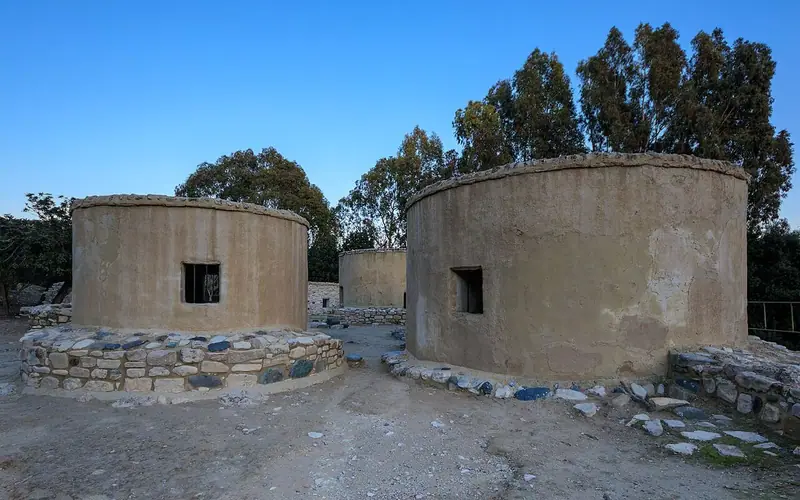 Neolithic7 stops · c. 7000–6000 BCE
Choirokoitia audio guide
Step inside the round stone houses of a Neolithic village founded around nine thousand years ago on a hillside above the Maroni valley.
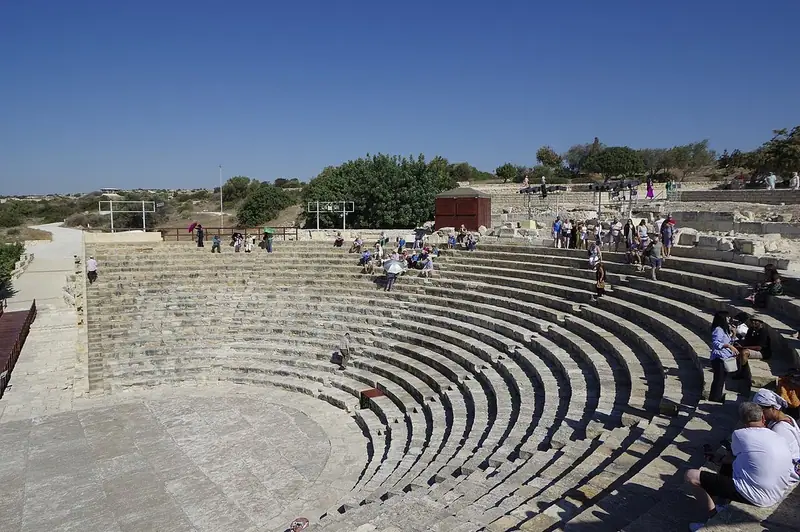 Greek8 stops · 12th century BCE – 7th century CE
Kourion audio guide
Cross a limestone bluff above the sea through Roman houses rich in mosaics to a theatre with one of the finest views in Cyprus.
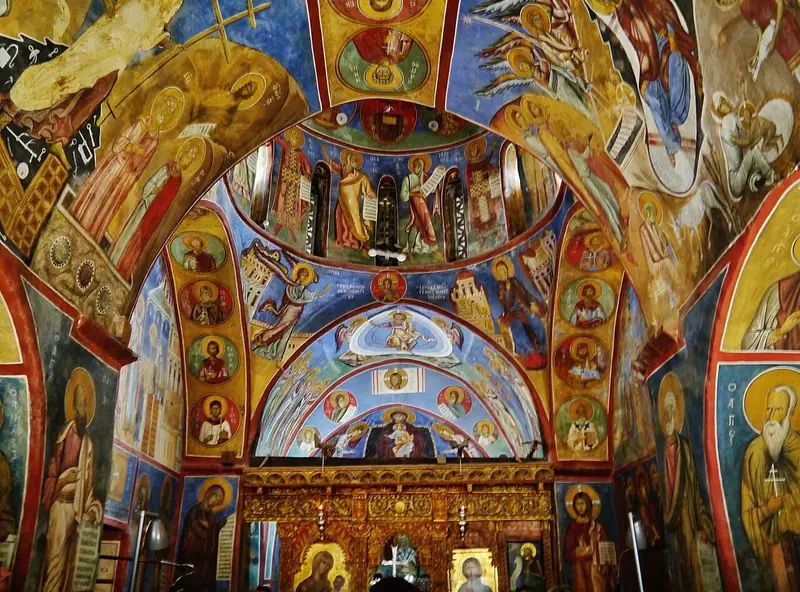 Byzantine9 stops · 11th – 16th century CE
Painted Churches of the Troodos audio guide
Nine of the ten painted churches of the Troodos, from Asinou and St Nicholas of the Roof to Panagia tou Araka and the Holy Cross of Agiasmati, with five centuries of Byzantine wall painting.
 Roman8 stops · late 4th century BCE – 4th century CE
Paphos Archaeological Park audio guide
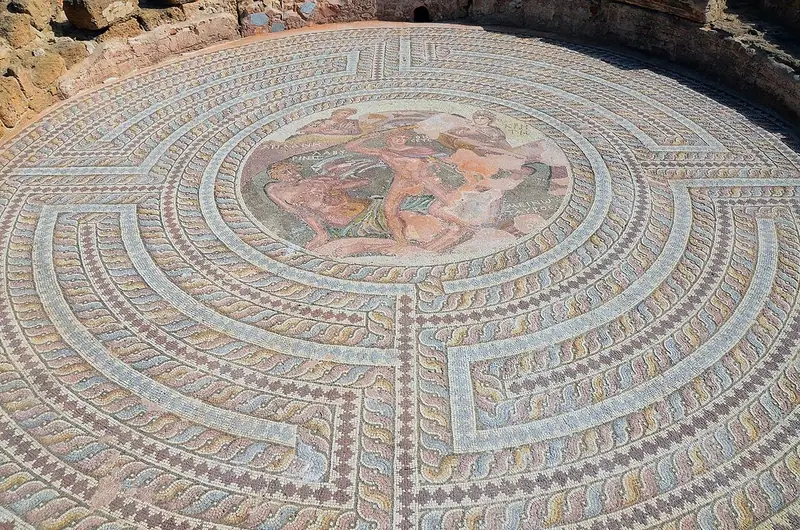
The floor mosaics of Nea Paphos, among the finest in the Mediterranean, from the House of Dionysus to the Villa of Theseus.
Every guide, in every country
Tombs of the Kings and every other guide we publish, including future ones. One payment, no subscription.