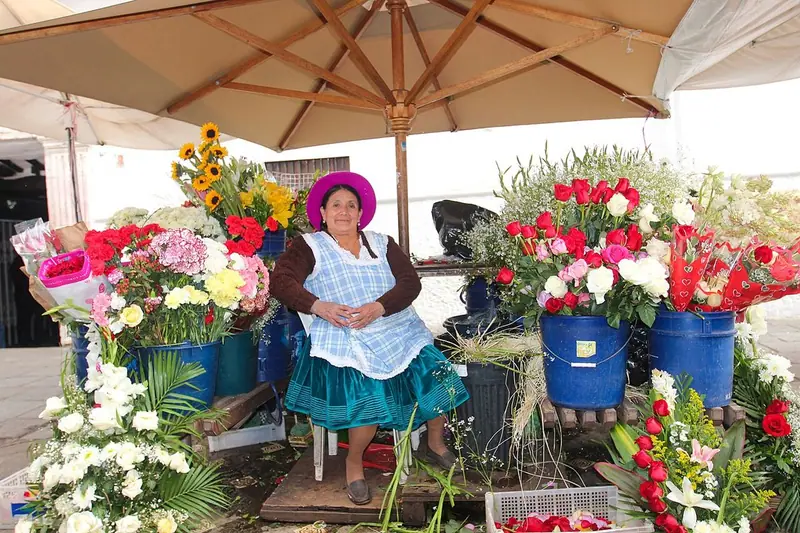
Before you start
Cuenca lies high in the southern Andes of Ecuador, at about two and a half thousand metres, beside the Tomebamba river. Founded by the Spanish in 1557 on the ruins of an Inca city, its historic centre of churches, squares and balconied houses is a UNESCO World Heritage Site. The guide opens in the main square, visits the old and new cathedrals and the flower market, looks at the craft of the Panama hat, follows the river below the old town, and ends at the Inca ruins of Pumapungo. The altitude can leave you breathless at first, so take it slowly. The route is mostly flat, with one set of steps down to the river.
Use it as a self-guided tour of Historic Cuenca: 7 stops in visit order, each played when you’re ready, at your own pace.
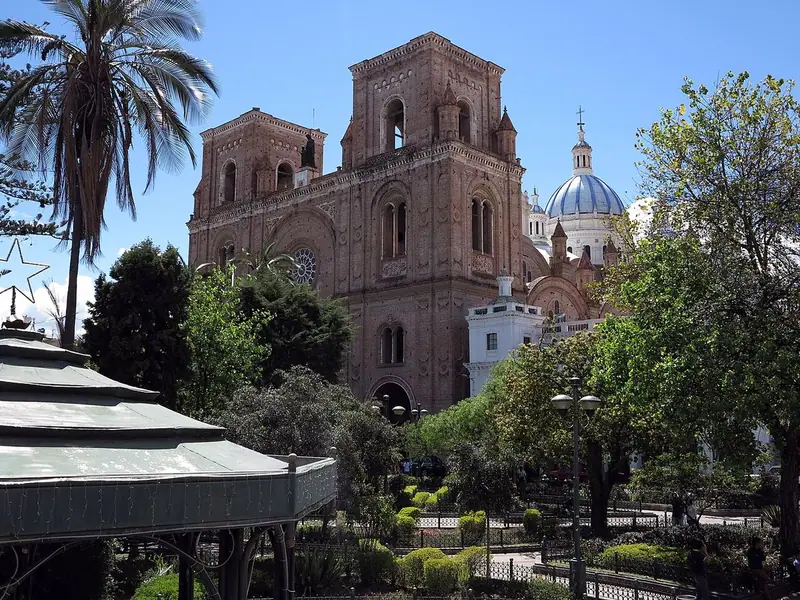 Free preview · Stop 1
Parque Calderón
Begin in Parque Calderón, the main square of Cuenca, shaded by tall trees. When the city was founded in 1557, its streets were laid out in a grid from this square, and you can still see that pattern today. The park is named after Abdón Calderón, a young hero of the wars of independence from Spain, whose statue stands in the middle. Look around the square at the buildings: on one side the great new cathedral, with its blue domes, and on the other the old cathedral, small and white, with its bell tower. Around them are government buildings and fine nineteenth-century houses, with iron balconies and painted façades. Many were built when Cuenca grew rich from the export of straw hats and quinine bark. Sit on a bench for a while, and watch the life of the city, with families, students and shoeshine boys.
Photo: Johannes Wagenknecht · CC BY-SA 4.0 · Wikimedia Commons
What to see at Historic Cuenca: 7 stops, in visit order
- 01
 Parque CalderónThe main squareFree preview
- 02
 The Old CathedralStones from TomebambaIn the guide
- 03
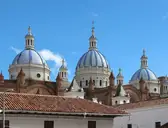 The New CathedralDomes of blue tileIn the guide
- 04
 The Flower MarketCarmen de la AsunciónIn the guide
- 05
 The Panama HatA Cuenca craftIn the guide
- 06
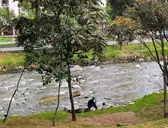 The BarrancoHouses above the riverIn the guide
- 07
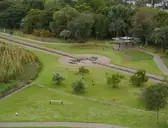 PumapungoThe Inca cityIn the guide
Site map of Historic Cuenca
History of Historic Cuenca
For many centuries this valley was home to the Cañari people, whose settlement here was called Guapondelig. In the late fifteenth century the Incas conquered the Cañari, after a hard struggle, and the emperor Tupac Yupanqui ordered a great city built here, called Tomebamba. By the time the Spanish arrived, it had been largely destroyed in war. In 1557 Gil Ramírez Dávalos founded the Spanish city, on the orders of the viceroy of Peru, who named it after his home town of Cuenca, in Spain. Cuenca became part of independent Ecuador in the nineteenth century.
Historic Cuenca guide: questions
How many stops does the Historic Cuenca guide have?
7 stops, in visit order: 1. Parque Calderón; 2. The Old Cathedral; 3. The New Cathedral; 4. The Flower Market; 5. The Panama Hat; 6. The Barranco; 7. Pumapungo.
Can I do a self-guided tour of Historic Cuenca with this guide?
Yes. The guide is made for a self-guided tour: 7 stops in visit order, each with a photo, a story and a voice, so you can explore Historic Cuenca at your own pace, without joining a group. Download it before you go and it works offline.
How long is each guide?
The 7 stops add up to about 5 minutes of listening in total. You play each stop when you’re ready, so you can go at your own pace.
Does the guide work offline?
Yes, once it’s downloaded. The guide is a single self-contained web page (about 7.0 MB) with the photos, text and audio built in. Download it to your phone before you go (Wi-Fi is best); after that it opens in any modern browser on iPhone or Android, with no app, account or mobile signal needed.
Does it use GPS or need my location?
No. The guide doesn’t use GPS and doesn’t know where you are: you play each stop when you reach it. It works on iPhone and Android in any modern browser, and it’s in English.
What’s included?
One self-contained HTML guide: 7 stops in visit order, each with a photo, text and a voice, plus the story of who built the site.
Who built Historic Cuenca?
For many centuries this valley was home to the Cañari people, whose settlement here was called Guapondelig. In the late fifteenth century the Incas conquered the Cañari, after a hard struggle, and the emperor Tupac Yupanqui ordered a great city built here, called Tomebamba.
Where is Historic Cuenca?
Cuenca lies high in the southern Andes of Ecuador, at about two and a half thousand metres, beside the Tomebamba river.
Is there a free audio guide to Historic Cuenca?
The first stop, Parque Calderón, is free to read and hear on this page, so you can try the Historic Cuenca audio tour before you buy. The full guide, with all 7 stops, is a one-off purchase: download it once and it’s yours to keep, working offline.
Is the Historic Cuenca guide worth it?
If you’d like to know what you’re looking at, yes. For $10 you get 7 stops in visit order, each with a photo, a short history and a voice you play when you’re ready, plus a site map of the stops, and about 5 minutes of listening in all. It’s short on purpose, so you spend your time looking, not listening. It’s yours to keep, works offline and needs no app. The first stop is free on this page, so you can try it before you buy. If you’d like hours of detail, a guided tour will go deeper.
Audio guide or guided tour?
It depends how you like to visit. This guide lets you explore Historic Cuenca at your own pace, at any time, for a one-off price. A guided tour gives you a live expert you can ask questions, but at fixed times and usually for a higher price. Many people use both: a tour for the big picture, and the guide to read beforehand or to revisit the stops in their own time.
Is this the official Historic Cuenca guide?
No. It’s an independent guide by The Historian Guide, not affiliated with or endorsed by the operator of Historic Cuenca. For tickets and opening hours, check the official site operator before you go.
Does the guide include entry tickets or opening hours?
No. The guide is a digital companion only. Admission to Historic Cuenca is separate, so check the official site operator for current tickets and opening hours before you go.
- Stop 1 · Parque Calderón: Johannes Wagenknecht · CC BY-SA 4.0 · Wikimedia Commons · resized
- Stop 2 · The Old Cathedral: Ymblanter · CC BY-SA 4.0 · Wikimedia Commons · resized
- Stop 3 · The New Cathedral: Bernard Gagnon · CC BY-SA 3.0 · Wikimedia Commons · resized
- Stop 4 · The Flower Market (also the cover): amalavida.tv · CC BY-SA 2.0 · Wikimedia Commons · resized
- Stop 5 · The Panama Hat: David Brossard · CC BY-SA 2.0 · Wikimedia Commons · resized
- Stop 6 · The Barranco: Martín Vasco · CC BY-SA 4.0 · Wikimedia Commons · resized
- Stop 7 · Pumapungo: Edjoerv · CC BY-SA 4.0 · Wikimedia Commons · resized


All photographs from Wikimedia Commons under the licences shown.
More guides in Ecuador
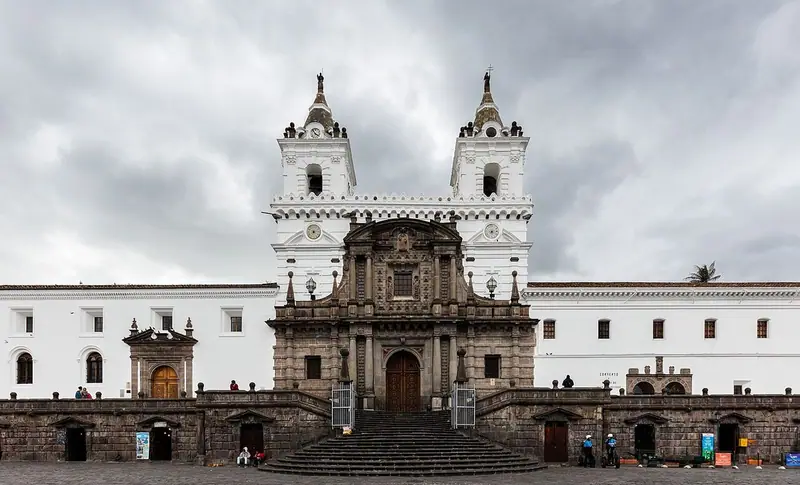 Spanish Colonial7 stops · 1534 – 18th century
Historic Quito audio guide
Explore Quito’s grid of steep streets beneath the Pichincha volcano, from the Plaza Grande to La Compañía, San Francisco and La Ronda.
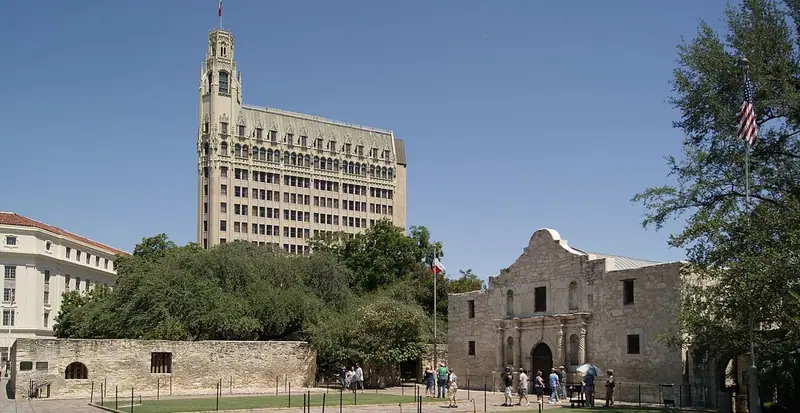 Spanish Colonial7 stops · 1718–1782
Alamo and San Antonio Missions audio guide
From the battle-scarred Alamo to Mission San José and the Espada Aqueduct, the five missions that made San Antonio.
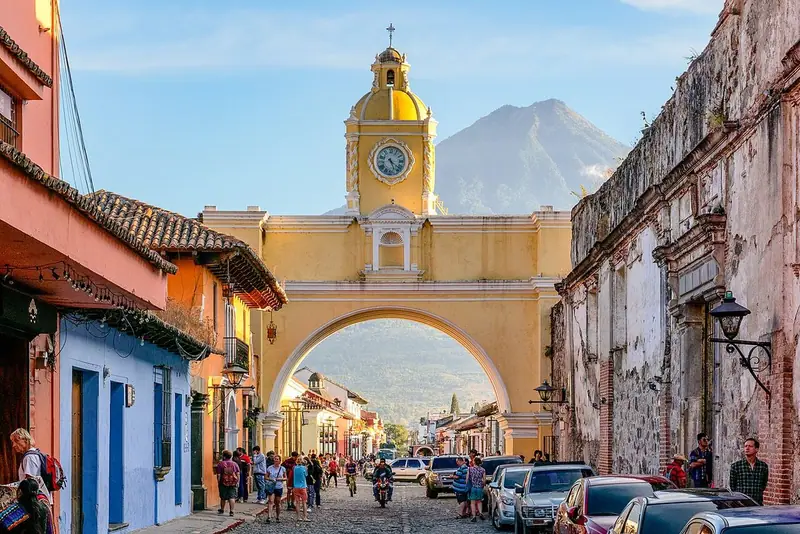 Spanish Colonial7 stops · 1543–1773 CE
Antigua Guatemala audio guide
The grid of Santiago de los Caballeros beneath three volcanoes, from the Central Park and the cathedral to the Santa Catalina Arch, La Merced and the Capuchinas.
Every guide, in every country
Historic Cuenca and every other guide we publish, including future ones. One payment, no subscription.