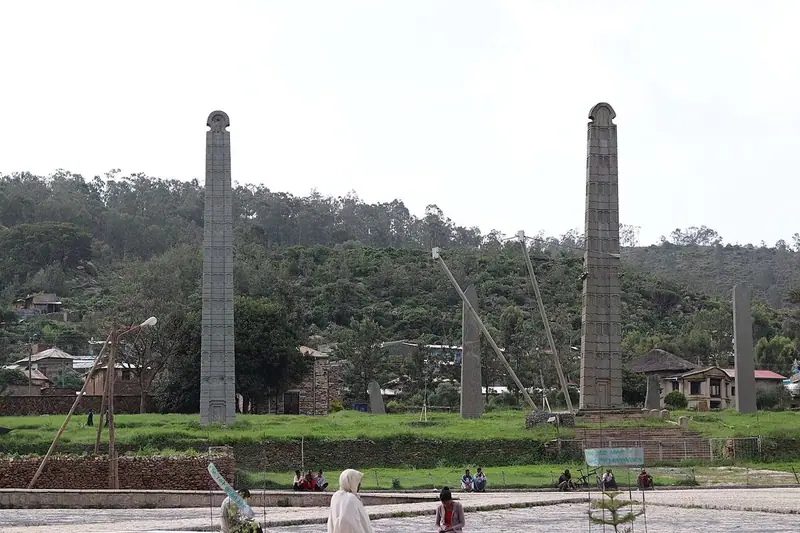
Before you start
Aksum, in the highlands of northern Ethiopia, was the capital of one of the great kingdoms of the ancient world, which traded across the Red Sea with Rome, Arabia and India. Its giant carved stone stelae, its royal tombs and its inscriptions are a World Heritage Site, and its Church of Saint Mary of Zion is one of the holiest places of Ethiopian Christianity. This guide begins in the Northern Stelae Park, visits the tombs beneath it, crosses to the church compound, and ends at the inscription of King Ezana. Dress modestly in the church compound, remove your shoes where asked, and note that women may not enter the old church or approach the Chapel of the Tablet. Ask before photographing priests or worshippers.
Use it as a self-guided tour of Aksum: 8 stops in visit order, each played when you’re ready, at your own pace.
 Free preview · Stop 1
The Northern Stelae Park
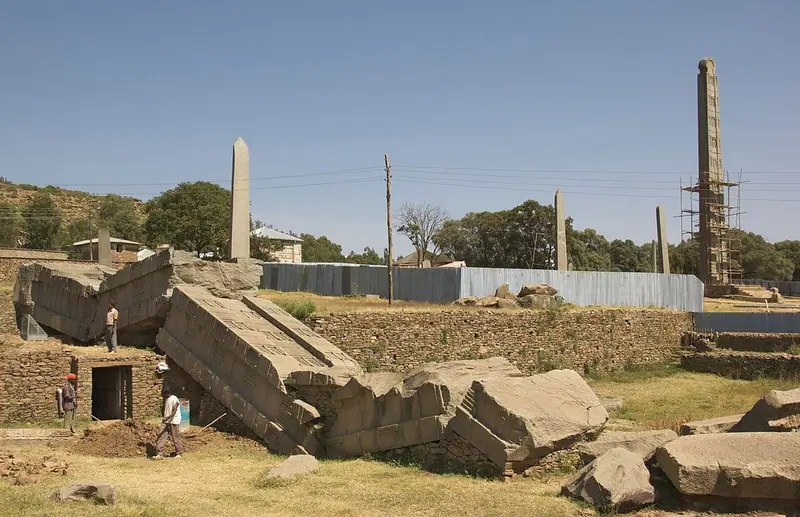
Begin at the entrance to the Northern Stelae Park, the great burial ground of the kings and nobles of Aksum. Look out across the field, where many stelae, large and small, stand or lie on the ground. Most are rough, uncarved slabs, but the largest are carefully shaped and decorated. They are thought to have marked underground tombs, and the largest and most elaborate were for royal burials. Notice the three great stelae: two standing, and one lying broken on the ground. Each was cut from a single block of stone, quarried in the hills some kilometres away and dragged here, a remarkable feat of engineering. The stelae probably date from the third and fourth centuries CE. Look for the stone platforms at the foot of some of the stelae, which may once have served as altars for offerings.
Photo: A. Davey from Where I Live Now: Pacific Northwest · CC BY 2.0 · Wikimedia Commons
What to see at Aksum: 8 stops, in visit order
- 01
 The Northern Stelae ParkA Field of GiantsFree preview
- 02
 King Ezana’s SteleThe Last Standing GiantIn the guide
- 03
 The Obelisk of AksumThe Stele That Came HomeIn the guide
- 04
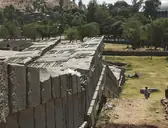 The Great SteleThe Fallen GiantIn the guide
- 05
 The Tomb of the False DoorBeneath the StelaeIn the guide
- 06
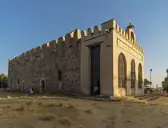 The Old Church of Saint Mary of ZionA Church of KingsIn the guide
- 07
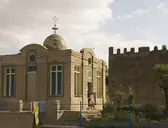 The Chapel of the TabletThe Ark of the CovenantIn the guide
- 08
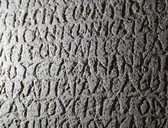 The Ezana StoneAn Ancient InscriptionIn the guide
Site map of Aksum
History of Aksum
Aksum was already described as a great city in the first century CE, and in the following centuries its kings minted their own coins in gold, silver and bronze. They marked the tombs of the elite with stone stelae, which grew ever larger and were carved to look like tall buildings of many storeys. In the fourth century, King Ezana became one of the first rulers in the world to adopt Christianity, and the custom of raising stelae came to an end. Aksum declined after the seventh century, and its political capital moved south, but it remained the spiritual heart of Ethiopia, where emperors came to be crowned.
Aksum guide: questions
How many stops does the Aksum guide have?
8 stops, in visit order: 1. The Northern Stelae Park; 2. King Ezana’s Stele; 3. The Obelisk of Aksum; 4. The Great Stele; 5. The Tomb of the False Door; 6. The Old Church of Saint Mary of Zion; 7. The Chapel of the Tablet; 8. The Ezana Stone.
Can I do a self-guided tour of Aksum with this guide?
Yes. The guide is made for a self-guided tour: 8 stops in visit order, each with a photo, a story and a voice, so you can explore Aksum at your own pace, without joining a group. Download it before you go and it works offline.
How long is each guide?
The 8 stops add up to about 6 minutes of listening in total. You play each stop when you’re ready, so you can go at your own pace.
Does the guide work offline?
Yes, once it’s downloaded. The guide is a single self-contained web page (about 7.3 MB) with the photos, text and audio built in. Download it to your phone before you go (Wi-Fi is best); after that it opens in any modern browser on iPhone or Android, with no app, account or mobile signal needed.
Does it use GPS or need my location?
No. The guide doesn’t use GPS and doesn’t know where you are: you play each stop when you reach it. It works on iPhone and Android in any modern browser, and it’s in English.
What’s included?
One self-contained HTML guide: 8 stops in visit order, each with a photo, text and a voice, plus the story of who built the site.
Who built Aksum?
Aksum was already described as a great city in the first century CE, and in the following centuries its kings minted their own coins in gold, silver and bronze. They marked the tombs of the elite with stone stelae, which grew ever larger and were carved to look like tall buildings of many storeys.
Where is Aksum?
Aksum, in the highlands of northern Ethiopia, was the capital of one of the great kingdoms of the ancient world, which traded across the Red Sea with Rome, Arabia and India.
Is there a free audio guide to Aksum?
The first stop, The Northern Stelae Park, is free to read and hear on this page, so you can try the Aksum audio tour before you buy. The full guide, with all 8 stops, is a one-off purchase: download it once and it’s yours to keep, working offline.
Is the Aksum guide worth it?
If you’d like to know what you’re looking at, yes. For $10 you get 8 stops in visit order, each with a photo, a short history and a voice you play when you’re ready, plus a site map of the stops, and about 6 minutes of listening in all. It’s short on purpose, so you spend your time looking, not listening. It’s yours to keep, works offline and needs no app. The first stop is free on this page, so you can try it before you buy. If you’d like hours of detail, a guided tour will go deeper.
Audio guide or guided tour?
It depends how you like to visit. This guide lets you explore Aksum at your own pace, at any time, for a one-off price. A guided tour gives you a live expert you can ask questions, but at fixed times and usually for a higher price. Many people use both: a tour for the big picture, and the guide to read beforehand or to revisit the stops in their own time.
Is this the official Aksum guide?
No. It’s an independent guide by The Historian Guide, not affiliated with or endorsed by the operator of Aksum. For tickets and opening hours, check the official site operator before you go.
Does the guide include entry tickets or opening hours?
No. The guide is a digital companion only. Admission to Aksum is separate, so check the official site operator for current tickets and opening hours before you go.
- Stop 1 · The Northern Stelae Park: A. Davey from Where I Live Now: Pacific Northwest · CC BY 2.0 · Wikimedia Commons · resized
- Stop 2 · King Ezana’s Stele: Sailko · CC BY 3.0 · Wikimedia Commons · resized
- Stop 3 · The Obelisk of Aksum (also the cover): Tesfawel · CC BY-SA 4.0 · Wikimedia Commons · resized
- Stop 4 · The Great Stele: A. Davey from Where I Live Now: Pacific Northwest · CC BY 2.0 · Wikimedia Commons · resized
- Stop 5 · The Tomb of the False Door: Sailko · CC BY 3.0 · Wikimedia Commons · resized
- Stop 6 · The Old Church of Saint Mary of Zion: A.Savin · FAL · Wikimedia Commons · resized
- Stop 7 · The Chapel of the Tablet: A. Davey from Where I Live Now: Pacific Northwest · CC BY 2.0 · Wikimedia Commons · resized
- Stop 8 · The Ezana Stone: Sailko · CC BY 3.0 · Wikimedia Commons · resized


All photographs from Wikimedia Commons under the licences shown.
More guides in Ethiopia
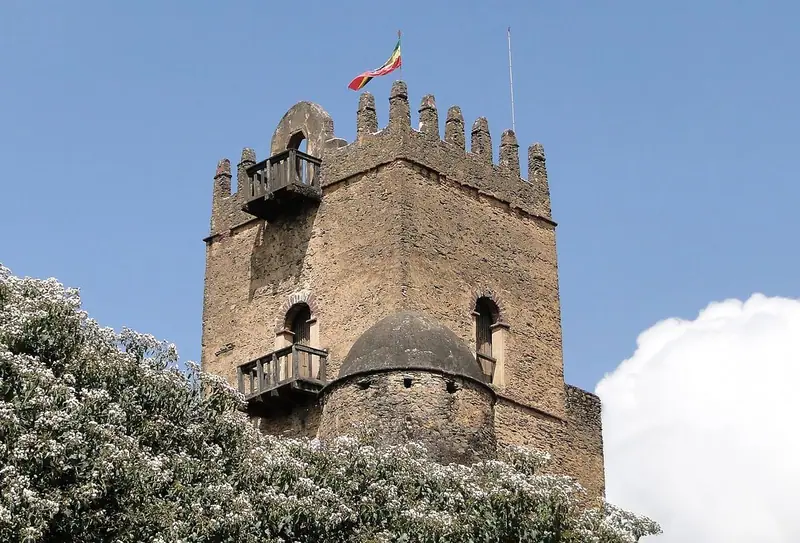 Solomonic Ethiopia8 stops · from 1636 CE
Gondar audio guide
The battlemented castles of Fasil Ghebbi, royal enclosure of Ethiopia’s emperors, and the bath of Fasilides with its painted church.
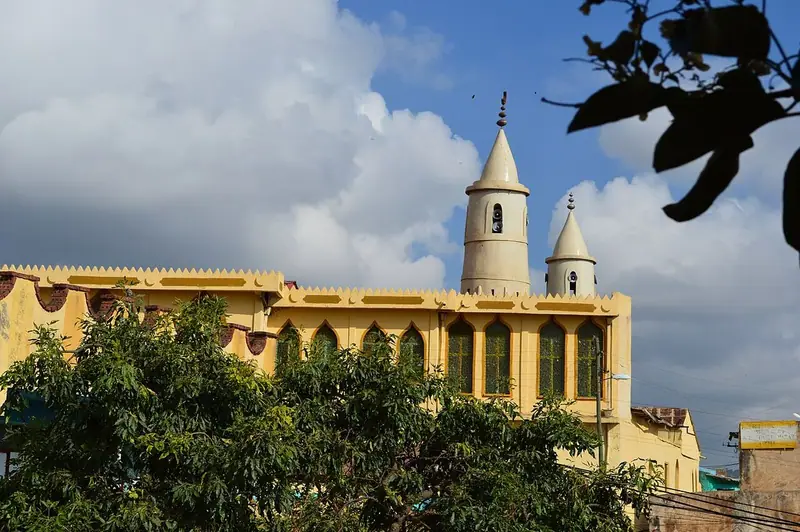 Adal Sultanate8 stops · from the 13th century CE
Harar audio guide
The walled lanes of the City of Saints, past whitewashed houses, mosques and the market, to the hyena men.
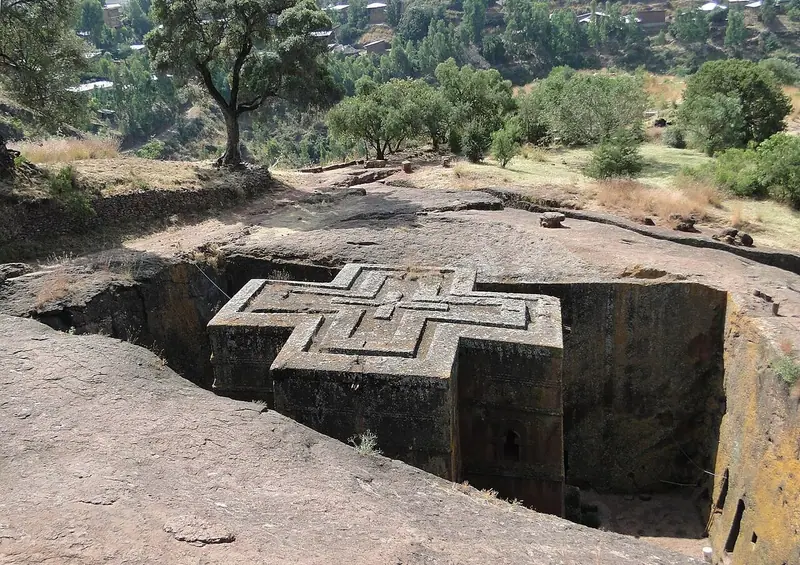 Zagwe8 stops · late 12th – early 13th century CE
Lalibela audio guide
Descend into trenches cut in the living rock to the medieval churches of Lalibela, still a working place of daily prayer and pilgrimage.
Every guide, in every country
Aksum and every other guide we publish, including future ones. One payment, no subscription.