Before you start
Mtskheta lies about twenty kilometres north of Tbilisi, where the Aragvi river flows into the Mtkvari. For centuries it was the capital of the ancient Georgian kingdom of Iberia, and it is where Georgia became a Christian country. Its historic churches are a UNESCO World Heritage Site, and the Georgian Orthodox Church calls it the Holy City. This guide begins at Jvari Monastery, on its hilltop above the town, then crosses to Svetitskhoveli Cathedral, the burial place of kings, and ends at Samtavro Monastery. Jvari is on the far side of the river, so you will need a car or taxi to reach it. These are working churches, so dress modestly; women usually cover their heads.
Use it as a self-guided tour of Mtskheta: 8 stops in visit order, each played when you’re ready, at your own pace.
 Free preview · Stop 1
The Hilltop
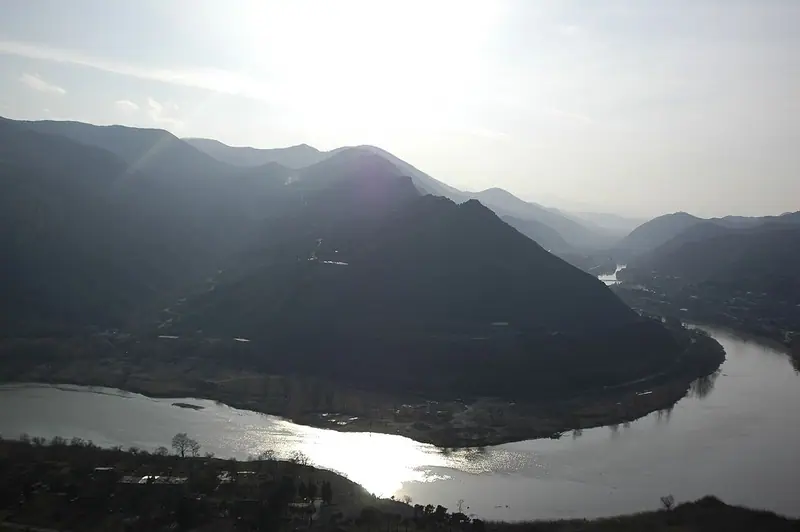
Begin on the terrace outside Jvari Monastery, on a rocky hilltop more than six hundred metres above sea level. Look down at the meeting of two rivers: the Aragvi, flowing in from the north, and the wider Mtkvari, also known as the Kura. Below them lies the town of Mtskheta, with the great cathedral of Svetitskhoveli at its heart, surrounded by its walls. For nearly a thousand years this was the capital of the kingdom of Iberia. In those days the city was strongly fortified, with walls along both banks of the river and forts on the hills around it. Notice how the church seems to grow out of the rock, with its western wall almost hanging over the cliff. The Russian poet Mikhail Lermontov set his poem Mtsyri, or The Novice, at a monastery here, where the two rivers meet.
Photo: Margot Kask · CC BY-SA 3.0 · Wikimedia Commons
What to see at Mtskheta: 8 stops, in visit order
- 01
 The HilltopWhere two rivers meetFree preview
- 02
 The Church of the CrossSaint Nino’s crossIn the guide
- 03
 The Carvings of JvariPrinces before ChristIn the guide
- 04
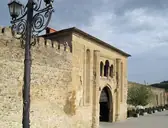 The Cathedral WallsA fortified churchyardIn the guide
- 05
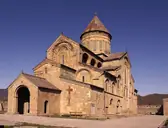 The Hand of the ArchitectA carved façadeIn the guide
- 06
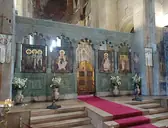 The Life-Giving PillarA robe and a treeIn the guide
- 07
 The Tombs of the KingsCoronations and burialsIn the guide
- 08
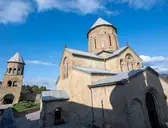 Samtavro MonasteryThe grave of a kingIn the guide
Site map of Mtskheta
History of Mtskheta
People have lived around Mtskheta since the Bronze Age. From around the third century before Christ, it was the capital of the kingdom of Iberia, known to Georgians as Kartli. Around the fourth century, a woman called Nino, remembered as a saint, converted King Mirian the Third and Queen Nana to Christianity, and Christianity became the state religion. In the sixth century the capital moved to Tbilisi, but Mtskheta remained the place where Georgian kings were crowned and buried. Georgia’s kingdom came to an end when it was taken over by the Russian Empire in 1801.
Mtskheta guide: questions
How many stops does the Mtskheta guide have?
8 stops, in visit order: 1. The Hilltop; 2. The Church of the Cross; 3. The Carvings of Jvari; 4. The Cathedral Walls; 5. The Hand of the Architect; 6. The Life-Giving Pillar; 7. The Tombs of the Kings; 8. Samtavro Monastery.
Can I do a self-guided tour of Mtskheta with this guide?
Yes. The guide is made for a self-guided tour: 8 stops in visit order, each with a photo, a story and a voice, so you can explore Mtskheta at your own pace, without joining a group. Download it before you go and it works offline.
How long is each guide?
The 8 stops add up to about 6 minutes of listening in total. You play each stop when you’re ready, so you can go at your own pace.
Does the guide work offline?
Yes, once it’s downloaded. The guide is a single self-contained web page (about 7.4 MB) with the photos, text and audio built in. Download it to your phone before you go (Wi-Fi is best); after that it opens in any modern browser on iPhone or Android, with no app, account or mobile signal needed.
Does it use GPS or need my location?
No. The guide doesn’t use GPS and doesn’t know where you are: you play each stop when you reach it. It works on iPhone and Android in any modern browser, and it’s in English.
What’s included?
One self-contained HTML guide: 8 stops in visit order, each with a photo, text and a voice, plus the story of who built the site.
Who built Mtskheta?
People have lived around Mtskheta since the Bronze Age. From around the third century before Christ, it was the capital of the kingdom of Iberia, known to Georgians as Kartli.
Is there a free audio guide to Mtskheta?
The first stop, The Hilltop, is free to read and hear on this page, so you can try the Mtskheta audio tour before you buy. The full guide, with all 8 stops, is a one-off purchase: download it once and it’s yours to keep, working offline.
Is the Mtskheta guide worth it?
If you’d like to know what you’re looking at, yes. For $10 you get 8 stops in visit order, each with a photo, a short history and a voice you play when you’re ready, plus a site map of the stops, and about 6 minutes of listening in all. It’s short on purpose, so you spend your time looking, not listening. It’s yours to keep, works offline and needs no app. The first stop is free on this page, so you can try it before you buy. If you’d like hours of detail, a guided tour will go deeper.
Audio guide or guided tour?
It depends how you like to visit. This guide lets you explore Mtskheta at your own pace, at any time, for a one-off price. A guided tour gives you a live expert you can ask questions, but at fixed times and usually for a higher price. Many people use both: a tour for the big picture, and the guide to read beforehand or to revisit the stops in their own time.
Is this the official Mtskheta guide?
No. It’s an independent guide by The Historian Guide, not affiliated with or endorsed by the operator of Mtskheta. For tickets and opening hours, check the official site operator before you go.
Does the guide include entry tickets or opening hours?
No. The guide is a digital companion only. Admission to Mtskheta is separate, so check the official site operator for current tickets and opening hours before you go.
- Stop 1 · The Hilltop: Margot Kask · CC BY-SA 3.0 · Wikimedia Commons · resized
- Stop 2 · The Church of the Cross: xiquinhosilva · CC BY 4.0 · Wikimedia Commons · resized
- Stop 3 · The Carvings of Jvari: Surprizi · CC0 · Wikimedia Commons · resized
- Stop 4 · The Cathedral Walls: Oleg Moro · CC BY-SA 4.0 · Wikimedia Commons · resized
- Stop 5 · The Hand of the Architect: Kroc, Łukasz Dzieżyc · CC BY-SA 4.0 · Wikimedia Commons · resized
- Stop 6 · The Life-Giving Pillar (also the cover): Radosław Botev · CC BY 3.0 pl · Wikimedia Commons · resized
- Stop 7 · The Tombs of the Kings: Grete Howard from Bristol, England · CC BY-SA 2.0 · Wikimedia Commons · resized
- Stop 8 · Samtavro Monastery: xiquinhosilva · CC BY 4.0 · Wikimedia Commons · resized


All photographs from Wikimedia Commons under the licences shown.
More guides in Georgia
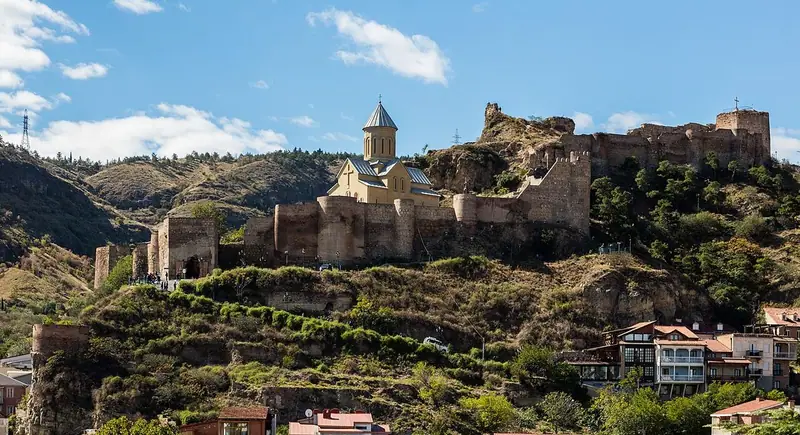 Georgian7 stops · 5th century CE – 19th century
Old Tbilisi audio guide
From Metekhi Church past the domed sulphur baths and up to Narikala Fortress, then down to Sioni Cathedral.
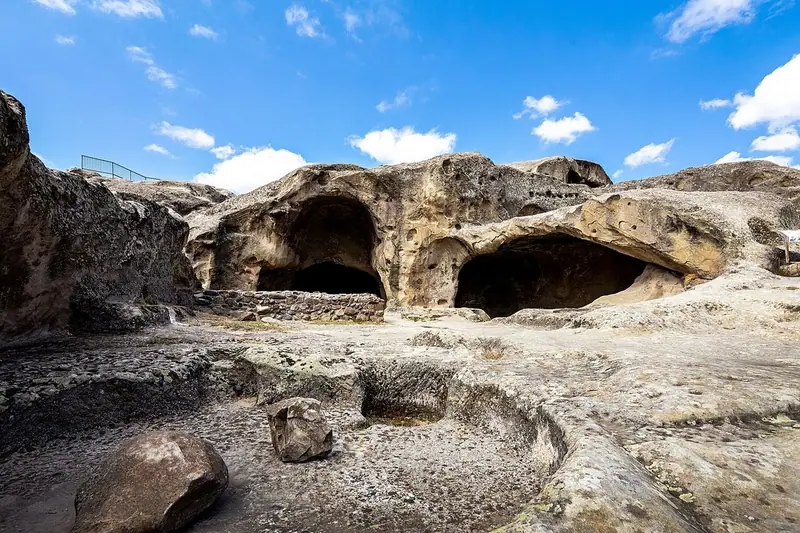 Kartli (Iberia)7 stops · c. 1000 BCE – 14th century
Uplistsikhe audio guide
Climb the ancient main street of a town cut into a sandstone ridge above the Mtkvari, past the theatre and Tamar’s Hall to the Prince’s Church.
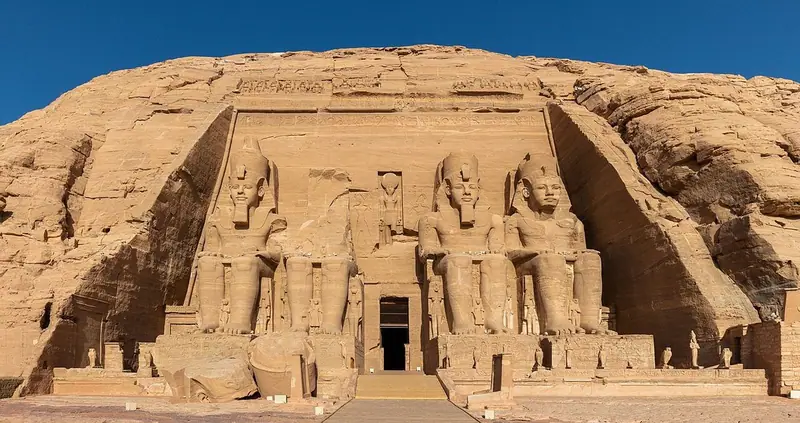 Ancient Egyptian8 stops · 13th century BCE
Abu Simbel audio guide
Ramesses II’s colossal temple façade, the Temple of Nefertari, and how both were rescued from the waters of Lake Nasser.
Every guide, in every country
Mtskheta and every other guide we publish, including future ones. One payment, no subscription.