Before you start
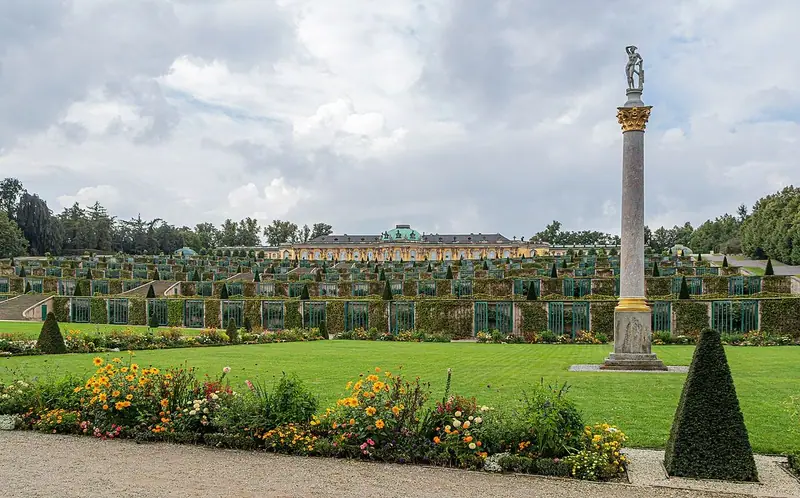
Sanssouci, in Potsdam, was the summer palace of Frederick the Great, King of Prussia, who called it his little vineyard house. Its name means without care, and here, above terraces of vines, the king played the flute, wrote, and talked philosophy with Voltaire. Around it spreads a great park of palaces, temples and gardens. The route climbs from the Great Fountain up the terraces to the palace and on to the king’s grave, then follows the park to the Chinese House and the New Palace. Allow a full day.
Use it as a self-guided tour of Sanssouci: 8 stops in visit order, each played when you’re ready, at your own pace.
 Free preview · Stop 1
The Great Fountain
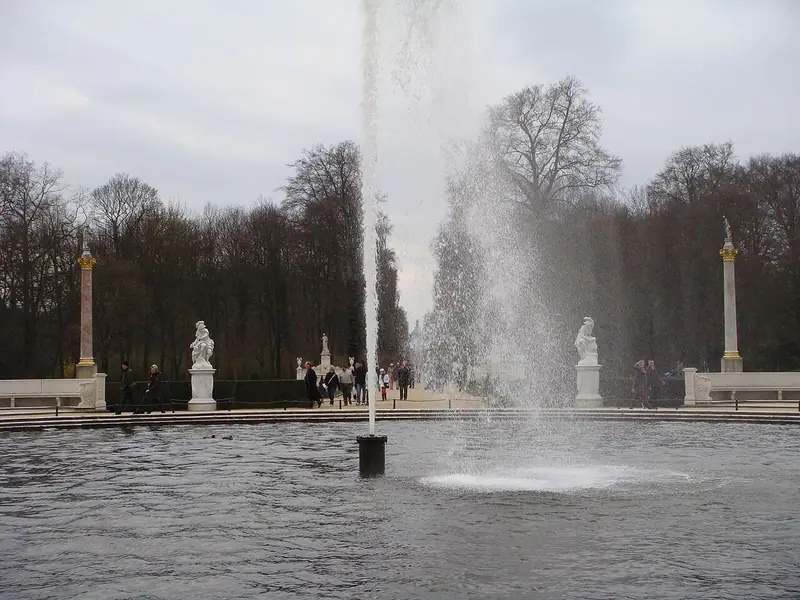
Begin beside the Great Fountain, in the formal garden at the foot of the hill. Look up the long flight of steps to the vineyard terraces and the low yellow palace at the top. This garden was laid out in 1745 in the French style, on the model of Versailles, and the fountain basin was built in 1748. Frederick hoped for a great jet of water here, but his engineers did not understand the hydraulics, and he never saw it play. The fountains of Sanssouci stayed silent for about a century, until steam power was used to pump the water. Around the basin stand marble statues of the gods and goddesses of ancient myth. Now climb the steps up the terraces.
Photo: Karen Mardahl · CC BY-SA 2.0 · Wikimedia Commons
What to see at Sanssouci: 8 stops, in visit order
- 01
 The Great FountainThe garden below the hillFree preview
- 02
 The Vineyard TerracesThe king’s little vineyardIn the guide
- 03
 The Palace FrontSans, Souci.In the guide
- 04
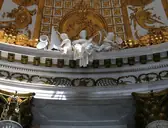 The Marble Hall and Voltaire RoomPhilosophy and musicIn the guide
- 05
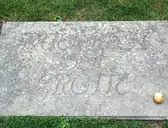 Frederick’s GraveWithout pomp, as he wishedIn the guide
- 06
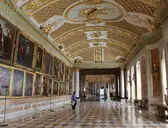 The Picture GalleryA museum for a kingIn the guide
- 07
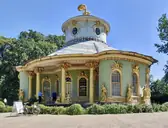 The Chinese HouseA dream of ChinaIn the guide
- 08
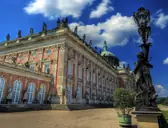 The New PalacePrussia’s show of strengthIn the guide
Site map of Sanssouci
History of Sanssouci
Frederick the Great ordered the vineyard terraces in 1744, and the palace was built between 1745 and 1747 by Georg Wenzeslaus von Knobelsdorff, closely following the king’s own sketches. Frederick added the Picture Gallery, the Chinese House and, after the Seven Years' War, the vast New Palace, built from 1763 to 1769. He died at Sanssouci in 1786. Later Prussian kings and German emperors enlarged the park, and in 1990 it became a World Heritage Site.
Sanssouci guide: questions
How many stops does the Sanssouci guide have?
8 stops, in visit order: 1. The Great Fountain; 2. The Vineyard Terraces; 3. The Palace Front; 4. The Marble Hall and Voltaire Room; 5. Frederick’s Grave; 6. The Picture Gallery; 7. The Chinese House; 8. The New Palace.
Can I do a self-guided tour of Sanssouci with this guide?
Yes. The guide is made for a self-guided tour: 8 stops in visit order, each with a photo, a story and a voice, so you can explore Sanssouci at your own pace, without joining a group. Download it before you go and it works offline.
How long is each guide?
The 8 stops add up to about 5 minutes of listening in total. You play each stop when you’re ready, so you can go at your own pace.
Does the guide work offline?
Yes, once it’s downloaded. The guide is a single self-contained web page (about 7.4 MB) with the photos, text and audio built in. Download it to your phone before you go (Wi-Fi is best); after that it opens in any modern browser on iPhone or Android, with no app, account or mobile signal needed.
Does it use GPS or need my location?
No. The guide doesn’t use GPS and doesn’t know where you are: you play each stop when you reach it. It works on iPhone and Android in any modern browser, and it’s in English.
What’s included?
One self-contained HTML guide: 8 stops in visit order, each with a photo, text and a voice, plus the story of who built the site.
Who built Sanssouci?
Frederick the Great ordered the vineyard terraces in 1744, and the palace was built between 1745 and 1747 by Georg Wenzeslaus von Knobelsdorff, closely following the king’s own sketches. Frederick added the Picture Gallery, the Chinese House and, after the Seven Years' War, the vast New Palace, built from 1763 to 1769.
Where is Sanssouci?
Sanssouci, in Potsdam, was the summer palace of Frederick the Great, King of Prussia, who called it his little vineyard house.
Is there a free audio guide to Sanssouci?
The first stop, The Great Fountain, is free to read and hear on this page, so you can try the Sanssouci audio tour before you buy. The full guide, with all 8 stops, is a one-off purchase: download it once and it’s yours to keep, working offline.
Is the Sanssouci guide worth it?
If you’d like to know what you’re looking at, yes. For $10 you get 8 stops in visit order, each with a photo, a short history and a voice you play when you’re ready, plus a site map of the stops, and about 5 minutes of listening in all. It’s short on purpose, so you spend your time looking, not listening. It’s yours to keep, works offline and needs no app. The first stop is free on this page, so you can try it before you buy. If you’d like hours of detail, a guided tour will go deeper.
Audio guide or guided tour?
It depends how you like to visit. This guide lets you explore Sanssouci at your own pace, at any time, for a one-off price. A guided tour gives you a live expert you can ask questions, but at fixed times and usually for a higher price. Many people use both: a tour for the big picture, and the guide to read beforehand or to revisit the stops in their own time.
Is this the official Sanssouci guide?
No. It’s an independent guide by The Historian Guide, not affiliated with or endorsed by the operator of Sanssouci. For tickets and opening hours, check the official site operator before you go.
Does the guide include entry tickets or opening hours?
No. The guide is a digital companion only. Admission to Sanssouci is separate, so check the official site operator for current tickets and opening hours before you go.
- Stop 1 · The Great Fountain: Karen Mardahl · CC BY-SA 2.0 · Wikimedia Commons · resized
- Stop 2 · The Vineyard Terraces (also the cover): H. Zell · CC BY-SA 3.0 · Wikimedia Commons · resized
- Stop 3 · The Palace Front: H. Zell · CC BY-SA 3.0 · Wikimedia Commons · resized
- Stop 4 · The Marble Hall and Voltaire Room: Benjamin Smith · CC BY-SA 4.0 · Wikimedia Commons · resized
- Stop 5 · Frederick’s Grave: Dennis G. Jarvis · CC BY-SA 2.0 · Wikimedia Commons · resized
- Stop 6 · The Picture Gallery: Ruhrfisch (talk) · CC BY-SA 3.0 · Wikimedia Commons · resized
- Stop 7 · The Chinese House: Kurt Kaiser · CC0 · Wikimedia Commons · resized
- Stop 8 · The New Palace: Wolfgang Staudt from Saarbruecken, Germany · CC BY 2.0 · Wikimedia Commons · resized


All photographs from Wikimedia Commons under the licences shown.
More guides in Germany
 Cold War Berlin8 stops · Cold War
The Berlin Wall Memorial and Checkpoint Charlie audio guide
Follow the stories of a divided city from the preserved border strip on Bernauer Straße to Checkpoint Charlie.
 Kingdom of Prussia8 stops · Kingdom of Prussia
The Brandenburg Gate and the Reichstag audio guide
From Pariser Platz through the Brandenburg Gate and along the line of the Wall to the glass dome of the Reichstag.
 Gothic7 stops · 1248–1880 CE
Cologne Cathedral audio guide
Stand beneath twin spires about 157 metres high, then find the Gero Cross and the golden Shrine of the Three Kings inside.
 Renaissance8 stops · 1214–1693 CE
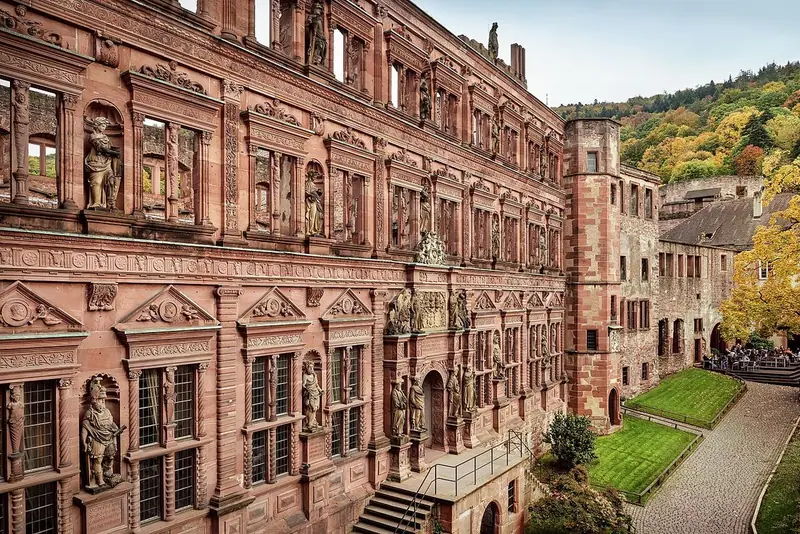
Heidelberg Castle audio guide
Explore the red sandstone ruin of the Electors Palatine above the Neckar, from the Ottheinrich Wing to the Great Tun and the blown-up tower.
 Hanseatic9 stops · 1143 – 16th century
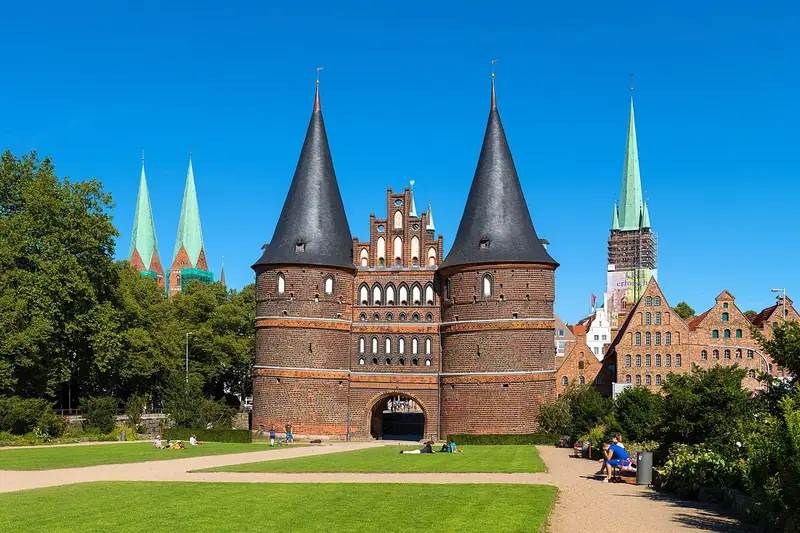
Lübeck audio guide
The brick Gothic island city that led the Hanseatic League, with the Holstentor, the salt warehouses, St Mary’s Church and the town hall.
 Kingdom of Prussia8 stops · Kingdom of Prussia
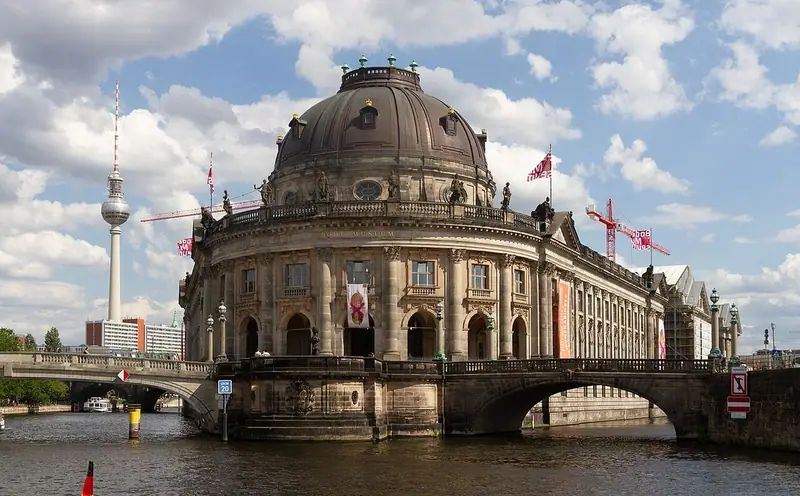
Museum Island audio guide
From the Lustgarten through the Altes and Neues Museums to the bust of Nefertiti, and on to the Bode Museum on the Spree.
Every guide, in every country
Sanssouci and every other guide we publish, including future ones. One payment, no subscription.