Before you start
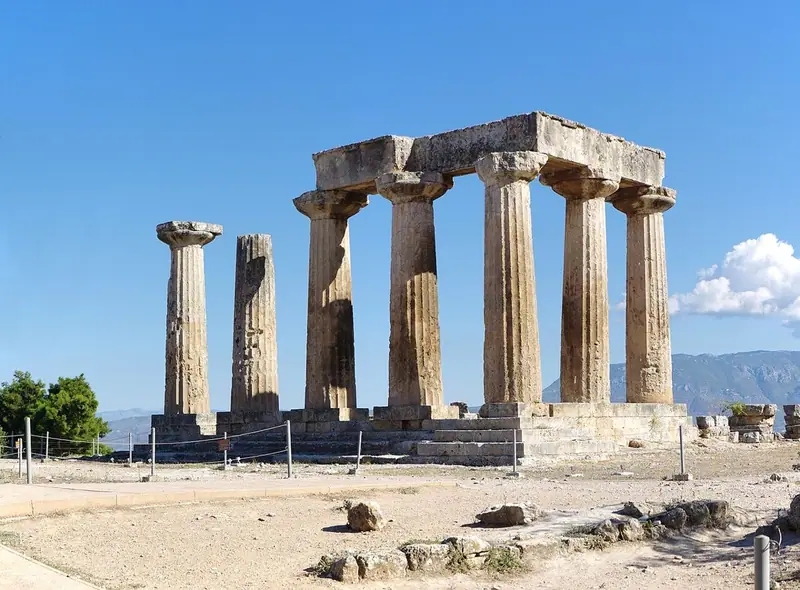
Ancient Corinth lies at the foot of the great rock of Acrocorinth, beside the modern village of Archaia Korinthos, about seven kilometres south-west of the modern city of Corinth and roughly 80 kilometres west of Athens. Its position near the narrow isthmus between mainland Greece and the Peloponnese, with harbours on two seas, made it one of the richest cities of the ancient world. Ancient Corinth is not a UNESCO World Heritage Site, but it is one of the major archaeological sites of Greece, cared for by the Hellenic Ministry of Culture and excavated by the American School of Classical Studies at Athens. This guide starts at the museum, climbs to the Temple of Apollo, crosses the Roman Forum to the Bema, descends to the Peirene Fountain and the Lechaion Road, and ends with a drive up to Acrocorinth.
Use it as a self-guided tour of Ancient Corinth: 7 stops in visit order, each played when you’re ready, at your own pace.
 Free preview · Stop 1
Archaeological Museum
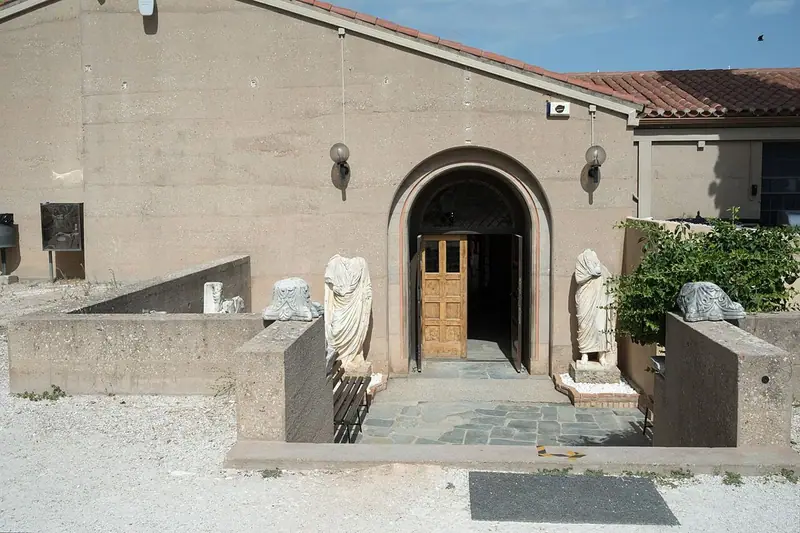
Begin at the museum by the entrance, which gives you a feel for the whole story before you step onto the site. The early galleries show why Corinth was famous: its painted pottery, decorated with animal friezes, lions, panthers and sphinxes in bands around the pot, was traded all over the Mediterranean in the seventh and sixth centuries BCE. Later rooms hold Roman portrait statues of the imperial family, fine mosaics, and sculpture from the forum. Look out for the striking Archaic statues of young men, the kouroi, and the finds from the sanctuary of Asklepios, including clay models of body parts left by grateful patients. In the courtyard, take a moment with the headless Roman statues before heading out towards the temple on its low hill.
Photo: Zde · CC BY-SA 4.0 · Wikimedia Commons
What to see at Ancient Corinth: 7 stops, in visit order
- 01
 Archaeological MuseumArchaiologikó MouseíoFree preview
- 02
 Temple of ApolloNaós tou ApóllonaIn the guide
- 03
 Roman ForumRomaikí AgoráIn the guide
- 04
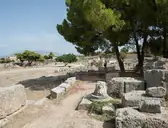 The BemaVímaIn the guide
- 05
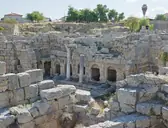 Peirene FountainPeiríni KríniIn the guide
- 06
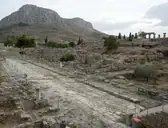 Lechaion RoadOdós LechaíouIn the guide
- 07
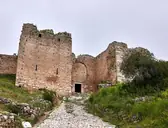 AcrocorinthAkrokórinthosIn the guide
Site map of Ancient Corinth
History of Ancient Corinth
Corinth was built by the ancient Greeks and rebuilt by the Romans. People farmed here in the Neolithic, and Greek civilisation took shape through the Bronze Age, including the Mycenaean era of about 1600 to 1100 BCE, then flowered in the Archaic, Classical and Hellenistic periods. Archaic Corinth was a great power: under the Bacchiad clan and then the tyrants Kypselos and Periander, between the eighth and sixth centuries BCE, it founded colonies such as Syracuse and Corfu and exported its fine painted pottery all over the Mediterranean. Greek independence ended with the Roman conquest of 146 BCE, when the consul Lucius Mummius sacked the city. In 44 BCE Julius Caesar refounded it as a Roman colony, and much of what you see is Roman. The apostle Paul lived here around 50 to 52 CE.
The full history continues in the guide.
Ancient Corinth guide: questions
How many stops does the Ancient Corinth guide have?
7 stops, in visit order: 1. Archaeological Museum; 2. Temple of Apollo; 3. Roman Forum; 4. The Bema; 5. Peirene Fountain; 6. Lechaion Road; 7. Acrocorinth.
Can I do a self-guided tour of Ancient Corinth with this guide?
Yes. The guide is made for a self-guided tour: 7 stops in visit order, each with a photo, a story and a voice, so you can explore Ancient Corinth at your own pace, without joining a group. Download it before you go and it works offline.
How long is each guide?
The 7 stops add up to about 6 minutes of listening in total. You play each stop when you’re ready, so you can go at your own pace.
Does the guide work offline?
Yes, once it’s downloaded. The guide is a single self-contained web page (about 7.7 MB) with the photos, text and audio built in. Download it to your phone before you go (Wi-Fi is best); after that it opens in any modern browser on iPhone or Android, with no app, account or mobile signal needed.
Does it use GPS or need my location?
No. The guide doesn’t use GPS and doesn’t know where you are: you play each stop when you reach it. It works on iPhone and Android in any modern browser, and it’s in English.
What’s included?
One self-contained HTML guide: 7 stops in visit order, each with a photo, text and a voice, plus the story of who built the site.
Who built Ancient Corinth?
Corinth was built by the ancient Greeks and rebuilt by the Romans. People farmed here in the Neolithic, and Greek civilisation took shape through the Bronze Age, including the Mycenaean era of about 1600 to 1100 BCE, then flowered in the Archaic, Classical and Hellenistic periods.
Is there a free audio guide to Ancient Corinth?
The first stop, Archaeological Museum, is free to read and hear on this page, so you can try the Ancient Corinth audio tour before you buy. The full guide, with all 7 stops, is a one-off purchase: download it once and it’s yours to keep, working offline.
Is the Ancient Corinth guide worth it?
If you’d like to know what you’re looking at, yes. For $10 you get 7 stops in visit order, each with a photo, a short history and a voice you play when you’re ready, plus a site map of the stops, and about 6 minutes of listening in all. It’s short on purpose, so you spend your time looking, not listening. It’s yours to keep, works offline and needs no app. The first stop is free on this page, so you can try it before you buy. If you’d like hours of detail, a guided tour will go deeper.
Audio guide or guided tour?
It depends how you like to visit. This guide lets you explore Ancient Corinth at your own pace, at any time, for a one-off price. A guided tour gives you a live expert you can ask questions, but at fixed times and usually for a higher price. Many people use both: a tour for the big picture, and the guide to read beforehand or to revisit the stops in their own time.
Is this the official Ancient Corinth guide?
No. It’s an independent guide by The Historian Guide, not affiliated with or endorsed by the operator of Ancient Corinth. For tickets and opening hours, check the official site operator before you go.
Does the guide include entry tickets or opening hours?
No. The guide is a digital companion only. Admission to Ancient Corinth is separate, so check the official site operator for current tickets and opening hours before you go.
- Stop 1 · Archaeological Museum: Zde · CC BY-SA 4.0 · Wikimedia Commons · resized
- Stop 2 · Temple of Apollo (also the cover): Berthold Werner · CC BY-SA 3.0 · Wikimedia Commons · resized
- Stop 3 · Roman Forum: George E. Koronaios · CC0 · Wikimedia Commons · resized
- Stop 4 · The Bema: Zde · CC BY-SA 4.0 · Wikimedia Commons · resized
- Stop 5 · Peirene Fountain: Berthold Werner · CC BY-SA 3.0 · Wikimedia Commons · resized
- Stop 6 · Lechaion Road: Zde · CC BY-SA 4.0 · Wikimedia Commons · resized
- Stop 7 · Acrocorinth: George E. Koronaios · CC BY-SA 4.0 · Wikimedia Commons · resized


All photographs from Wikimedia Commons under the licences shown.
More guides in Greece
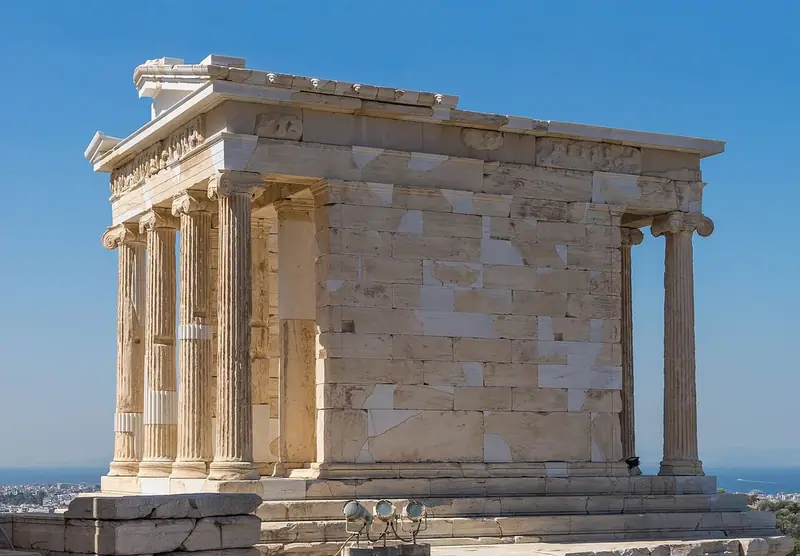 Greek7 stops · 5th century BCE
Acropolis of Athens audio guide
Climb through the Propylaia to the Parthenon and the Erechtheion, on the rock that has crowned Athens for three thousand years.
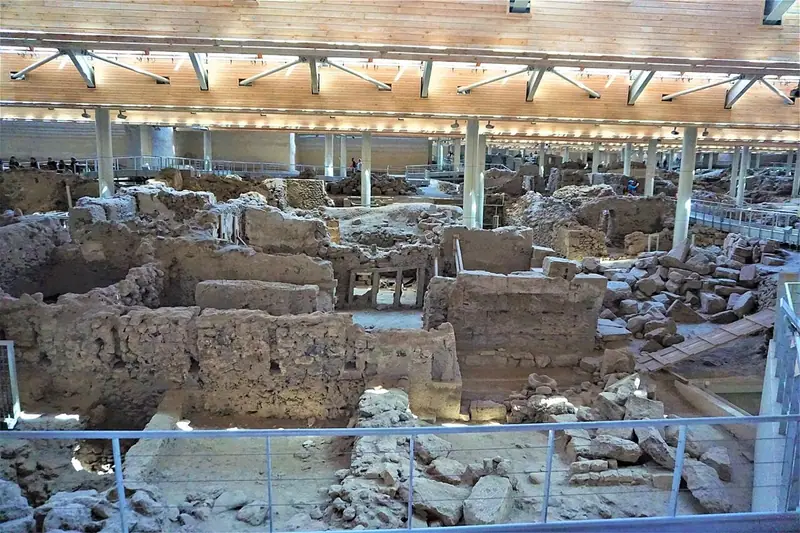 Minoan7 stops · c. 2000–1600 BCE
Akrotiri audio guide
The streets of a Bronze Age town buried by Santorini’s volcano, preserved beneath a great modern roof.
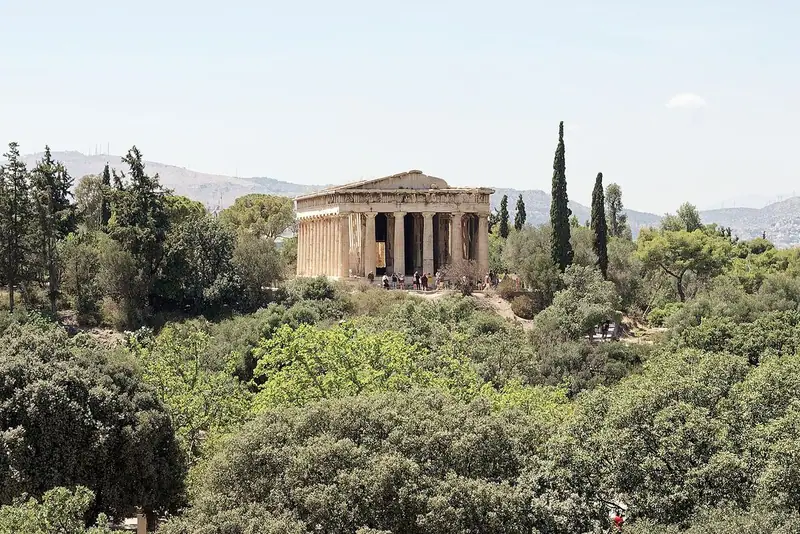 Greek7 stops · 6th century BCE – 2nd century CE
Ancient Agora of Athens audio guide
The market square where Athenians shopped, voted and argued, overlooked by the Temple of Hephaestus.
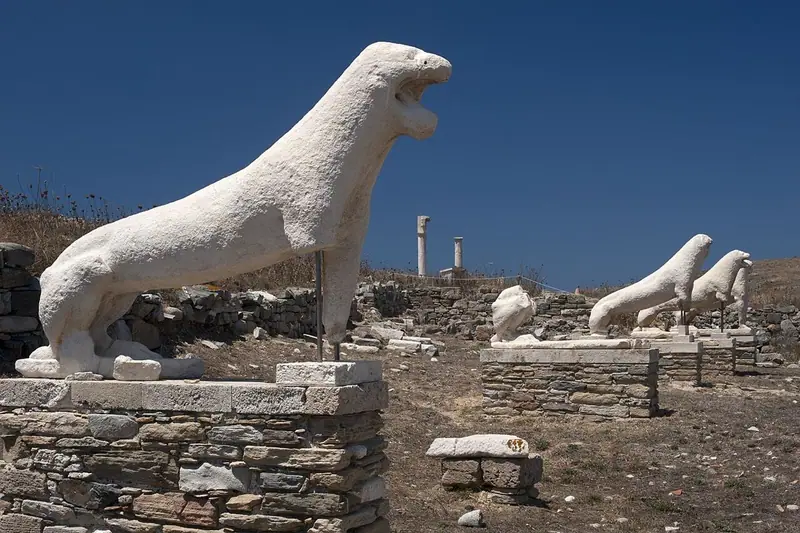 Greek7 stops · c. 800 BCE – 1st century BCE
Delos audio guide
The sacred island of Apollo: the Terrace of the Lions, mosaic-floored houses and the climb up Mount Kynthos.
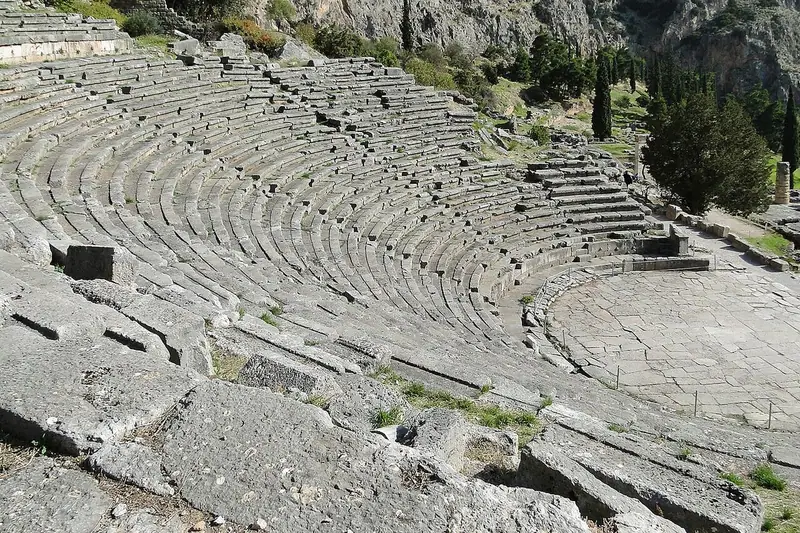 Greek8 stops · 8th century BCE – 4th century CE
Delphi audio guide
Up the Sacred Way past the treasuries to Apollo’s temple, the theatre and the stadium, high on the slopes of Parnassus.
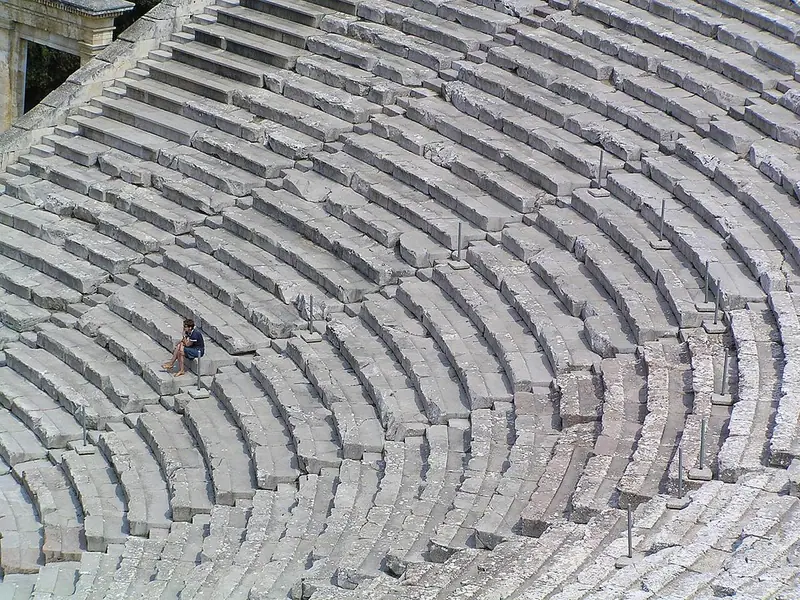 Greek7 stops · 4th century BCE
Epidaurus audio guide
The healing sanctuary of Asklepios, with its celebrated theatre, stadium and the mysterious Tholos.
Every guide, in every country
Ancient Corinth and every other guide we publish, including future ones. One payment, no subscription.