Before you start
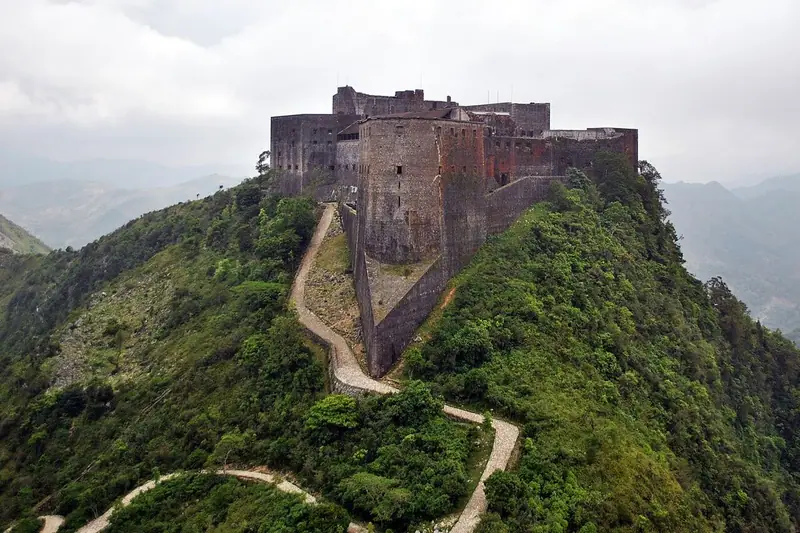
In the mountains of northern Haiti, about twenty kilometres south of Cap-Haïtien, stand the monuments of King Henry I: the ruined Palace of Sans-Souci in the town of Milot, and high above it the Citadelle, one of the largest fortresses in the Americas. UNESCO inscribed them, with the nearby site of Ramiers, as the National History Park in 1982, calling them universal symbols of liberty, the first monuments built by black slaves who had won their freedom. An earthquake in 1842 left the palace a ruin, a fire in April 2020 destroyed the dome of the royal chapel, and on 11 April 2026 twenty-five people died in a crush at the Citadelle’s entrance during a crowded event. Armed gangs control much of the capital, Port-au-Prince, and the main roads north; most visitors arrive through Cap-Haïtien. This guide says plainly what has been lost, and what stands today. Check your government’s current travel advice before you plan a visit.
Use it as a self-guided tour of Citadelle and Sans-Souci: 10 stops in visit order, each played when you’re ready, at your own pace.
 Free preview · Stop 1
The Royal Chapel of Milot
Begin in the square of Milot, at the foot of the palace, beside the round church of Our Lady of the Immaculate Conception, the royal chapel of King Henry. It was among the first buildings of the independent state, built in the years when Milot grew around the king’s headquarters. Its circular body and great dome made it one of the most unusual churches in Haiti. After the earthquake of 1842 it was the only part of Sans-Souci to be rebuilt, and it served as Milot’s parish church. In the early hours of 13 April 2020 a fire broke out; the cause has never been established. The dome, some thirty metres across, collapsed, and only the walls were left standing. The photograph was taken in 2007, before the fire. Ask locally how far repairs have progressed, and whether the church is open.
Photo: Carol4929 · CC BY 3.0 · Wikimedia Commons. Taken in 2007, before the fire of April 2020 destroyed the dome
What to see at Citadelle and Sans-Souci: 10 stops, in visit order
- 01
 The Royal Chapel of MilotA dome lost to fireFree preview
- 02
 The Palace of Sans-SouciThe king’s residenceIn the guide
- 03
 The Gardens and WaterworksFountains in the mountainsIn the guide
- 04
 The Parade Ground in 1826A palace seen by a travellerIn the guide
- 05
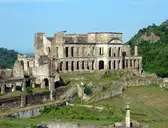 The Palace RuinsThe earthquake of 1842In the guide
- 06
 The Road to the CitadelUp the Bonnet à l’ÉvêqueIn the guide
- 07
 The Prow of the CitadelA ship of stoneIn the guide
- 08
 The Gun BatteriesCannon that never fired in warIn the guide
- 09
 The Cannonball YardPyramids of ironIn the guide
- 10
 The Upper Platform and RamiersThe view to the seaIn the guide
Site map of Citadelle and Sans-Souci
History of Citadelle and Sans-Souci
In 1791 the enslaved people of the French colony of Saint-Domingue, then the richest sugar colony in the world, rose in revolt. After thirteen years of war they defeated the French, and on 1 January 1804 Jean-Jacques Dessalines declared the independent state of Haiti. Henri Christophe, born in 1767, probably in Grenada, and brought to Saint-Domingue as a slave, became one of the revolution’s leading generals. After Dessalines was killed in 1806 the country split: Alexandre Pétion ruled a republic in the south, and Christophe the north, where in 1811 he made himself King Henry I, with a court, a nobility and a law code. Fearing that France would return, he built a chain of forts, crowned by the Citadelle. Ill after a stroke and facing revolt, he took his own life in October 1820, and the north was reunited with the republic.
Citadelle and Sans-Souci guide: questions
How many stops does the Citadelle and Sans-Souci guide have?
10 stops, in visit order: 1. The Royal Chapel of Milot; 2. The Palace of Sans-Souci; 3. The Gardens and Waterworks; 4. The Parade Ground in 1826; 5. The Palace Ruins; 6. The Road to the Citadel; 7. The Prow of the Citadel; 8. The Gun Batteries; 9. The Cannonball Yard; 10. The Upper Platform and Ramiers.
Can I do a self-guided tour of Citadelle and Sans-Souci with this guide?
Yes. The guide is made for a self-guided tour: 10 stops in visit order, each with a photo, a story and a voice, so you can explore Citadelle and Sans-Souci at your own pace, without joining a group. Download it before you go and it works offline.
How long do you need at Citadelle and Sans-Souci?
We suggest allowing A full day. The 10 stops add up to about 7 minutes of listening, and you play each one when you’re ready, so you can linger wherever you like.
How long is each guide?
The 10 stops add up to about 7 minutes of listening in total. You play each stop when you’re ready, so you can go at your own pace.
Does the guide work offline?
Yes, once it’s downloaded. The guide is a single self-contained web page (about 9.8 MB) with the photos, text and audio built in. Download it to your phone before you go (Wi-Fi is best); after that it opens in any modern browser on iPhone or Android, with no app, account or mobile signal needed.
Does it use GPS or need my location?
No. The guide doesn’t use GPS and doesn’t know where you are: you play each stop when you reach it. It works on iPhone and Android in any modern browser, and it’s in English.
What’s included?
One self-contained HTML guide: 10 stops in visit order, each with a photo, text and a voice, plus the story of who built the site.
Who built Citadelle and Sans-Souci?
In 1791 the enslaved people of the French colony of Saint-Domingue, then the richest sugar colony in the world, rose in revolt. After thirteen years of war they defeated the French, and on 1 January 1804 Jean-Jacques Dessalines declared the independent state of Haiti.
Where is Citadelle and Sans-Souci?
In the mountains of northern Haiti, about twenty kilometres south of Cap-Haïtien, stand the monuments of King Henry I: the ruined Palace of Sans-Souci in the town of Milot, and high above it the Citadelle, one of the largest fortresses in the Americas.
Is there a free audio guide to Citadelle and Sans-Souci?
The first stop, The Royal Chapel of Milot, is free to read and hear on this page, so you can try the Citadelle and Sans-Souci audio tour before you buy. The full guide, with all 10 stops, is a one-off purchase: download it once and it’s yours to keep, working offline.
Is the Citadelle and Sans-Souci guide worth it?
If you’d like to know what you’re looking at, yes. For $10 you get 10 stops in visit order, each with a photo, a short history and a voice you play when you’re ready, plus a site map of the stops, and about 7 minutes of listening in all. It’s short on purpose, so you spend your time looking, not listening. It’s yours to keep, works offline and needs no app. The first stop is free on this page, so you can try it before you buy. If you’d like hours of detail, a guided tour will go deeper.
Audio guide or guided tour?
It depends how you like to visit. This guide lets you explore Citadelle and Sans-Souci at your own pace, at any time, for a one-off price. A guided tour gives you a live expert you can ask questions, but at fixed times and usually for a higher price. Many people use both: a tour for the big picture, and the guide to read beforehand or to revisit the stops in their own time.
Is this the official Citadelle and Sans-Souci guide?
No. It’s an independent guide by The Historian Guide, not affiliated with or endorsed by the operator of Citadelle and Sans-Souci. For tickets and opening hours, check the official site operator before you go.
Does the guide include entry tickets or opening hours?
No. The guide is a digital companion only. Admission to Citadelle and Sans-Souci is separate, so check the official site operator for current tickets and opening hours before you go.
- Stop 1 · The Royal Chapel of Milot: Carol4929 · CC BY 3.0 · Wikimedia Commons · resized
- Stop 2 · The Palace of Sans-Souci: Didier Moïse · CC BY-SA 4.0 · Wikimedia Commons · resized
- Stop 3 · The Gardens and Waterworks: Rémi Kaupp · CC BY-SA 3.0 · Wikimedia Commons · resized
- Stop 4 · The Parade Ground in 1826: Gottfried Küstner / Caspar Obach / Carl Ritter · Public domain · Wikimedia Commons · cropped and resized
- Stop 5 · The Palace Ruins: Rémi Kaupp · CC BY-SA 2.0 · Wikimedia Commons · resized
- Stop 6 · The Road to the Citadel: Rémi Kaupp from Coventry, Angleterre · CC BY-SA 2.0 · Wikimedia Commons · resized
- Stop 7 · The Prow of the Citadel (also the cover): SPC Gibran Torres, United States Army · Public domain · Wikimedia Commons · resized
- Stop 8 · The Gun Batteries: Rémi Kaupp · CC BY-SA 3.0 · Wikimedia Commons · resized
- Stop 9 · The Cannonball Yard: Stefan Krasowski from New York, NY, USA · CC BY 2.0 · Wikimedia Commons · resized
- Stop 10 · The Upper Platform and Ramiers: Rémi Kaupp · CC BY-SA 3.0 · Wikimedia Commons · resized


All photographs from Wikimedia Commons under the licences shown.
More guides
 Ancient Egyptian8 stops · 13th century BCE
Abu Simbel audio guide
Ramesses II’s colossal temple façade, the Temple of Nefertari, and how both were rescued from the waters of Lake Nasser.
 Ga7 stops · 1649–1957
Old Accra audio guide
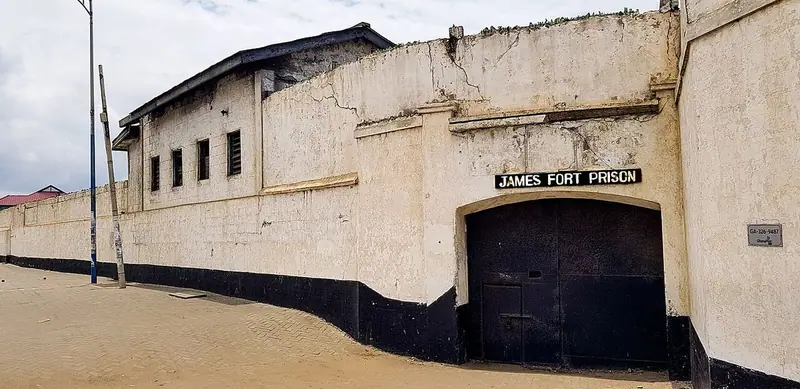
From the old forts and lighthouse of Jamestown, through the Ga fishing quarter, to the monuments of Ghana’s independence and Osu Castle.
 Greek7 stops · 5th century BCE
Acropolis of Athens audio guide
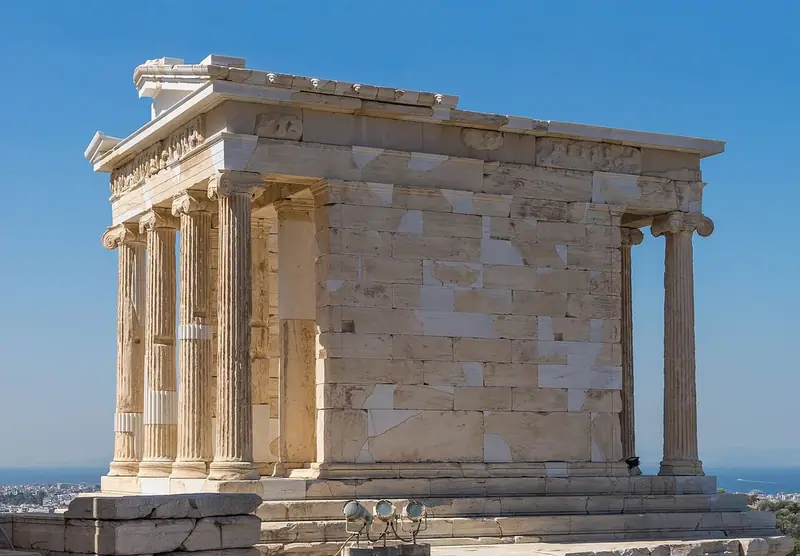
Climb through the Propylaia to the Parthenon and the Erechtheion, on the rock that has crowned Athens for three thousand years.
Every guide, in every country
Citadelle and Sans-Souci and every other guide we publish, including future ones. One payment, no subscription.