Before you start
Babylon stands beside the Euphrates near the modern city of Hillah, about 85 kilometres south of Baghdad. For much of two thousand years it was the greatest city of Mesopotamia, and its name still calls up Hammurabi’s laws, Nebuchadnezzar’s walls and gates, and the biblical stories of exile and of a tower reaching to heaven. UNESCO inscribed Babylon as a World Heritage Site in 2019. Not everything you see is ancient: from 1978 the Iraqi government rebuilt walls and buildings on top of the original remains, and in 2003 and 2004 coalition forces used the site as a military base, damaging pavements and reliefs. Today the excavated heart of the city is open to visitors, and conservation work continues. Check your government’s current travel advice before you plan a visit.
Use it as a self-guided tour of Babylon: 9 stops in visit order, each played when you’re ready, at your own pace.
 Free preview · Stop 1
The Ishtar Gate Replica
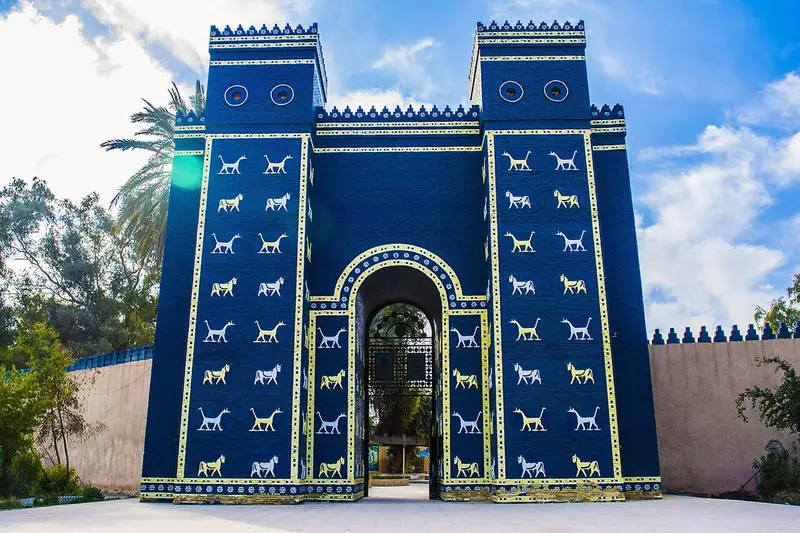
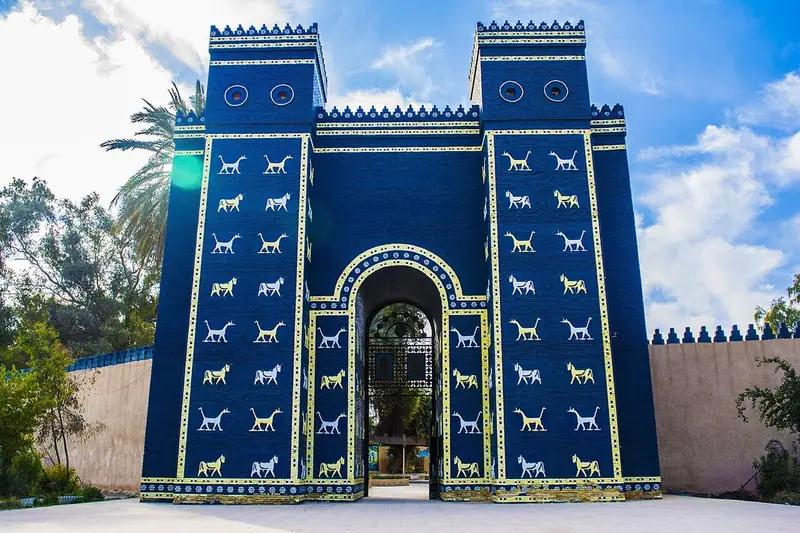
Begin at the entrance, where a replica of the Ishtar Gate greets visitors in bright blue. It was built in the 1960s, is smaller than the original and is not ancient, but it gives a sense of what travellers saw as they approached Babylon in the sixth century BCE. The real gate was built around 575 BCE by King Nebuchadnezzar II and was the most splendid of the eight gates of the inner city, dedicated to Ishtar, goddess of love and war. Its walls were faced with deep blue glazed bricks, set with rows of dragons for the god Marduk and bulls for the storm god Adad. German excavators shipped many of its glazed bricks to Berlin, where a reconstruction stands today in the Pergamon Museum. Notice the animals marching up the towers; you will meet them again in the ancient brickwork beyond.
Photo: Osama Sarm · CC BY-SA 4.0 · Wikimedia Commons
What to see at Babylon: 9 stops, in visit order
- 01
 The Ishtar Gate ReplicaA blue gate at the entranceFree preview
- 02
 The Greek TheatrePlays in a Mesopotamian cityIn the guide
- 03
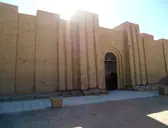 The Temple of NinmakhA shrine to the mother goddessIn the guide
- 04
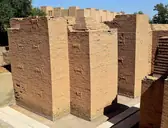 The Ishtar Gate FoundationsDragons and bulls in raw brickIn the guide
- 05
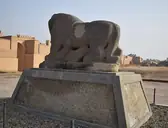 The Lion of BabylonA basalt beast over a fallen manIn the guide
- 06
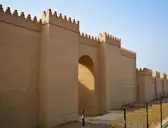 The Processional WayThe road of the New Year festivalIn the guide
- 07
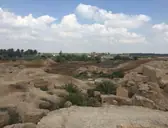 The Vaulted BuildingA riddle of the Hanging GardensIn the guide
- 08
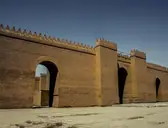 The Southern PalaceNebuchadnezzar’s halls and a modern nameIn the guide
- 09
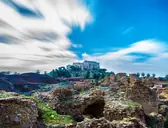 Saddam’s Palace HillA modern palace above the ruinsIn the guide
Site map of Babylon
History of Babylon
Babylon was a small town until the Amorite king Hammurabi, who reigned from about 1792 to 1750 BCE, made it the capital of an empire and set down his famous code of laws. Kassites, Assyrians and Elamites later ruled it in turn, and in 689 BCE the Assyrian king Sennacherib destroyed it. Rebuilt, it reached its height under Nabopolassar and his son Nebuchadnezzar II, who reigned from 605 to 562 BCE and raised most of the brick buildings uncovered here. Cyrus of Persia took the city in 539 BCE, and Alexander the Great entered it in 331 BCE and died here in 323 BCE. Afterwards Babylon slowly declined. A German team led by Robert Koldewey excavated it from 1899 to 1917.
Babylon guide: questions
How many stops does the Babylon guide have?
9 stops, in visit order: 1. The Ishtar Gate Replica; 2. The Greek Theatre; 3. The Temple of Ninmakh; 4. The Ishtar Gate Foundations; 5. The Lion of Babylon; 6. The Processional Way; 7. The Vaulted Building; 8. The Southern Palace; 9. Saddam’s Palace Hill.
Can I do a self-guided tour of Babylon with this guide?
Yes. The guide is made for a self-guided tour: 9 stops in visit order, each with a photo, a story and a voice, so you can explore Babylon at your own pace, without joining a group. Download it before you go and it works offline.
How long do you need at Babylon?
We suggest allowing half a day. The 9 stops add up to about 7 minutes of listening, and you play each one when you’re ready, so you can linger wherever you like.
How long is each guide?
The 9 stops add up to about 7 minutes of listening in total. You play each stop when you’re ready, so you can go at your own pace.
Does the guide work offline?
Yes, once it’s downloaded. The guide is a single self-contained web page (about 8.3 MB) with the photos, text and audio built in. Download it to your phone before you go (Wi-Fi is best); after that it opens in any modern browser on iPhone or Android, with no app, account or mobile signal needed.
Does it use GPS or need my location?
No. The guide doesn’t use GPS and doesn’t know where you are: you play each stop when you reach it. It works on iPhone and Android in any modern browser, and it’s in English.
What’s included?
One self-contained HTML guide: 9 stops in visit order, each with a photo, text and a voice, plus the story of who built the site.
Who built Babylon?
Babylon was a small town until the Amorite king Hammurabi, who reigned from about 1792 to 1750 BCE, made it the capital of an empire and set down his famous code of laws. Kassites, Assyrians and Elamites later ruled it in turn, and in 689 BCE the Assyrian king Sennacherib destroyed it.
Where is Babylon?
Babylon stands beside the Euphrates near the modern city of Hillah, about 85 kilometres south of Baghdad.
Is there a free audio guide to Babylon?
The first stop, The Ishtar Gate Replica, is free to read and hear on this page, so you can try the Babylon audio tour before you buy. The full guide, with all 9 stops, is a one-off purchase: download it once and it’s yours to keep, working offline.
Is the Babylon guide worth it?
If you’d like to know what you’re looking at, yes. For $10 you get 9 stops in visit order, each with a photo, a short history and a voice you play when you’re ready, plus a site map of the stops, and about 7 minutes of listening in all. It’s short on purpose, so you spend your time looking, not listening. It’s yours to keep, works offline and needs no app. The first stop is free on this page, so you can try it before you buy. If you’d like hours of detail, a guided tour will go deeper.
Audio guide or guided tour?
It depends how you like to visit. This guide lets you explore Babylon at your own pace, at any time, for a one-off price. A guided tour gives you a live expert you can ask questions, but at fixed times and usually for a higher price. Many people use both: a tour for the big picture, and the guide to read beforehand or to revisit the stops in their own time.
Is this the official Babylon guide?
No. It’s an independent guide by The Historian Guide, not affiliated with or endorsed by the operator of Babylon. For tickets and opening hours, check the official site operator before you go.
Does the guide include entry tickets or opening hours?
No. The guide is a digital companion only. Admission to Babylon is separate, so check the official site operator for current tickets and opening hours before you go.
- Stop 1 · The Ishtar Gate Replica (also the cover): Osama Sarm · CC BY-SA 4.0 · Wikimedia Commons · resized
- Stop 2 · The Greek Theatre: Osama Sarm · CC BY-SA 4.0 · Wikimedia Commons · resized
- Stop 3 · The Temple of Ninmakh: Osama Shukir Muhammed Amin FRCP(Glasg) · CC BY-SA 4.0 · Wikimedia Commons · resized
- Stop 4 · The Ishtar Gate Foundations: Osama Shukir Muhammed Amin FRCP(Glasg) · CC BY-SA 4.0 · Wikimedia Commons · resized
- Stop 5 · The Lion of Babylon: Hamody al-iraqi · CC BY-SA 4.0 · Wikimedia Commons · resized
- Stop 6 · The Processional Way: MohammadHuzam · CC BY-SA 4.0 · Wikimedia Commons · resized
- Stop 7 · The Vaulted Building: Al-Hamza Ahmad · CC BY-SA 4.0 · Wikimedia Commons · resized
- Stop 8 · The Southern Palace: Mohamm3dfadil · CC BY-SA 4.0 · Wikimedia Commons · resized
- Stop 9 · Saddam’s Palace Hill: Osama Sarm · CC BY-SA 4.0 · Wikimedia Commons · resized


All photographs from Wikimedia Commons under the licences shown.
More guides in Iraq
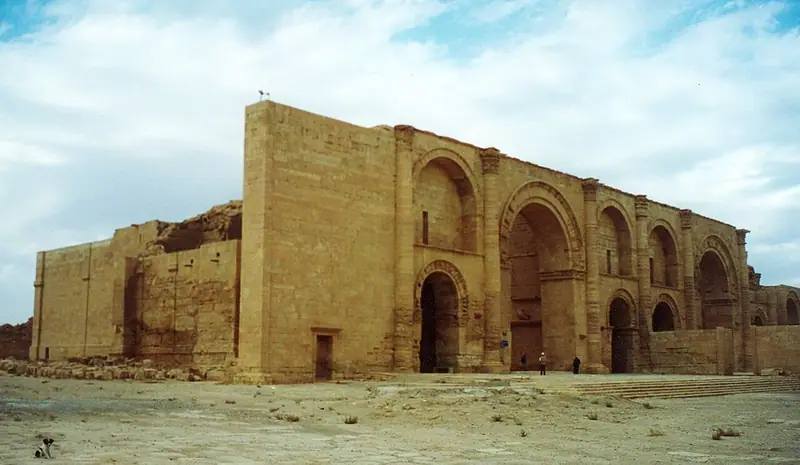 Parthian8 stops · 1st – 3rd century CE
Hatra audio guide
A round desert city that defied two Roman emperors: the Great Iwans, a Greek-style temple and carved faces, with the damage of 2015 and the city’s recovery since 2017.
 Abbasid8 stops · 836 – 892
Samarra Archaeological City audio guide
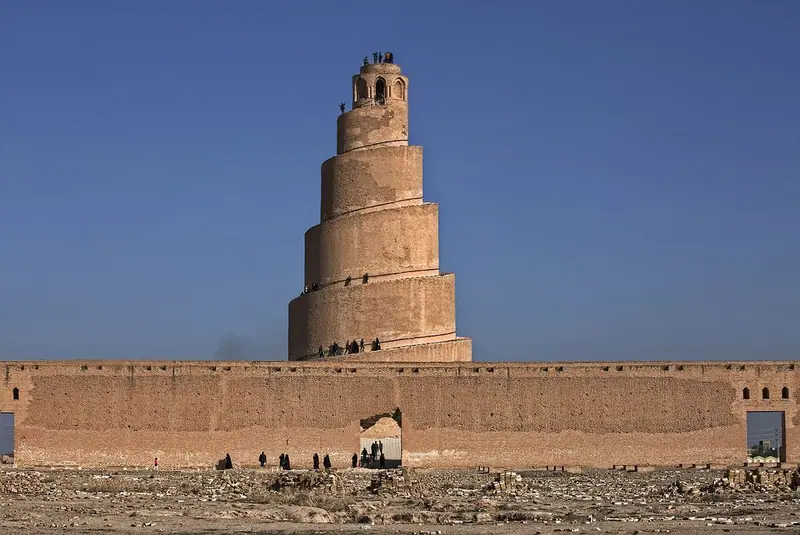
The Abbasid caliphs' capital on the Tigris: the spiral Malwiya minaret, the Great Mosque, Abu Dulaf, a caliph’s palace gate and the golden-domed al-Askari Shrine.
 Ancient Egyptian8 stops · 13th century BCE
Abu Simbel audio guide
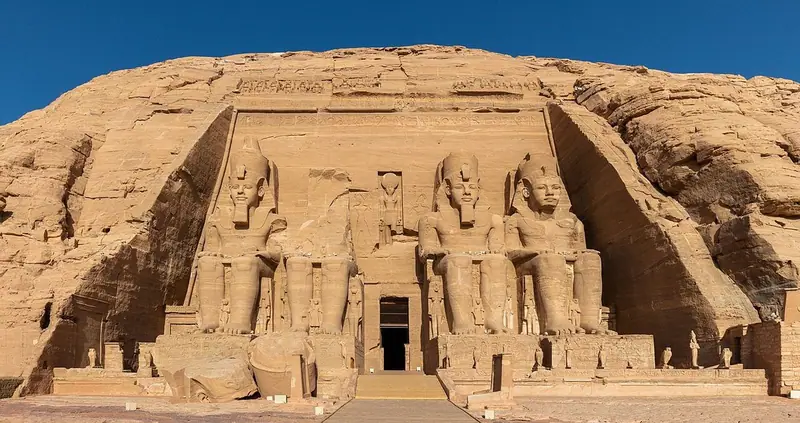
Ramesses II’s colossal temple façade, the Temple of Nefertari, and how both were rescued from the waters of Lake Nasser.
Every guide, in every country
Babylon and every other guide we publish, including future ones. One payment, no subscription.