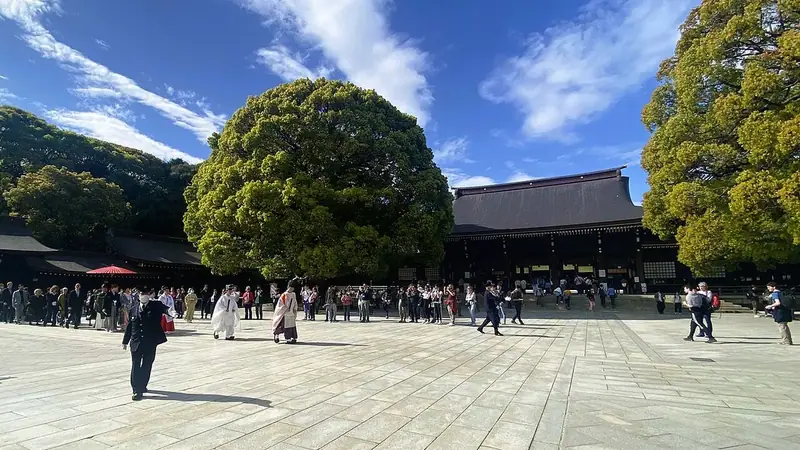
Before you start
Meiji Jingu is Tokyo’s great Shinto shrine, dedicated to the spirits of Emperor Meiji and Empress Shōken, who led Japan into the modern world. It stands in a forest of around seventy hectares, planted by hand a century ago, just a few steps from the crowds of Harajuku. This guide follows the gravel approach through the trees, past the offerings of sake and French wine, under the great wooden torii, into the empress’s garden and on to the shrine itself. Allow ninety minutes. The paths are level but long, and the gates open at sunrise and close at sunset.
Use it as a self-guided tour of Meiji Jingu: 7 stops in visit order, each played when you’re ready, at your own pace.
 Free preview · Stop 1
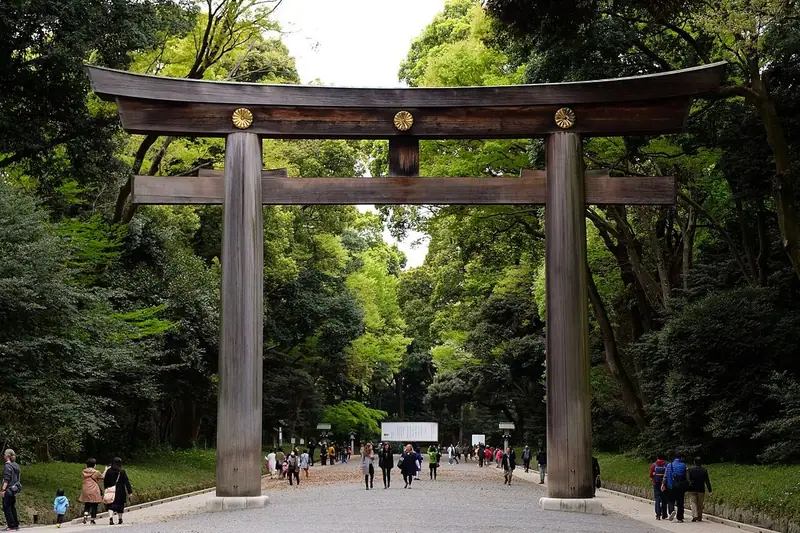
The Harajuku Entrance
Begin at the southern entrance, beside Harajuku station. Cross the small bridge, the Jingu Bashi, and pass under the first torii, the gateway that marks the beginning of sacred ground. It is polite to bow once before you walk through. Visitors are asked to keep to the sides of the path, because the centre is said to be the way of the gods. Behind you is one of the busiest districts in Tokyo, famous for its street fashion. Ahead, the noise falls away almost at once. The broad gravel path is the main approach to the shrine. The crunch of gravel underfoot is part of the experience. Near the entrance stands the Meiji Jingu Museum, opened in 2019 and designed by the architect Kengo Kuma. It displays treasures linked to the emperor and empress.
Photo: jessedyck · CC0 · Wikimedia Commons
What to see at Meiji Jingu: 7 stops, in visit order
- 01
 The Harajuku EntranceFrom the city into the forestFree preview
- 02
 The Eternal ForestA hundred thousand giftsIn the guide
- 03
 The Sake and Wine BarrelsOfferings from East and WestIn the guide
- 04
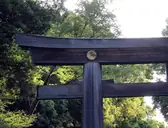 The ŌtoriiCypress from TaiwanIn the guide
- 05
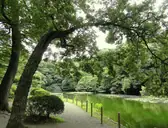 The Inner GardenA garden for an empressIn the guide
- 06
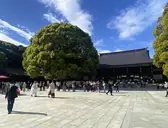 The Husband and Wife TreesPrayers for the futureIn the guide
- 07
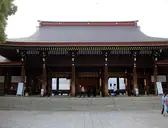 The Main ShrineWhere the spirits are honouredIn the guide
Site map of Meiji Jingu
History of Meiji Jingu
Emperor Meiji came to the throne as a boy in 1867. The next year the shogunate fell, and the imperial court moved from Kyoto to Edo, renamed Tokyo. During his reign Japan built railways, factories, an army and navy on Western lines and, in 1889, a constitution. His wife, Empress Shōken, championed women’s education and the Japanese Red Cross. When the emperor died in 1912, the nation resolved to honour him. A shrine was begun in 1915 on the site of a garden the couple had loved, and it was dedicated in 1920.
The full history continues in the guide.
Meiji Jingu guide: questions
How many stops does the Meiji Jingu guide have?
7 stops, in visit order: 1. The Harajuku Entrance; 2. The Eternal Forest; 3. The Sake and Wine Barrels; 4. The Ōtorii; 5. The Inner Garden; 6. The Husband and Wife Trees; 7. The Main Shrine.
Can I do a self-guided tour of Meiji Jingu with this guide?
Yes. The guide is made for a self-guided tour: 7 stops in visit order, each with a photo, a story and a voice, so you can explore Meiji Jingu at your own pace, without joining a group. Download it before you go and it works offline.
How long is each guide?
The 7 stops add up to about 5 minutes of listening in total. You play each stop when you’re ready, so you can go at your own pace.
Does the guide work offline?
Yes, once it’s downloaded. The guide is a single self-contained web page (about 7.1 MB) with the photos, text and audio built in. Download it to your phone before you go (Wi-Fi is best); after that it opens in any modern browser on iPhone or Android, with no app, account or mobile signal needed.
Does it use GPS or need my location?
No. The guide doesn’t use GPS and doesn’t know where you are: you play each stop when you reach it. It works on iPhone and Android in any modern browser, and it’s in English.
What’s included?
One self-contained HTML guide: 7 stops in visit order, each with a photo, text and a voice, plus the story of who built the site.
Who built Meiji Jingu?
Emperor Meiji came to the throne as a boy in 1867. The next year the shogunate fell, and the imperial court moved from Kyoto to Edo, renamed Tokyo.
Where is Meiji Jingu?
Meiji Jingu is Tokyo’s great Shinto shrine, dedicated to the spirits of Emperor Meiji and Empress Shōken, who led Japan into the modern world.
Is there a free audio guide to Meiji Jingu?
The first stop, The Harajuku Entrance, is free to read and hear on this page, so you can try the Meiji Jingu audio tour before you buy. The full guide, with all 7 stops, is a one-off purchase: download it once and it’s yours to keep, working offline.
Is the Meiji Jingu guide worth it?
If you’d like to know what you’re looking at, yes. For $10 you get 7 stops in visit order, each with a photo, a short history and a voice you play when you’re ready, plus a site map of the stops, and about 5 minutes of listening in all. It’s short on purpose, so you spend your time looking, not listening. It’s yours to keep, works offline and needs no app. The first stop is free on this page, so you can try it before you buy. If you’d like hours of detail, a guided tour will go deeper.
Audio guide or guided tour?
It depends how you like to visit. This guide lets you explore Meiji Jingu at your own pace, at any time, for a one-off price. A guided tour gives you a live expert you can ask questions, but at fixed times and usually for a higher price. Many people use both: a tour for the big picture, and the guide to read beforehand or to revisit the stops in their own time.
Is this the official Meiji Jingu guide?
No. It’s an independent guide by The Historian Guide, not affiliated with or endorsed by the operator of Meiji Jingu. For tickets and opening hours, check the official site operator before you go.
Does the guide include entry tickets or opening hours?
No. The guide is a digital companion only. Admission to Meiji Jingu is separate, so check the official site operator for current tickets and opening hours before you go.
- Stop 1 · The Harajuku Entrance: jessedyck · CC0 · Wikimedia Commons · resized
- Stop 2 · The Eternal Forest: Daderot · Public domain · Wikimedia Commons · resized
- Stop 3 · The Sake and Wine Barrels: Ilkka Simomaa · CC BY 4.0 · Wikimedia Commons · resized
- Stop 4 · The Ōtorii: Hyppolyte de Saint-Rambert · CC BY-SA 4.0 · Wikimedia Commons · resized
- Stop 5 · The Inner Garden: Daderot · Public domain · Wikimedia Commons · resized
- Stop 6 · The Husband and Wife Trees (also the cover): Akonnchiroll · CC BY-SA 4.0 · Wikimedia Commons · resized
- Stop 7 · The Main Shrine: Hyppolyte de Saint-Rambert · CC BY-SA 4.0 · Wikimedia Commons · resized


All photographs from Wikimedia Commons under the licences shown.
More guides in Japan
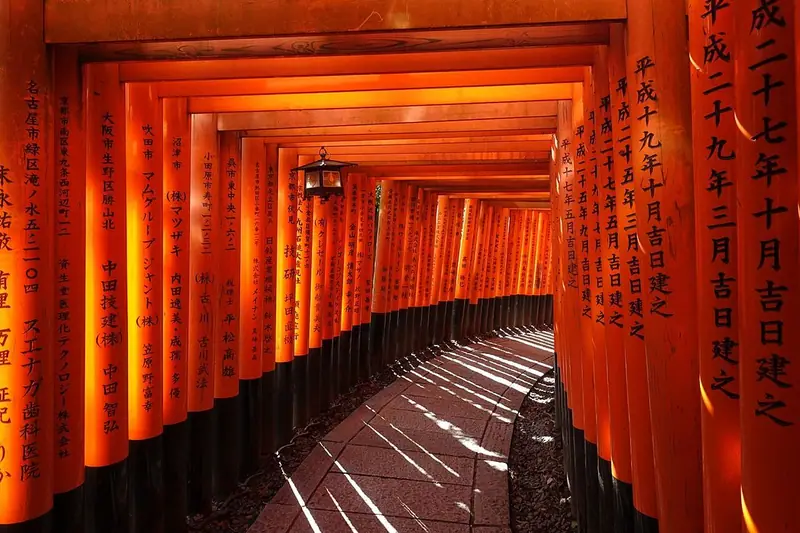 Shinto7 stops · founded 711; main hall 1499
Fushimi Inari Taisha audio guide
Pass through the Senbon Torii, the 'thousand gates', on the trail that winds up Mount Inari to the summit.
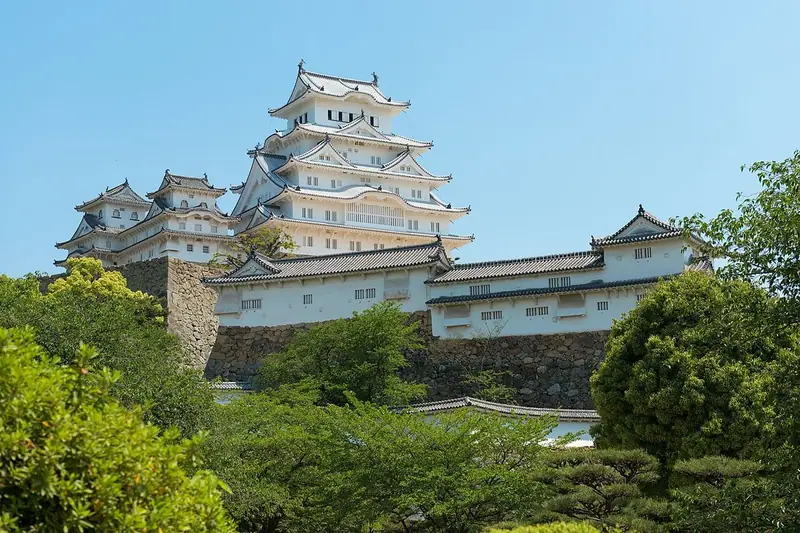 Edo7 stops · keep 1601–1609
Himeji Castle audio guide
Through the gates of the maze and the baileys to the main keep of Himeji, the great castle of the samurai lords.
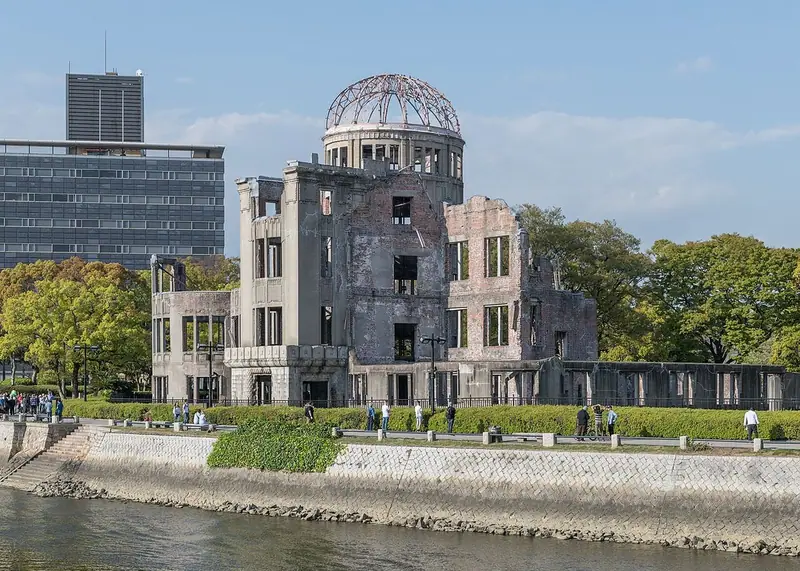 Shōwa Japan8 stops · Post-war Shōwa
Hiroshima Peace Memorial Park audio guide
The Peace Memorial Park, from the museum and the cenotaph to the Children’s Peace Monument and the Atomic Bomb Dome.
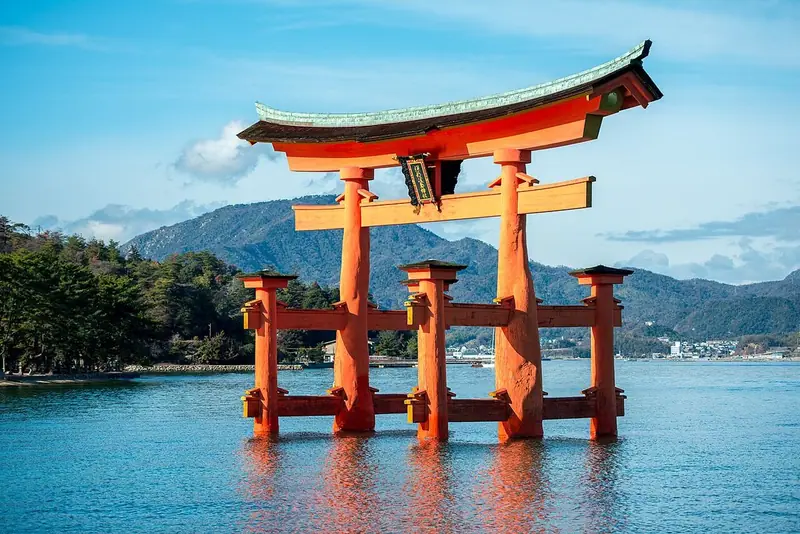 Heian7 stops · plan of 1168
Itsukushima Shrine audio guide
Past the Great Torii to the shrine’s corridors, stages and Noh stage on the shore of Miyajima.
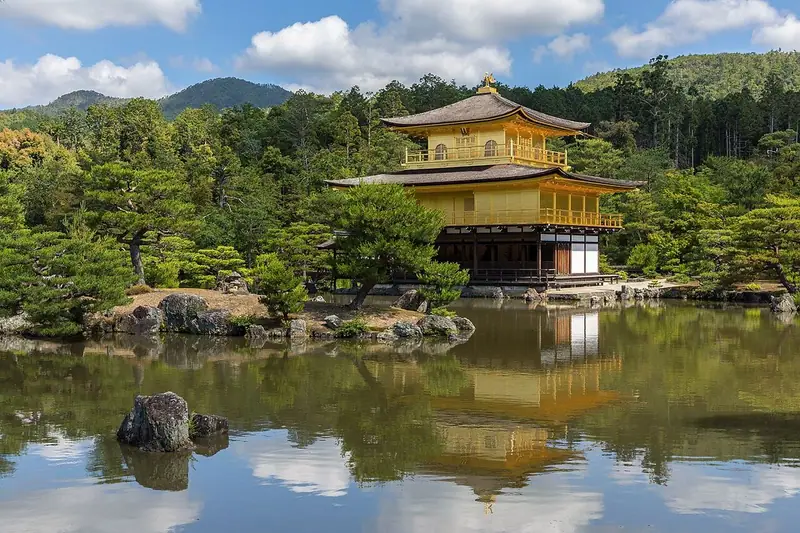 Muromachi7 stops · 1397 (rebuilt 1955)
Kinkaku-ji audio guide
The Golden Pavilion mirrored in its pond, then a garden path past the Ryumon Falls to an old teahouse.
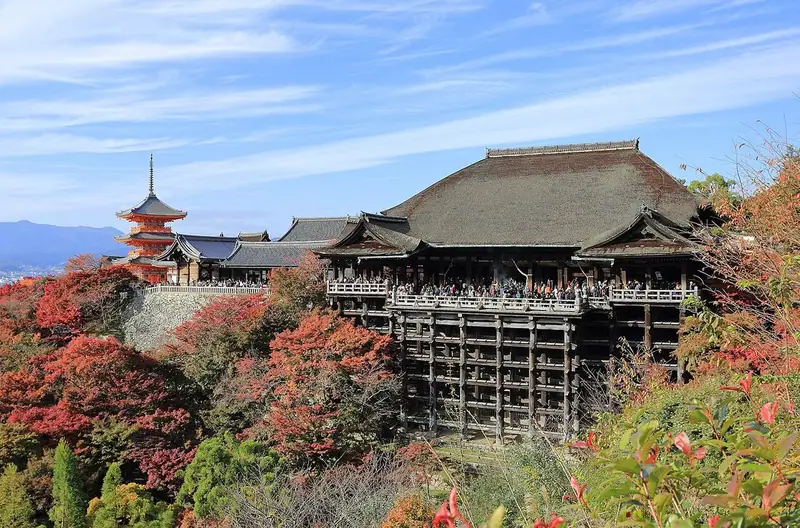 Japanese Buddhist7 stops · founded 778; main hall 1633
Kiyomizu-dera audio guide
Out onto the great wooden stage of the Main Hall, then down to the Otowa Waterfall below.
Every guide, in every country
Meiji Jingu and every other guide we publish, including future ones. One payment, no subscription.