Before you start
High in the forested mountains north of Tokyo, the town of Nikko is home to two Shinto shrines and a Buddhist temple that together hold some of the most richly decorated buildings in Japan. Among them is the mausoleum of Tokugawa Ieyasu, the warlord who united Japan and founded the shogunate that ruled the country for more than two and a half centuries. UNESCO inscribed the Shrines and Temples of Nikko as a World Heritage Site in 1999, praising their union of architecture and art with a sacred natural setting of mountains and cedar forest. This guide crosses the sacred bridge, climbs through the shrines and temples, and ends beside the river.
Use it as a self-guided tour of Nikko: 9 stops in visit order, each played when you’re ready, at your own pace.
 Free preview · Stop 1
The Sacred Bridge
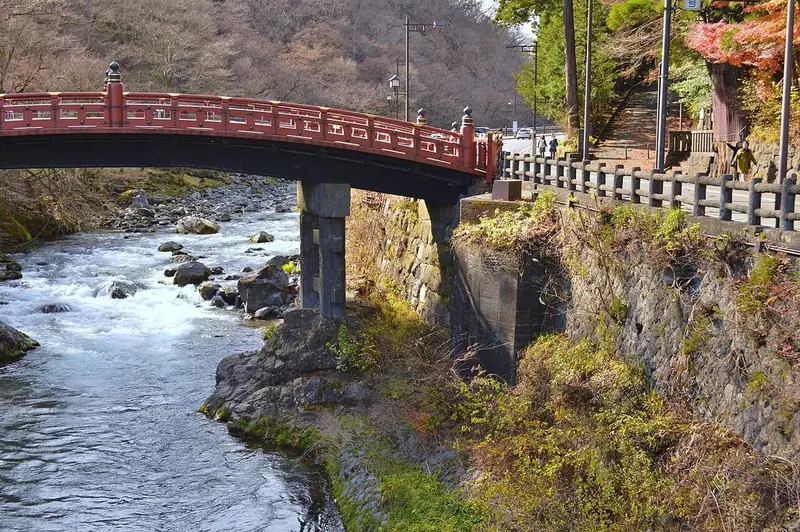
Begin at the Shinkyo, the Sacred Bridge, whose vermilion lacquered arch spans the rushing Daiya River at the entrance to the shrines. It belongs to Futarasan Shrine and is often counted among the three most beautiful bridges in Japan. According to legend, when the monk Shodo Shonin and his followers came here in 766, they could not cross the fast-flowing river. Shodo prayed, and a god appeared with two snakes, one red and one blue, coiled around his arm; he released them, and they turned into a bridge covered with sedge, on which the monks crossed. For that reason the bridge is sometimes called the Snake Bridge of Sedge. The bridge has been rebuilt many times but has kept the same design since 1636. For centuries only messengers of the imperial court could cross it, and it was opened to the public only in 1973.
Photo: Saigen Jiro · CC0 · Wikimedia Commons
What to see at Nikko: 9 stops, in visit order
- 01
 The Sacred BridgeThe snake bridgeFree preview
- 02
 Rinnoji and the SanbutsudoThree Buddhas for three mountainsIn the guide
- 03
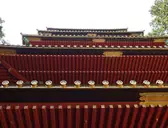 The Approach to ToshoguA pagoda among the cedarsIn the guide
- 04
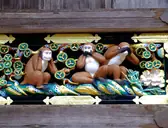 The Sacred StableSee no evilIn the guide
- 05
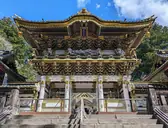 The Yomeimon GateA gate to gaze at until sunsetIn the guide
- 06
 The Sleeping Cat and Ieyasu’s TombPeace for the shogunIn the guide
- 07
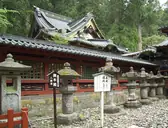 Futarasan ShrineThe gods of the mountainsIn the guide
- 08
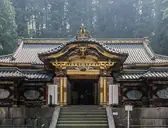 The TaiyuinA grandson’s homageIn the guide
- 09
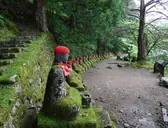 The Kanmangafuchi AbyssA row of silent statuesIn the guide
Site map of Nikko
History of Nikko
Nikko’s mountains were sacred long before any building stood here, worshipped as the homes of gods who sent water to the rice fields below. In 766 a Buddhist monk, Shodo Shonin, crossed the Daiya River and founded the first temple, and soon afterwards a shrine to the mountain gods; Nikko became a centre of mountain worship, where Shinto and Buddhism were long intertwined. In 1617, a year after the death of Tokugawa Ieyasu, his son Hidetada brought his remains here and built a shrine in which he was honoured as a god, Tosho Daigongen. Ieyasu’s grandson Iemitsu enlarged the shrine in the 1630s into the lavish complex you see today, and he was himself buried nearby. The cedar forest that frames the buildings was planted at the same time, and the shrines and temples have been faithfully restored, again and again, ever since.
Nikko guide: questions
How many stops does the Nikko guide have?
9 stops, in visit order: 1. The Sacred Bridge; 2. Rinnoji and the Sanbutsudo; 3. The Approach to Toshogu; 4. The Sacred Stable; 5. The Yomeimon Gate; 6. The Sleeping Cat and Ieyasu’s Tomb; 7. Futarasan Shrine; 8. The Taiyuin; 9. The Kanmangafuchi Abyss.
Can I do a self-guided tour of Nikko with this guide?
Yes. The guide is made for a self-guided tour: 9 stops in visit order, each with a photo, a story and a voice, so you can explore Nikko at your own pace, without joining a group. Download it before you go and it works offline.
How long do you need at Nikko?
We suggest allowing about half a day. The 9 stops add up to about 7 minutes of listening, and you play each one when you’re ready, so you can linger wherever you like.
How long is each guide?
The 9 stops add up to about 7 minutes of listening in total. You play each stop when you’re ready, so you can go at your own pace.
Does the guide work offline?
Yes, once it’s downloaded. The guide is a single self-contained web page (about 9.2 MB) with the photos, text and audio built in. Download it to your phone before you go (Wi-Fi is best); after that it opens in any modern browser on iPhone or Android, with no app, account or mobile signal needed.
Does it use GPS or need my location?
No. The guide doesn’t use GPS and doesn’t know where you are: you play each stop when you reach it. It works on iPhone and Android in any modern browser, and it’s in English.
What’s included?
One self-contained HTML guide: 9 stops in visit order, each with a photo, text and a voice, plus the story of who built the site.
Who built Nikko?
Nikko’s mountains were sacred long before any building stood here, worshipped as the homes of gods who sent water to the rice fields below. In 766 a Buddhist monk, Shodo Shonin, crossed the Daiya River and founded the first temple, and soon afterwards a shrine to the mountain gods; Nikko became a centre of mountain worship, where Shinto and Buddhism were long intertwined.
Where is Nikko?
High in the forested mountains north of Tokyo, the town of Nikko is home to two Shinto shrines and a Buddhist temple that together hold some of the most richly decorated buildings in Japan.
Is there a free audio guide to Nikko?
The first stop, The Sacred Bridge, is free to read and hear on this page, so you can try the Nikko audio tour before you buy. The full guide, with all 9 stops, is a one-off purchase: download it once and it’s yours to keep, working offline.
Is the Nikko guide worth it?
If you’d like to know what you’re looking at, yes. For $10 you get 9 stops in visit order, each with a photo, a short history and a voice you play when you’re ready, plus a site map of the stops, and about 7 minutes of listening in all. It’s short on purpose, so you spend your time looking, not listening. It’s yours to keep, works offline and needs no app. The first stop is free on this page, so you can try it before you buy. If you’d like hours of detail, a guided tour will go deeper.
Audio guide or guided tour?
It depends how you like to visit. This guide lets you explore Nikko at your own pace, at any time, for a one-off price. A guided tour gives you a live expert you can ask questions, but at fixed times and usually for a higher price. Many people use both: a tour for the big picture, and the guide to read beforehand or to revisit the stops in their own time.
Is this the official Nikko guide?
No. It’s an independent guide by The Historian Guide, not affiliated with or endorsed by the operator of Nikko. For tickets and opening hours, check the official site operator before you go.
Does the guide include entry tickets or opening hours?
No. The guide is a digital companion only. Admission to Nikko is separate, so check the official site operator for current tickets and opening hours before you go.
- Stop 1 · The Sacred Bridge: Saigen Jiro · CC0 · Wikimedia Commons · resized
- Stop 2 · Rinnoji and the Sanbutsudo: Fg2 · Public domain · Wikimedia Commons · resized
- Stop 3 · The Approach to Toshogu: Guilhem Vellut from Annecy, France · CC BY 2.0 · Wikimedia Commons · resized
- Stop 4 · The Sacred Stable: foooomio · CC BY 2.0 · Wikimedia Commons · resized
- Stop 5 · The Yomeimon Gate (also the cover): Jpatokal · CC BY-SA 4.0 · Wikimedia Commons · resized
- Stop 6 · The Sleeping Cat and Ieyasu’s Tomb: Jakub Hałun · CC BY-SA 4.0 · Wikimedia Commons · resized
- Stop 7 · Futarasan Shrine: No machine-readable author provided. Fg2 assumed (based on copyright claims). · Public domain · Wikimedia Commons · resized
- Stop 8 · The Taiyuin: DXR / Daniel Vorndran · CC BY-SA 3.0 · Wikimedia Commons · resized
- Stop 9 · The Kanmangafuchi Abyss: Miyuki Meinaka · CC BY-SA 4.0 · Wikimedia Commons · resized


All photographs from Wikimedia Commons under the licences shown.
More guides in Japan
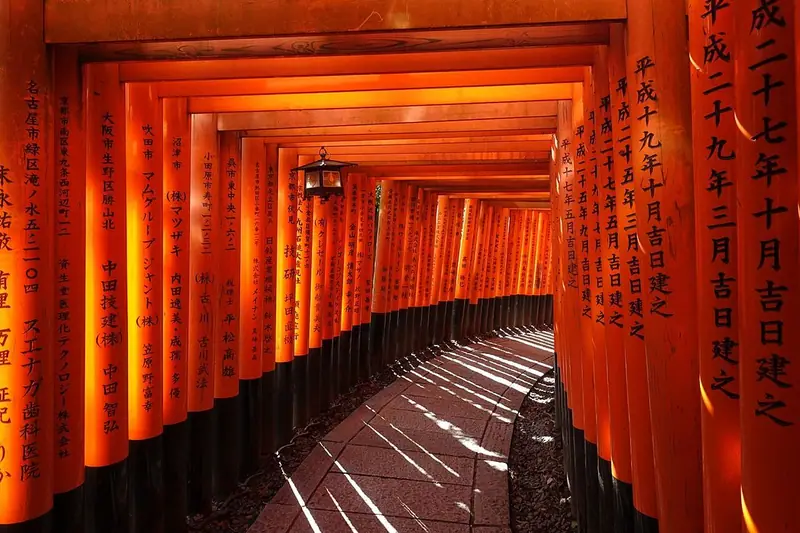 Shinto7 stops · founded 711; main hall 1499
Fushimi Inari Taisha audio guide
Pass through the Senbon Torii, the 'thousand gates', on the trail that winds up Mount Inari to the summit.
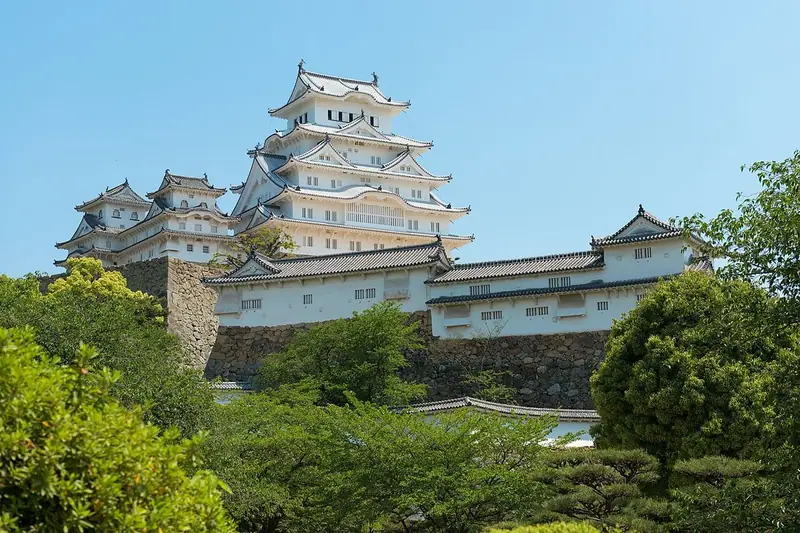 Edo7 stops · keep 1601–1609
Himeji Castle audio guide
Through the gates of the maze and the baileys to the main keep of Himeji, the great castle of the samurai lords.
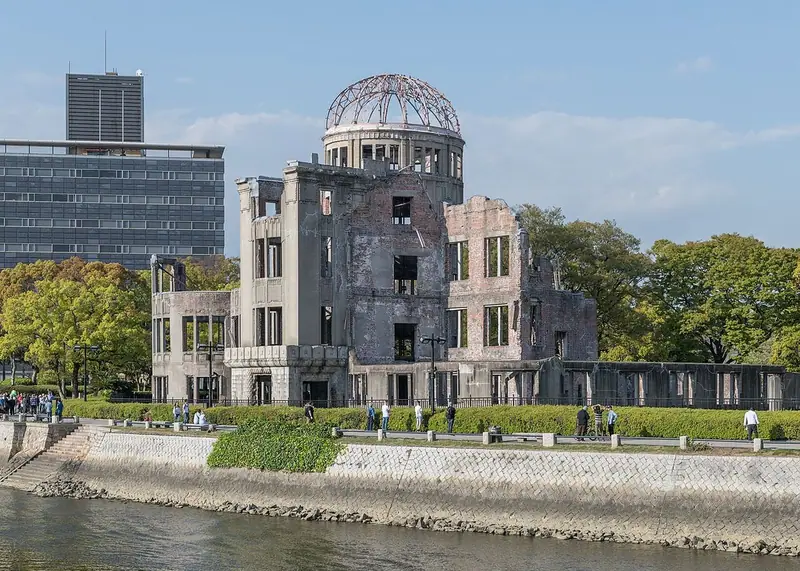 Shōwa Japan8 stops · Post-war Shōwa
Hiroshima Peace Memorial Park audio guide
The Peace Memorial Park, from the museum and the cenotaph to the Children’s Peace Monument and the Atomic Bomb Dome.
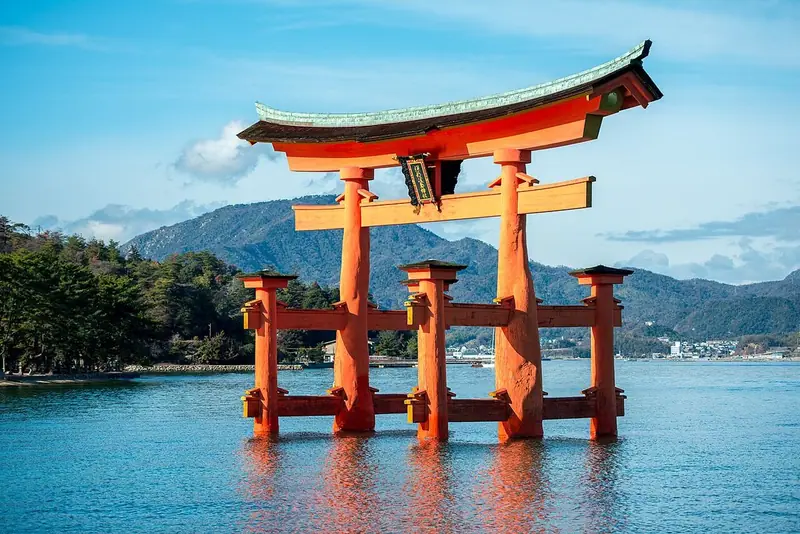 Heian7 stops · plan of 1168
Itsukushima Shrine audio guide
Past the Great Torii to the shrine’s corridors, stages and Noh stage on the shore of Miyajima.
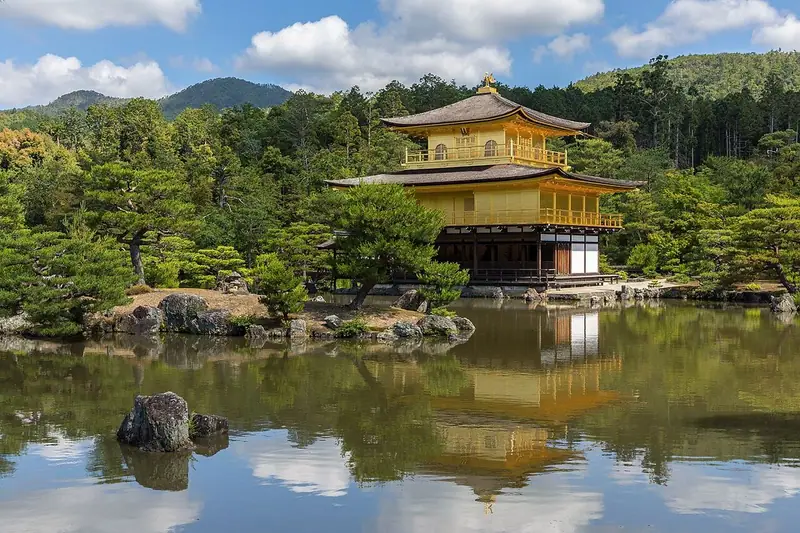 Muromachi7 stops · 1397 (rebuilt 1955)
Kinkaku-ji audio guide
The Golden Pavilion mirrored in its pond, then a garden path past the Ryumon Falls to an old teahouse.
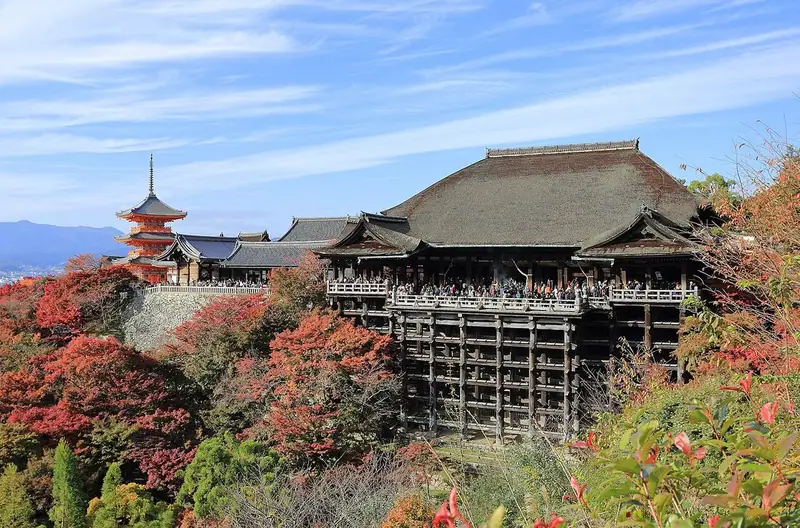 Japanese Buddhist7 stops · founded 778; main hall 1633
Kiyomizu-dera audio guide
Out onto the great wooden stage of the Main Hall, then down to the Otowa Waterfall below.
Every guide, in every country
Nikko and every other guide we publish, including future ones. One payment, no subscription.