Before you start
Senso-ji stands in Asakusa, in Tokyo’s Taito ward, a short walk from Asakusa Station on the Ginza and Asakusa subway lines and from the Sumida River. It is Tokyo’s oldest temple and one of the busiest religious sites anywhere: the temple itself says it welcomes around thirty million visitors a year. It is a working Buddhist temple dedicated to Kannon, the bodhisattva of compassion, so you will be walking among people who have come to pray. The grounds are open air, flat and paved, and easy to walk, though Nakamise-dori becomes very crowded from mid-morning. The route enters through the Thunder Gate, follows the shopping street to the Treasure House Gate, visits the pagoda and the Main Hall, then turns east to Asakusa Shrine and leaves through the old Niten-mon Gate.
Use it as a self-guided tour of Senso-ji: 7 stops in visit order, each played when you’re ready, at your own pace.
 Free preview · Stop 1
Kaminarimon
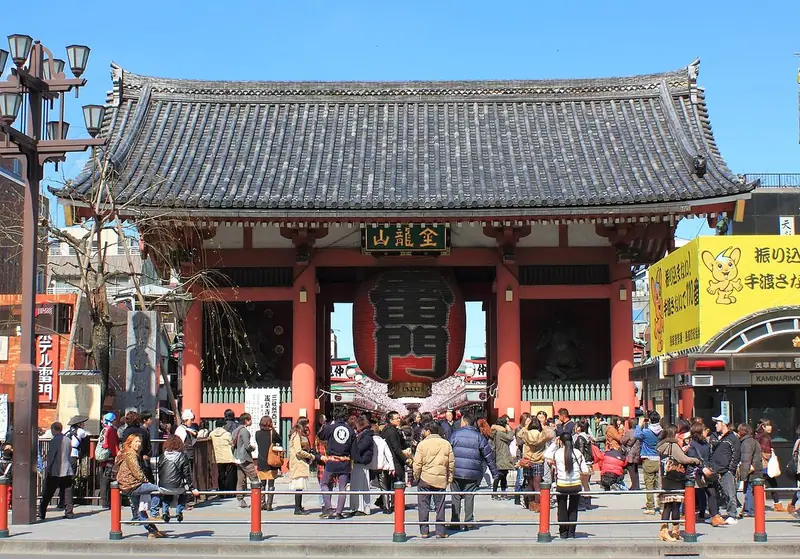
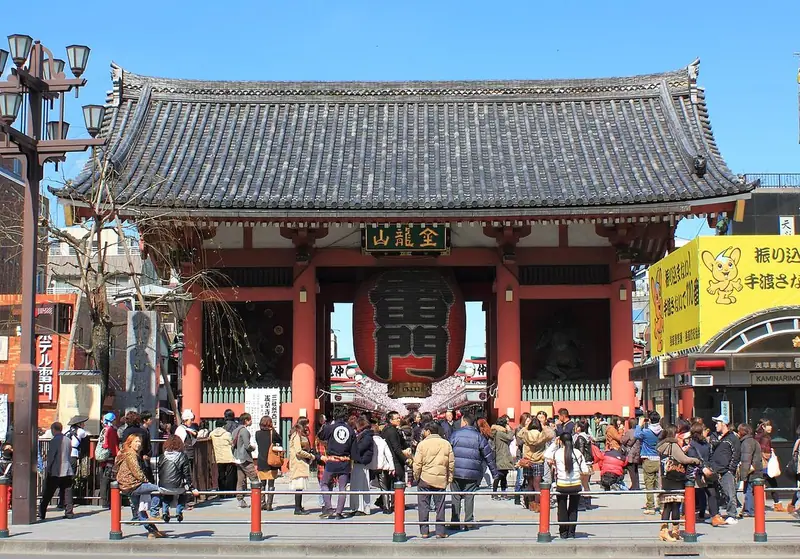
Begin at the Kaminarimon, the outer gate and the symbol of Asakusa. A gate was first built here, according to the temple, by the military commander Taira no Kinmasa in 942. The present gate dates from 1960: after a fire in 1865 destroyed its predecessor, it stood empty for ninety-five years until Konosuke Matsushita, founder of the company now called Panasonic, paid for its rebuilding. Beneath it hangs the famous red-and-black paper lantern, just under four metres tall and weighing about 700 kilograms, painted with the characters for ‘Thunder Gate’. Look into the front alcoves: on the right sits Fujin, god of wind, with his bag of air, and on the left Raijin, god of thunder, ringed by drums. Their job is to protect the temple from storms and fire. Walk through and look back at the two further statues, Tenryu and Kinryu, on the reverse.
Photo: Kakidai · CC BY-SA 3.0 · Wikimedia Commons
What to see at Senso-ji: 7 stops, in visit order
- 01
 KaminarimonThe Thunder GateFree preview
- 02
 Nakamise-doriShops on the temple approachIn the guide
- 03
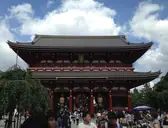 HozomonThe Treasure House GateIn the guide
- 04
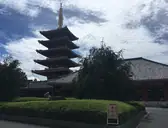 Five-Storey PagodaA relic of the BuddhaIn the guide
- 05
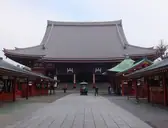 Main HallThe hall of KannonIn the guide
- 06
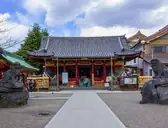 Asakusa ShrineThe shrine of the three foundersIn the guide
- 07
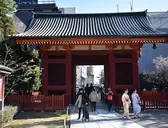 Niten-mon GateAn Edo-period survivorIn the guide
Site map of Senso-ji
History of Senso-ji
Senso-ji was founded by Japanese Buddhists and has been rebuilt again and again by the people of Edo, which became Tokyo. According to the temple’s own account, two brothers fishing in the Sumida River in 628 netted a small statue of Kannon; the village headman, Haji no Nakatomo, turned his house into a temple, and in 645 a priest named Shokai built a hall and decreed that the statue should never be shown. Buddhism had reached Japan from the Korean kingdom of Baekje in the sixth century and has been practised there ever since, so the tradition that built Senso-ji runs unbroken from the Asuka period to today. The temple’s greatest patrons were the Tokugawa shoguns, who ruled from Edo between 1603 and 1868; Tokugawa Ieyasu made it the shogunate’s place of prayer in 1590, and his grandson Iemitsu rebuilt the main buildings in the 1640s.
The full history continues in the guide.
Senso-ji guide: questions
How many stops does the Senso-ji guide have?
7 stops, in visit order: 1. Kaminarimon; 2. Nakamise-dori; 3. Hozomon; 4. Five-Storey Pagoda; 5. Main Hall; 6. Asakusa Shrine; 7. Niten-mon Gate.
Can I do a self-guided tour of Senso-ji with this guide?
Yes. The guide is made for a self-guided tour: 7 stops in visit order, each with a photo, a story and a voice, so you can explore Senso-ji at your own pace, without joining a group. Download it before you go and it works offline.
How long is each guide?
The 7 stops add up to about 5 minutes of listening in total. You play each stop when you’re ready, so you can go at your own pace.
Does the guide work offline?
Yes, once it’s downloaded. The guide is a single self-contained web page (about 7.0 MB) with the photos, text and audio built in. Download it to your phone before you go (Wi-Fi is best); after that it opens in any modern browser on iPhone or Android, with no app, account or mobile signal needed.
Does it use GPS or need my location?
No. The guide doesn’t use GPS and doesn’t know where you are: you play each stop when you reach it. It works on iPhone and Android in any modern browser, and it’s in English.
What’s included?
One self-contained HTML guide: 7 stops in visit order, each with a photo, text and a voice, plus the story of who built the site.
Who built Senso-ji?
Senso-ji was founded by Japanese Buddhists and has been rebuilt again and again by the people of Edo, which became Tokyo. According to the temple’s own account, two brothers fishing in the Sumida River in 628 netted a small statue of Kannon; the village headman, Haji no Nakatomo, turned his house into a temple, and in 645 a priest named Shokai built a hall and decreed that the statue should never be shown.
Where is Senso-ji?
Senso-ji stands in Asakusa, in Tokyo’s Taito ward, a short walk from Asakusa Station on the Ginza and Asakusa subway lines and from the Sumida River.
Is there a free audio guide to Senso-ji?
The first stop, Kaminarimon, is free to read and hear on this page, so you can try the Senso-ji audio tour before you buy. The full guide, with all 7 stops, is a one-off purchase: download it once and it’s yours to keep, working offline.
Is the Senso-ji guide worth it?
If you’d like to know what you’re looking at, yes. For $10 you get 7 stops in visit order, each with a photo, a short history and a voice you play when you’re ready, plus a site map of the stops, and about 5 minutes of listening in all. It’s short on purpose, so you spend your time looking, not listening. It’s yours to keep, works offline and needs no app. The first stop is free on this page, so you can try it before you buy. If you’d like hours of detail, a guided tour will go deeper.
Audio guide or guided tour?
It depends how you like to visit. This guide lets you explore Senso-ji at your own pace, at any time, for a one-off price. A guided tour gives you a live expert you can ask questions, but at fixed times and usually for a higher price. Many people use both: a tour for the big picture, and the guide to read beforehand or to revisit the stops in their own time.
Is this the official Senso-ji guide?
No. It’s an independent guide by The Historian Guide, not affiliated with or endorsed by the operator of Senso-ji. For tickets and opening hours, check the official site operator before you go.
Does the guide include entry tickets or opening hours?
No. The guide is a digital companion only. Admission to Senso-ji is separate, so check the official site operator for current tickets and opening hours before you go.
- Stop 1 · Kaminarimon (also the cover): Kakidai · CC BY-SA 3.0 · Wikimedia Commons · resized
- Stop 2 · Nakamise-dori: Asturio Cantabrio · CC BY-SA 4.0 · Wikimedia Commons · resized
- Stop 3 · Hozomon: そらみみ (Soramimi) · CC BY-SA 4.0 · Wikimedia Commons · resized
- Stop 4 · Five-Storey Pagoda: Christophe95 · CC BY-SA 4.0 · Wikimedia Commons · resized
- Stop 5 · Main Hall: Tak1701d · CC BY-SA 3.0 · Wikimedia Commons · resized
- Stop 6 · Asakusa Shrine: Kakidai · CC BY-SA 3.0 · Wikimedia Commons · resized
- Stop 7 · Niten-mon Gate: 江戸村のとくぞう · CC BY-SA 4.0 · Wikimedia Commons · resized


All photographs from Wikimedia Commons under the licences shown.
More guides in Japan
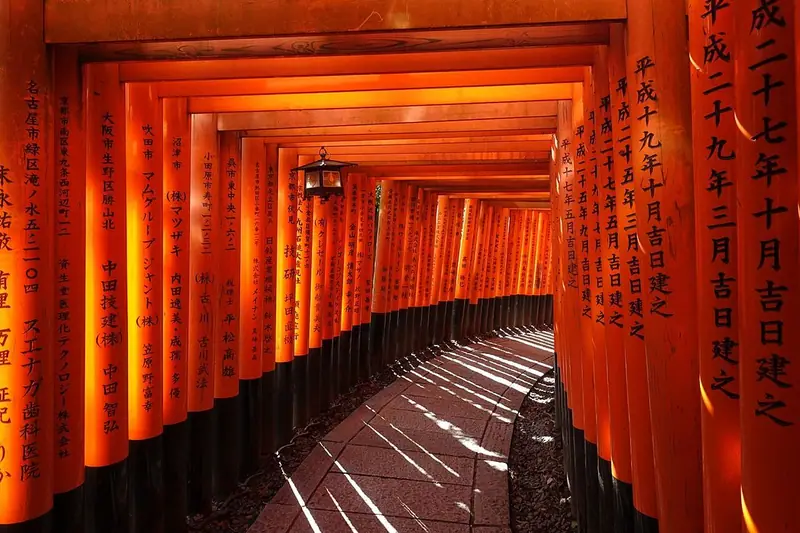 Shinto7 stops · founded 711; main hall 1499
Fushimi Inari Taisha audio guide
Pass through the Senbon Torii, the 'thousand gates', on the trail that winds up Mount Inari to the summit.
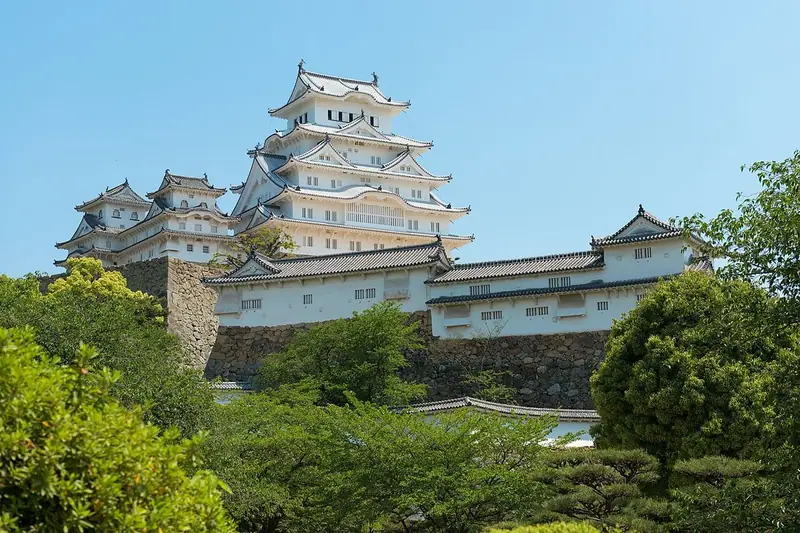 Edo7 stops · keep 1601–1609
Himeji Castle audio guide
Through the gates of the maze and the baileys to the main keep of Himeji, the great castle of the samurai lords.
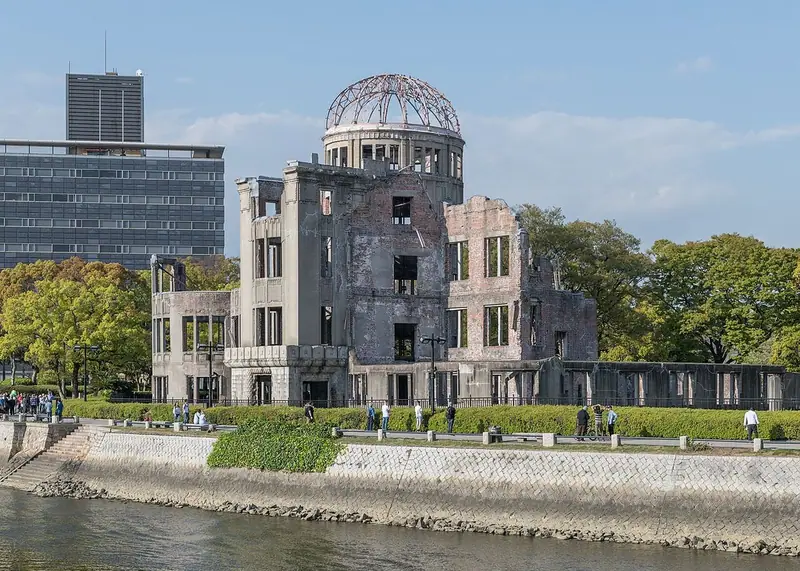 Shōwa Japan8 stops · Post-war Shōwa
Hiroshima Peace Memorial Park audio guide
The Peace Memorial Park, from the museum and the cenotaph to the Children’s Peace Monument and the Atomic Bomb Dome.
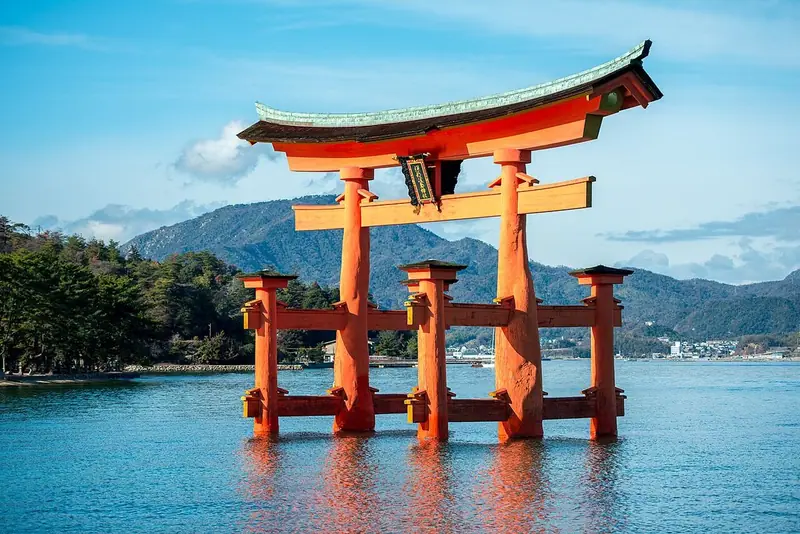 Heian7 stops · plan of 1168
Itsukushima Shrine audio guide
Past the Great Torii to the shrine’s corridors, stages and Noh stage on the shore of Miyajima.
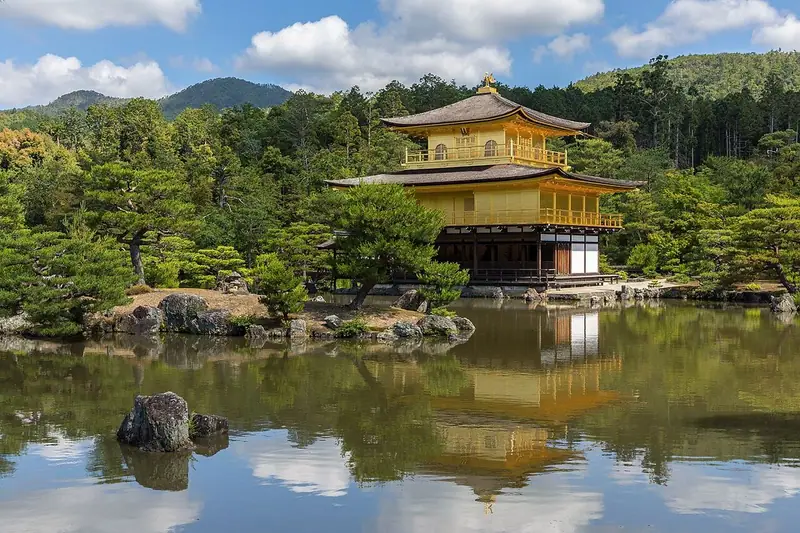 Muromachi7 stops · 1397 (rebuilt 1955)
Kinkaku-ji audio guide
The Golden Pavilion mirrored in its pond, then a garden path past the Ryumon Falls to an old teahouse.
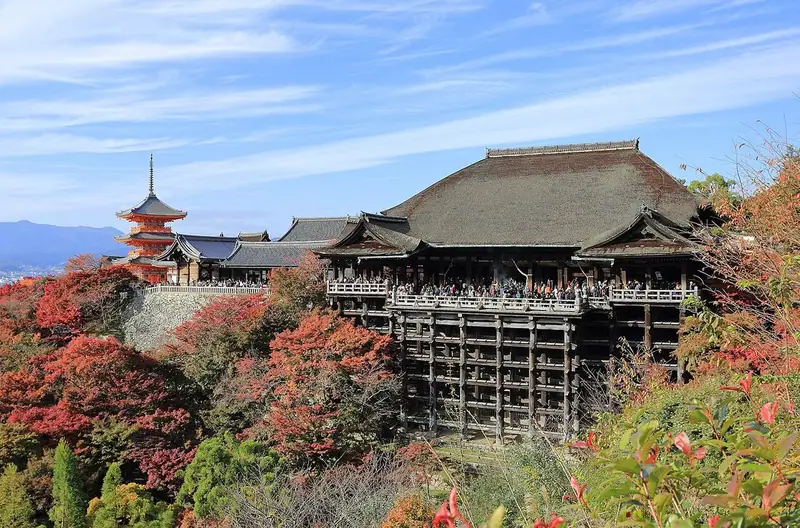 Japanese Buddhist7 stops · founded 778; main hall 1633
Kiyomizu-dera audio guide
Out onto the great wooden stage of the Main Hall, then down to the Otowa Waterfall below.
Every guide, in every country
Senso-ji and every other guide we publish, including future ones. One payment, no subscription.