Before you start
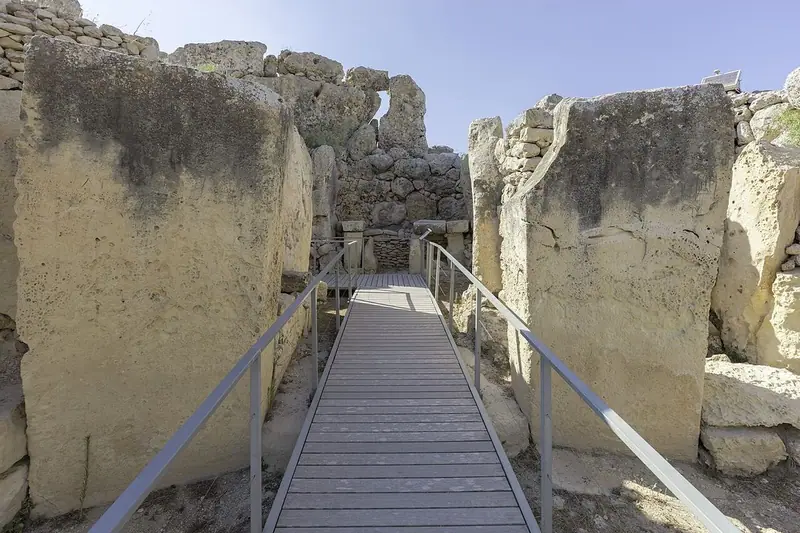
On the edge of the Xagħra plateau, on the island of Gozo, stand the Ġgantija temples, the oldest of the Megalithic Temples of Malta, and among the oldest free-standing stone buildings in the world. They were built around 3600 BCE, more than a thousand years before the great pyramids of Egypt, and they are part of a World Heritage Site. Their name means the place of giants, for local legend held that only giants could have raised such enormous stones. This guide begins in the interpretation centre, continues through the heritage park to the two temples, and ends at a historic windmill in the village nearby. The site is exposed, with little shade, so bring water and a hat in summer.
Use it as a self-guided tour of the Ġgantija Temples: 7 stops in visit order, each played when you’re ready, at your own pace.
 Free preview · Stop 1
The Interpretation Centre
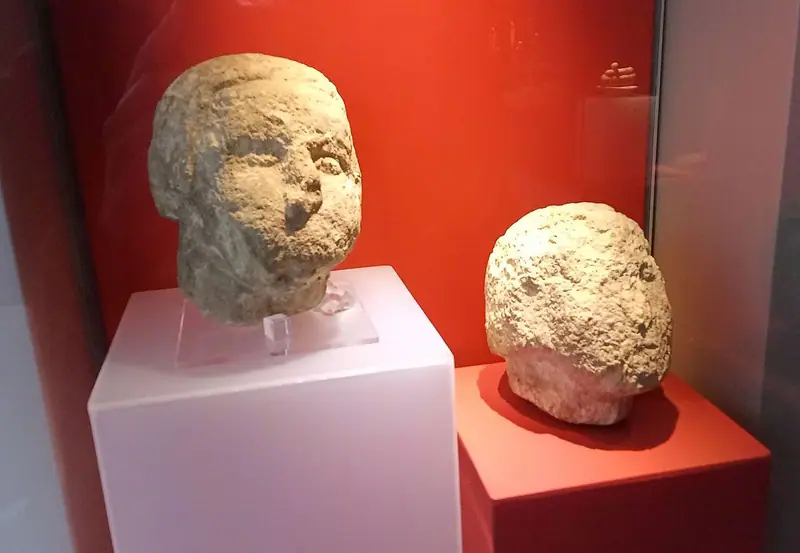
Begin in the interpretation centre, at the entrance to the site, which introduces the people who built the temples of Gozo and Malta, and the world they lived in. Look at the objects found at Ġgantija and in the surrounding area, including tools of flint and stone, pottery and animal bones. Find the two carved stone heads, found at the back of one of the rooms of the southern temple. Look at the faces, worn by time, and imagine the people who carved them more than five thousand years ago. No one knows whom they represent: a god, an ancestor, or perhaps a priest. Notice the displays on the farming life of the Neolithic Gozitans, who grew wheat and barley and kept sheep, goats, pigs and cattle, and who found time and strength to build these great monuments.
Photo: A.-K. D. · CC BY-SA 4.0 · Wikimedia Commons
What to see at the Ġgantija Temples: 7 stops, in visit order
- 01
 The Interpretation CentreFaces from the PastFree preview
- 02
 The Xagħra CircleThe AncestorsIn the guide
- 03
 The Heritage ParkApproaching the TemplesIn the guide
- 04
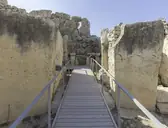 The Southern TempleThe EntranceIn the guide
- 05
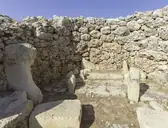 The Inner ChambersAltars and ApsesIn the guide
- 06
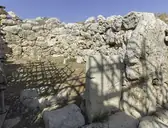 The Northern TempleThe Younger TempleIn the guide
- 07
 Ta’ Kola WindmillXagħra VillageIn the guide
Site map of the Ġgantija Temples
History of the Ġgantija Temples
The temples were built by the farming communities of Gozo in the Neolithic period, the later Stone Age, without metal tools or the wheel. The southern temple is the older and larger of the two, built around 3600 BCE; the northern temple was added later, and a third was begun but never finished. The temples were used for many centuries, until the end of the temple period around 2500 BCE. The site was cleared of debris in 1827, without proper recording, but a plan drawn in the eighteenth century and paintings made just before the clearance help archaeologists understand it. Walkways were laid through the temples in 2011, and a heritage park opened in 2013.
Ġgantija Temples guide: questions
How many stops does the Ġgantija Temples guide have?
7 stops, in visit order: 1. The Interpretation Centre; 2. The Xagħra Circle; 3. The Heritage Park; 4. The Southern Temple; 5. The Inner Chambers; 6. The Northern Temple; 7. Ta’ Kola Windmill.
Can I do a self-guided tour of the Ġgantija Temples with this guide?
Yes. The guide is made for a self-guided tour: 7 stops in visit order, each with a photo, a story and a voice, so you can explore the Ġgantija Temples at your own pace, without joining a group. Download it before you go and it works offline.
How long is each guide?
The 7 stops add up to about 5 minutes of listening in total. You play each stop when you’re ready, so you can go at your own pace.
Does the guide work offline?
Yes, once it’s downloaded. The guide is a single self-contained web page (about 6.0 MB) with the photos, text and audio built in. Download it to your phone before you go (Wi-Fi is best); after that it opens in any modern browser on iPhone or Android, with no app, account or mobile signal needed.
Does it use GPS or need my location?
No. The guide doesn’t use GPS and doesn’t know where you are: you play each stop when you reach it. It works on iPhone and Android in any modern browser, and it’s in English.
What’s included?
One self-contained HTML guide: 7 stops in visit order, each with a photo, text and a voice, plus the story of who built the site.
Who built the Ġgantija Temples?
The temples were built by the farming communities of Gozo in the Neolithic period, the later Stone Age, without metal tools or the wheel. The southern temple is the older and larger of the two, built around 3600 BCE; the northern temple was added later, and a third was begun but never finished.
Where is the Ġgantija Temples?
On the edge of the Xagħra plateau, on the island of Gozo, stand the Ġgantija temples, the oldest of the Megalithic Temples of Malta, and among the oldest free-standing stone buildings in the world.
Is there a free audio guide to the Ġgantija Temples?
The first stop, The Interpretation Centre, is free to read and hear on this page, so you can try the Ġgantija Temples audio tour before you buy. The full guide, with all 7 stops, is a one-off purchase: download it once and it’s yours to keep, working offline.
Is the Ġgantija Temples guide worth it?
If you’d like to know what you’re looking at, yes. For $10 you get 7 stops in visit order, each with a photo, a short history and a voice you play when you’re ready, plus a site map of the stops, and about 5 minutes of listening in all. It’s short on purpose, so you spend your time looking, not listening. It’s yours to keep, works offline and needs no app. The first stop is free on this page, so you can try it before you buy. If you’d like hours of detail, a guided tour will go deeper.
Audio guide or guided tour?
It depends how you like to visit. This guide lets you explore the Ġgantija Temples at your own pace, at any time, for a one-off price. A guided tour gives you a live expert you can ask questions, but at fixed times and usually for a higher price. Many people use both: a tour for the big picture, and the guide to read beforehand or to revisit the stops in their own time.
Is this the official Ġgantija Temples guide?
No. It’s an independent guide by The Historian Guide, not affiliated with or endorsed by the operator of the Ġgantija Temples. For tickets and opening hours, check the official site operator before you go.
Does the guide include entry tickets or opening hours?
No. The guide is a digital companion only. Admission to the Ġgantija Temples is separate, so check the official site operator for current tickets and opening hours before you go.
- Stop 1 · The Interpretation Centre: A.-K. D. · CC BY-SA 4.0 · Wikimedia Commons · resized
- Stop 2 · The Xagħra Circle: Simon Burchell · CC BY-SA 4.0 · Wikimedia Commons · resized
- Stop 3 · The Heritage Park: Diego Delso · CC BY-SA 4.0 · Wikimedia Commons · resized
- Stop 4 · The Southern Temple (also the cover): Diego Delso · CC BY-SA 4.0 · Wikimedia Commons · resized
- Stop 5 · The Inner Chambers: Diego Delso · CC BY-SA 4.0 · Wikimedia Commons · resized
- Stop 6 · The Northern Temple: Diego Delso · CC BY-SA 4.0 · Wikimedia Commons · resized
- Stop 7 · Ta’ Kola Windmill: Tranceliner · CC BY-SA 4.0 · Wikimedia Commons · resized


All photographs from Wikimedia Commons under the licences shown.
More guides in Malta
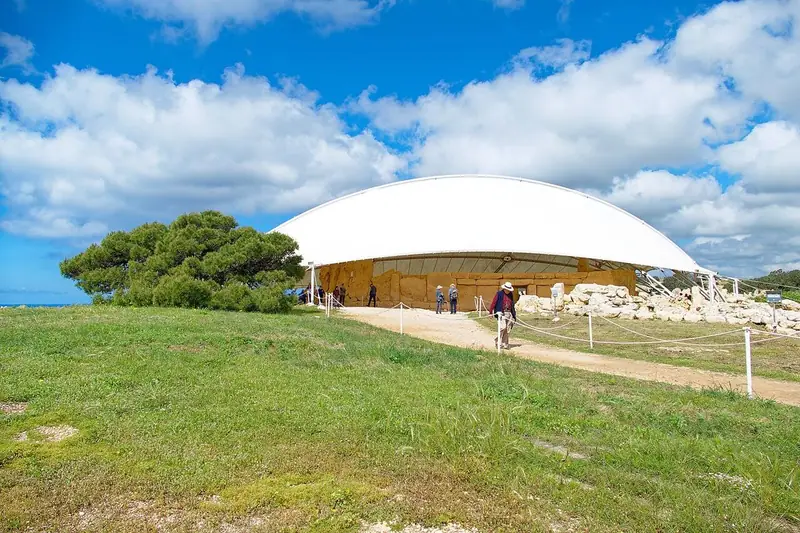 Maltese Temple8 stops · c. 3600–2500 BCE
Ħaġar Qim and Mnajdra audio guide
On a clifftop above the sea, two of the oldest buildings on Earth: the megalithic temples of Ħaġar Qim and Mnajdra.
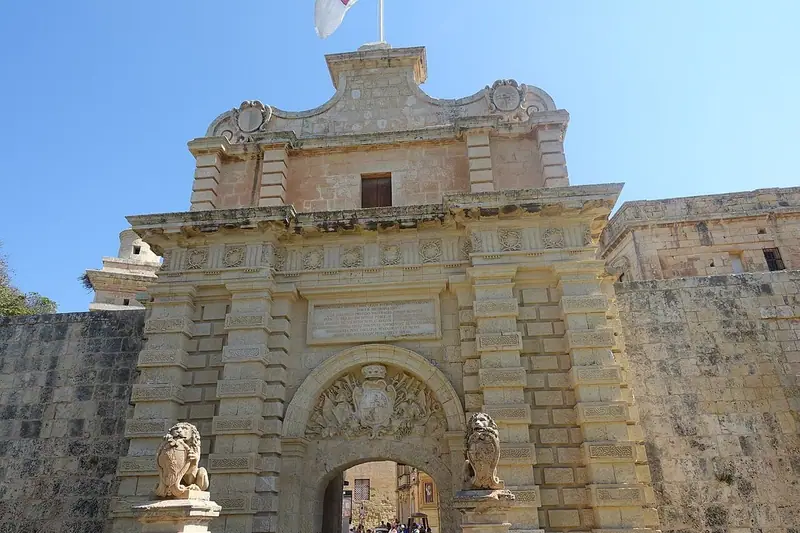 Medieval8 stops · 8th century BCE – 18th century CE
Mdina audio guide
Pass through the main gate of the Silent City, Malta’s old walled capital, to its palaces, cathedral and bastions above the fields.
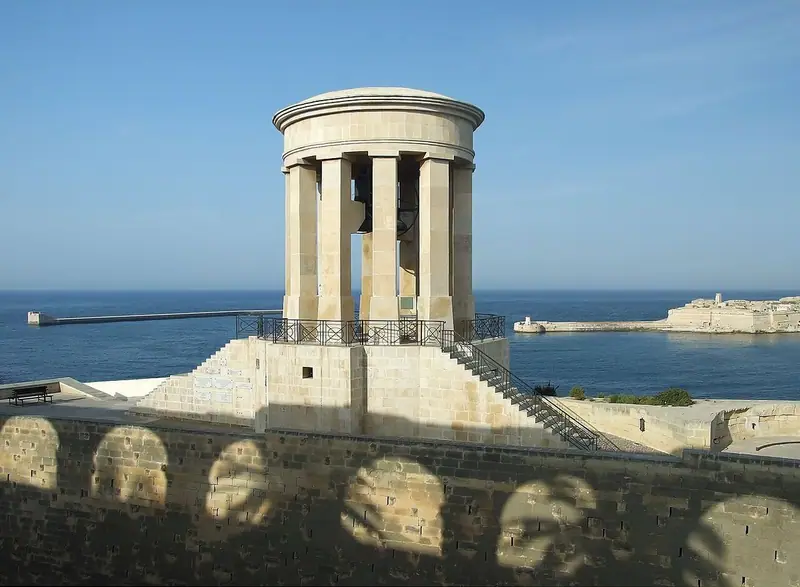 Knights Hospitaller8 stops · 1565–1798 CE
Valletta audio guide
The honey-coloured city of the Knights of Saint John, from City Gate to St John’s Co-Cathedral and its Caravaggio, and on to Fort Saint Elmo.
Every guide, in every country
Ġgantija Temples and every other guide we publish, including future ones. One payment, no subscription.