Before you start
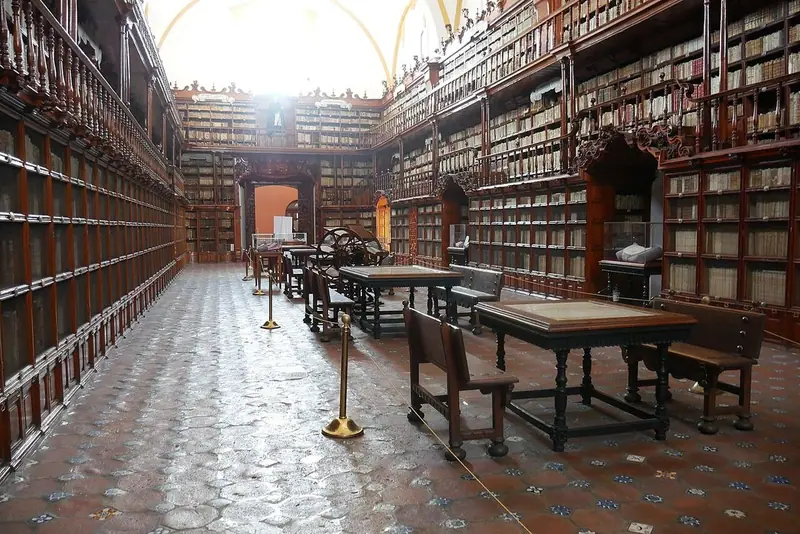
Puebla stands on a high plain in central Mexico, about two thousand one hundred metres above sea level, with the snow-capped volcanoes Popocatépetl and Iztaccíhuatl on the western skyline. It was founded by the Spanish in 1531 and laid out on a strict grid of streets, and it became one of the richest cities of New Spain, famous for its churches, its painted Talavera pottery and its façades of red brick and glazed tiles. Its historic centre, with some two thousand five hundred listed buildings, was inscribed as a UNESCO World Heritage Site in 1987. This guide starts at the church of San Francisco on the east side of the centre, crosses the old artists' quarter and the Jesuit college, visits the Palafox Library and the cathedral on the main square, and ends at the gilded Rosary Chapel. Allow about half a day.
Use it as a self-guided tour of Puebla: 8 stops in visit order, each played when you’re ready, at your own pace.
 Free preview · Stop 1
The Church of San Francisco
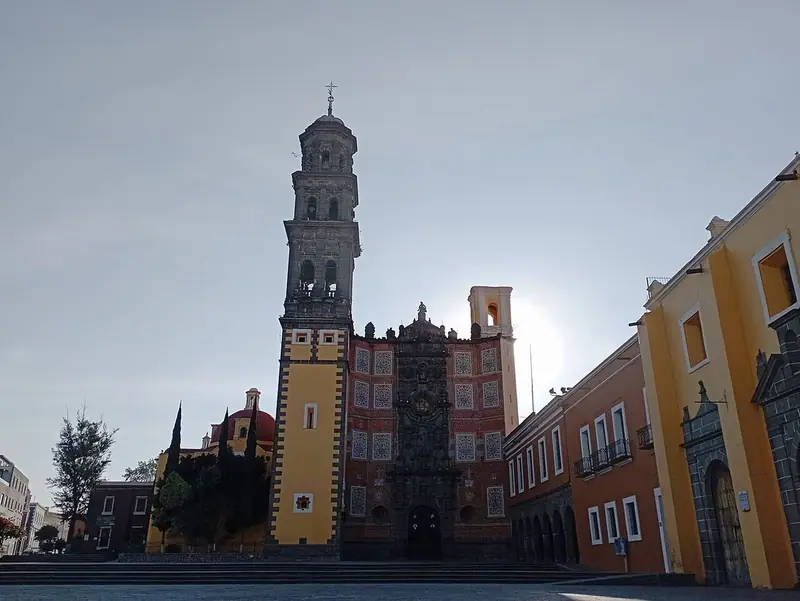
Begin at the church of San Francisco, beside the boulevard on the east side of the old centre. The Franciscans were the first friars in Puebla, and they built their convent here near the river, on the edge of the new city; work on the present convent began around 1535. The church front is the most striking part. Look up at the tall tower and the façade, built in the middle of the eighteenth century, between 1743 and 1767, where carved grey stone is set against panels of red brick and glazed Talavera tiles with flowers and leaves. This mix of brick, tile and stone became the trademark of Puebla. Inside, in a side chapel, a silver and glass case holds the body of Blessed Sebastián de Aparicio, a Spanish farmer and carter who built some of the first roads in New Spain and who became a Franciscan friar in his old age. He died here in 1600, and many still come to pray at his shrine.
Photo: Juan Carlos Fonseca Mata · CC BY-SA 4.0 · Wikimedia Commons
What to see at Puebla: 8 stops, in visit order
- 01
 The Church of San FranciscoThe first convent of the cityFree preview
- 02
 The Teatro Principal and the Barrio del ArtistaA theatre and the artists' quarterIn the guide
- 03
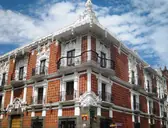 The Casa del AlfeñiqueA house iced like a cakeIn the guide
- 04
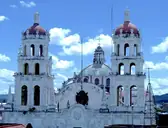 La Compañía and the Edificio CarolinoThe Jesuit collegeIn the guide
- 05
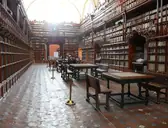 The Palafox LibraryThe oldest library of the AmericasIn the guide
- 06
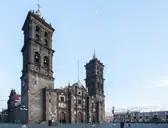 Puebla CathedralA cathedral of the Counter-ReformationIn the guide
- 07
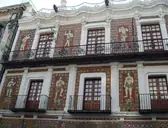 The Zócalo and the Casa de los MuñecosThe square where the grid beganIn the guide
- 08
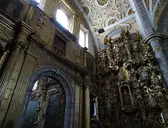 Santo Domingo and the Rosary ChapelThe house of goldIn the guide
History of Puebla
Unlike most cities of New Spain, Puebla was not built on top of an older Indigenous town. The Spanish founded it on the sixteenth of April 1531, on open ground between the great Indigenous cities of Tlaxcala and Cholula, as a town for Spanish settlers on the road from the port of Veracruz to Mexico City. A local legend says that the bishop of Tlaxcala dreamt of angels drawing lines across the plain, and in 1532 the Spanish crown gave the place the title of City of the Angels. Craftsmen from Spain and Indigenous builders and potters made it a centre of weaving, glass and glazed pottery, and its bishops built on a grand scale. On the fifth of May 1862, on the hills just north of the centre, a Mexican army under General Ignacio Zaragoza defeated an invading French army, a victory still celebrated every year as the Cinco de Mayo. Afterwards the city was renamed Puebla de Zaragoza in his honour.
Puebla guide: questions
How many stops does the Puebla guide have?
8 stops, in visit order: 1. The Church of San Francisco; 2. The Teatro Principal and the Barrio del Artista; 3. The Casa del Alfeñique; 4. La Compañía and the Edificio Carolino; 5. The Palafox Library; 6. Puebla Cathedral; 7. The Zócalo and the Casa de los Muñecos; 8. Santo Domingo and the Rosary Chapel.
Can I do a self-guided tour of Puebla with this guide?
Yes. The guide is made for a self-guided tour: 8 stops in visit order, each with a photo, a story and a voice, so you can explore Puebla at your own pace, without joining a group. Download it before you go and it works offline.
How long is each guide?
The 8 stops add up to about 6 minutes of listening in total. You play each stop when you’re ready, so you can go at your own pace.
Does the guide work offline?
Yes, once it’s downloaded. The guide is a single self-contained web page (about 7.6 MB) with the photos, text and audio built in. Download it to your phone before you go (Wi-Fi is best); after that it opens in any modern browser on iPhone or Android, with no app, account or mobile signal needed.
Does it use GPS or need my location?
No. The guide doesn’t use GPS and doesn’t know where you are: you play each stop when you reach it. It works on iPhone and Android in any modern browser, and it’s in English.
What’s included?
One self-contained HTML guide: 8 stops in visit order, each with a photo, text and a voice, plus the story of who built the site.
Who built Puebla?
Unlike most cities of New Spain, Puebla was not built on top of an older Indigenous town. The Spanish founded it on the sixteenth of April 1531, on open ground between the great Indigenous cities of Tlaxcala and Cholula, as a town for Spanish settlers on the road from the port of Veracruz to Mexico City.
Where is Puebla?
Puebla stands on a high plain in central Mexico, about two thousand one hundred metres above sea level, with the snow-capped volcanoes Popocatépetl and Iztaccíhuatl on the western skyline.
Is there a free audio guide to Puebla?
The first stop, The Church of San Francisco, is free to read and hear on this page, so you can try the Puebla audio tour before you buy. The full guide, with all 8 stops, is a one-off purchase: download it once and it’s yours to keep, working offline.
Is the Puebla guide worth it?
If you’d like to know what you’re looking at, yes. For $10 you get 8 stops in visit order, each with a photo, a short history and a voice you play when you’re ready, about 6 minutes of listening in all. It’s short on purpose, so you spend your time looking, not listening. It’s yours to keep, works offline and needs no app. The first stop is free on this page, so you can try it before you buy. If you’d like hours of detail, a guided tour will go deeper.
Audio guide or guided tour?
It depends how you like to visit. This guide lets you explore Puebla at your own pace, at any time, for a one-off price. A guided tour gives you a live expert you can ask questions, but at fixed times and usually for a higher price. Many people use both: a tour for the big picture, and the guide to read beforehand or to revisit the stops in their own time.
Is this the official Puebla guide?
No. It’s an independent guide by The Historian Guide, not affiliated with or endorsed by the operator of Puebla. For tickets and opening hours, check the official site operator before you go.
Does the guide include entry tickets or opening hours?
No. The guide is a digital companion only. Admission to Puebla is separate, so check the official site operator for current tickets and opening hours before you go.
- Stop 1 · The Church of San Francisco: Juan Carlos Fonseca Mata · CC BY-SA 4.0 · Wikimedia Commons · resized
- Stop 2 · The Teatro Principal and the Barrio del Artista: Diego Delso · CC BY-SA 3.0 · Wikimedia Commons · resized
- Stop 3 · The Casa del Alfeñique: Mexch · CC BY-SA 3.0 · Wikimedia Commons · resized
- Stop 4 · La Compañía and the Edificio Carolino: Luisalvaz · CC BY-SA 4.0 · Wikimedia Commons · resized
- Stop 5 · The Palafox Library (also the cover): Luis Alvaz · CC BY-SA 4.0 · Wikimedia Commons · resized
- Stop 6 · Puebla Cathedral: Diego Delso · CC BY-SA 3.0 · Wikimedia Commons · resized
- Stop 7 · The Zócalo and the Casa de los Muñecos: Wicki · Public domain · Wikimedia Commons · resized
- Stop 8 · Santo Domingo and the Rosary Chapel: Adam Jones from Kelowna, BC, Canada · CC BY-SA 2.0 · Wikimedia Commons · resized


All photographs from Wikimedia Commons under the licences shown.
More guides in Mexico
 New Spain and Mexico8 stops · Colonial and modern Mexico
The Basilica of Guadalupe audio guide
Cross the great plaza of the world’s most visited Catholic shrine to see the image of Our Lady of Guadalupe, then climb the hill of Tepeyac.
 Maya6 stops · c. 600–800 CE
Bonampak audio guide
Three small rooms in the Lacandon forest painted with vivid Maya murals: a royal court, a battle and a celebration.
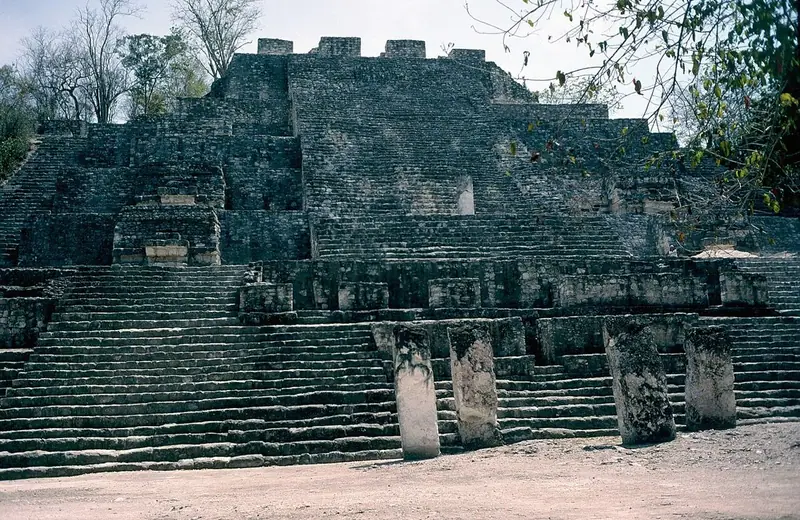 Maya6 stops · c. 250–900 CE
Calakmul audio guide
Capital of the Snake Kingdom, rising out of the Campeche rainforest.
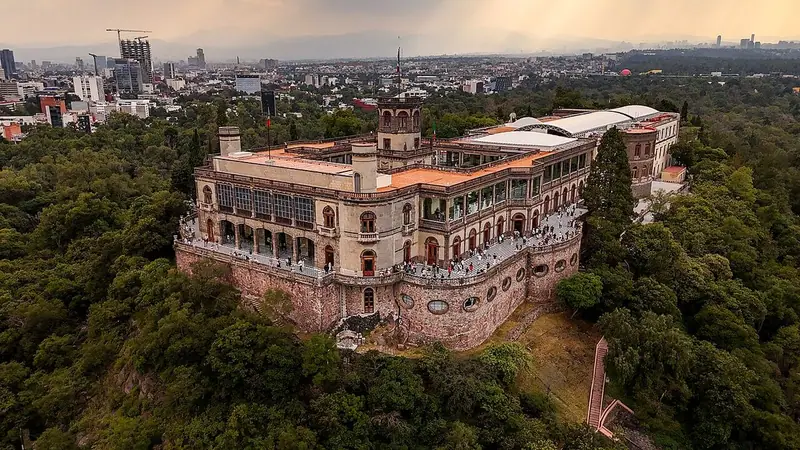 New Spain and Mexico8 stops · Second Mexican Empire
Chapultepec Castle audio guide
Climb the hill of Chapultepec to the castle of a viceroy, an emperor and presidents, now the National Museum of History.
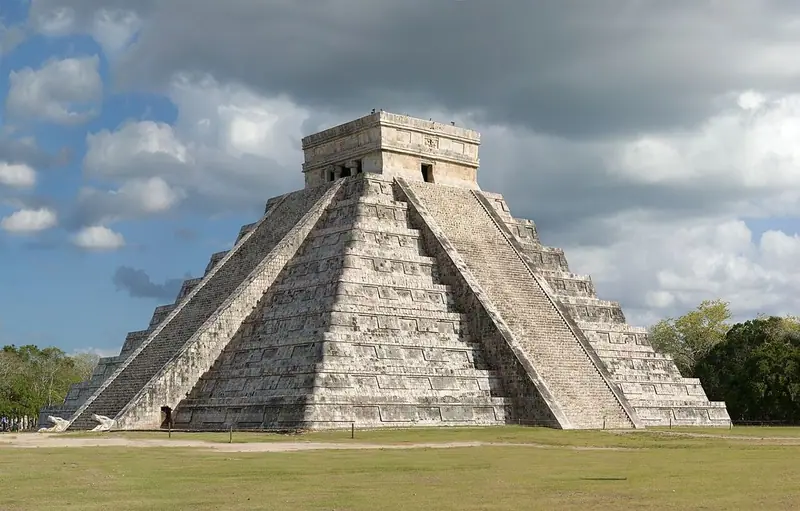 Maya8 stops · c. 600–1200 CE
Chichén Itzá audio guide
El Castillo and its serpent of light, the greatest ballcourt in Mesoamerica and the Sacred Cenote.
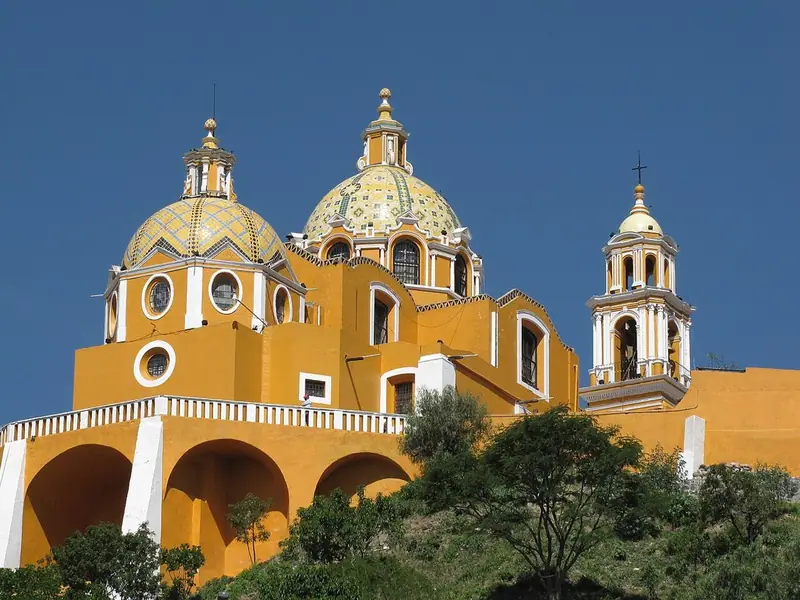 Mesoamerican6 stops · c. 300 BCE – 900 CE (pyramid)
Cholula audio guide
Tunnel into the Great Pyramid, then climb to the church on its summit and the view of the volcanoes.
Every guide, in every country
Puebla and every other guide we publish, including future ones. One payment, no subscription.