Before you start
Querétaro lies in the highlands of central Mexico, on the old silver road that ran north from Mexico City to the mines of Zacatecas. Its centre of plazas, convents and pink and ochre stone houses has seen more turning points in Mexican history than almost any other town: the plot that began the War of Independence, the end of the Emperor Maximilian, and the signing of the Constitution of 1917. Its Historic Monuments Zone was inscribed as a UNESCO World Heritage Site in 1996. This guide starts at the viewpoint over the great aqueduct on the east side of the centre, follows the pedestrian streets west through the plazas, and ends on the Hill of the Bells, where the empire came to an end. Allow about half a day.
Use it as a self-guided tour of Querétaro: 9 stops in visit order, each played when you’re ready, at your own pace.
 Free preview · Stop 1
The Aqueduct
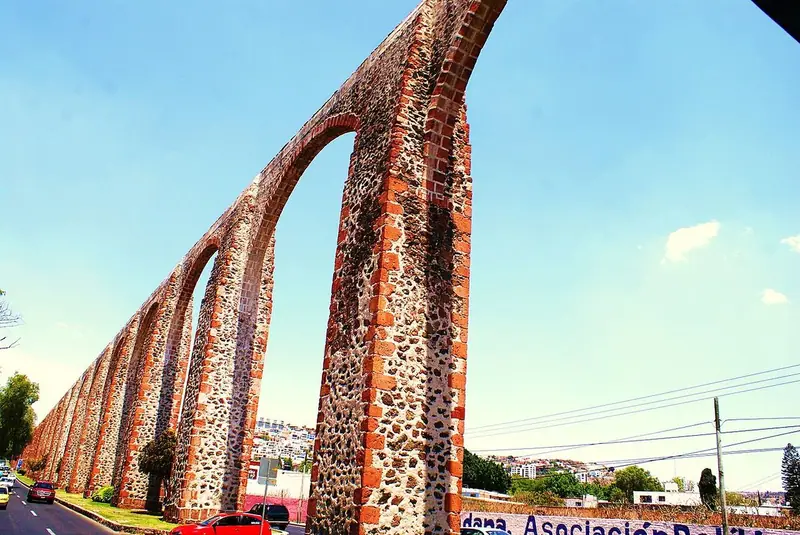
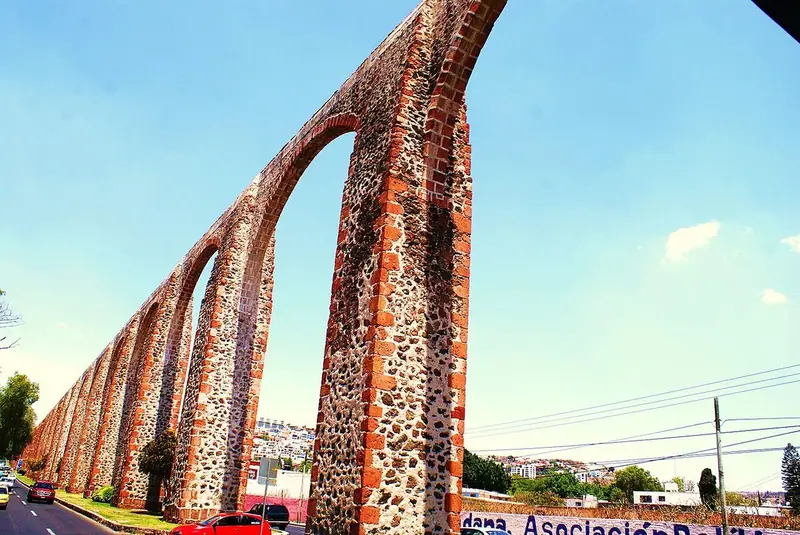
Begin at the viewpoint above the aqueduct, on the east side of the old town, where a long line of stone arches strides across the valley. Between 1726 and 1738, a rich nobleman, Juan Antonio de Urrutia y Arana, the Marquis of the Villa del Villar del Águila, paid for an aqueduct to bring spring water from the hills to the east. The arches you see carry the channel across the lowest ground: there are seventy-four of them, about one thousand two hundred and eighty metres long, and the tallest reach about twenty-eight metres. Built of local pink stone, they are the symbol of the city. Beside the viewpoint is the Pantheon of Illustrious Queretanos, where the Corregidora, Josefa Ortiz de Domínguez, and her husband are buried; you will hear their story at the third stop.
Photo: Pabloangulo84 · CC BY-SA 3.0 · Wikimedia Commons
What to see at Querétaro: 9 stops, in visit order
- 01
 The AqueductSeventy-four archesFree preview
- 02
 The Convent of the Holy CrossThe college of missionariesIn the guide
- 03
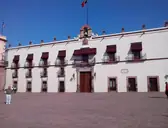 The Plaza de Armas and the Casa de la CorregidoraWhere independence was plottedIn the guide
- 04
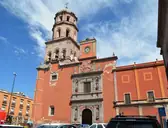 San Francisco and the Regional MuseumThe great Franciscan conventIn the guide
- 05
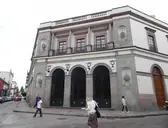 The Teatro de la RepúblicaWhere the Constitution was signedIn the guide
- 06
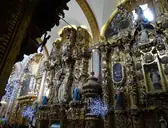 The Neptune Fountain and Santa ClaraA fountain and a convent of nunsIn the guide
- 07
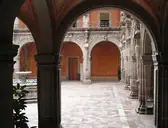 The Museum of Art and the Cloister of San AgustínCarved figures in stoneIn the guide
- 08
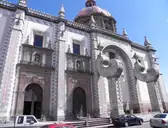 Santa Rosa de ViterboButtresses and a clock towerIn the guide
- 09
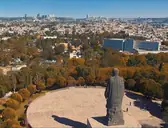 The Hill of the BellsWhere the empire endedIn the guide
History of Querétaro
Before the Spanish came, this valley was home to Otomí and Chichimec peoples, and the name Querétaro is usually said to come from the Purépecha language. The Spanish town was founded in the 1530s, and tradition holds that it began in 1531 with a battle between Otomí allies of the Spanish and the local Chichimecs, during which a cross and Saint James appeared in the sky; that is why the city is called Santiago de Querétaro. Its position on the road to the silver mines made it rich, and in the seventeenth and eighteenth centuries its wealthy families, friars and nuns filled it with churches and convents. Here, in 1810, a group of conspirators met to plan a rising against Spanish rule. In 1867 the Emperor Maximilian made his last stand in the city, and in 1916 and 1917 the Constituent Congress met here to write the constitution that still governs Mexico.
Querétaro guide: questions
How many stops does the Querétaro guide have?
9 stops, in visit order: 1. The Aqueduct; 2. The Convent of the Holy Cross; 3. The Plaza de Armas and the Casa de la Corregidora; 4. San Francisco and the Regional Museum; 5. The Teatro de la República; 6. The Neptune Fountain and Santa Clara; 7. The Museum of Art and the Cloister of San Agustín; 8. Santa Rosa de Viterbo; 9. The Hill of the Bells.
Can I do a self-guided tour of Querétaro with this guide?
Yes. The guide is made for a self-guided tour: 9 stops in visit order, each with a photo, a story and a voice, so you can explore Querétaro at your own pace, without joining a group. Download it before you go and it works offline.
How long is each guide?
The 9 stops add up to about 7 minutes of listening in total. You play each stop when you’re ready, so you can go at your own pace.
Does the guide work offline?
Yes, once it’s downloaded. The guide is a single self-contained web page (about 8.4 MB) with the photos, text and audio built in. Download it to your phone before you go (Wi-Fi is best); after that it opens in any modern browser on iPhone or Android, with no app, account or mobile signal needed.
Does it use GPS or need my location?
No. The guide doesn’t use GPS and doesn’t know where you are: you play each stop when you reach it. It works on iPhone and Android in any modern browser, and it’s in English.
What’s included?
One self-contained HTML guide: 9 stops in visit order, each with a photo, text and a voice, plus the story of who built the site.
Who built Querétaro?
Before the Spanish came, this valley was home to Otomí and Chichimec peoples, and the name Querétaro is usually said to come from the Purépecha language. The Spanish town was founded in the 1530s, and tradition holds that it began in 1531 with a battle between Otomí allies of the Spanish and the local Chichimecs, during which a cross and Saint James appeared in the sky; that is why the city is called Santiago de Querétaro.
Where is Querétaro?
Querétaro lies in the highlands of central Mexico, on the old silver road that ran north from Mexico City to the mines of Zacatecas.
Is there a free audio guide to Querétaro?
The first stop, The Aqueduct, is free to read and hear on this page, so you can try the Querétaro audio tour before you buy. The full guide, with all 9 stops, is a one-off purchase: download it once and it’s yours to keep, working offline.
Is the Querétaro guide worth it?
If you’d like to know what you’re looking at, yes. For $10 you get 9 stops in visit order, each with a photo, a short history and a voice you play when you’re ready, about 7 minutes of listening in all. It’s short on purpose, so you spend your time looking, not listening. It’s yours to keep, works offline and needs no app. The first stop is free on this page, so you can try it before you buy. If you’d like hours of detail, a guided tour will go deeper.
Audio guide or guided tour?
It depends how you like to visit. This guide lets you explore Querétaro at your own pace, at any time, for a one-off price. A guided tour gives you a live expert you can ask questions, but at fixed times and usually for a higher price. Many people use both: a tour for the big picture, and the guide to read beforehand or to revisit the stops in their own time.
Is this the official Querétaro guide?
No. It’s an independent guide by The Historian Guide, not affiliated with or endorsed by the operator of Querétaro. For tickets and opening hours, check the official site operator before you go.
Does the guide include entry tickets or opening hours?
No. The guide is a digital companion only. Admission to Querétaro is separate, so check the official site operator for current tickets and opening hours before you go.
- Stop 1 · The Aqueduct (also the cover): Pabloangulo84 · CC BY-SA 3.0 · Wikimedia Commons · resized
- Stop 2 · The Convent of the Holy Cross: Adamcastforth · CC BY-SA 3.0 · Wikimedia Commons · resized
- Stop 3 · The Plaza de Armas and the Casa de la Corregidora: Calipso03 · CC BY-SA 4.0 · Wikimedia Commons · resized
- Stop 4 · San Francisco and the Regional Museum: AlejandroLinaresGarcia · CC BY-SA 4.0 · Wikimedia Commons · resized
- Stop 5 · The Teatro de la República: P.Fossas · CC BY-SA 3.0 · Wikimedia Commons · resized
- Stop 6 · The Neptune Fountain and Santa Clara: Adam Jones from Kelowna, BC, Canada · CC BY-SA 2.0 · Wikimedia Commons · resized
- Stop 7 · The Museum of Art and the Cloister of San Agustín: Minaram · CC BY-SA 4.0 · Wikimedia Commons · resized
- Stop 8 · Santa Rosa de Viterbo: P.Fossas · CC BY-SA 3.0 · Wikimedia Commons · resized
- Stop 9 · The Hill of the Bells: Drone Films · CC BY 3.0 · Wikimedia Commons · resized


All photographs from Wikimedia Commons under the licences shown.
More guides in Mexico
 New Spain and Mexico8 stops · Colonial and modern Mexico
The Basilica of Guadalupe audio guide
Cross the great plaza of the world’s most visited Catholic shrine to see the image of Our Lady of Guadalupe, then climb the hill of Tepeyac.
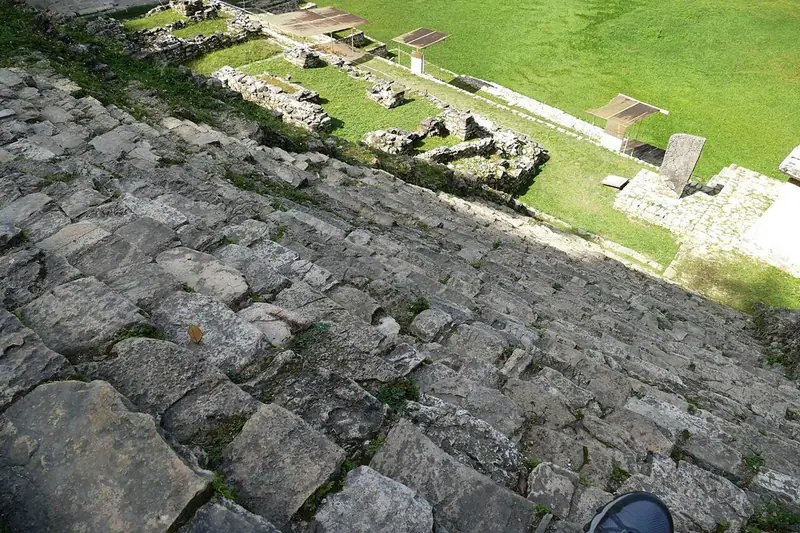 Maya6 stops · c. 600–800 CE
Bonampak audio guide
Three small rooms in the Lacandon forest painted with vivid Maya murals: a royal court, a battle and a celebration.
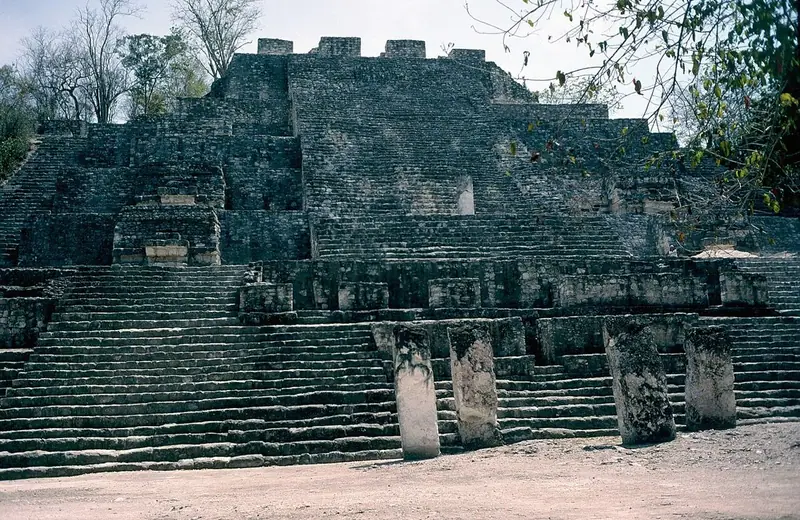 Maya6 stops · c. 250–900 CE
Calakmul audio guide
Capital of the Snake Kingdom, rising out of the Campeche rainforest.
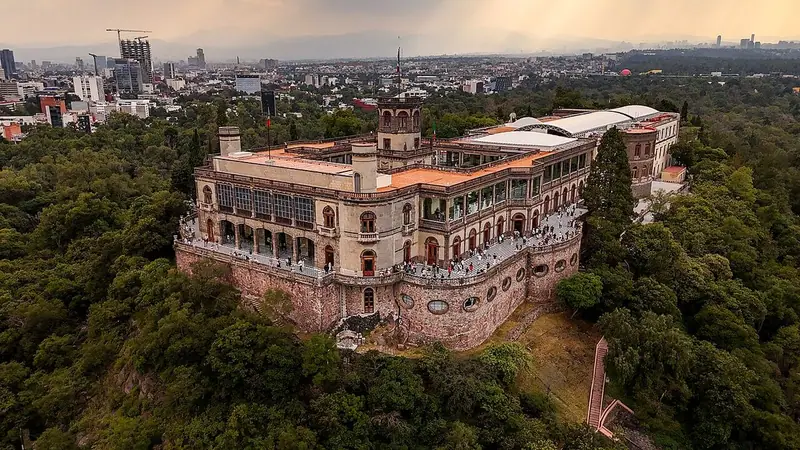 New Spain and Mexico8 stops · Second Mexican Empire
Chapultepec Castle audio guide
Climb the hill of Chapultepec to the castle of a viceroy, an emperor and presidents, now the National Museum of History.
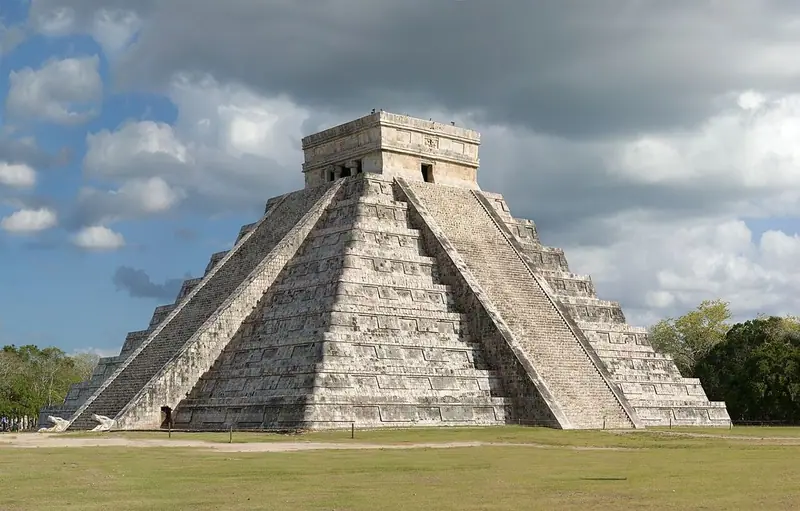 Maya8 stops · c. 600–1200 CE
Chichén Itzá audio guide
El Castillo and its serpent of light, the greatest ballcourt in Mesoamerica and the Sacred Cenote.
 Mesoamerican6 stops · c. 300 BCE – 900 CE (pyramid)
Cholula audio guide
Tunnel into the Great Pyramid, then climb to the church on its summit and the view of the volcanoes.
Every guide, in every country
Querétaro and every other guide we publish, including future ones. One payment, no subscription.