Before you start
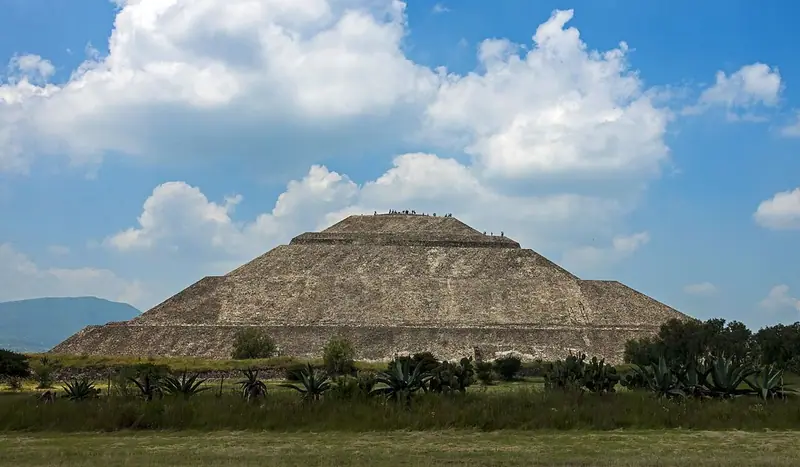
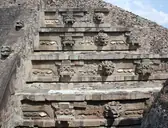
Teotihuacán lies in a broad highland valley in the State of Mexico, about 50 kilometres north-east of central Mexico City, at roughly 2,300 metres above sea level. The Pre-Hispanic City of Teotihuacán has been a UNESCO World Heritage Site since 1987 and is managed by INAH, Mexico’s National Institute of Anthropology and History. The ancient city is laid out along one great avenue, so this guide walks it from south to north: from the Citadel and the Temple of the Feathered Serpent, up the Avenue of the Dead to the Pyramid of the Sun, on to the Palace of Quetzalpapálotl and the Pyramid of the Moon, ending with the painted walls of Tepantitla on the eastern edge.
Use it as a self-guided tour of Teotihuacán: 7 stops in visit order, each played when you’re ready, at your own pace.
 Free preview · Stop 1
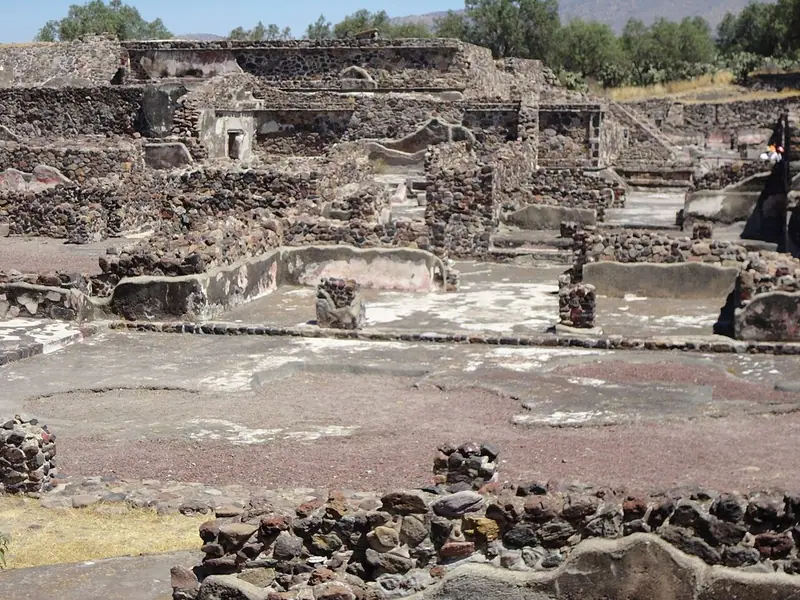
The Citadel
Begin in the vast sunken square the Spanish called La Ciudadela, the Citadel. It was no fortress. Each side is formed by a broad platform about 400 metres long, topped with small temples, and together they enclose a plaza big enough to hold a large part of the city’s population. Archaeologists believe this was Teotihuacán’s political and religious heart, where rulers staged great ceremonies before the crowds. Climb the steps of the surrounding platform if it is open and look around: the scale is designed to impress, and it still does. From here you can also see how the whole city was laid out on a carefully planned grid, aligned about fifteen degrees east of north. That orientation was repeated in buildings, streets and even the canalised river, a sign of extraordinary planning almost two thousand years ago.
Photo: Juan Carlos Fonseca Mata · CC BY-SA 4.0 · Wikimedia Commons
What to see at Teotihuacán: 7 stops, in visit order
- 01
 The CitadelLa CiudadelaFree preview
- 02
 Temple of the Feathered SerpentTemplo de QuetzalcóatlIn the guide
- 03
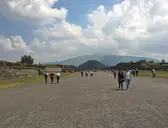 Avenue of the DeadCalzada de los MuertosIn the guide
- 04
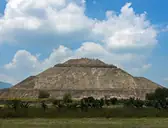 Pyramid of the SunPirámide del SolIn the guide
- 05
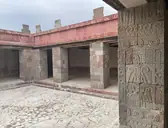 Palace of the Butterfly-BirdQuetzalpapálotlIn the guide
- 06
 Pyramid of the MoonPirámide de la LunaIn the guide
- 07
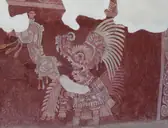 Tepantitla muralsTepantitlaIn the guide
Site map of Teotihuacán
History of Teotihuacán
Teotihuacán belongs to the long story of Mesoamerican civilisation. Farming villages spread across Mexico from around 2000 BCE; the Olmecs of the Gulf Coast raised the first great ceremonial centres from about 1200 BCE; the Classic period, roughly 200 to 900 CE, was the age of great cities; and the Postclassic ended with the Spanish conquest of the Aztec capital in 1521. Teotihuacán grew from about 100 BCE and reached its height between about 200 and 550 CE, when perhaps 100,000 people lived here in one of the largest cities in the world at the time, with neighbourhoods of migrants from Oaxaca and the Gulf Coast. We do not know what language its builders spoke, nor what they called their city: the name Teotihuacán, ‘place where the gods were created’, was given centuries later by the Aztecs, who revered the ruins. Around 550 the centre was burned and the city declined.
The full history continues in the guide.
Teotihuacán guide: questions
How many stops does the Teotihuacán guide have?
7 stops, in visit order: 1. The Citadel; 2. Temple of the Feathered Serpent; 3. Avenue of the Dead; 4. Pyramid of the Sun; 5. Palace of the Butterfly-Bird; 6. Pyramid of the Moon; 7. Tepantitla murals.
Can I do a self-guided tour of Teotihuacán with this guide?
Yes. The guide is made for a self-guided tour: 7 stops in visit order, each with a photo, a story and a voice, so you can explore Teotihuacán at your own pace, without joining a group. Download it before you go and it works offline.
How long is each guide?
The 7 stops add up to about 7 minutes of listening in total. You play each stop when you’re ready, so you can go at your own pace.
Does the guide work offline?
Yes, once it’s downloaded. The guide is a single self-contained web page (about 7.5 MB) with the photos, text and audio built in. Download it to your phone before you go (Wi-Fi is best); after that it opens in any modern browser on iPhone or Android, with no app, account or mobile signal needed.
Does it use GPS or need my location?
No. The guide doesn’t use GPS and doesn’t know where you are: you play each stop when you reach it. It works on iPhone and Android in any modern browser, and it’s in English.
What’s included?
One self-contained HTML guide: 7 stops in visit order, each with a photo, text and a voice, plus the story of who built the site.
Who built Teotihuacán?
Teotihuacán belongs to the long story of Mesoamerican civilisation. Farming villages spread across Mexico from around 2000 BCE; the Olmecs of the Gulf Coast raised the first great ceremonial centres from about 1200 BCE; the Classic period, roughly 200 to 900 CE, was the age of great cities; and the Postclassic ended with the Spanish conquest of the Aztec capital in 1521.
Where is Teotihuacán?
Teotihuacán lies in a broad highland valley in the State of Mexico, about 50 kilometres north-east of central Mexico City, at roughly 2,300 metres above sea level.
Is there a free audio guide to Teotihuacán?
The first stop, The Citadel, is free to read and hear on this page, so you can try the Teotihuacán audio tour before you buy. The full guide, with all 7 stops, is a one-off purchase: download it once and it’s yours to keep, working offline.
Is the Teotihuacán guide worth it?
If you’d like to know what you’re looking at, yes. For $10 you get 7 stops in visit order, each with a photo, a short history and a voice you play when you’re ready, plus a site map of the stops, and about 7 minutes of listening in all. It’s short on purpose, so you spend your time looking, not listening. It’s yours to keep, works offline and needs no app. The first stop is free on this page, so you can try it before you buy. If you’d like hours of detail, a guided tour will go deeper.
Audio guide or guided tour?
It depends how you like to visit. This guide lets you explore Teotihuacán at your own pace, at any time, for a one-off price. A guided tour gives you a live expert you can ask questions, but at fixed times and usually for a higher price. Many people use both: a tour for the big picture, and the guide to read beforehand or to revisit the stops in their own time.
Is this the official Teotihuacán guide?
No. It’s an independent guide by The Historian Guide, not affiliated with or endorsed by the operator of Teotihuacán. For tickets and opening hours, check the official site operator before you go.
Does the guide include entry tickets or opening hours?
No. The guide is a digital companion only. Admission to Teotihuacán is separate, so check the official site operator for current tickets and opening hours before you go.
- Stop 1 · The Citadel: Juan Carlos Fonseca Mata · CC BY-SA 4.0 · Wikimedia Commons · resized
- Stop 2 · Temple of the Feathered Serpent: Arian Zwegers from Brussels, Belgium · CC BY 2.0 · Wikimedia Commons · resized
- Stop 3 · Avenue of the Dead: MIKHEIL · CC BY-SA 4.0 · Wikimedia Commons · resized
- Stop 4 · Pyramid of the Sun (also the cover): Daniel Case · CC BY-SA 3.0 · Wikimedia Commons · resized
- Stop 5 · Palace of the Butterfly-Bird: Peachseltzer · CC BY-SA 4.0 · Wikimedia Commons · resized
- Stop 6 · Pyramid of the Moon: Jarek Tuszyński · CC BY 4.0 · Wikimedia Commons · resized
- Stop 7 · Tepantitla murals: Álvaro de la Paz Franco · CC0 · Wikimedia Commons · resized


All photographs from Wikimedia Commons under the licences shown.
More guides in Mexico
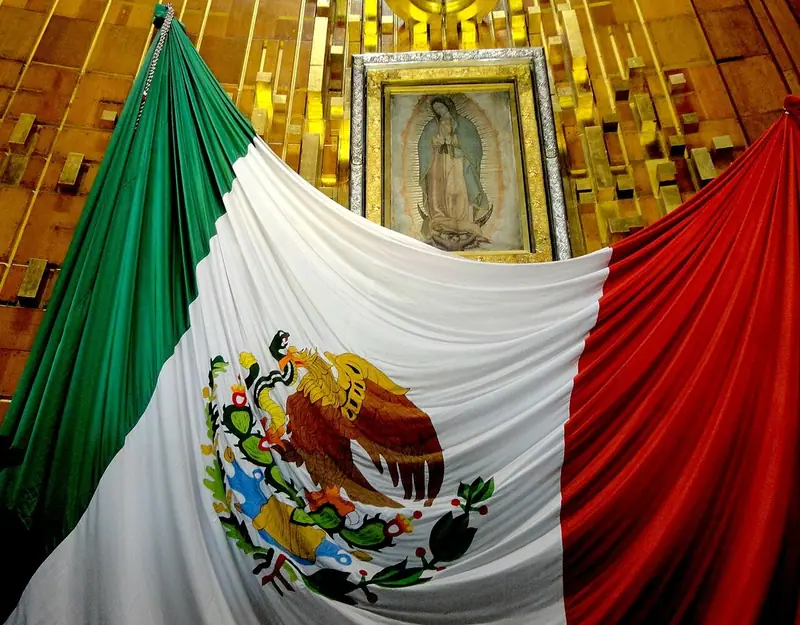 New Spain and Mexico8 stops · Colonial and modern Mexico
The Basilica of Guadalupe audio guide
Cross the great plaza of the world’s most visited Catholic shrine to see the image of Our Lady of Guadalupe, then climb the hill of Tepeyac.
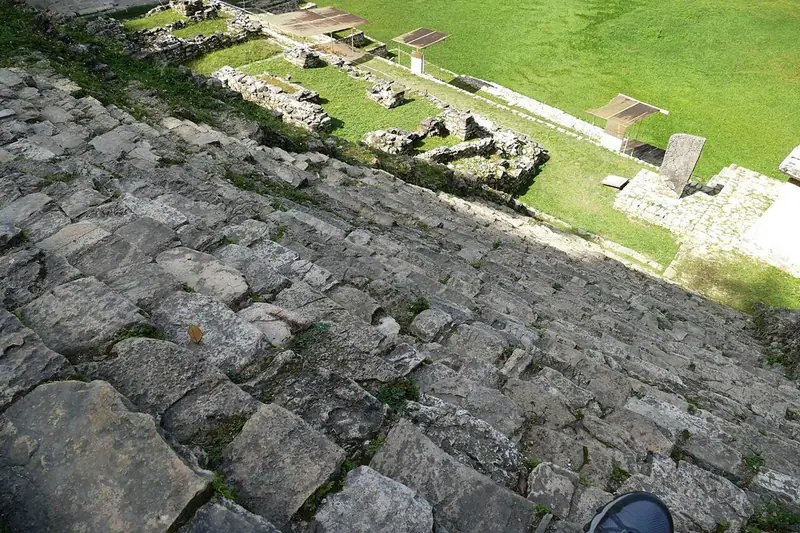 Maya6 stops · c. 600–800 CE
Bonampak audio guide
Three small rooms in the Lacandon forest painted with vivid Maya murals: a royal court, a battle and a celebration.
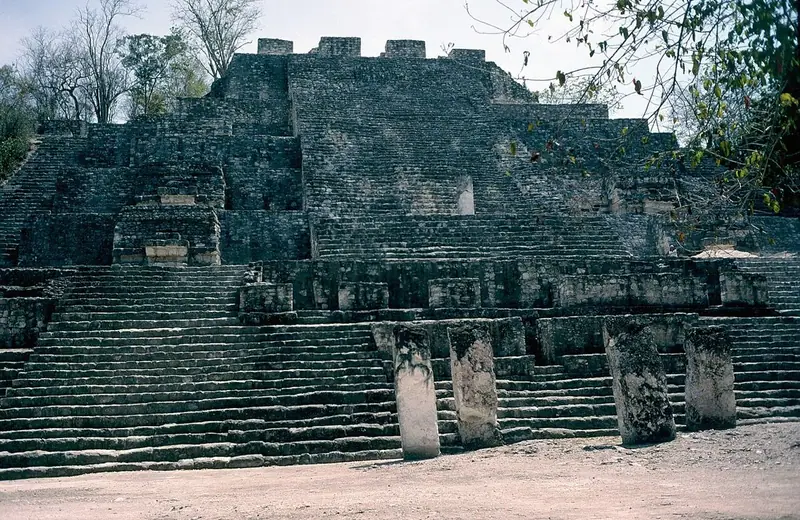 Maya6 stops · c. 250–900 CE
Calakmul audio guide
Capital of the Snake Kingdom, rising out of the Campeche rainforest.
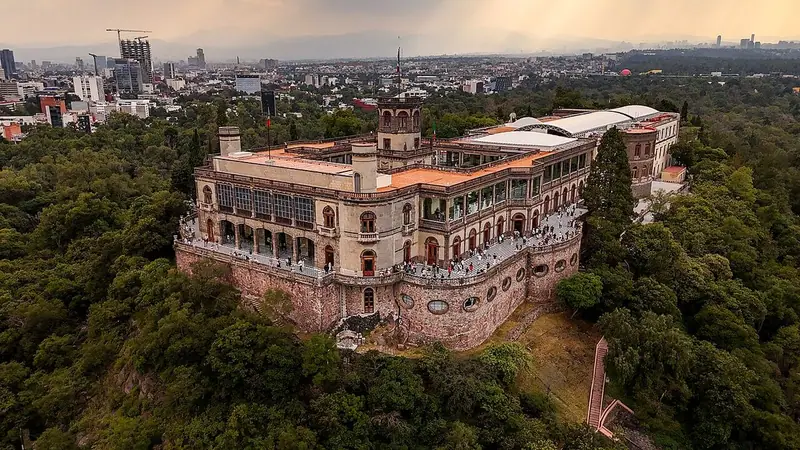 New Spain and Mexico8 stops · Second Mexican Empire
Chapultepec Castle audio guide
Climb the hill of Chapultepec to the castle of a viceroy, an emperor and presidents, now the National Museum of History.
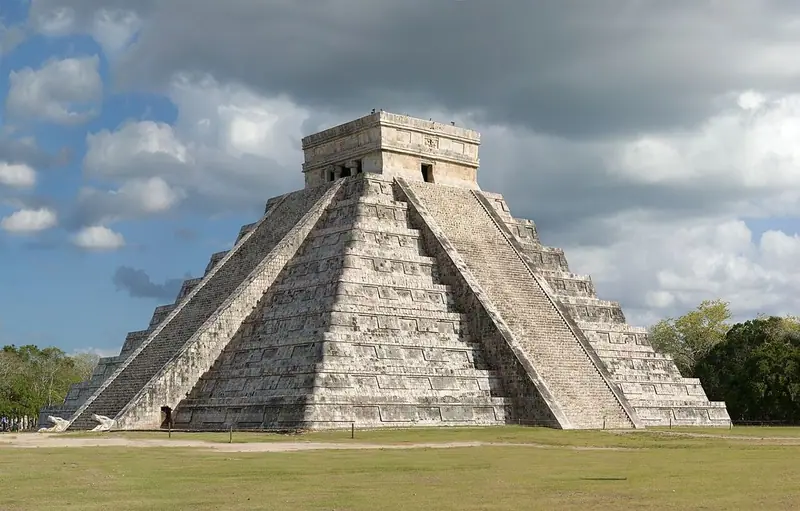 Maya8 stops · c. 600–1200 CE
Chichén Itzá audio guide
El Castillo and its serpent of light, the greatest ballcourt in Mesoamerica and the Sacred Cenote.
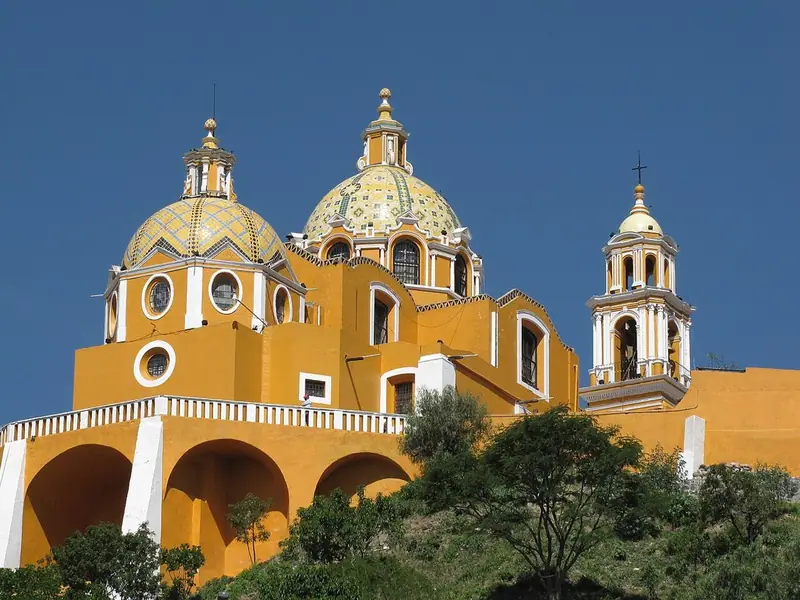 Mesoamerican6 stops · c. 300 BCE – 900 CE (pyramid)
Cholula audio guide
Tunnel into the Great Pyramid, then climb to the church on its summit and the view of the volcanoes.
Every guide, in every country
Teotihuacán and every other guide we publish, including future ones. One payment, no subscription.