Before you start
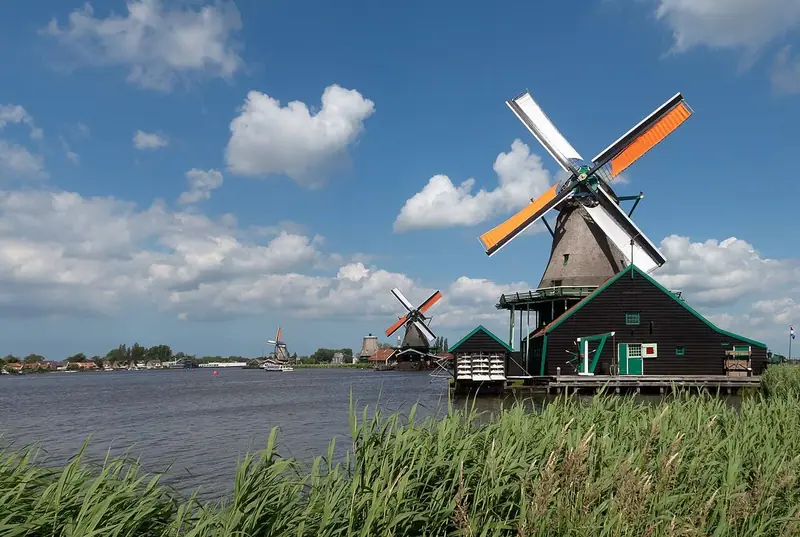
The Zaanse Schans, on the banks of the river Zaan just north of Amsterdam, is a living neighbourhood of green wooden houses, warehouses and working windmills, gathered here to preserve the heritage of one of the earliest industrial regions in Europe. Most of its buildings were moved here from elsewhere in the Zaan region from the 1960s onwards, and people still live in many of the houses, so please respect their privacy. This guide begins at the Zaans Museum, continues through the village, and then follows the dyke along the river past a row of historic mills. The outdoor area is open to walk around, while the mills and museums have their own entry. The dyke is exposed, so bring a windproof layer, and expect crowds in the middle of the day.
Use it as a self-guided tour of the Zaanse Schans: 7 stops in visit order, each played when you’re ready, at your own pace.
 Free preview · Stop 1
The Zaans Museum
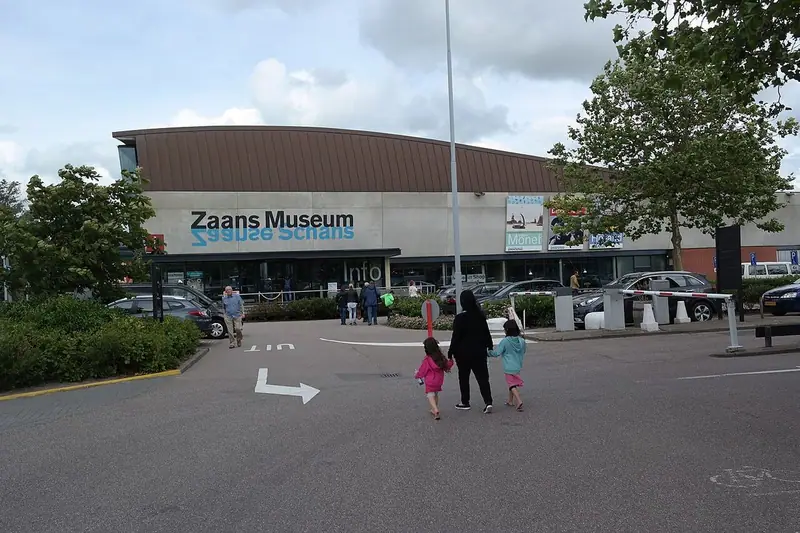
Begin at the Zaans Museum, the modern building at the entrance to the Zaanse Schans, near the car park, which opened in the 1990s to tell the story of the Zaan region and its people. Inside, displays explain how a marshy landscape of peat and water became one of the first industrial areas in Europe, powered by the wind. Look for the models of mills and ships, and for the Verkade Experience, which recalls the Verkade factory in Zaandam, famous for its biscuits and chocolate. The museum also owns a painting by Claude Monet, who stayed in Zaandam in 1871 and painted the river and its windmills. Even if you do not go inside, it is worth knowing that the region around you was once filled with hundreds of working mills, busy with trade and industry.
Photo: Steven Lek · CC BY-SA 4.0 · Wikimedia Commons
What to see at the Zaanse Schans: 7 stops, in visit order
- 01
 The Zaans MuseumThe Story of the ZaanFree preview
- 02
 The Wooden HousesZaan GreenIn the guide
- 03
 De HuismanThe Mustard MillIn the guide
- 04
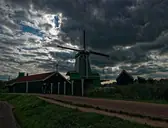 De Gekroonde PoelenburgThe Paltrok SawmillIn the guide
- 05
 De KatThe Paint MillIn the guide
- 06
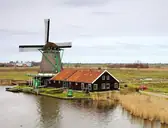 De ZoekerThe Oil MillIn the guide
- 07
 Het Jonge SchaapThe Last Hexagonal SawmillIn the guide
Site map of the Zaanse Schans
History of the Zaanse Schans
The name comes from a schans, or earthwork fort, built here in 1574 during the Eighty Years’ War, the Dutch revolt against Spanish rule led by William of Orange. In the seventeenth and eighteenth centuries, in the Dutch Republic, the Zaan region became a great industrial centre, where hundreds of windmills sawed timber for shipbuilding and ground and pressed seeds, spices, pigments and much else. In 1697 Tsar Peter the Great of Russia came to Zaandam to learn about shipbuilding. In the twentieth century, as old buildings were being lost, local people in the Kingdom of the Netherlands campaigned to save them, and from the 1960s many were moved here and restored.
Zaanse Schans guide: questions
How many stops does the Zaanse Schans guide have?
7 stops, in visit order: 1. The Zaans Museum; 2. The Wooden Houses; 3. De Huisman; 4. De Gekroonde Poelenburg; 5. De Kat; 6. De Zoeker; 7. Het Jonge Schaap.
Can I do a self-guided tour of the Zaanse Schans with this guide?
Yes. The guide is made for a self-guided tour: 7 stops in visit order, each with a photo, a story and a voice, so you can explore the Zaanse Schans at your own pace, without joining a group. Download it before you go and it works offline.
How long is each guide?
The 7 stops add up to about 5 minutes of listening in total. You play each stop when you’re ready, so you can go at your own pace.
Does the guide work offline?
Yes, once it’s downloaded. The guide is a single self-contained web page (about 6.1 MB) with the photos, text and audio built in. Download it to your phone before you go (Wi-Fi is best); after that it opens in any modern browser on iPhone or Android, with no app, account or mobile signal needed.
Does it use GPS or need my location?
No. The guide doesn’t use GPS and doesn’t know where you are: you play each stop when you reach it. It works on iPhone and Android in any modern browser, and it’s in English.
What’s included?
One self-contained HTML guide: 7 stops in visit order, each with a photo, text and a voice, plus the story of who built the site.
Who built the Zaanse Schans?
The name comes from a schans, or earthwork fort, built here in 1574 during the Eighty Years’ War, the Dutch revolt against Spanish rule led by William of Orange. In the seventeenth and eighteenth centuries, in the Dutch Republic, the Zaan region became a great industrial centre, where hundreds of windmills sawed timber for shipbuilding and ground and pressed seeds, spices, pigments and much else.
Is there a free audio guide to the Zaanse Schans?
The first stop, The Zaans Museum, is free to read and hear on this page, so you can try the Zaanse Schans audio tour before you buy. The full guide, with all 7 stops, is a one-off purchase: download it once and it’s yours to keep, working offline.
Is the Zaanse Schans guide worth it?
If you’d like to know what you’re looking at, yes. For $10 you get 7 stops in visit order, each with a photo, a short history and a voice you play when you’re ready, plus a site map of the stops, and about 5 minutes of listening in all. It’s short on purpose, so you spend your time looking, not listening. It’s yours to keep, works offline and needs no app. The first stop is free on this page, so you can try it before you buy. If you’d like hours of detail, a guided tour will go deeper.
Audio guide or guided tour?
It depends how you like to visit. This guide lets you explore the Zaanse Schans at your own pace, at any time, for a one-off price. A guided tour gives you a live expert you can ask questions, but at fixed times and usually for a higher price. Many people use both: a tour for the big picture, and the guide to read beforehand or to revisit the stops in their own time.
Is this the official Zaanse Schans guide?
No. It’s an independent guide by The Historian Guide, not affiliated with or endorsed by the operator of the Zaanse Schans. For tickets and opening hours, check the official site operator before you go.
Does the guide include entry tickets or opening hours?
No. The guide is a digital companion only. Admission to the Zaanse Schans is separate, so check the official site operator for current tickets and opening hours before you go.
- Stop 1 · The Zaans Museum: Steven Lek · CC BY-SA 4.0 · Wikimedia Commons · resized
- Stop 2 · The Wooden Houses: Little Savage · CC BY-SA 4.0 · Wikimedia Commons · resized
- Stop 3 · De Huisman: Hellumpie · CC BY-SA 3.0 · Wikimedia Commons · resized
- Stop 4 · De Gekroonde Poelenburg: Txllxt TxllxT · CC BY-SA 4.0 · Wikimedia Commons · resized
- Stop 5 · De Kat (also the cover): Michielverbeek · CC BY-SA 4.0 · Wikimedia Commons · resized
- Stop 6 · De Zoeker: Murdockcrc · CC BY 3.0 · Wikimedia Commons · resized
- Stop 7 · Het Jonge Schaap: Hellumpie · CC BY-SA 3.0 · Wikimedia Commons · resized


All photographs from Wikimedia Commons under the licences shown.
More guides in Netherlands
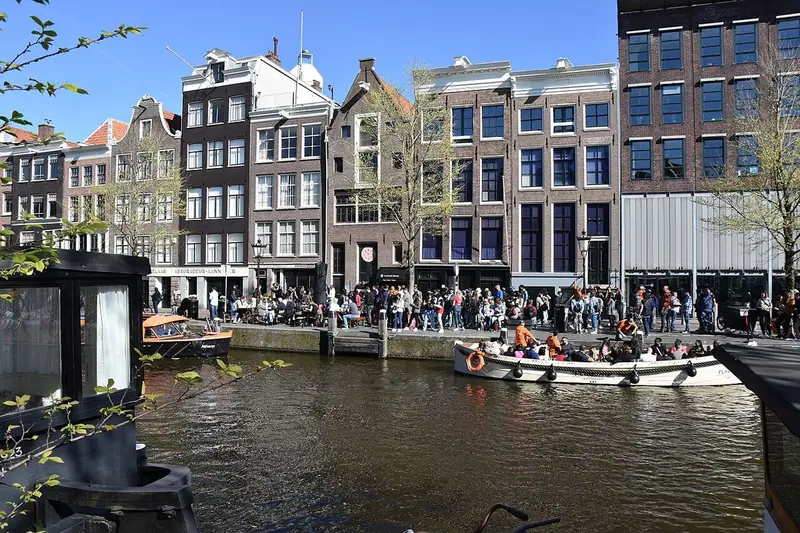 Modern7 stops · 1635 house; hiding 1942–1944
Anne Frank House audio guide
Pass behind the bookcase into the hiding place on the Prinsengracht where Anne Frank wrote her diary during the Second World War.
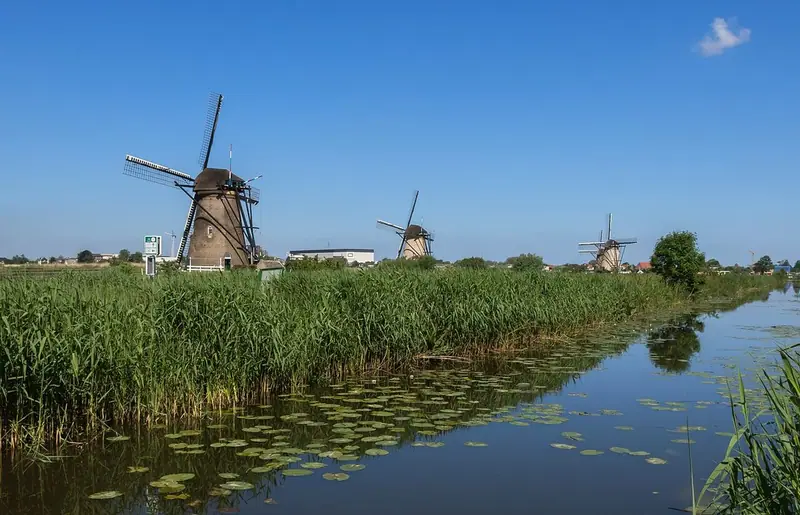 Dutch Republic7 stops · 1360s–1868 CE
Kinderdijk audio guide
Dikes across a low polder between rows of windmills built in 1738 and 1740 to lift the water in stages, the largest group of old mills in the Netherlands.
 Dutch Republic8 stops · 17th century; museum 1798
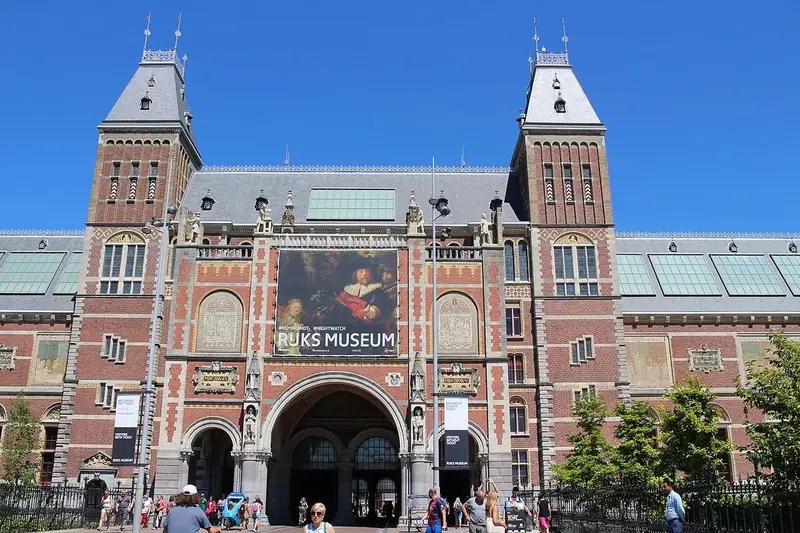
Rijksmuseum audio guide
From the Great Hall down the Gallery of Honour to The Milkmaid and The Night Watch, the treasures of the Dutch Golden Age.
Every guide, in every country
Zaanse Schans and every other guide we publish, including future ones. One payment, no subscription.