Before you start
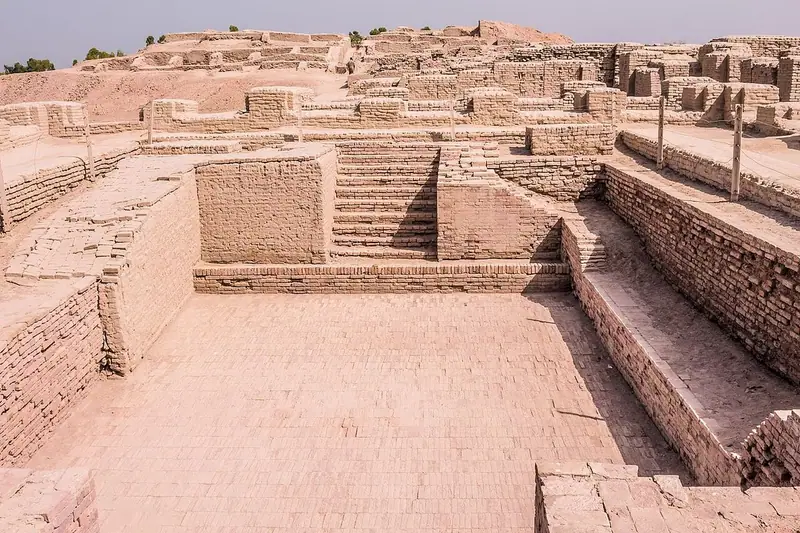
Mohenjo-daro lies on a ridge in the flood plain of the Indus, west of the river, in Larkana District in the province of Sindh, southern Pakistan. Built around 2500 BCE, it was one of the largest cities of the Indus Valley Civilisation, and one of the world’s earliest great cities, contemporary with those of ancient Egypt and Mesopotamia. Its modern name is usually translated as the Mound of the Dead. In 1980 it became the first site in South Asia to be inscribed by UNESCO as a World Heritage Site. The ruins lie in two areas, a raised mound known as the Citadel and the Lower City to the east. The plain is very hot for much of the year, so come early, wear a hat and carry plenty of water. The route begins at the museum, climbs the Citadel to the stupa and the Great Bath, and ends among the streets, wells and houses of the Lower City.
Use it as a self-guided tour of Mohenjo-daro: 8 stops in visit order, each played when you’re ready, at your own pace.
 Free preview · Stop 1
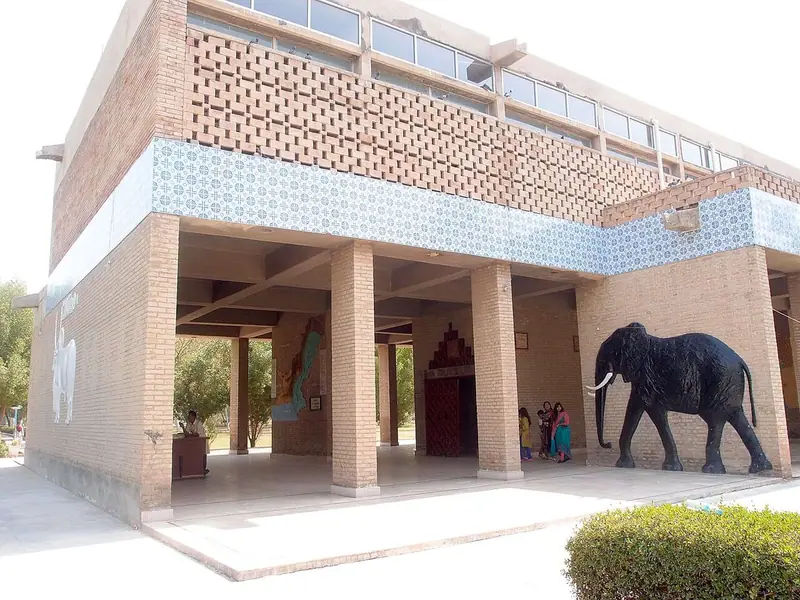
The Site Museum
Begin at the museum near the entrance, which displays objects found during the excavations. Look for the small square seals of carved stone, many showing animals, among them a creature with one horn, above short lines of the Indus script, which has never been deciphered. There are also stone and copper tools, balance scales and stone weights, beads, jewellery of gold and semi-precious stones, pottery and children’s toys. When India was partitioned in 1947, the finds from Mohenjo-daro were divided between India and Pakistan; Pakistan received the seated figure known as the Priest-King, which is now in the National Museum in Karachi, and India kept the bronze Dancing Girl, now in New Delhi. Bronze and copper figures and bowls show that the people of the city mastered the lost-wax method of casting metal, and furnaces found at the site were used for working copper.
Photo: Saqib Qayyum · CC BY-SA 3.0 · Wikimedia Commons
What to see at Mohenjo-daro: 8 stops, in visit order
- 01
 The Site MuseumSeals, sculpture and jewelleryFree preview
- 02
 The Great BathThe earliest public water tankIn the guide
- 03
 The CitadelHalls of an unknown purposeIn the guide
- 04
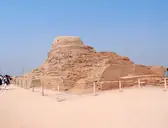 The Buddhist StupaA later monument on the CitadelIn the guide
- 05
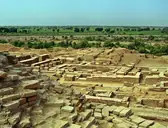 The Lower City StreetsA city planned on a gridIn the guide
- 06
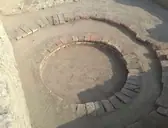 The WellsA city of wellsIn the guide
- 07
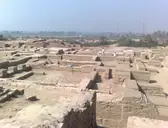 The HousesCourtyards, baths and a dancerIn the guide
- 08
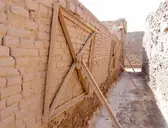 Saving Mohenjo-daroA city of brick under threatIn the guide
Site map of Mohenjo-daro
History of Mohenjo-daro
Mohenjo-daro was built by the people of the Indus Valley Civilisation, also called the Harappan Civilisation after the city of Harappa. It developed from earlier farming cultures of the region around 3000 BCE, and at its height it spread across much of what is now Pakistan and north-western India, with great cities at Harappa, Mohenjo-daro, Dholavira and Rakhigarhi. Its people planned their cities on a grid, built in fired brick, traded widely and used a script on small carved seals that has never been deciphered. No palaces or royal tombs have been found, and how the cities were governed remains a mystery. Mohenjo-daro may have had a population of around 40,000. Around 1700 BCE the great Indus cities declined, and Mohenjo-daro was abandoned.
The full history continues in the guide.
Mohenjo-daro guide: questions
How many stops does the Mohenjo-daro guide have?
8 stops, in visit order: 1. The Site Museum; 2. The Great Bath; 3. The Citadel; 4. The Buddhist Stupa; 5. The Lower City Streets; 6. The Wells; 7. The Houses; 8. Saving Mohenjo-daro.
Can I do a self-guided tour of Mohenjo-daro with this guide?
Yes. The guide is made for a self-guided tour: 8 stops in visit order, each with a photo, a story and a voice, so you can explore Mohenjo-daro at your own pace, without joining a group. Download it before you go and it works offline.
How long do you need at Mohenjo-daro?
We suggest allowing 3–4 hours. The 8 stops add up to about 6 minutes of listening, and you play each one when you’re ready, so you can linger wherever you like.
How long is each guide?
The 8 stops add up to about 6 minutes of listening in total. You play each stop when you’re ready, so you can go at your own pace.
Does the guide work offline?
Yes, once it’s downloaded. The guide is a single self-contained web page (about 7.5 MB) with the photos, text and audio built in. Download it to your phone before you go (Wi-Fi is best); after that it opens in any modern browser on iPhone or Android, with no app, account or mobile signal needed.
Does it use GPS or need my location?
No. The guide doesn’t use GPS and doesn’t know where you are: you play each stop when you reach it. It works on iPhone and Android in any modern browser, and it’s in English.
What’s included?
One self-contained HTML guide: 8 stops in visit order, each with a photo, text and a voice, plus the story of who built the site.
Who built Mohenjo-daro?
Mohenjo-daro was built by the people of the Indus Valley Civilisation, also called the Harappan Civilisation after the city of Harappa. It developed from earlier farming cultures of the region around 3000 BCE, and at its height it spread across much of what is now Pakistan and north-western India, with great cities at Harappa, Mohenjo-daro, Dholavira and Rakhigarhi.
Where is Mohenjo-daro?
Mohenjo-daro lies on a ridge in the flood plain of the Indus, west of the river, in Larkana District in the province of Sindh, southern Pakistan.
Is there a free audio guide to Mohenjo-daro?
The first stop, The Site Museum, is free to read and hear on this page, so you can try the Mohenjo-daro audio tour before you buy. The full guide, with all 8 stops, is a one-off purchase: download it once and it’s yours to keep, working offline.
Is the Mohenjo-daro guide worth it?
If you’d like to know what you’re looking at, yes. For $10 you get 8 stops in visit order, each with a photo, a short history and a voice you play when you’re ready, plus a site map of the stops, and about 6 minutes of listening in all. It’s short on purpose, so you spend your time looking, not listening. It’s yours to keep, works offline and needs no app. The first stop is free on this page, so you can try it before you buy. If you’d like hours of detail, a guided tour will go deeper.
Audio guide or guided tour?
It depends how you like to visit. This guide lets you explore Mohenjo-daro at your own pace, at any time, for a one-off price. A guided tour gives you a live expert you can ask questions, but at fixed times and usually for a higher price. Many people use both: a tour for the big picture, and the guide to read beforehand or to revisit the stops in their own time.
Is this the official Mohenjo-daro guide?
No. It’s an independent guide by The Historian Guide, not affiliated with or endorsed by the operator of Mohenjo-daro. For tickets and opening hours, check the official site operator before you go.
Does the guide include entry tickets or opening hours?
No. The guide is a digital companion only. Admission to Mohenjo-daro is separate, so check the official site operator for current tickets and opening hours before you go.
- Stop 1 · The Site Museum: Saqib Qayyum · CC BY-SA 3.0 · Wikimedia Commons · resized
- Stop 2 · The Great Bath (also the cover): Soban · CC BY-SA 3.0 · Wikimedia Commons · resized
- Stop 3 · The Citadel: Usman.pg · CC BY-SA 3.0 · Wikimedia Commons · resized
- Stop 4 · The Buddhist Stupa: Saqib Qayyum · CC BY-SA 3.0 · Wikimedia Commons · resized
- Stop 5 · The Lower City Streets: Ziegler175 · CC BY-SA 3.0 · Wikimedia Commons · resized
- Stop 6 · The Wells: Najamuddin Shahwani · CC BY 3.0 · Wikimedia Commons · resized
- Stop 7 · The Houses: Nawabtanweer · CC BY-SA 4.0 · Wikimedia Commons · resized
- Stop 8 · Saving Mohenjo-daro: Saqib · CC BY-SA 4.0 · Wikimedia Commons · resized


All photographs from Wikimedia Commons under the licences shown.
More guides in Pakistan
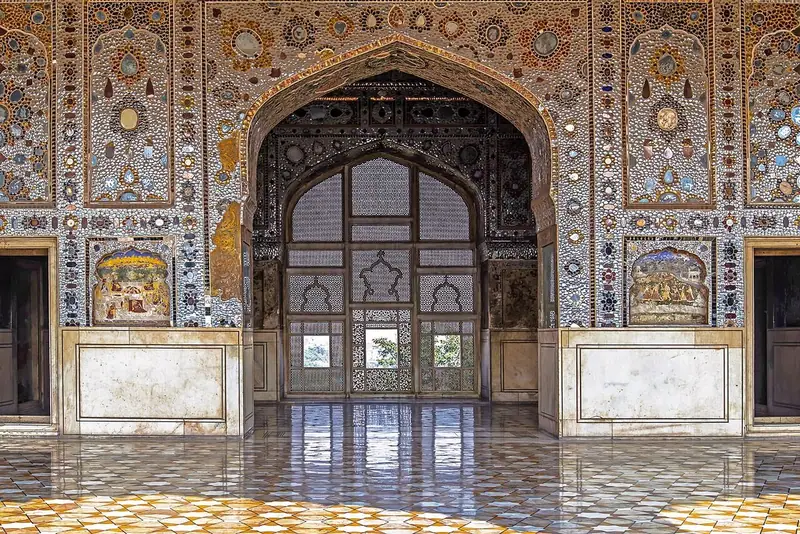 Mughal9 stops · 1566 – 1674 (Akbar’s fort to the Alamgiri Gate)
Lahore Fort and Shalamar Gardens audio guide
The Mughal citadel of Lahore, with its marble halls, Palace of Mirrors and tiled Picture Wall, and Shah Jahan’s terraced Shalamar Gardens across the city.
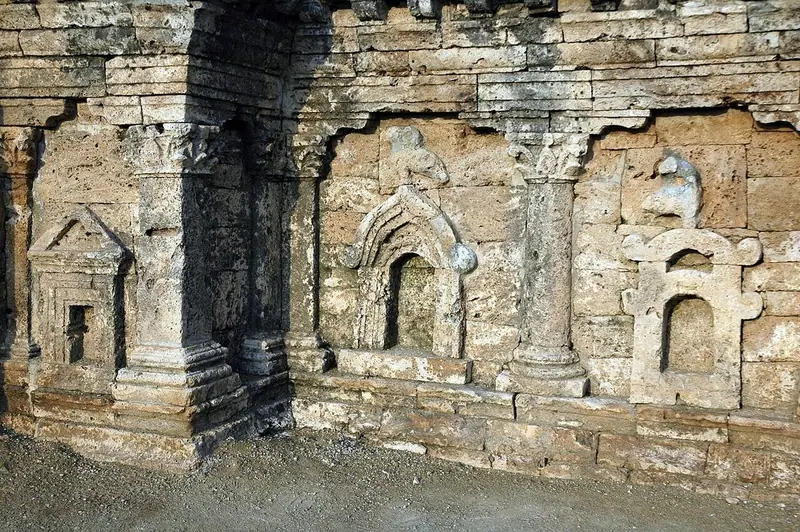 Gandharan9 stops · c. 1000 BCE – 5th century CE
Taxila audio guide
Ancient Gandhara’s great city: the Taxila Museum, the Bhir Mound, the Dharmarajika stupa, Greek-planned Sirkap, the Ionic temple at Jandial and the hill monasteries of Mohra Muradu and Jaulian.
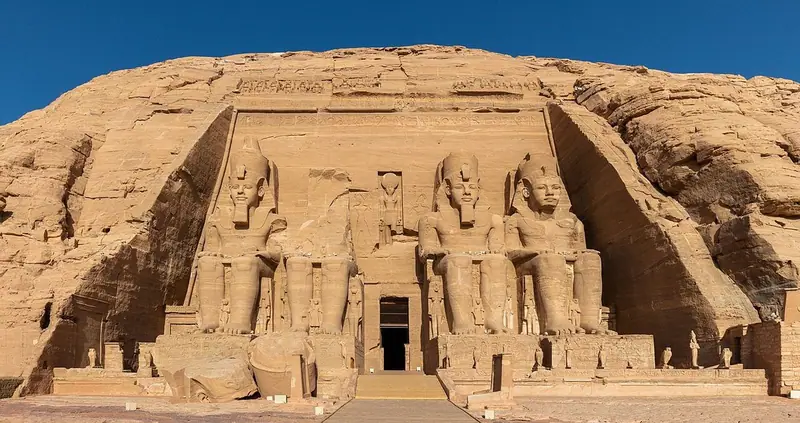 Ancient Egyptian8 stops · 13th century BCE
Abu Simbel audio guide
Ramesses II’s colossal temple façade, the Temple of Nefertari, and how both were rescued from the waters of Lake Nasser.
Every guide, in every country
Mohenjo-daro and every other guide we publish, including future ones. One payment, no subscription.