Before you start
Cusco lies in a high Andean valley at about 3,400 metres above sea level, and its historic centre has been a UNESCO World Heritage Site since 1983. Most visitors arrive by air or by bus and spend several days here before visiting Machu Picchu and the Sacred Valley. The route is about three kilometres on steep, narrow cobbled streets, so take it slowly, particularly in your first days at altitude. Churches are places of worship, so dress modestly and be respectful during services; some sites require separate tickets or the Cusco tourist ticket, and photography is not allowed inside some churches. This guide starts in the Plaza de Armas and the cathedral, climbs past the Twelve-Angled Stone to San Blas, returns to the Jesuit church on the plaza, and follows the Inca walls of Loreto Street to the Qorikancha.
Use it as a self-guided tour of the Historic Centre of Cusco: 7 stops in visit order, each played when you’re ready, at your own pace.
 Free preview · Stop 1
Plaza de Armas
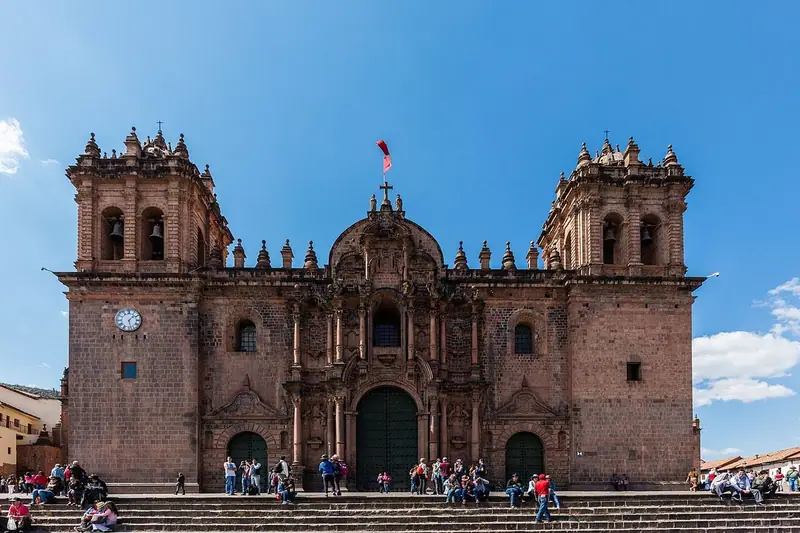
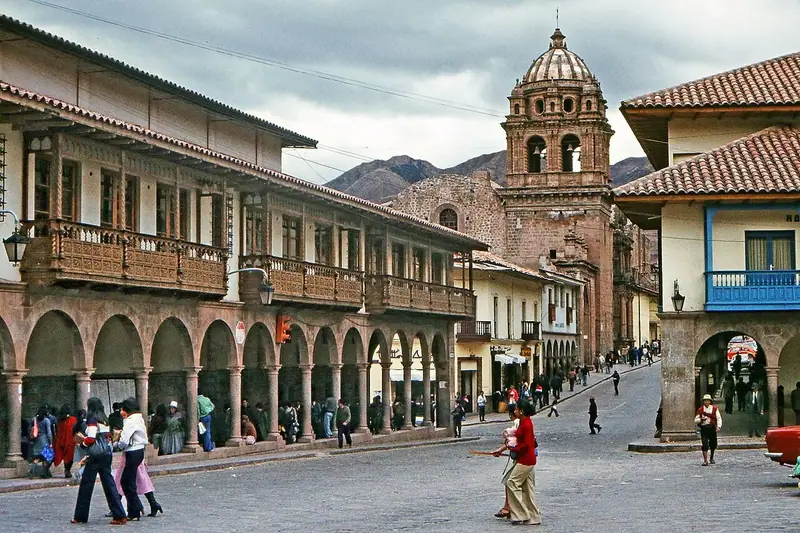
Begin in the Plaza de Armas, the heart of Cusco for more than five centuries. In Inca times the main square, called Huacaypata, was even larger than today and was the setting for great ceremonies, when the mummies of past rulers were brought out to attend the festivities. The Spanish redrew the square and surrounded it with churches and colonial arcades, with the cathedral on one side and the Jesuit church of La Compañía on another. The square has also seen tragedy: in 1781 Túpac Amaru II, leader of a great rebellion against Spanish rule, was executed here. Look at the arcades, the wooden balconies and the fountain in the centre, and at the hillsides above the city. Take a seat on a bench for a while and watch the life of the square, which is still the city’s meeting place.
Photo: W. Bulach · CC BY-SA 4.0 · Wikimedia Commons
What to see at the Historic Centre of Cusco: 7 stops, in visit order
- 01
 Plaza de ArmasThe great square of the IncasFree preview
- 02
 The CathedralOn the palace of an Inca rulerIn the guide
- 03
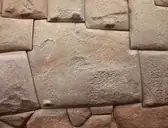 Twelve-Angled StoneHatun RumiyocIn the guide
- 04
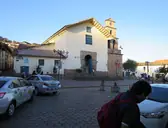 San BlasThe artists’ quarterIn the guide
- 05
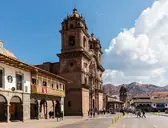 La CompañíaThe Jesuit churchIn the guide
- 06
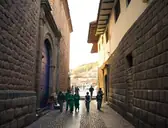 Loreto StreetAn alley of Inca wallsIn the guide
- 07
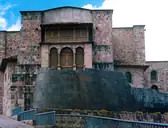 The QorikanchaTemple of the SunIn the guide
Site map of the Historic Centre of Cusco
History of the Historic Centre of Cusco
According to tradition, Cusco was founded by Manco Cápac, the legendary first ruler of the Incas, and it grew from a small kingdom in the valley into the capital of the largest empire in the Americas in the fifteenth and early sixteenth centuries. Andean peoples had lived in the valley long before, including the Killke culture before the Incas. The ruler Pachacuti, who came to power around 1438, is credited with rebuilding the city as a grand capital, with palaces and temples of finely fitted stone. The Spanish arrived in 1533, and after Manco Inca’s great siege in 1536 they rebuilt Cusco as a colonial city, placing churches, convents and mansions on top of Inca walls, which often survived earthquakes better than the new buildings. The result is the layered city you see today.
Historic Centre of Cusco guide: questions
How many stops does the Historic Centre of Cusco guide have?
7 stops, in visit order: 1. Plaza de Armas; 2. The Cathedral; 3. Twelve-Angled Stone; 4. San Blas; 5. La Compañía; 6. Loreto Street; 7. The Qorikancha.
Can I do a self-guided tour of the Historic Centre of Cusco with this guide?
Yes. The guide is made for a self-guided tour: 7 stops in visit order, each with a photo, a story and a voice, so you can explore the Historic Centre of Cusco at your own pace, without joining a group. Download it before you go and it works offline.
How long is each guide?
The 7 stops add up to about 5 minutes of listening in total. You play each stop when you’re ready, so you can go at your own pace.
Does the guide work offline?
Yes, once it’s downloaded. The guide is a single self-contained web page (about 6.6 MB) with the photos, text and audio built in. Download it to your phone before you go (Wi-Fi is best); after that it opens in any modern browser on iPhone or Android, with no app, account or mobile signal needed.
Does it use GPS or need my location?
No. The guide doesn’t use GPS and doesn’t know where you are: you play each stop when you reach it. It works on iPhone and Android in any modern browser, and it’s in English.
What’s included?
One self-contained HTML guide: 7 stops in visit order, each with a photo, text and a voice, plus the story of who built the site.
Who built the Historic Centre of Cusco?
According to tradition, Cusco was founded by Manco Cápac, the legendary first ruler of the Incas, and it grew from a small kingdom in the valley into the capital of the largest empire in the Americas in the fifteenth and early sixteenth centuries. Andean peoples had lived in the valley long before, including the Killke culture before the Incas.
Where is the Historic Centre of Cusco?
Cusco lies in a high Andean valley at about 3,400 metres above sea level, and its historic centre has been a UNESCO World Heritage Site since 1983.
Is there a free audio guide to the Historic Centre of Cusco?
The first stop, Plaza de Armas, is free to read and hear on this page, so you can try the Historic Centre of Cusco audio tour before you buy. The full guide, with all 7 stops, is a one-off purchase: download it once and it’s yours to keep, working offline.
Is the Historic Centre of Cusco guide worth it?
If you’d like to know what you’re looking at, yes. For $10 you get 7 stops in visit order, each with a photo, a short history and a voice you play when you’re ready, plus a site map of the stops, and about 5 minutes of listening in all. It’s short on purpose, so you spend your time looking, not listening. It’s yours to keep, works offline and needs no app. The first stop is free on this page, so you can try it before you buy. If you’d like hours of detail, a guided tour will go deeper.
Audio guide or guided tour?
It depends how you like to visit. This guide lets you explore the Historic Centre of Cusco at your own pace, at any time, for a one-off price. A guided tour gives you a live expert you can ask questions, but at fixed times and usually for a higher price. Many people use both: a tour for the big picture, and the guide to read beforehand or to revisit the stops in their own time.
Is this the official Historic Centre of Cusco guide?
No. It’s an independent guide by The Historian Guide, not affiliated with or endorsed by the operator of the Historic Centre of Cusco. For tickets and opening hours, check the official site operator before you go.
Does the guide include entry tickets or opening hours?
No. The guide is a digital companion only. Admission to the Historic Centre of Cusco is separate, so check the official site operator for current tickets and opening hours before you go.
- Stop 1 · Plaza de Armas: W. Bulach · CC BY-SA 4.0 · Wikimedia Commons · resized
- Stop 2 · The Cathedral (also the cover): Diego Delso · CC BY-SA 4.0 · Wikimedia Commons · resized
- Stop 3 · Twelve-Angled Stone: Unukorno · CC BY 3.0 · Wikimedia Commons · resized
- Stop 4 · San Blas: Garett Schromm · CC BY-SA 4.0 · Wikimedia Commons · resized
- Stop 5 · La Compañía: Diego Delso · CC BY-SA 4.0 · Wikimedia Commons · resized
- Stop 6 · Loreto Street: Ricardo Sánchez · CC BY 2.0 · Wikimedia Commons · resized
- Stop 7 · The Qorikancha: Håkan Svensson (Xauxa) · CC BY 2.5 · Wikimedia Commons · resized


All photographs from Wikimedia Commons under the licences shown.
More guides in Peru
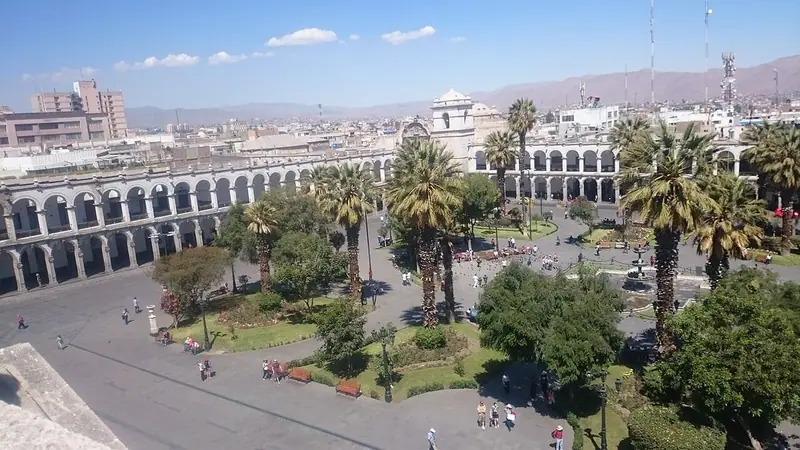 Spanish Colonial7 stops · 16th–19th century CE
Arequipa audio guide
The White City of volcanic stone: the Santa Catalina Monastery, the cathedral and La Compañía on the Plaza de Armas, the ice maiden Juanita and the Yanahuara viewpoint.
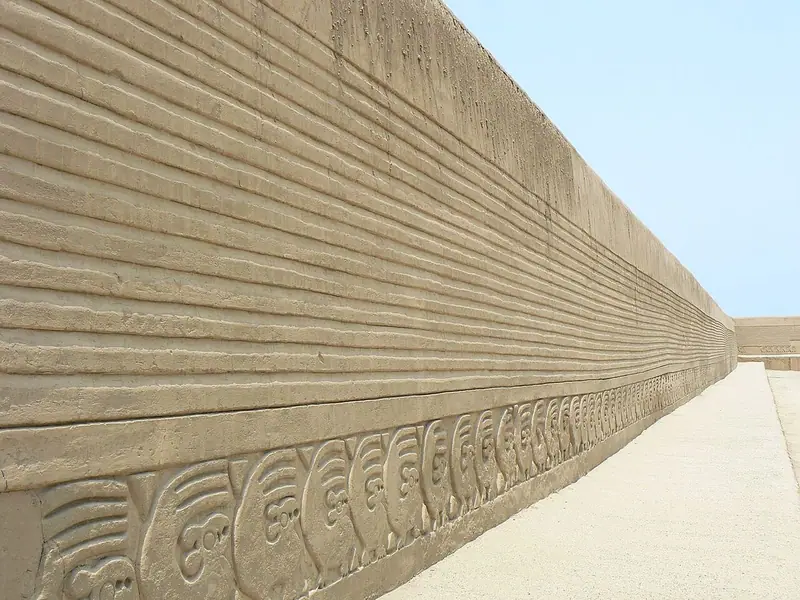 Chimú8 stops · c. 900 – 1470 CE
Chan Chan audio guide
The vast adobe capital of the Chimú kings by the Pacific: the palace of Nik An with its friezes of fish and nets, its audiencias and royal tomb, and the rainbow temple of the Huaca Arco Iris.
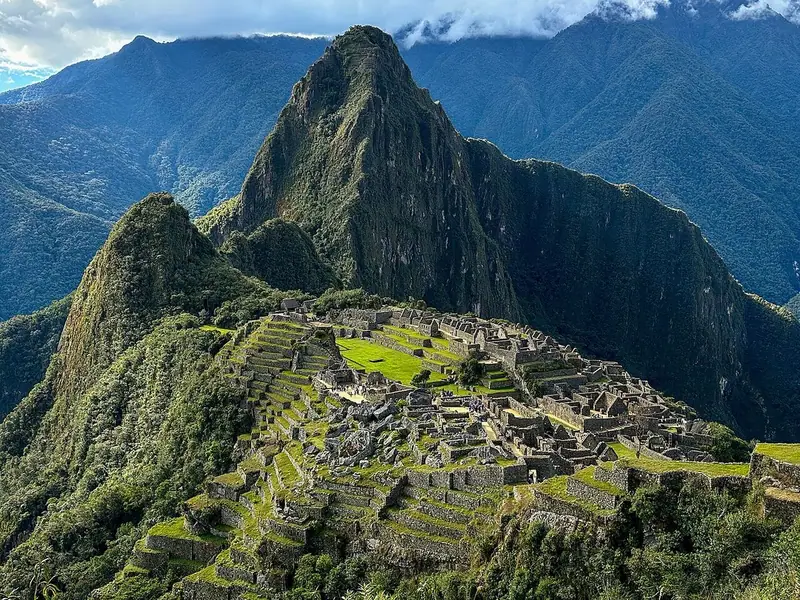 Inca8 stops · 15th century CE
Machu Picchu audio guide
Through the city gate to the Temple of the Sun, the Intihuatana and the Temple of the Condor, high above the Urubamba.
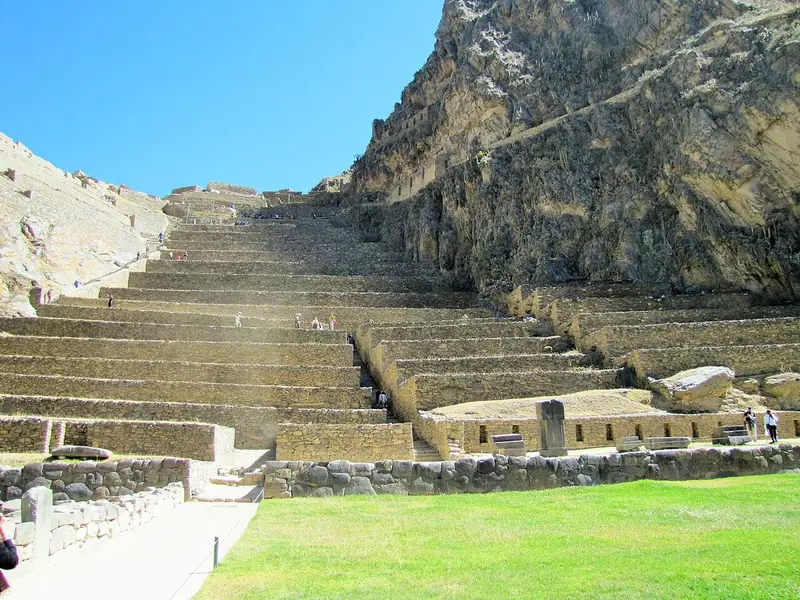 Inca6 stops · 15th–16th century CE
Ollantaytambo audio guide
The Pumatallis terraces, the Temple Sector’s six great monoliths and the Inca town below.
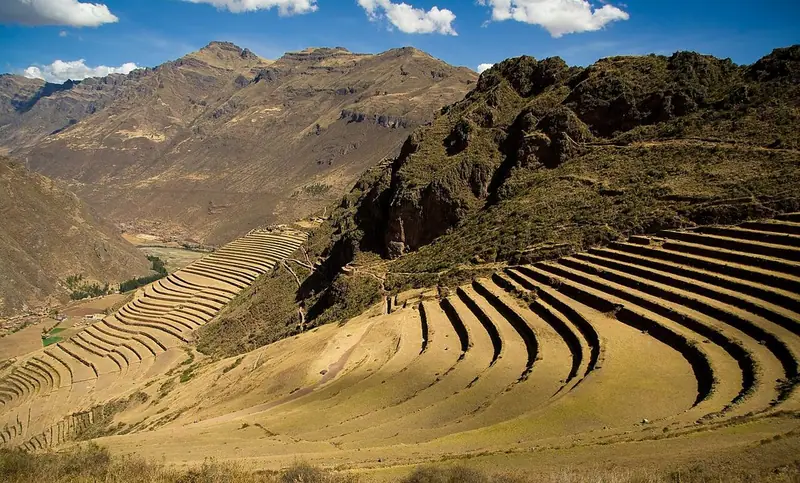 Inca6 stops · 15th century CE
Pisac audio guide
Sweeping terraces and the Intiwatana on a ridge high above the Sacred Valley, then the path down to the town.
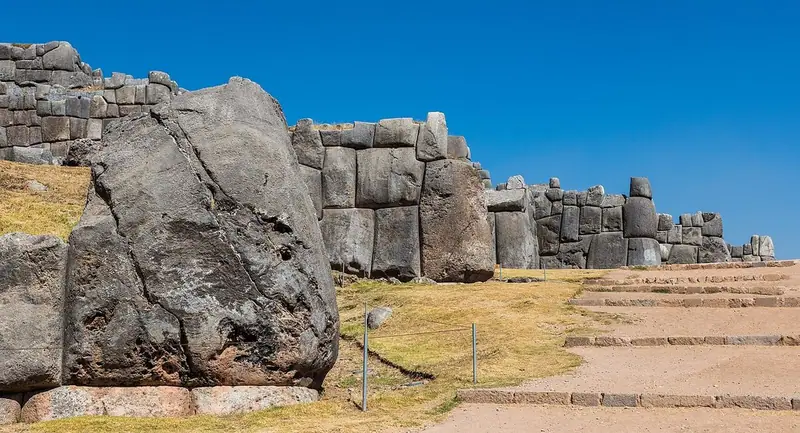 Inca6 stops · 15th–16th century CE
Sacsayhuamán audio guide
Zigzag walls of giant fitted stones on the hill above Cusco, guarding the Inca capital.
Every guide, in every country
Historic Centre of Cusco and every other guide we publish, including future ones. One payment, no subscription.