Before you start
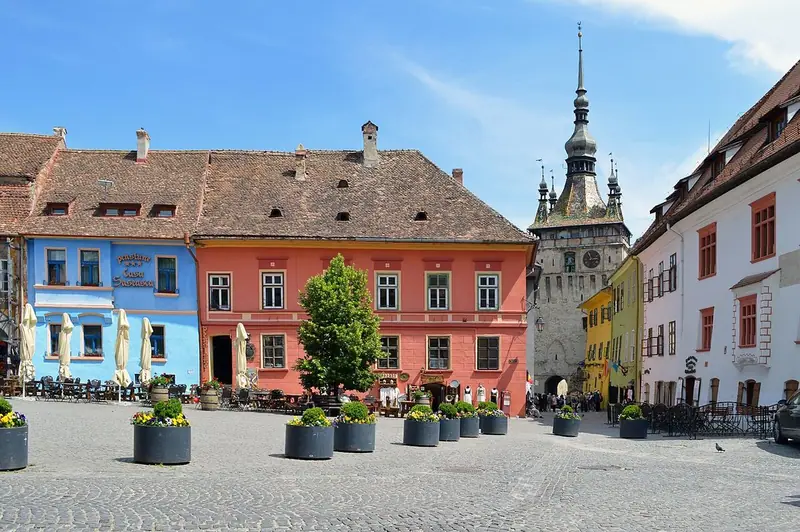
Sighișoara, in the heart of Transylvania, is a walled medieval town on a hilltop above the River Târnava Mare, with a famous clock tower, guild towers, Gothic churches and narrow streets of brightly painted houses. Its historic centre was inscribed as a UNESCO World Heritage Site in 1999, and it is one of the few medieval citadels in Europe that is still inhabited. The citadel is small and easily walked, but the streets are steep and cobbled, and the covered stairway to the Church on the Hill has many steps. This guide enters through the Clock Tower, visits the Monastery Church, the house of Vlad Dracul and Citadel Square, climbs the Scholars’ Stairs to the Church on the Hill, and returns past the guild towers.
Use it as a self-guided tour of Sighișoara: 8 stops in visit order, each played when you’re ready, at your own pace.
 Free preview · Stop 1
The Clock Tower
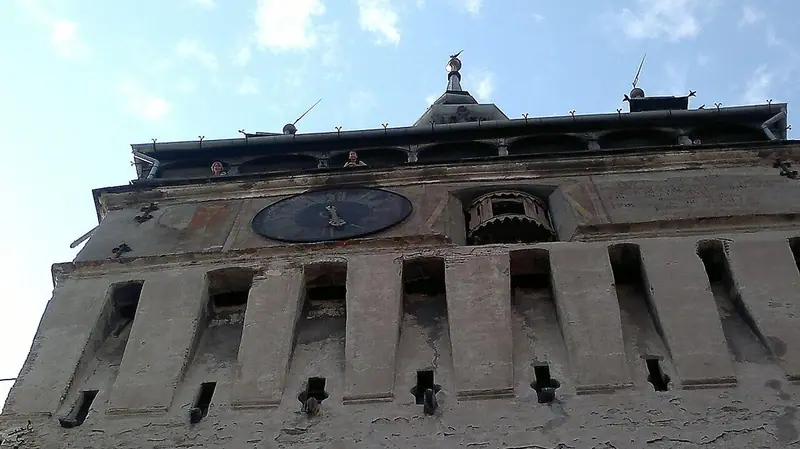
Begin at the foot of the Clock Tower, the symbol of Sighișoara, which guards the main entrance to the citadel. Built in the fourteenth century as the main gate and later raised, it is about sixty-four metres high, with a colourful tiled roof and four small corner turrets, a sign that the town once had the right to judge and punish. Pass beneath it into the citadel, and look up at the clock and its carved wooden figures. On the side facing the citadel, figures represent Peace, Justice and Law, with a drummer, while on the side facing the lower town, beside a drummer and an executioner, seven figures, one for each day of the week, turn into view at midnight. The tower houses the town’s history museum, and you can climb to the gallery at the top for fine views over the roofs of the citadel and the lower town.
Photo: Albertdoris · CC BY-SA 4.0 · Wikimedia Commons
What to see at Sighișoara: 8 stops, in visit order
- 01
 The Clock TowerGateway to the citadelFree preview
- 02
 Monastery ChurchSaxon carpetsIn the guide
- 03
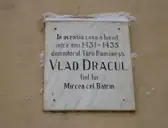 Vlad Dracul HouseThe Dracula connectionIn the guide
- 04
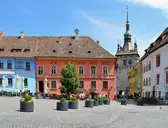 Citadel SquareHeart of the citadelIn the guide
- 05
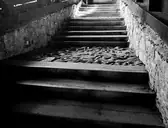 Scholars’ StairsA covered stairwayIn the guide
- 06
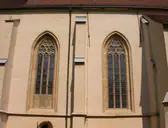 Church on the HillA Gothic hall churchIn the guide
- 07
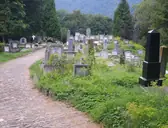 Saxon CemeteryRope-makers’ TowerIn the guide
- 08
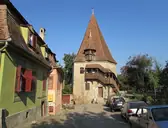 Guild TowersDefenders of the wallsIn the guide
Site map of Sighișoara
History of Sighișoara
Sighișoara was built by German settlers, known as Transylvanian Saxons, invited by the kings of Hungary in the twelfth century to farm, trade and defend the borders of the kingdom. By the fourteenth century it was a prosperous town of craftsmen and merchants, organised in guilds, each of which built and defended a tower in the town walls. In the fifteenth century, Vlad II Dracul, father of Vlad the Impaler, lived here, and according to tradition his son was born in the town. Transylvania later came under Habsburg rule and in 1918 became part of Romania. Most of the Saxon community emigrated to Germany in the late twentieth century, but their town survives.
Sighișoara guide: questions
How many stops does the Sighișoara guide have?
8 stops, in visit order: 1. The Clock Tower; 2. Monastery Church; 3. Vlad Dracul House; 4. Citadel Square; 5. Scholars’ Stairs; 6. Church on the Hill; 7. Saxon Cemetery; 8. Guild Towers.
Can I do a self-guided tour of Sighișoara with this guide?
Yes. The guide is made for a self-guided tour: 8 stops in visit order, each with a photo, a story and a voice, so you can explore Sighișoara at your own pace, without joining a group. Download it before you go and it works offline.
How long is each guide?
The 8 stops add up to about 5 minutes of listening in total. You play each stop when you’re ready, so you can go at your own pace.
Does the guide work offline?
Yes, once it’s downloaded. The guide is a single self-contained web page (about 6.9 MB) with the photos, text and audio built in. Download it to your phone before you go (Wi-Fi is best); after that it opens in any modern browser on iPhone or Android, with no app, account or mobile signal needed.
Does it use GPS or need my location?
No. The guide doesn’t use GPS and doesn’t know where you are: you play each stop when you reach it. It works on iPhone and Android in any modern browser, and it’s in English.
What’s included?
One self-contained HTML guide: 8 stops in visit order, each with a photo, text and a voice, plus the story of who built the site.
Who built Sighișoara?
Sighișoara was built by German settlers, known as Transylvanian Saxons, invited by the kings of Hungary in the twelfth century to farm, trade and defend the borders of the kingdom. By the fourteenth century it was a prosperous town of craftsmen and merchants, organised in guilds, each of which built and defended a tower in the town walls.
Where is Sighișoara?
Sighișoara, in the heart of Transylvania, is a walled medieval town on a hilltop above the River Târnava Mare, with a famous clock tower, guild towers, Gothic churches and narrow streets of brightly painted houses.
Is there a free audio guide to Sighișoara?
The first stop, The Clock Tower, is free to read and hear on this page, so you can try the Sighișoara audio tour before you buy. The full guide, with all 8 stops, is a one-off purchase: download it once and it’s yours to keep, working offline.
Is the Sighișoara guide worth it?
If you’d like to know what you’re looking at, yes. For $10 you get 8 stops in visit order, each with a photo, a short history and a voice you play when you’re ready, plus a site map of the stops, and about 5 minutes of listening in all. It’s short on purpose, so you spend your time looking, not listening. It’s yours to keep, works offline and needs no app. The first stop is free on this page, so you can try it before you buy. If you’d like hours of detail, a guided tour will go deeper.
Audio guide or guided tour?
It depends how you like to visit. This guide lets you explore Sighișoara at your own pace, at any time, for a one-off price. A guided tour gives you a live expert you can ask questions, but at fixed times and usually for a higher price. Many people use both: a tour for the big picture, and the guide to read beforehand or to revisit the stops in their own time.
Is this the official Sighișoara guide?
No. It’s an independent guide by The Historian Guide, not affiliated with or endorsed by the operator of Sighișoara. For tickets and opening hours, check the official site operator before you go.
Does the guide include entry tickets or opening hours?
No. The guide is a digital companion only. Admission to Sighișoara is separate, so check the official site operator for current tickets and opening hours before you go.
- Stop 1 · The Clock Tower: Albertdoris · CC BY-SA 4.0 · Wikimedia Commons · resized
- Stop 2 · Monastery Church: Antimuonium · CC BY-SA 4.0 · Wikimedia Commons · resized
- Stop 3 · Vlad Dracul House: Stefano Vigorelli · CC BY-SA 4.0 · Wikimedia Commons · resized
- Stop 4 · Citadel Square (also the cover): DimiTalen · CC0 · Wikimedia Commons · resized
- Stop 5 · Scholars’ Stairs: Ghișa Ștefania-Maria · CC BY-SA 4.0 · Wikimedia Commons · resized
- Stop 6 · Church on the Hill: Andrei kokelburg · CC BY-SA 3.0 ro · Wikimedia Commons · resized
- Stop 7 · Saxon Cemetery: Alessio Damato · CC BY-SA 3.0 · Wikimedia Commons · resized
- Stop 8 · Guild Towers: Cezar Suceveanu · CC BY-SA 4.0 · Wikimedia Commons · resized


All photographs from Wikimedia Commons under the licences shown.
More guides in Romania
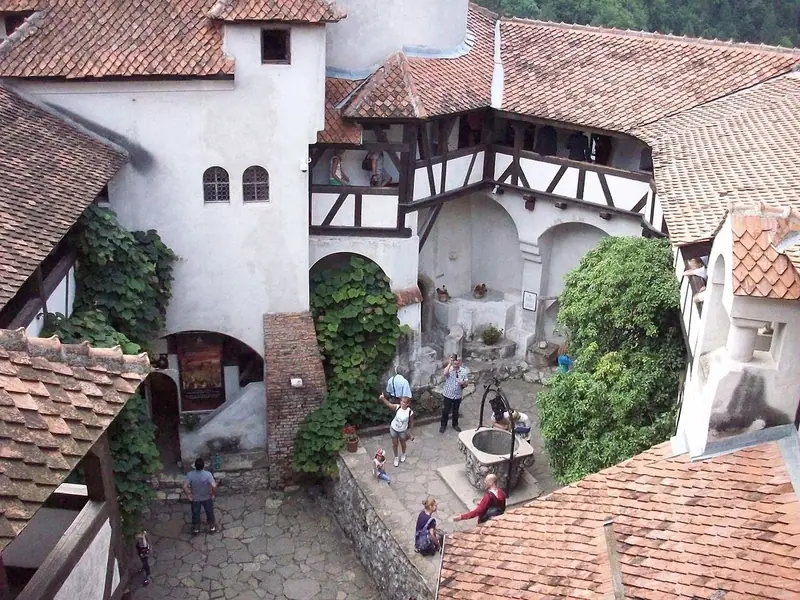 Transylvanian Saxon7 stops · 1377–20th century
Bran Castle audio guide
Climb from the Carpathian pass to the castle on the rock, and find the real story of Saxon townsmen and Queen Marie behind the Dracula legend.
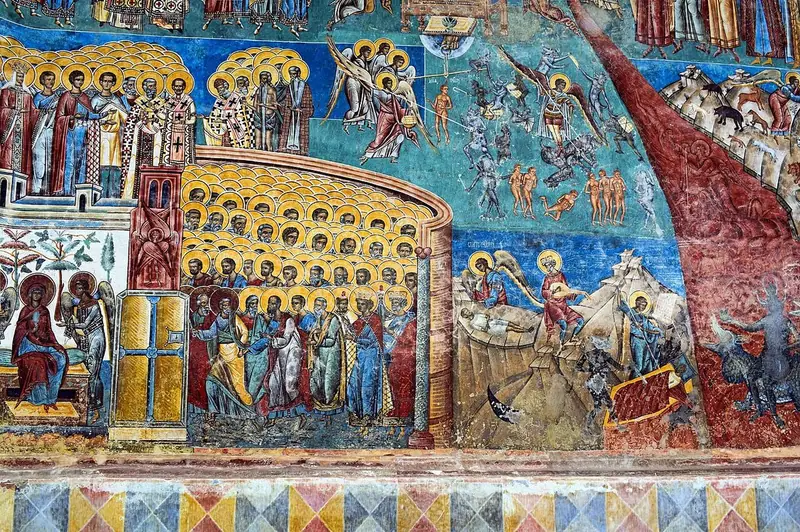 Byzantine8 stops · 1487 – c. 1601 CE
Painted Churches of Bucovina audio guide
Eight churches of Moldavia whose outer walls are covered in sixteenth-century frescoes, from Stephen the Great’s Pătrăuți to the Last Judgement of Voroneț.
 Kingdom of Romania8 stops · 1873–1947
Peleș Castle audio guide
Climb through the royal estate to Carol I’s palace of towers and timber, from the Hall of Honour to the armouries and theatre.
Every guide, in every country
Sighișoara and every other guide we publish, including future ones. One payment, no subscription.