Before you start
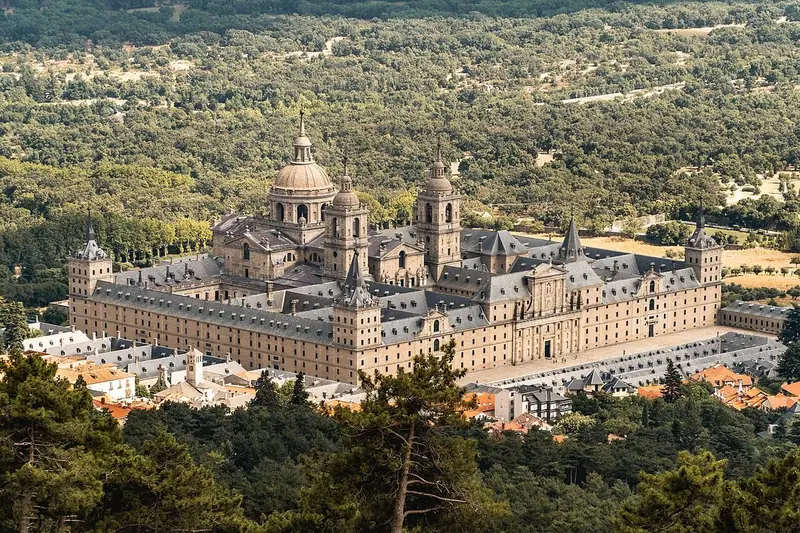
The Royal Monastery of San Lorenzo de El Escorial stands in the town of San Lorenzo de El Escorial, at the foot of the Guadarrama mountains, about fifty kilometres north-west of Madrid. Local trains from Madrid run to El Escorial station, from where it is a walk uphill or a short bus ride, and there are direct buses from Madrid. It is a monastery, a palace, a church, a royal burial place and a library all in one, and it has been a UNESCO World Heritage Site since 1984. It is managed by Patrimonio Nacional, and a community of Augustinian monks still lives here. This guide starts outside the main facade, then follows the visitor route through the palace, the royal tombs and the basilica, and finishes in the library.
Use it as a self-guided tour of El Escorial: 7 stops in visit order, each played when you’re ready, at your own pace.
 Free preview · Stop 1
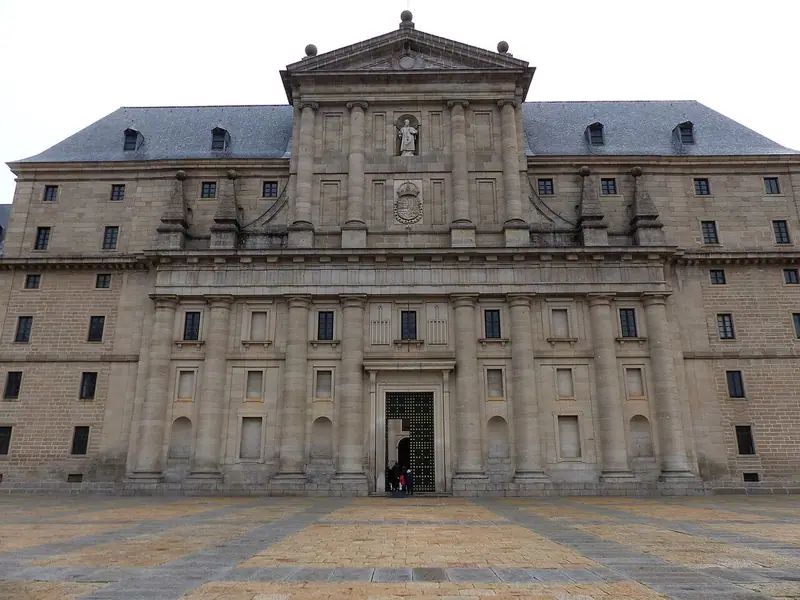
The Main Facade
Begin outside on the large esplanade in front of the west facade. Look at the length of the building, built of grey granite from the surrounding mountains, with its rows of plain windows and its towers at the corners. There is very little decoration, and this severity was what Philip II wanted, as a sign of his religious devotion and his power. The plan is a huge rectangle, divided into courtyards. According to a popular tradition, it was meant to recall the gridiron on which Saint Lawrence was martyred, but there is no evidence that this was the intention. Above the main entrance, look for the statue of Saint Lawrence, holding a gridiron, and the royal coat of arms. Behind you, the mountains rise towards the sky, and you can see why Philip chose this quiet place.
Photo: Benjamín Núñez González · CC BY-SA 4.0 · Wikimedia Commons
What to see at El Escorial: 7 stops, in visit order
- 01
 The Main FacadeA monastery fit for a kingFree preview
- 02
 The Palace of Philip IIThe king’s private roomsIn the guide
- 03
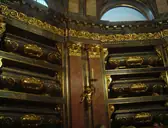 The Royal PantheonTombs of the kingsIn the guide
- 04
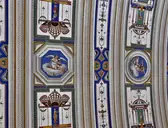 The Chapter RoomsMasterpieces of paintingIn the guide
- 05
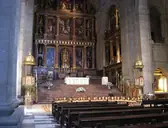 The BasilicaThe heart of El EscorialIn the guide
- 06
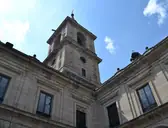 The Courtyard of the KingsThe entrance to the basilicaIn the guide
- 07
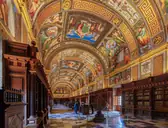 The LibraryA treasury of booksIn the guide
History of El Escorial
El Escorial was built by the Spanish monarchy at the height of the Spanish Empire, which began with the voyages of Columbus in 1492 and lost its last American colonies in 1898. In the sixteenth century the Habsburg kings of Spain ruled lands across Europe and the Americas. King Philip II, the son of the Emperor Charles V, founded El Escorial to give thanks for his victory over the French at the Battle of Saint-Quentin in 1557, won on the feast of Saint Lawrence, and to serve as a burial place for his family. Building began in 1563 under the architect Juan Bautista de Toledo, and after his death Juan de Herrera completed it in 1584. Its plain, severe style became known as the Herrerian style.
El Escorial guide: questions
How many stops does the El Escorial guide have?
7 stops, in visit order: 1. The Main Facade; 2. The Palace of Philip II; 3. The Royal Pantheon; 4. The Chapter Rooms; 5. The Basilica; 6. The Courtyard of the Kings; 7. The Library.
Can I do a self-guided tour of El Escorial with this guide?
Yes. The guide is made for a self-guided tour: 7 stops in visit order, each with a photo, a story and a voice, so you can explore El Escorial at your own pace, without joining a group. Download it before you go and it works offline.
How long is each guide?
The 7 stops add up to about 5 minutes of listening in total. You play each stop when you’re ready, so you can go at your own pace.
Does the guide work offline?
Yes, once it’s downloaded. The guide is a single self-contained web page (about 6.8 MB) with the photos, text and audio built in. Download it to your phone before you go (Wi-Fi is best); after that it opens in any modern browser on iPhone or Android, with no app, account or mobile signal needed.
Does it use GPS or need my location?
No. The guide doesn’t use GPS and doesn’t know where you are: you play each stop when you reach it. It works on iPhone and Android in any modern browser, and it’s in English.
What’s included?
One self-contained HTML guide: 7 stops in visit order, each with a photo, text and a voice, plus the story of who built the site.
Who built El Escorial?
El Escorial was built by the Spanish monarchy at the height of the Spanish Empire, which began with the voyages of Columbus in 1492 and lost its last American colonies in 1898. In the sixteenth century the Habsburg kings of Spain ruled lands across Europe and the Americas.
Where is El Escorial?
The Royal Monastery of San Lorenzo de El Escorial stands in the town of San Lorenzo de El Escorial, at the foot of the Guadarrama mountains, about fifty kilometres north-west of Madrid.
Is there a free audio guide to El Escorial?
The first stop, The Main Facade, is free to read and hear on this page, so you can try the El Escorial audio tour before you buy. The full guide, with all 7 stops, is a one-off purchase: download it once and it’s yours to keep, working offline.
Is the El Escorial guide worth it?
If you’d like to know what you’re looking at, yes. For $10 you get 7 stops in visit order, each with a photo, a short history and a voice you play when you’re ready, about 5 minutes of listening in all. It’s short on purpose, so you spend your time looking, not listening. It’s yours to keep, works offline and needs no app. The first stop is free on this page, so you can try it before you buy. If you’d like hours of detail, a guided tour will go deeper.
Audio guide or guided tour?
It depends how you like to visit. This guide lets you explore El Escorial at your own pace, at any time, for a one-off price. A guided tour gives you a live expert you can ask questions, but at fixed times and usually for a higher price. Many people use both: a tour for the big picture, and the guide to read beforehand or to revisit the stops in their own time.
Is this the official El Escorial guide?
No. It’s an independent guide by The Historian Guide, not affiliated with or endorsed by the operator of El Escorial. For tickets and opening hours, check the official site operator before you go.
Does the guide include entry tickets or opening hours?
No. The guide is a digital companion only. Admission to El Escorial is separate, so check the official site operator for current tickets and opening hours before you go.
- Stop 1 · The Main Facade: Benjamín Núñez González · CC BY-SA 4.0 · Wikimedia Commons · resized
- Stop 2 · The Palace of Philip II: Artinpl · CC0 · Wikimedia Commons · resized
- Stop 3 · The Royal Pantheon: Bocachete · Public domain · Wikimedia Commons · resized
- Stop 4 · The Chapter Rooms: Jl FilpoC · CC BY-SA 4.0 · Wikimedia Commons · resized
- Stop 5 · The Basilica: AldanaN · CC BY-SA 4.0 · Wikimedia Commons · resized
- Stop 6 · The Courtyard of the Kings: Dorieo · CC BY-SA 3.0 · Wikimedia Commons · resized
- Stop 7 · The Library: Diego Delso · CC BY-SA 4.0 · Wikimedia Commons · resized
- Cover: Zvonimir Stamenov · CC BY-SA 4.0 · Wikimedia Commons · resized


All photographs from Wikimedia Commons under the licences shown.
More guides in Spain
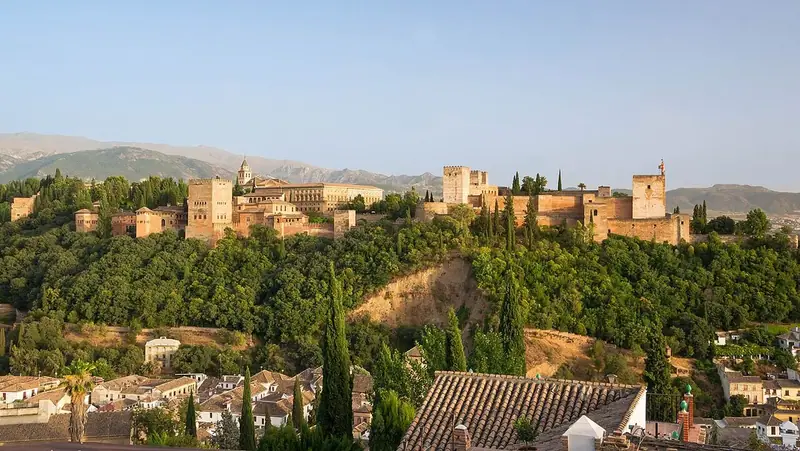 Nasrid9 stops · 13th–15th century CE
Alhambra audio guide
Climb to the Nasrid royal city above Granada, from the Alcazaba through the Court of the Myrtles and the Court of the Lions to the gardens of the Generalife.
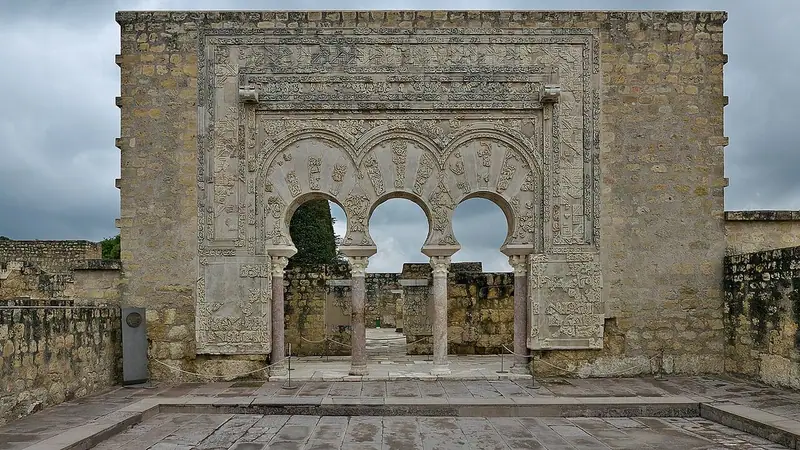 Umayyad9 stops · 936 – 1013 CE
Medina Azahara audio guide
The palace-city of the caliphs of Córdoba on the slopes of the Sierra Morena: the North Gate, the royal house, the House of Ja’far, the great portico, the Salón Rico and the caliph’s mosque.
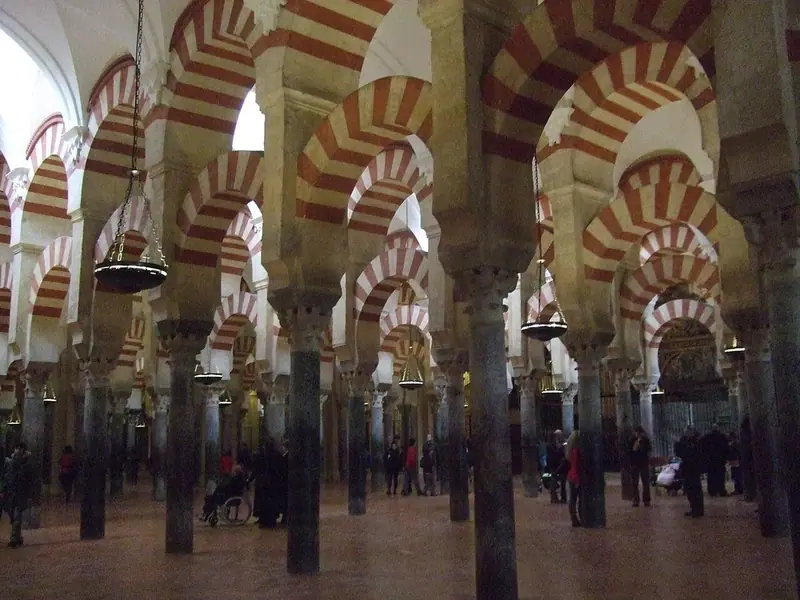 Umayyad8 stops · c. 785–1236 CE
Mosque-Cathedral of Córdoba audio guide
From the Court of the Orange Trees into a forest of columns and arches to the mihrab of the Umayyad mosque that became a cathedral.
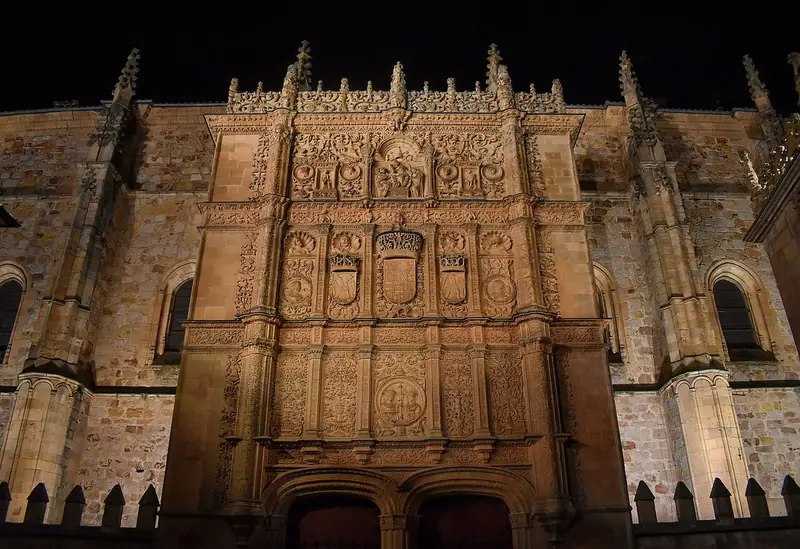 Renaissance11 stops · 1218 – 1755 (university founded to Plaza Mayor completed)
Old City of Salamanca audio guide
A golden-stone university city: the Plateresque university façade, two cathedrals side by side, the House of Shells, the Roman bridge and a Baroque Plaza Mayor.
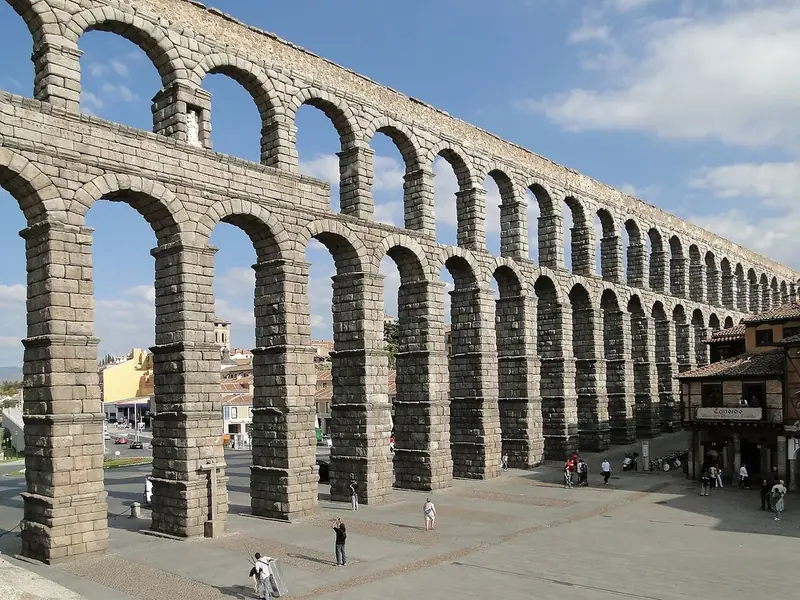 Roman8 stops · c. 100 CE – 16th century
Old Town of Segovia audio guide
From the soaring Roman aqueduct through the Plaza Mayor to the cathedral and the Alcázar on the rocky ridge.
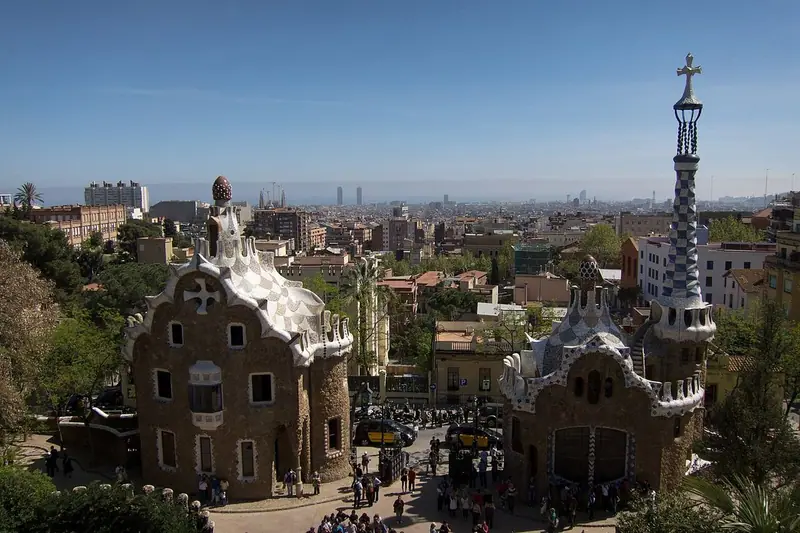 Catalan Modernisme7 stops · 1900–1914 CE
Park Güell audio guide
Climb Gaudí’s Dragon Stairway to the Hypostyle Room and the Nature Square, high above Barcelona in his hillside park.
Every guide, in every country
El Escorial and every other guide we publish, including future ones. One payment, no subscription.