Before you start
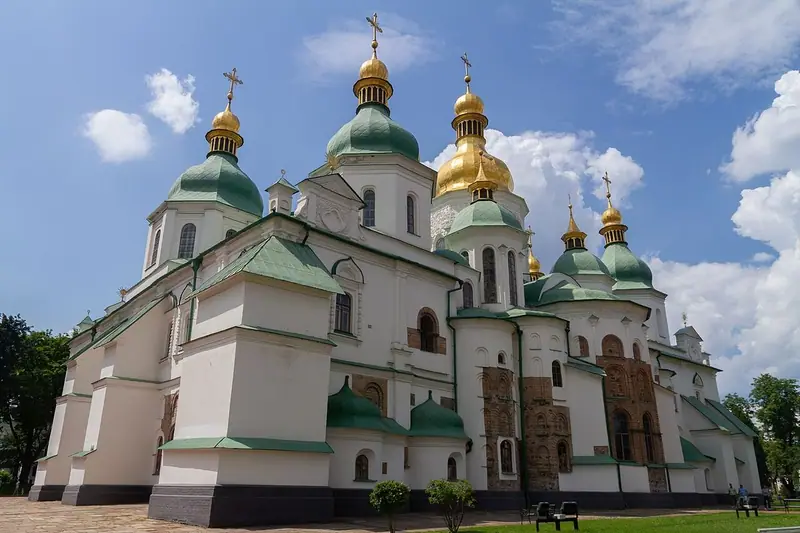
This guide covers the two parts of one World Heritage Site in Kyiv: Saint Sophia Cathedral, in the old upper town, with its monastery buildings, and the Kyiv-Pechersk Lavra, the Monastery of the Caves, about four kilometres to the south-east, above the River Dnipro. UNESCO inscribed them in 1990, the cathedral built to rival Hagia Sophia in Constantinople and the monastery as a centre of Orthodox faith and learning for nine centuries. Since Russia’s full-scale invasion of Ukraine in February 2022, Kyiv has been hit repeatedly by missiles and drones, and in 2023 UNESCO placed the site on the List of World Heritage in Danger. In June 2025 a blast wave damaged part of the cathedral’s eastern façade, and in June 2026 a drone strike set fire to the Lavra’s Dormition Cathedral. This guide says plainly what has been damaged, and what stands today. Check your government’s current travel advice before you plan a visit.
Use it as a self-guided tour of Kyiv: Saint Sophia and the Lavra: 11 stops in visit order, each played when you’re ready, at your own pace.
 Free preview · Stop 1
The Bell Tower of Saint Sophia
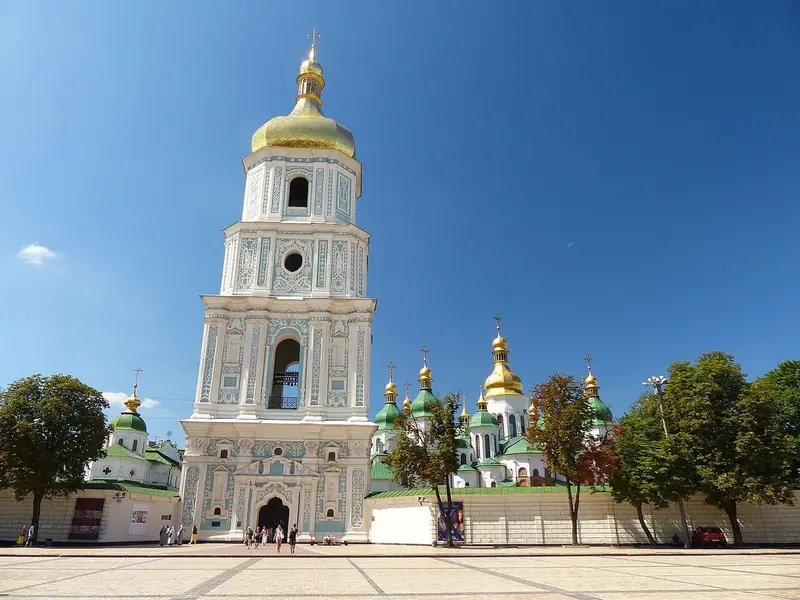
Begin in Sofiiska Square, before the bell tower that forms the main gate to the cathedral precinct. A wooden bell tower stood here until a fire in 1697; it was replaced by a brick tower built at the expense of Hetman Ivan Mazepa, and the great Mazepa bell, cast in 1705 and weighing thirteen tonnes, still hangs on its second level. The upper tiers were rebuilt in the 1740s by the architect Johann Gottfried Schädel, and in the nineteenth century a fourth tier and the pear-shaped gilded dome were added, bringing the tower to a height of seventy-six metres. Its unusual position, to the east of the cathedral rather than beside it, was chosen to make a grand urban ensemble. The tower was restored in the 2000s; check locally whether visitors may climb it. During air-raid alerts the museum closes, and visitors must follow instructions to take shelter.
Photo: Nick Grapsy · CC BY-SA 4.0 · Wikimedia Commons. Taken in 2013
What to see at Kyiv: Saint Sophia and the Lavra: 11 stops, in visit order
- 01
 The Bell Tower of Saint SophiaA Baroque gatewayFree preview
- 02
 Saint Sophia CathedralYaroslav’s answer to ConstantinopleIn the guide
- 03
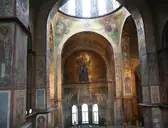 The MosaicsThe Virgin of the unbreakable wallIn the guide
- 04
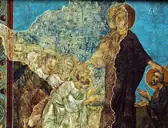 The Frescoes and GraffitiPrinces, saints and acrobatsIn the guide
- 05
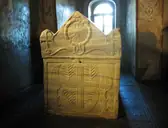 The Tomb of Yaroslav the WiseA marble sarcophagus and a mysteryIn the guide
- 06
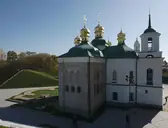 The Church of the Saviour at BerestoveBurial place of the founder of MoscowIn the guide
- 07
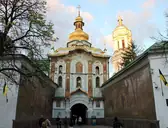 The Holy Gates and the Trinity ChurchThe entrance to the LavraIn the guide
- 08
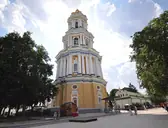 The Great Lavra Bell TowerThe tallest of its ageIn the guide
- 09
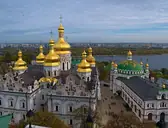 The Dormition CathedralDestroyed in 1941, struck in 2026In the guide
- 10
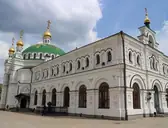 The Refectory ChurchWhere the monks dinedIn the guide
- 11
 The Near and Far CavesThe monastery beneath the hillIn the guide
Site map of Kyiv: Saint Sophia and the Lavra
History of Kyiv: Saint Sophia and the Lavra
Kyiv was the capital of Kyivan Rus', a medieval state of Eastern Slavs that accepted Christianity from Byzantium under Prince Volodymyr, traditionally in 988. His son Yaroslav the Wise, who ruled Kyiv from 1019 to 1054, built Saint Sophia and much of the city’s upper town. Around the middle of the eleventh century the monk Anthony, who had lived on Mount Athos, settled in a cave above the Dnipro, and with his disciple Theodosius founded the Monastery of the Caves. Kyiv was sacked in 1169 and devastated by the Mongols in 1240, and for centuries it was ruled by Lithuania, Poland and then Russia. In the seventeenth and eighteenth centuries churchmen such as Petro Mohyla, and the hetman Ivan Mazepa, rebuilt both sites in the style now called Ukrainian Baroque. Under Soviet rule both became museums, and they have belonged to independent Ukraine since 1991.
Kyiv: Saint Sophia and the Lavra guide: questions
How many stops does the Kyiv: Saint Sophia and the Lavra guide have?
11 stops, in visit order: 1. The Bell Tower of Saint Sophia; 2. Saint Sophia Cathedral; 3. The Mosaics; 4. The Frescoes and Graffiti; 5. The Tomb of Yaroslav the Wise; 6. The Church of the Saviour at Berestove; 7. The Holy Gates and the Trinity Church; 8. The Great Lavra Bell Tower; 9. The Dormition Cathedral; 10. The Refectory Church; 11. The Near and Far Caves.
Can I do a self-guided tour of Kyiv: Saint Sophia and the Lavra with this guide?
Yes. The guide is made for a self-guided tour: 11 stops in visit order, each with a photo, a story and a voice, so you can explore Kyiv: Saint Sophia and the Lavra at your own pace, without joining a group. Download it before you go and it works offline.
How long do you need at Kyiv: Saint Sophia and the Lavra?
We suggest allowing A full day. The 11 stops add up to about 9 minutes of listening, and you play each one when you’re ready, so you can linger wherever you like.
How long is each guide?
The 11 stops add up to about 9 minutes of listening in total. You play each stop when you’re ready, so you can go at your own pace.
Does the guide work offline?
Yes, once it’s downloaded. The guide is a single self-contained web page (about 9.5 MB) with the photos, text and audio built in. Download it to your phone before you go (Wi-Fi is best); after that it opens in any modern browser on iPhone or Android, with no app, account or mobile signal needed.
Does it use GPS or need my location?
No. The guide doesn’t use GPS and doesn’t know where you are: you play each stop when you reach it. It works on iPhone and Android in any modern browser, and it’s in English.
What’s included?
One self-contained HTML guide: 11 stops in visit order, each with a photo, text and a voice, plus the story of who built the site.
Who built Kyiv: Saint Sophia and the Lavra?
Kyiv was the capital of Kyivan Rus', a medieval state of Eastern Slavs that accepted Christianity from Byzantium under Prince Volodymyr, traditionally in 988. His son Yaroslav the Wise, who ruled Kyiv from 1019 to 1054, built Saint Sophia and much of the city’s upper town.
Where is Kyiv: Saint Sophia and the Lavra?
This guide covers the two parts of one World Heritage Site in Kyiv: Saint Sophia Cathedral, in the old upper town, with its monastery buildings, and the Kyiv-Pechersk Lavra, the Monastery of the Caves, about four kilometres to the south-east, above the River Dnipro.
Is there a free audio guide to Kyiv: Saint Sophia and the Lavra?
The first stop, The Bell Tower of Saint Sophia, is free to read and hear on this page, so you can try the Kyiv: Saint Sophia and the Lavra audio tour before you buy. The full guide, with all 11 stops, is a one-off purchase: download it once and it’s yours to keep, working offline.
Is the Kyiv: Saint Sophia and the Lavra guide worth it?
If you’d like to know what you’re looking at, yes. For $10 you get 11 stops in visit order, each with a photo, a short history and a voice you play when you’re ready, plus a site map of the stops, and about 9 minutes of listening in all. It’s short on purpose, so you spend your time looking, not listening. It’s yours to keep, works offline and needs no app. The first stop is free on this page, so you can try it before you buy. If you’d like hours of detail, a guided tour will go deeper.
Audio guide or guided tour?
It depends how you like to visit. This guide lets you explore Kyiv: Saint Sophia and the Lavra at your own pace, at any time, for a one-off price. A guided tour gives you a live expert you can ask questions, but at fixed times and usually for a higher price. Many people use both: a tour for the big picture, and the guide to read beforehand or to revisit the stops in their own time.
Is this the official Kyiv: Saint Sophia and the Lavra guide?
No. It’s an independent guide by The Historian Guide, not affiliated with or endorsed by the operator of Kyiv: Saint Sophia and the Lavra. For tickets and opening hours, check the official site operator before you go.
Does the guide include entry tickets or opening hours?
No. The guide is a digital companion only. Admission to Kyiv: Saint Sophia and the Lavra is separate, so check the official site operator for current tickets and opening hours before you go.
- Stop 1 · The Bell Tower of Saint Sophia: Nick Grapsy · CC BY-SA 4.0 · Wikimedia Commons · resized
- Stop 2 · Saint Sophia Cathedral (also the cover): Maksym Kozlenko · CC BY-SA 4.0 · Wikimedia Commons · resized
- Stop 3 · The Mosaics: A-bg78 · CC BY-SA 3.0 · Wikimedia Commons · resized
- Stop 4 · The Frescoes and Graffiti: Dmitri Semenovsky · CC BY-SA 4.0 · Wikimedia Commons · resized
- Stop 5 · The Tomb of Yaroslav the Wise: Stas-Adolf · CC BY-SA 4.0 · Wikimedia Commons · resized
- Stop 6 · The Church of the Saviour at Berestove: Alexey laa · CC BY-SA 4.0 · Wikimedia Commons · resized
- Stop 7 · The Holy Gates and the Trinity Church: Wadco2 · CC BY-SA 3.0 · Wikimedia Commons · resized
- Stop 8 · The Great Lavra Bell Tower: Jorge Láscar from Australia · CC BY 2.0 · Wikimedia Commons · resized
- Stop 9 · The Dormition Cathedral: Daniel Kraft · CC BY-SA 3.0 · Wikimedia Commons · resized
- Stop 10 · The Refectory Church: Suicasmo · CC BY-SA 4.0 · Wikimedia Commons · resized
- Stop 11 · The Near and Far Caves: Wadco2 · CC BY-SA 3.0 · Wikimedia Commons · resized


All photographs from Wikimedia Commons under the licences shown.
More guides
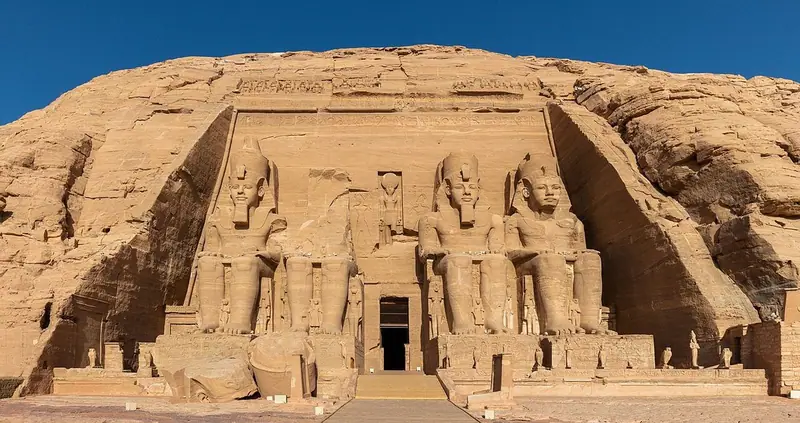 Ancient Egyptian8 stops · 13th century BCE
Abu Simbel audio guide
Ramesses II’s colossal temple façade, the Temple of Nefertari, and how both were rescued from the waters of Lake Nasser.
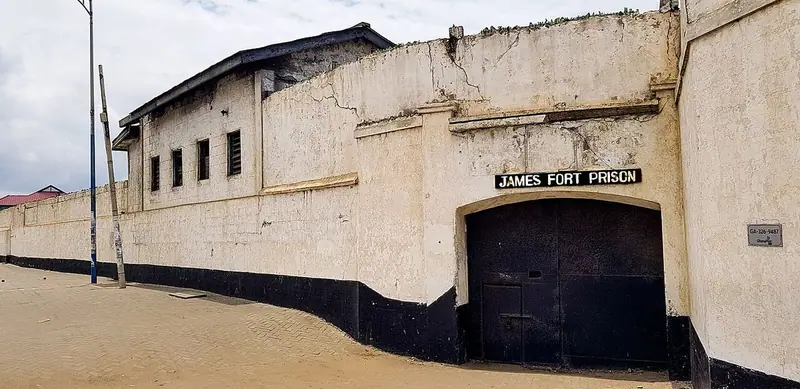 Ga7 stops · 1649–1957
Old Accra audio guide
From the old forts and lighthouse of Jamestown, through the Ga fishing quarter, to the monuments of Ghana’s independence and Osu Castle.
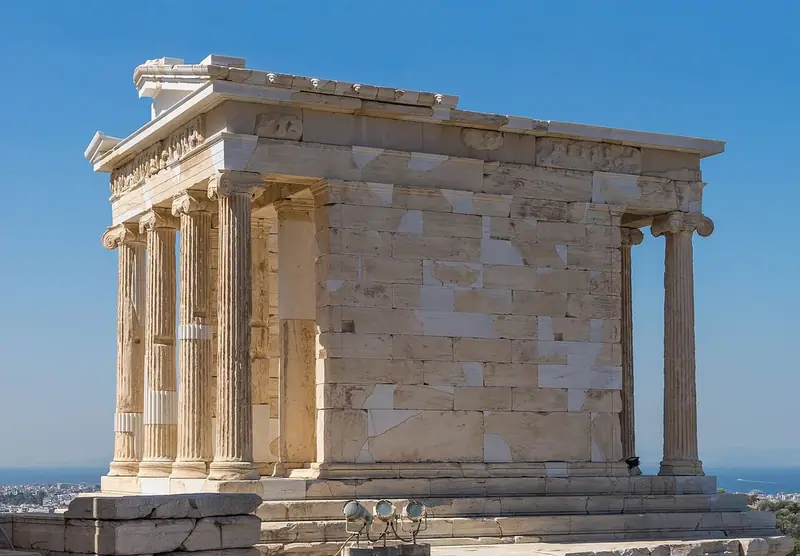 Greek7 stops · 5th century BCE
Acropolis of Athens audio guide
Climb through the Propylaia to the Parthenon and the Erechtheion, on the rock that has crowned Athens for three thousand years.
Every guide, in every country
Kyiv: Saint Sophia and the Lavra and every other guide we publish, including future ones. One payment, no subscription.