Before you start
The British Museum was the first national public museum in the world, and it is still one of the most visited. Its collection tells the story of human culture across two million years, in a great Greek Revival building in Bloomsbury. This guide takes you from the portico and the Great Court to some of its most famous treasures: the Rosetta Stone, a colossal pharaoh, the winged bulls of Assyria, the Parthenon Sculptures, Sutton Hoo and the Lewis Chessmen. Allow three hours. The galleries are vast, so pick up a map, and expect crowds around the Rosetta Stone.
Use it as a self-guided tour of the British Museum: 8 stops in visit order, each played when you’re ready, at your own pace.
 Free preview · Stop 1
The Portico
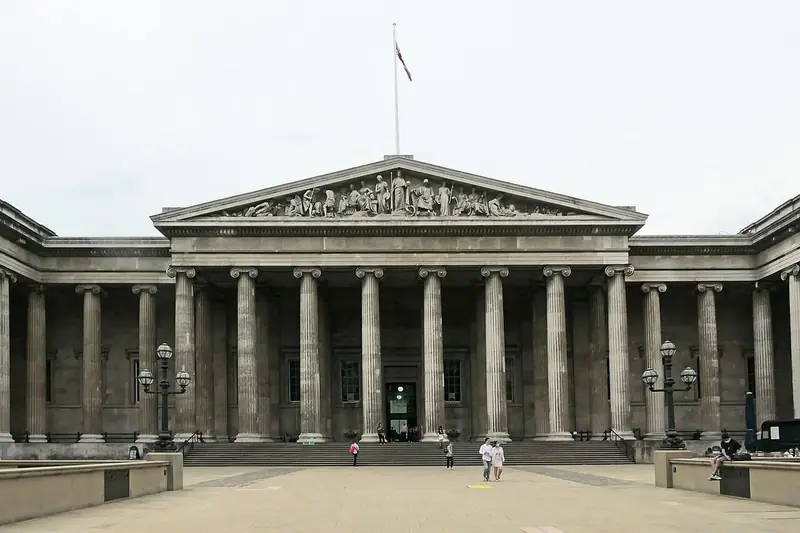
Begin in the forecourt, facing the great colonnade on Great Russell Street. Robert Smirke designed this building in the Greek Revival style, and it rose in stages from 1823. The forecourt was completed in 1852. The columns follow the Ionic order of an ancient Greek temple in Asia Minor. There are more than forty of them, each about fourteen metres tall. Look up at the sculptures in the pediment. They show the Progress of Civilisation, from a primitive man emerging from a rock to figures representing the arts and sciences. The building was designed to look like a temple, with knowledge in place of a god. The museum on this site was the first of its kind: a national museum belonging to neither the church nor the king, and open to the public. Climb the steps and go in through the main entrance.
Photo: amandabhslater · CC BY-SA 2.0 · Wikimedia Commons
What to see at the British Museum: 8 stops, in visit order
- 01
 The PorticoA temple for knowledgeFree preview
- 02
 The Great CourtA glass roof over a courtyardIn the guide
- 03
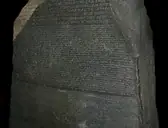 The Rosetta StoneThe key to hieroglyphsIn the guide
- 04
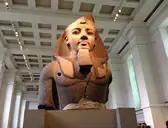 The Younger MemnonThe face of RamessesIn the guide
- 05
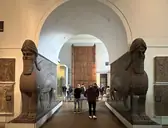 The Assyrian PalacesGuardians with human facesIn the guide
- 06
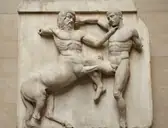 The Parthenon SculpturesA treasure and a quarrelIn the guide
- 07
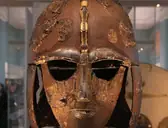 The Sutton Hoo HelmetA king’s ship in a fieldIn the guide
- 08
 The Lewis ChessmenWorried warriors of ivoryIn the guide
History of the British Museum
The museum began with one man’s collection. Sir Hans Sloane, a London doctor and naturalist, gathered some seventy-one thousand objects, books and specimens. When he died in 1753, he left them to the nation in return for a payment to his heirs, and Parliament founded the British Museum that same year. It opened in 1759 in Montagu House, a mansion on this site, free to all studious and curious persons. Gifts, purchases, excavations and the reach of the British Empire made it grow rapidly. From 1823 the architect Robert Smirke replaced the old house with the building you see.
The full history continues in the guide.
The British Museum guide: questions
How many stops does the British Museum guide have?
8 stops, in visit order: 1. The Portico; 2. The Great Court; 3. The Rosetta Stone; 4. The Younger Memnon; 5. The Assyrian Palaces; 6. The Parthenon Sculptures; 7. The Sutton Hoo Helmet; 8. The Lewis Chessmen.
Can I do a self-guided tour of the British Museum with this guide?
Yes. The guide is made for a self-guided tour: 8 stops in visit order, each with a photo, a story and a voice, so you can explore the British Museum at your own pace, without joining a group. Download it before you go and it works offline.
How long is each guide?
The 8 stops add up to about 6 minutes of listening in total. You play each stop when you’re ready, so you can go at your own pace.
Does the guide work offline?
Yes, once it’s downloaded. The guide is a single self-contained web page (about 7.4 MB) with the photos, text and audio built in. Download it to your phone before you go (Wi-Fi is best); after that it opens in any modern browser on iPhone or Android, with no app, account or mobile signal needed.
Does it use GPS or need my location?
No. The guide doesn’t use GPS and doesn’t know where you are: you play each stop when you reach it. It works on iPhone and Android in any modern browser, and it’s in English.
What’s included?
One self-contained HTML guide: 8 stops in visit order, each with a photo, text and a voice, plus the story of who built the site.
Who built the British Museum?
The museum began with one man’s collection. Sir Hans Sloane, a London doctor and naturalist, gathered some seventy-one thousand objects, books and specimens.
Is there a free audio guide to the British Museum?
The first stop, The Portico, is free to read and hear on this page, so you can try the British Museum audio tour before you buy. The full guide, with all 8 stops, is a one-off purchase: download it once and it’s yours to keep, working offline.
Is the British Museum guide worth it?
If you’d like to know what you’re looking at, yes. For $10 you get 8 stops in visit order, each with a photo, a short history and a voice you play when you’re ready, about 6 minutes of listening in all. It’s short on purpose, so you spend your time looking, not listening. It’s yours to keep, works offline and needs no app. The first stop is free on this page, so you can try it before you buy. If you’d like hours of detail, a guided tour will go deeper.
Audio guide or guided tour?
It depends how you like to visit. This guide lets you explore the British Museum at your own pace, at any time, for a one-off price. A guided tour gives you a live expert you can ask questions, but at fixed times and usually for a higher price. Many people use both: a tour for the big picture, and the guide to read beforehand or to revisit the stops in their own time.
Is this the official British Museum guide?
No. It’s an independent guide by The Historian Guide, not affiliated with or endorsed by the operator of the British Museum. For tickets and opening hours, check the official site operator before you go.
Does the guide include entry tickets or opening hours?
No. The guide is a digital companion only. Admission to the British Museum is separate, so check the official site operator for current tickets and opening hours before you go.
- Stop 1 · The Portico: amandabhslater · CC BY-SA 2.0 · Wikimedia Commons · resized
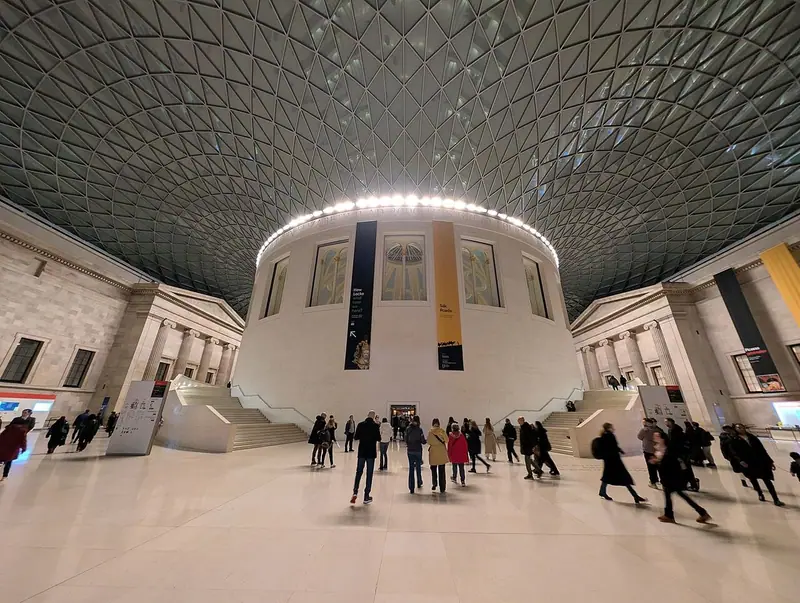
- Stop 2 · The Great Court (also the cover): Andy Li · CC0 · Wikimedia Commons · resized
- Stop 3 · The Rosetta Stone: © Hans Hillewaert · CC BY-SA 4.0 · Wikimedia Commons · resized
- Stop 4 · The Younger Memnon: Nate Loper from Flagstaff, AZ, USA · CC BY 2.0 · Wikimedia Commons · resized
- Stop 5 · The Assyrian Palaces: APK · CC BY 4.0 · Wikimedia Commons · resized
- Stop 6 · The Parthenon Sculptures: Carole Raddato from FRANKFURT, Germany · CC BY-SA 2.0 · Wikimedia Commons · resized
- Stop 7 · The Sutton Hoo Helmet: Geni · CC BY-SA 4.0 · Wikimedia Commons · resized
- Stop 8 · The Lewis Chessmen: APK · CC BY 4.0 · Wikimedia Commons · resized


All photographs from Wikimedia Commons under the licences shown.
More guides in United Kingdom
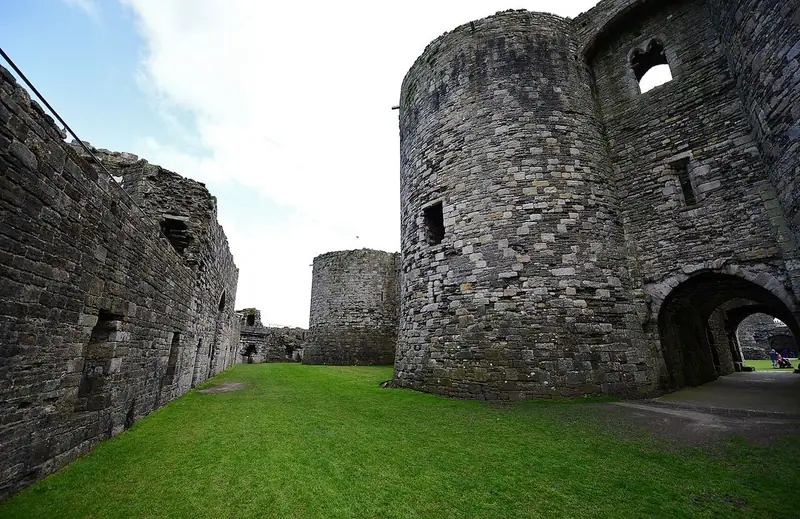 Edwardian8 stops · 1295–1330
Beaumaris audio guide
Explore Edward I’s never-finished castle at the entrance to the Menai Strait, one of the most perfectly planned in Europe, then the old gaol and pier.
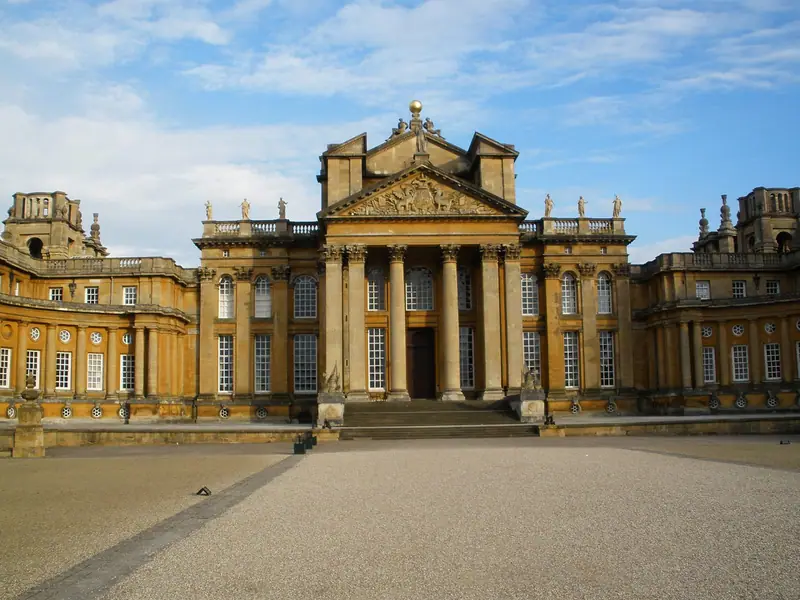 Stuart and Georgian England9 stops · 1705 – 1722 (construction)
Blenheim Palace audio guide
The Baroque palace built for the Duke of Marlborough after the Battle of Blenheim, birthplace of Winston Churchill, set in a landscape park by Capability Brown.
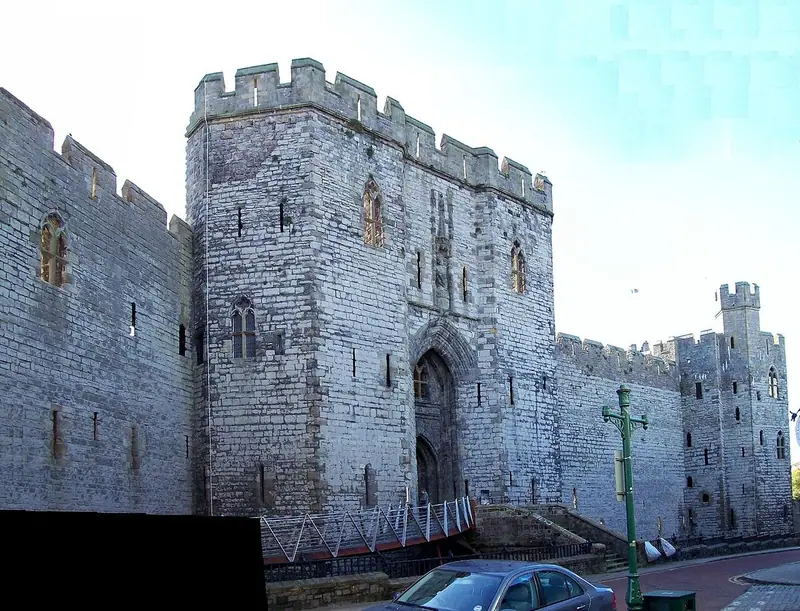 Plantagenet7 stops · 1283–1330
Caernarfon Castle audio guide
Edward I’s fortress-palace on the Menai Strait, with its banded walls and the Eagle Tower.
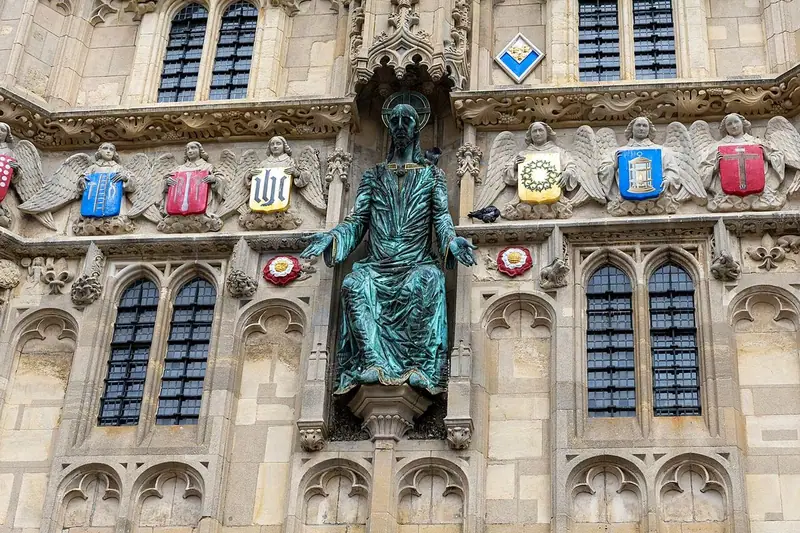 Gothic8 stops · 1070–1503
Canterbury Cathedral audio guide
Stand where Thomas Becket was murdered, then descend to the crypt and rise to the Trinity Chapel.
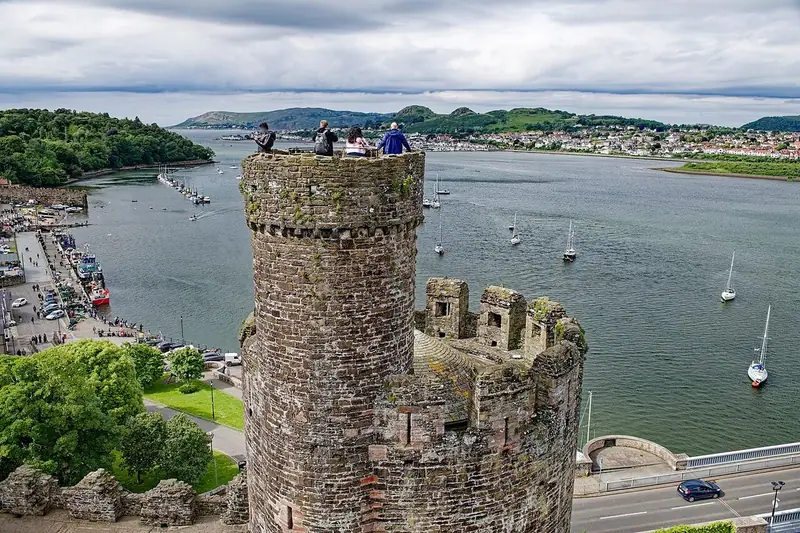 Plantagenet8 stops · 1283–1289
Conwy Castle and Town Walls audio guide
The walls of one of Europe’s finest medieval walled towns, and the mighty castle of Edward I above the River Conwy.
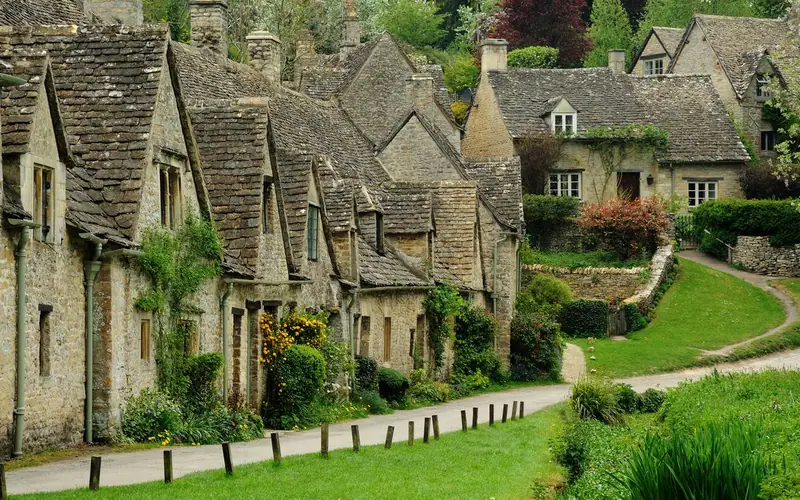 Medieval12 stops · 11th–17th century
The Cotswolds audio guide
Drive north through the honey-coloured wool towns of the Cotswolds, from Arlington Row in Bibury through Burford, Bourton-on-the-Water, Stow-on-the-Wold and Chipping Campden to Broadway Tower and Broadway.
Every guide, in every country
The British Museum and every other guide we publish, including future ones. One payment, no subscription.