Before you start
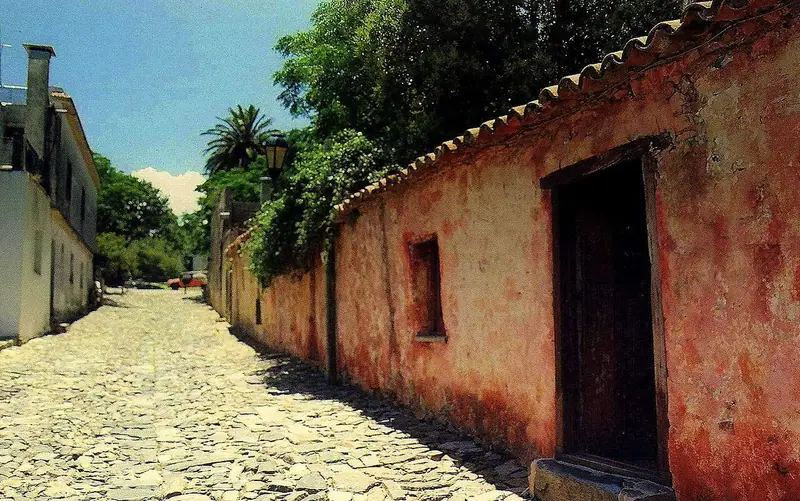
Colonia del Sacramento stands on a small headland on the north shore of the Río de la Plata, the great estuary that divides Uruguay from Argentina, with Buenos Aires out of sight across the water. Founded by the Portuguese and fought over for a century by Portugal and Spain, its old quarter of low stone houses, cobbled lanes and shady squares mixes the ways of building of both empires. It was inscribed as a UNESCO World Heritage Site in 1995. This guide starts at the old town gate on the landward side, follows the Street of Sighs down towards the river, crosses the main square to the lighthouse, and ends at the old bastion on the northern shore. The old quarter is small and quiet, and the whole guide can be followed in a couple of hours.
Use it as a self-guided tour of Colonia del Sacramento: 6 stops in visit order, each played when you’re ready, at your own pace.
 Free preview · Stop 1
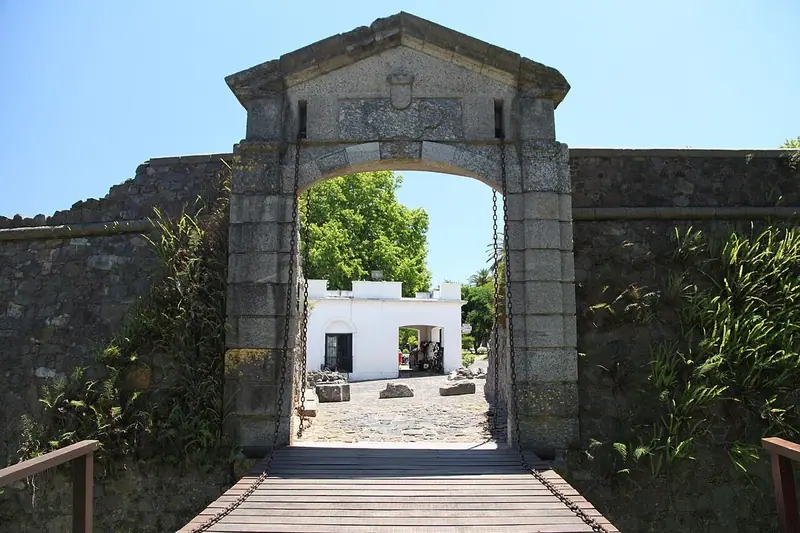
The Portón de Campo
Begin at the Portón de Campo, the Field Gate, at the landward end of the old town, where a wooden bridge crosses a dry moat to a stone gateway in a short stretch of wall. The Portuguese governor Antonio Pedro de Vasconcelos, who ruled the town for many years in the first half of the eighteenth century, had the walls rebuilt in stone, and this gate was opened in 1745. Look at the heavy wooden doors, and the chains and posts beside the bridge, which recall the drawbridge that once could be raised at night or in time of siege. Most of the walls were pulled down in the nineteenth century, when the town grew beyond them. What you see was rebuilt between 1968 and 1971, using surviving parts of the old wall and new stone, as part of the restoration of the old quarter. Walk through the gate into the old town.
Photo: Liam Quinn from Canada · CC BY-SA 2.0 · Wikimedia Commons
What to see at Colonia del Sacramento: 6 stops, in visit order
- 01
 The Portón de CampoThe gate of the walled townFree preview
- 02
 The Calle de los SuspirosThe Street of SighsIn the guide
- 03
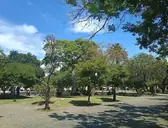 The Plaza MayorThe heart of the Portuguese townIn the guide
- 04
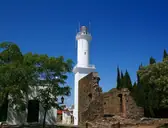 The Lighthouse and the Convent of San FranciscoA light on a ruined churchIn the guide
- 05
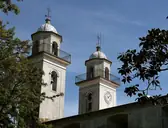 The Plaza de Armas and the BasilicaThe oldest church in UruguayIn the guide
- 06
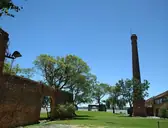 The Bastión del CarmenA bastion and a factory chimneyIn the guide
History of Colonia del Sacramento
Long before Europeans came, this shore was home to the Charrúa and Chaná peoples. In 1680 a Portuguese expedition led by Manuel Lobo landed on this headland and built a fort, as a foothold on the river that the Spanish regarded as theirs, across from their city of Buenos Aires. The Spanish attacked almost at once, and for the next hundred years the town changed hands again and again, by siege and by treaty. The Treaty of Madrid of 1750 gave it to Spain; the Spanish took it by force in 1762, but had to hand it back the next year. Only with the Treaty of San Ildefonso in 1777 did it become Spanish for good. Later it was part of the struggles that made Uruguay an independent country.
The full history continues in the guide.
Colonia del Sacramento guide: questions
How many stops does the Colonia del Sacramento guide have?
6 stops, in visit order: 1. The Portón de Campo; 2. The Calle de los Suspiros; 3. The Plaza Mayor; 4. The Lighthouse and the Convent of San Francisco; 5. The Plaza de Armas and the Basilica; 6. The Bastión del Carmen.
Can I do a self-guided tour of Colonia del Sacramento with this guide?
Yes. The guide is made for a self-guided tour: 6 stops in visit order, each with a photo, a story and a voice, so you can explore Colonia del Sacramento at your own pace, without joining a group. Download it before you go and it works offline.
How long is each guide?
The 6 stops add up to about 5 minutes of listening in total. You play each stop when you’re ready, so you can go at your own pace.
Does the guide work offline?
Yes, once it’s downloaded. The guide is a single self-contained web page (about 6.4 MB) with the photos, text and audio built in. Download it to your phone before you go (Wi-Fi is best); after that it opens in any modern browser on iPhone or Android, with no app, account or mobile signal needed.
Does it use GPS or need my location?
No. The guide doesn’t use GPS and doesn’t know where you are: you play each stop when you reach it. It works on iPhone and Android in any modern browser, and it’s in English.
What’s included?
One self-contained HTML guide: 6 stops in visit order, each with a photo, text and a voice, plus the story of who built the site.
Who built Colonia del Sacramento?
Long before Europeans came, this shore was home to the Charrúa and Chaná peoples. In 1680 a Portuguese expedition led by Manuel Lobo landed on this headland and built a fort, as a foothold on the river that the Spanish regarded as theirs, across from their city of Buenos Aires.
Where is Colonia del Sacramento?
Colonia del Sacramento stands on a small headland on the north shore of the Río de la Plata, the great estuary that divides Uruguay from Argentina, with Buenos Aires out of sight across the water.
Is there a free audio guide to Colonia del Sacramento?
The first stop, The Portón de Campo, is free to read and hear on this page, so you can try the Colonia del Sacramento audio tour before you buy. The full guide, with all 6 stops, is a one-off purchase: download it once and it’s yours to keep, working offline.
Is the Colonia del Sacramento guide worth it?
If you’d like to know what you’re looking at, yes. For $10 you get 6 stops in visit order, each with a photo, a short history and a voice you play when you’re ready, about 5 minutes of listening in all. It’s short on purpose, so you spend your time looking, not listening. It’s yours to keep, works offline and needs no app. The first stop is free on this page, so you can try it before you buy. If you’d like hours of detail, a guided tour will go deeper.
Audio guide or guided tour?
It depends how you like to visit. This guide lets you explore Colonia del Sacramento at your own pace, at any time, for a one-off price. A guided tour gives you a live expert you can ask questions, but at fixed times and usually for a higher price. Many people use both: a tour for the big picture, and the guide to read beforehand or to revisit the stops in their own time.
Is this the official Colonia del Sacramento guide?
No. It’s an independent guide by The Historian Guide, not affiliated with or endorsed by the operator of Colonia del Sacramento. For tickets and opening hours, check the official site operator before you go.
Does the guide include entry tickets or opening hours?
No. The guide is a digital companion only. Admission to Colonia del Sacramento is separate, so check the official site operator for current tickets and opening hours before you go.
- Stop 1 · The Portón de Campo: Liam Quinn from Canada · CC BY-SA 2.0 · Wikimedia Commons · resized
- Stop 2 · The Calle de los Suspiros (also the cover): rodoluca · CC BY-SA 3.0 · Wikimedia Commons · resized
- Stop 3 · The Plaza Mayor: Florencia Vittori · CC BY-SA 4.0 · Wikimedia Commons · resized
- Stop 4 · The Lighthouse and the Convent of San Francisco: Diego Delso · CC BY-SA 3.0 · Wikimedia Commons · resized
- Stop 5 · The Plaza de Armas and the Basilica: Carlos E. Gonzalez · CC BY-SA 3.0 · Wikimedia Commons · resized
- Stop 6 · The Bastión del Carmen: Flaviohmg · CC BY-SA 4.0 · Wikimedia Commons · resized


All photographs from Wikimedia Commons under the licences shown.
More guides
 Portuguese Colonial9 stops · 1698 – 1897
Ouro Preto audio guide
Brazil’s gold-rush capital: Praça Tiradentes, the Inconfidência museum, Aleijadinho’s São Francisco, Ataíde’s painted ceiling and the gilded churches of the Pilar and Rosário.
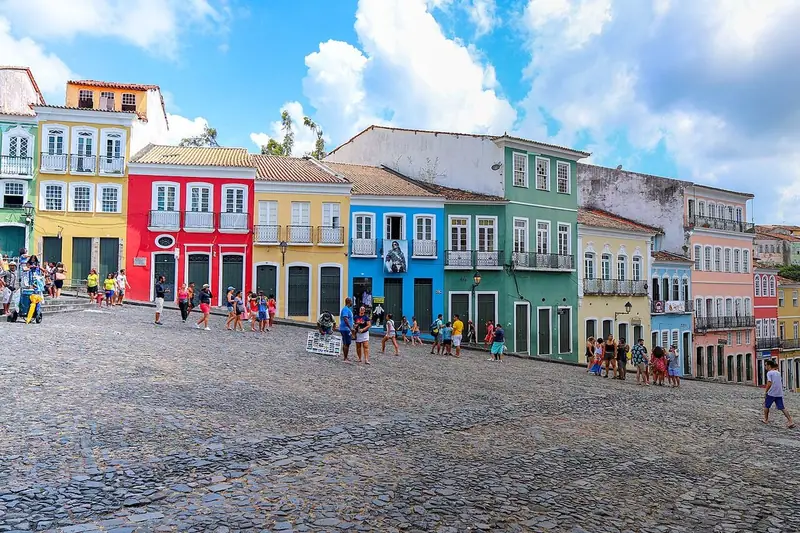 Portuguese Colonial8 stops · 1549–1763 CE
Pelourinho, Salvador audio guide
Ride the Lacerda Elevator up to Salvador’s cobbled old town, with its painted houses and some of the richest Baroque churches in the Americas.
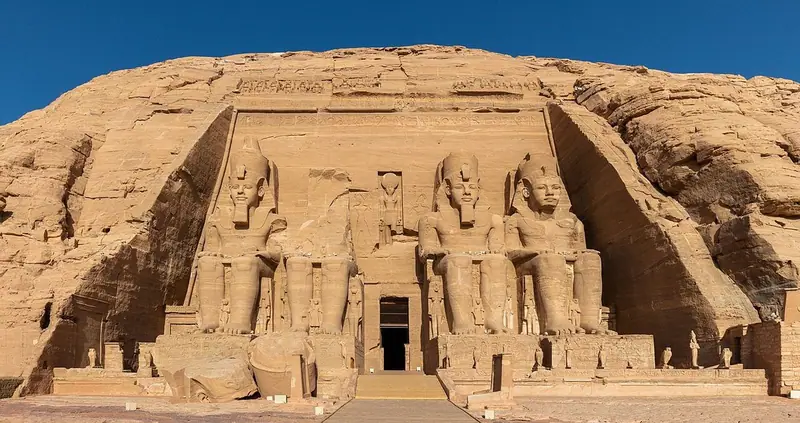 Ancient Egyptian8 stops · 13th century BCE
Abu Simbel audio guide
Ramesses II’s colossal temple façade, the Temple of Nefertari, and how both were rescued from the waters of Lake Nasser.
Every guide, in every country
Colonia del Sacramento and every other guide we publish, including future ones. One payment, no subscription.