Before you start
The Hofburg, in the heart of Vienna, was the main palace of the Habsburgs for more than six centuries, the winter residence from which they ruled their empire. It is not a single building but a sprawling complex of wings, courtyards and squares, added piece by piece from the thirteenth century to the early twentieth, and today it houses the office of the Austrian president, museums, a library and the Spanish Riding School. This guide enters from the Michaelerplatz, crosses the courtyards of the old palace and ends on the Heldenplatz. Each museum has its own entrance and ticket, so choose which interiors you want to visit.
Use it as a self-guided tour of the Hofburg: 8 stops in visit order, each played when you’re ready, at your own pace.
 Free preview · Stop 1
The Michaelerplatz
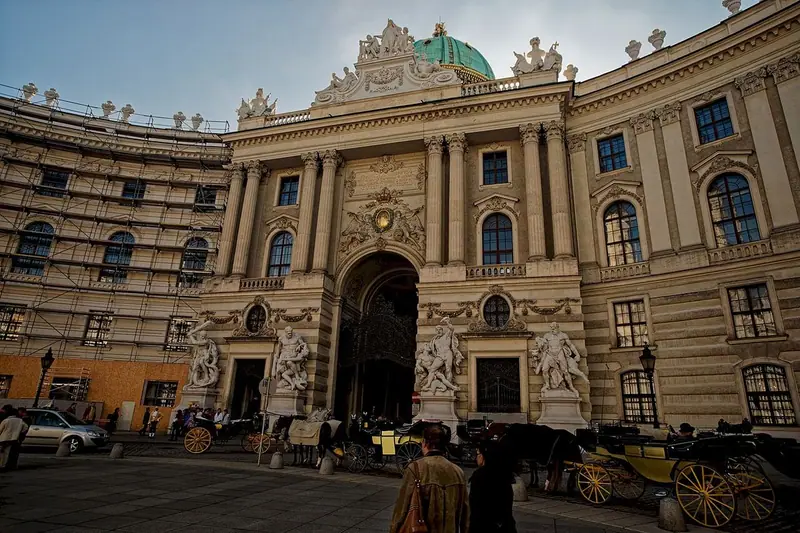
Begin on the Michaelerplatz, in front of the curved facade of the Michaelertrakt, the grand entrance wing of the Hofburg, completed only in the 1890s from designs drawn up in the eighteenth century. Look at the great domed gateway and the two monumental fountains on either side, representing Austria’s power on land and at sea. In the centre of the square, look down into the excavations, which reveal remains of a Roman settlement and of later buildings, a reminder that Vienna began as the Roman camp of Vindobona. Opposite the palace stands the Looshaus, built by the architect Adolf Loos in 1910 and 1911, whose plain, undecorated upper facade caused a scandal. It is said that Emperor Franz Joseph disliked it so much that he avoided using this gate. The gateway under the dome leads to the inner courtyard, which comes later in this guide.
Photo: Txllxt TxllxT · CC BY-SA 4.0 · Wikimedia Commons
What to see at the Hofburg: 8 stops, in visit order
- 01
 The MichaelerplatzThe Imperial GatewayFree preview
- 02
 The Imperial ApartmentsFranz Joseph and SisiIn the guide
- 03
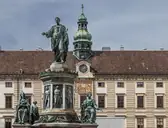 In der BurgThe Inner CourtyardIn the guide
- 04
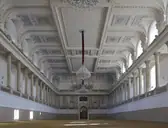 The Spanish Riding SchoolThe Dancing HorsesIn the guide
- 05
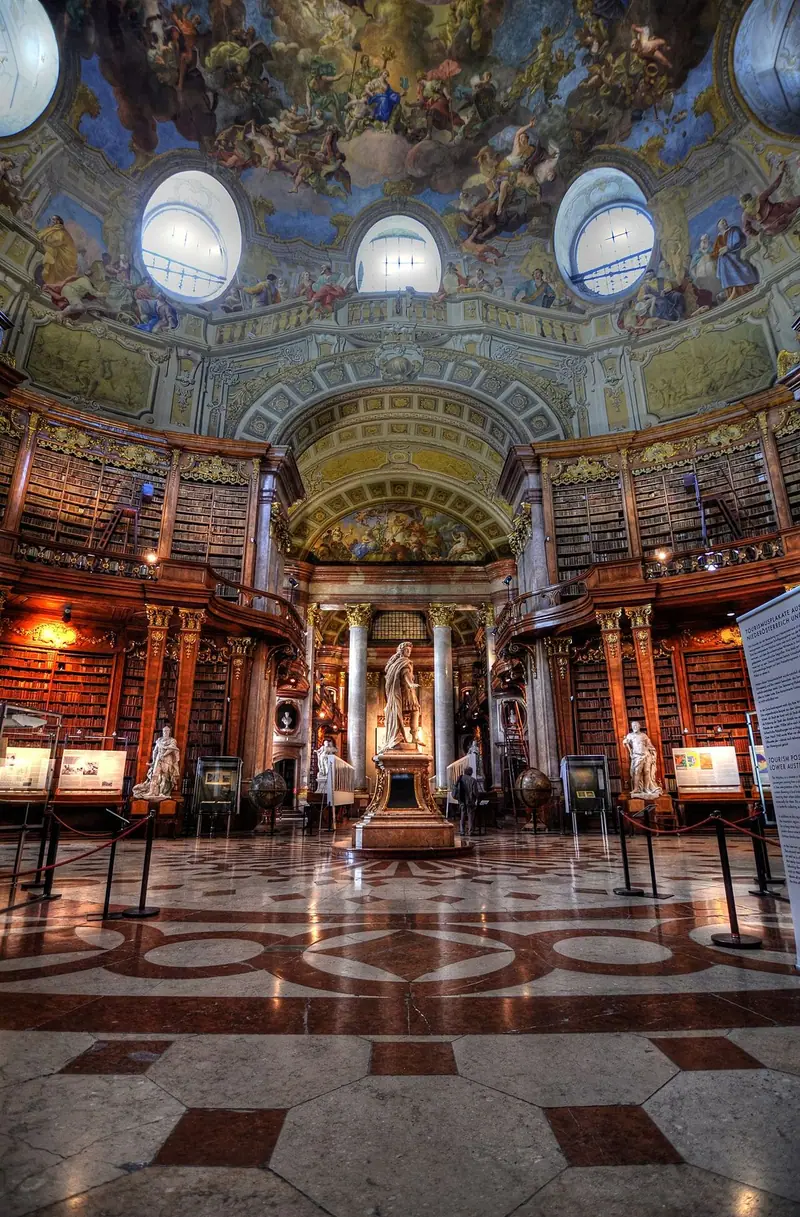
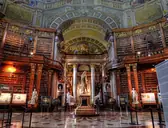 The State HallThe Imperial LibraryIn the guide
- 06
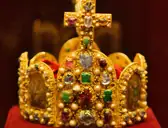 The Imperial TreasuryCrowns of EmpireIn the guide
- 07
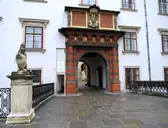 The Swiss GateThe Oldest CourtIn the guide
- 08
 The HeldenplatzHeroes’ SquareIn the guide
Site map of the Hofburg
History of the Hofburg
The Hofburg grew from a castle built in the thirteenth century, perhaps begun by the last Babenberg dukes or by King Ottokar the Second of Bohemia. From 1278 it belonged to the Habsburgs, who ruled Austria until 1918 and were Holy Roman Emperors for most of the period from 1438 to 1806, when that empire was dissolved. After 1804 they ruled as emperors of Austria, and from 1867 as rulers of Austria-Hungary. Each generation added to the palace, from the Renaissance Swiss Gate to the Baroque library and riding school, and finally the vast Neue Burg, built between 1881 and 1913. After the empire collapsed in 1918, the Hofburg passed to the Austrian Republic.
Hofburg guide: questions
How many stops does the Hofburg guide have?
8 stops, in visit order: 1. The Michaelerplatz; 2. The Imperial Apartments; 3. In der Burg; 4. The Spanish Riding School; 5. The State Hall; 6. The Imperial Treasury; 7. The Swiss Gate; 8. The Heldenplatz.
Can I do a self-guided tour of the Hofburg with this guide?
Yes. The guide is made for a self-guided tour: 8 stops in visit order, each with a photo, a story and a voice, so you can explore the Hofburg at your own pace, without joining a group. Download it before you go and it works offline.
How long is each guide?
The 8 stops add up to about 6 minutes of listening in total. You play each stop when you’re ready, so you can go at your own pace.
Does the guide work offline?
Yes, once it’s downloaded. The guide is a single self-contained web page (about 8.0 MB) with the photos, text and audio built in. Download it to your phone before you go (Wi-Fi is best); after that it opens in any modern browser on iPhone or Android, with no app, account or mobile signal needed.
Does it use GPS or need my location?
No. The guide doesn’t use GPS and doesn’t know where you are: you play each stop when you reach it. It works on iPhone and Android in any modern browser, and it’s in English.
What’s included?
One self-contained HTML guide: 8 stops in visit order, each with a photo, text and a voice, plus the story of who built the site.
Who built the Hofburg?
The Hofburg grew from a castle built in the thirteenth century, perhaps begun by the last Babenberg dukes or by King Ottokar the Second of Bohemia. From 1278 it belonged to the Habsburgs, who ruled Austria until 1918 and were Holy Roman Emperors for most of the period from 1438 to 1806, when that empire was dissolved.
Where is the Hofburg?
The Hofburg, in the heart of Vienna, was the main palace of the Habsburgs for more than six centuries, the winter residence from which they ruled their empire.
Is there a free audio guide to the Hofburg?
The first stop, The Michaelerplatz, is free to read and hear on this page, so you can try the Hofburg audio tour before you buy. The full guide, with all 8 stops, is a one-off purchase: download it once and it’s yours to keep, working offline.
Is the Hofburg guide worth it?
If you’d like to know what you’re looking at, yes. For $10 you get 8 stops in visit order, each with a photo, a short history and a voice you play when you’re ready, plus a site map of the stops, and about 6 minutes of listening in all. It’s short on purpose, so you spend your time looking, not listening. It’s yours to keep, works offline and needs no app. The first stop is free on this page, so you can try it before you buy. If you’d like hours of detail, a guided tour will go deeper.
Audio guide or guided tour?
It depends how you like to visit. This guide lets you explore the Hofburg at your own pace, at any time, for a one-off price. A guided tour gives you a live expert you can ask questions, but at fixed times and usually for a higher price. Many people use both: a tour for the big picture, and the guide to read beforehand or to revisit the stops in their own time.
Is this the official Hofburg guide?
No. It’s an independent guide by The Historian Guide, not affiliated with or endorsed by the operator of the Hofburg. For tickets and opening hours, check the official site operator before you go.
Does the guide include entry tickets or opening hours?
No. The guide is a digital companion only. Admission to the Hofburg is separate, so check the official site operator for current tickets and opening hours before you go.
- Stop 1 · The Michaelerplatz: Txllxt TxllxT · CC BY-SA 4.0 · Wikimedia Commons · resized
- Stop 2 · The Imperial Apartments: Hanno Niemus · CC BY-SA 3.0 · Wikimedia Commons · resized
- Stop 3 · In der Burg: Aneza Palaiou · CC BY-SA 4.0 · Wikimedia Commons · resized
- Stop 4 · The Spanish Riding School: Jebulon · CC0 · Wikimedia Commons · resized
- Stop 5 · The State Hall (also the cover): Richard Hopkins · CC BY 2.0 · Wikimedia Commons · resized
- Stop 6 · The Imperial Treasury: MatthiasKabel · CC BY 2.5 · Wikimedia Commons · resized
- Stop 7 · The Swiss Gate: Didi43 · CC BY-SA 4.0 · Wikimedia Commons · resized
- Stop 8 · The Heldenplatz: Rosser1954 · CC BY-SA 4.0 · Wikimedia Commons · resized


All photographs from Wikimedia Commons under the licences shown.
More guides in Austria
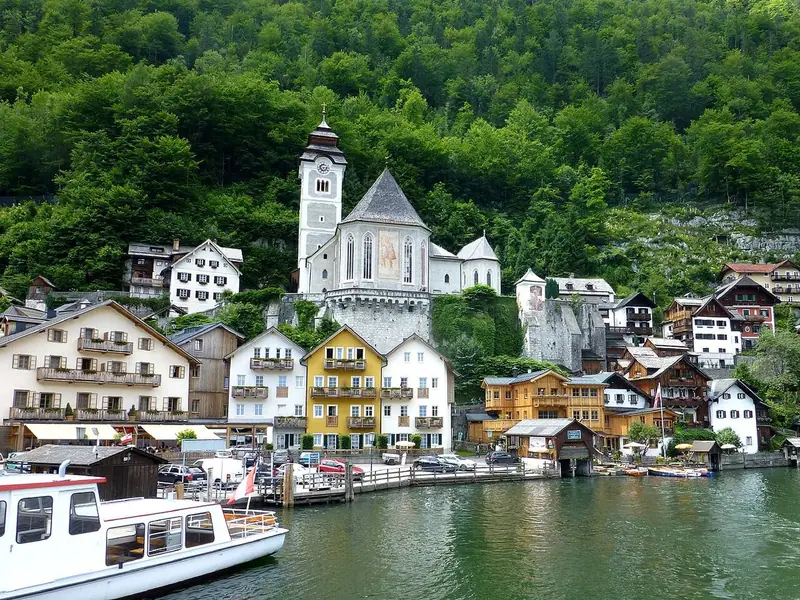 Hallstatt culture11 stops · c. 800 – 400 BCE (Hallstatt period; mining from c. 1500 BCE)
Hallstatt audio guide
A lakeside salt town that named a prehistoric age: the world’s oldest salt mine, the Iron Age cemetery, a painted-skull ossuary and the Dachstein ice caves.
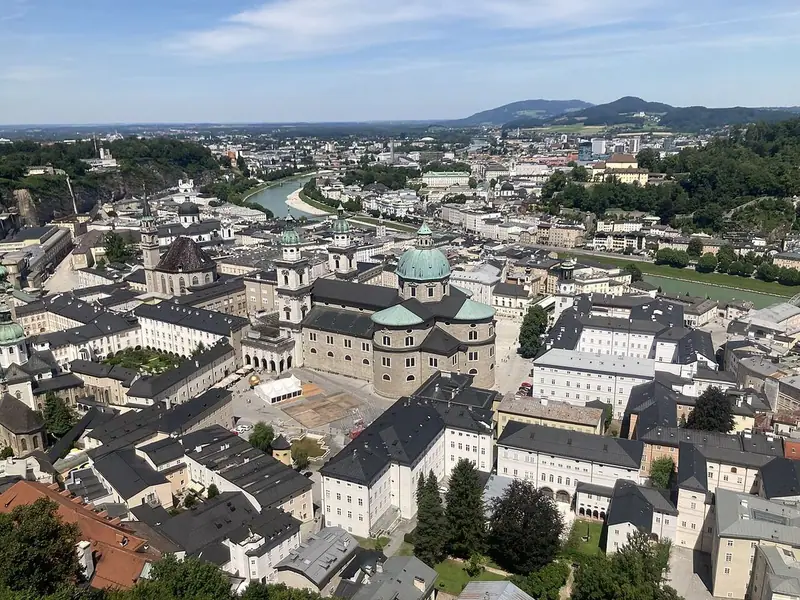 Medieval7 stops · from 1077 CE
Hohensalzburg Fortress audio guide
Ride the funicular up to the prince-archbishops’ fortress above Salzburg, through its bastions to the Golden Hall.
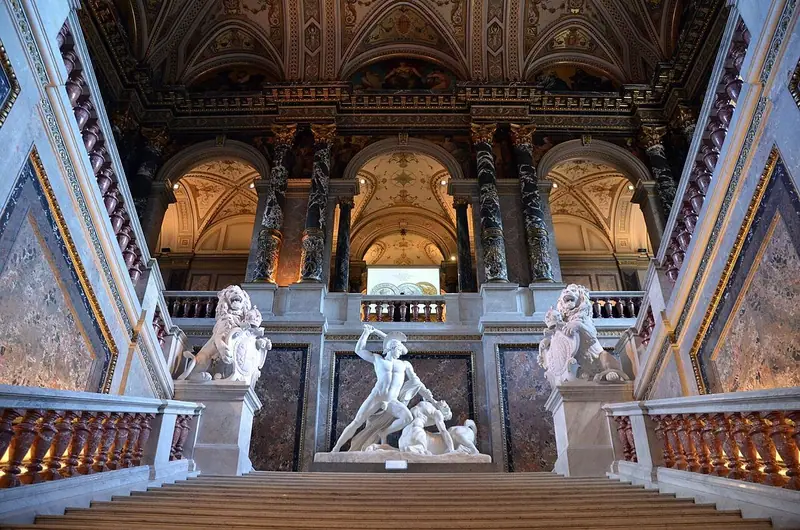 Habsburg8 stops · Ringstraße era
Kunsthistorisches Museum audio guide
Climb the grand staircase of the Habsburgs’ art museum to the Cupola Hall, the Kunstkammer and the finest collection of Bruegel in the world.
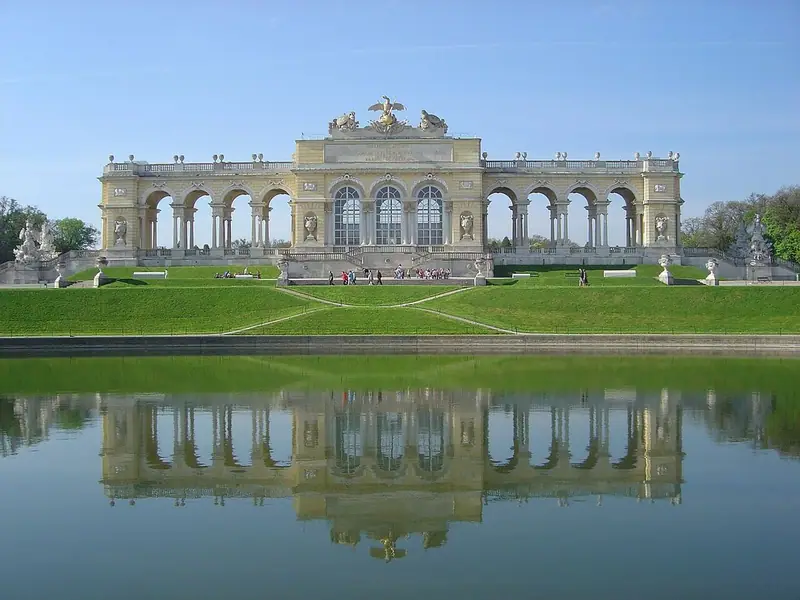 Habsburg8 stops · 1569–1918 CE
Schönbrunn Palace audio guide
Explore the Habsburgs’ summer palace from the Great Gallery and Franz Joseph’s apartments up through the gardens to the Gloriette.
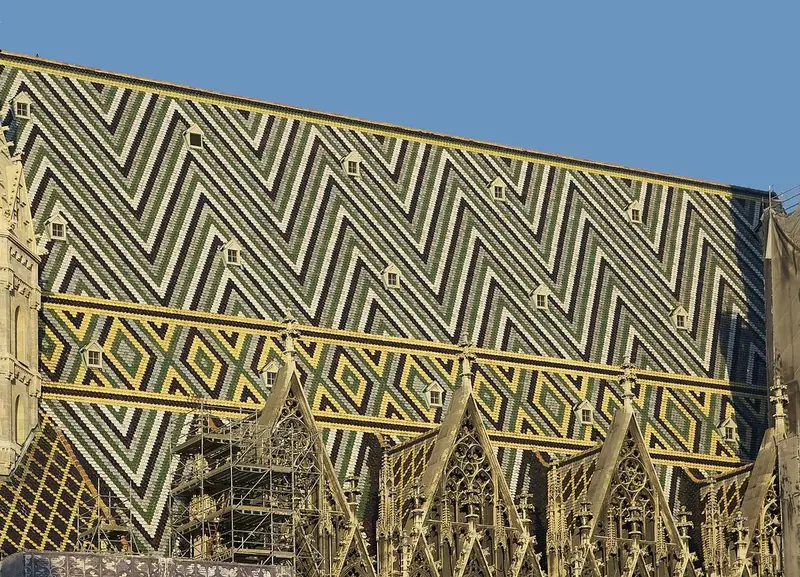 Gothic8 stops · 1147–1511 CE
St Stephen’s Cathedral audio guide
Circle the Stephansdom beneath its glittering tiled roof, from the Giant’s Door and the stone pulpit to the tomb of Frederick III and the south tower.
Every guide, in every country
Hofburg and every other guide we publish, including future ones. One payment, no subscription.