Before you start
The Kunsthistorisches Museum, the Museum of Art History, holds the great art collection of the Habsburgs, the family who ruled Austria and much of Europe for centuries. Its palace on the Ringstraße is itself a work of art, and inside are Egyptian tombs, Renaissance treasures and some of the most famous paintings in the world, including the finest collection of works by Pieter Bruegel the Elder. The route follows the building from the square to the picture gallery. Allow at least three hours.
Use it as a self-guided tour of the Kunsthistorisches Museum: 8 stops in visit order, each played when you’re ready, at your own pace.
 Free preview · Stop 1
Maria-Theresien-Platz
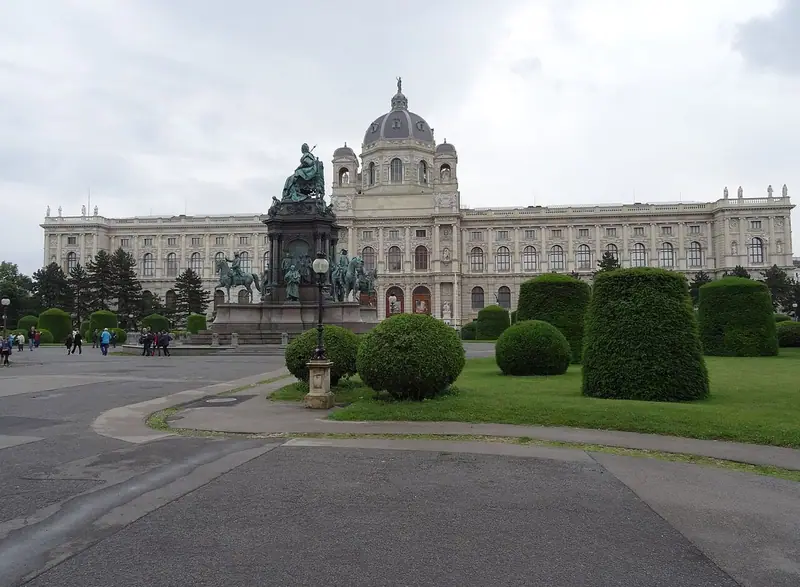
Begin in the garden square of Maria-Theresien-Platz, beside the great monument to the Empress Maria Theresa at its centre. On one side stands the Kunsthistorisches Museum, and facing it, almost identical, the Natural History Museum. Look at the sandstone façade, in the style of the Italian Renaissance, with its tall arched windows and the octagonal dome rising some sixty metres above the centre. Statues and portraits along the façade celebrate artists and patrons of the past. Behind you, across the Ringstraße, lies the Hofburg, the imperial palace. The plan was for a vast imperial forum, linking the palace and the two museums, but it was never completed. Now walk to the main entrance, in the centre of the façade, and go inside.
Photo: Sjaak Kempe from Groningen, The Netherlands · CC BY 2.0 · Wikimedia Commons
What to see at the Kunsthistorisches Museum: 8 stops, in visit order
- 01
 Maria-Theresien-PlatzTwin palaces of the RingstraßeFree preview
- 02
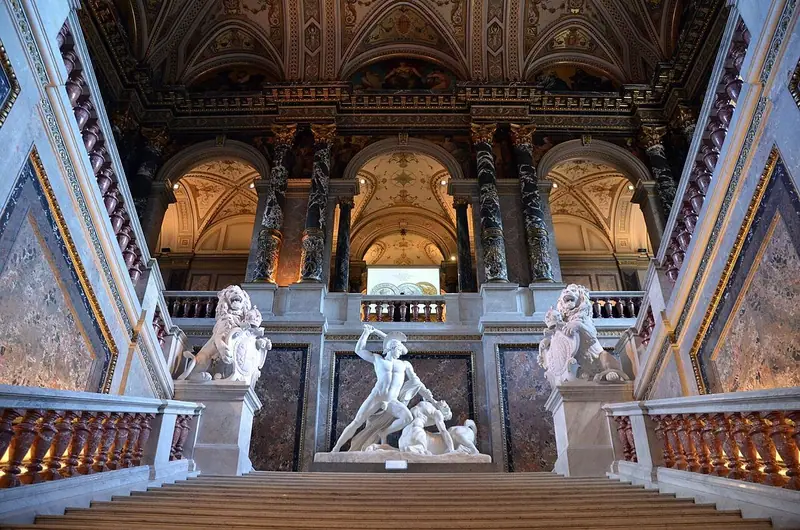
 The Grand StaircaseCanova and the young KlimtIn the guide
- 03
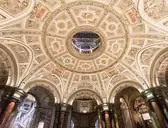 The Cupola HallUnder the great domeIn the guide
- 04
 The Egyptian CollectionA tomb chapel from GizaIn the guide
- 05
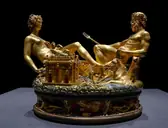 The KunstkammerCellini’s golden salt cellarIn the guide
- 06
 The Bruegel RoomBabel and the huntersIn the guide
- 07
 The Italian GalleriesRaphael, Titian and CaravaggioIn the guide
- 08
 Vermeer and VelázquezPainting about paintingIn the guide
History of the Kunsthistorisches Museum
For centuries the Habsburg emperors and archdukes collected paintings, sculpture, jewellery and curiosities. In the nineteenth century, as Vienna was rebuilt along the new Ringstraße, Emperor Franz Joseph the First commissioned two great museums facing each other, one for art and one for natural history. They were designed by Gottfried Semper and Karl von Hasenauer, built from 1871, and the art museum opened in 1891, to make the imperial collections accessible to the public.
Kunsthistorisches Museum guide: questions
How many stops does the Kunsthistorisches Museum guide have?
8 stops, in visit order: 1. Maria-Theresien-Platz; 2. The Grand Staircase; 3. The Cupola Hall; 4. The Egyptian Collection; 5. The Kunstkammer; 6. The Bruegel Room; 7. The Italian Galleries; 8. Vermeer and Velázquez.
Can I do a self-guided tour of the Kunsthistorisches Museum with this guide?
Yes. The guide is made for a self-guided tour: 8 stops in visit order, each with a photo, a story and a voice, so you can explore the Kunsthistorisches Museum at your own pace, without joining a group. Download it before you go and it works offline.
How long is each guide?
The 8 stops add up to about 5 minutes of listening in total. You play each stop when you’re ready, so you can go at your own pace.
Does the guide work offline?
Yes, once it’s downloaded. The guide is a single self-contained web page (about 7.4 MB) with the photos, text and audio built in. Download it to your phone before you go (Wi-Fi is best); after that it opens in any modern browser on iPhone or Android, with no app, account or mobile signal needed.
Does it use GPS or need my location?
No. The guide doesn’t use GPS and doesn’t know where you are: you play each stop when you reach it. It works on iPhone and Android in any modern browser, and it’s in English.
What’s included?
One self-contained HTML guide: 8 stops in visit order, each with a photo, text and a voice, plus the story of who built the site.
Who built the Kunsthistorisches Museum?
For centuries the Habsburg emperors and archdukes collected paintings, sculpture, jewellery and curiosities. In the nineteenth century, as Vienna was rebuilt along the new Ringstraße, Emperor Franz Joseph the First commissioned two great museums facing each other, one for art and one for natural history.
Where is the Kunsthistorisches Museum?
The Kunsthistorisches Museum, the Museum of Art History, holds the great art collection of the Habsburgs, the family who ruled Austria and much of Europe for centuries.
Is there a free audio guide to the Kunsthistorisches Museum?
The first stop, Maria-Theresien-Platz, is free to read and hear on this page, so you can try the Kunsthistorisches Museum audio tour before you buy. The full guide, with all 8 stops, is a one-off purchase: download it once and it’s yours to keep, working offline.
Is the Kunsthistorisches Museum guide worth it?
If you’d like to know what you’re looking at, yes. For $10 you get 8 stops in visit order, each with a photo, a short history and a voice you play when you’re ready, about 5 minutes of listening in all. It’s short on purpose, so you spend your time looking, not listening. It’s yours to keep, works offline and needs no app. The first stop is free on this page, so you can try it before you buy. If you’d like hours of detail, a guided tour will go deeper.
Audio guide or guided tour?
It depends how you like to visit. This guide lets you explore the Kunsthistorisches Museum at your own pace, at any time, for a one-off price. A guided tour gives you a live expert you can ask questions, but at fixed times and usually for a higher price. Many people use both: a tour for the big picture, and the guide to read beforehand or to revisit the stops in their own time.
Is this the official Kunsthistorisches Museum guide?
No. It’s an independent guide by The Historian Guide, not affiliated with or endorsed by the operator of the Kunsthistorisches Museum. For tickets and opening hours, check the official site operator before you go.
Does the guide include entry tickets or opening hours?
No. The guide is a digital companion only. Admission to the Kunsthistorisches Museum is separate, so check the official site operator for current tickets and opening hours before you go.
- Stop 1 · Maria-Theresien-Platz: Sjaak Kempe from Groningen, The Netherlands · CC BY 2.0 · Wikimedia Commons · resized
- Stop 2 · The Grand Staircase (also the cover): Manikandan Palaniappan · CC BY-SA 3.0 at · Wikimedia Commons · resized
- Stop 3 · The Cupola Hall: Georg Botz · CC BY-SA 3.0 · Wikimedia Commons · resized
- Stop 4 · The Egyptian Collection: No machine-readable author provided. Gryffindor assumed… · Public domain · Wikimedia Commons · resized
- Stop 5 · The Kunstkammer: Vassil · CC0 · Wikimedia Commons · resized
- Stop 6 · The Bruegel Room: Pieter Brueghel the Elder · Public domain · Wikimedia Commons · resized
- Stop 7 · The Italian Galleries: Raphael · Public domain · Wikimedia Commons · resized
- Stop 8 · Vermeer and Velázquez: Johannes Vermeer · Public domain · Wikimedia Commons · resized


All photographs from Wikimedia Commons under the licences shown.
More guides in Austria
 Hallstatt culture11 stops · c. 800 – 400 BCE (Hallstatt period; mining from c. 1500 BCE)
Hallstatt audio guide
A lakeside salt town that named a prehistoric age: the world’s oldest salt mine, the Iron Age cemetery, a painted-skull ossuary and the Dachstein ice caves.
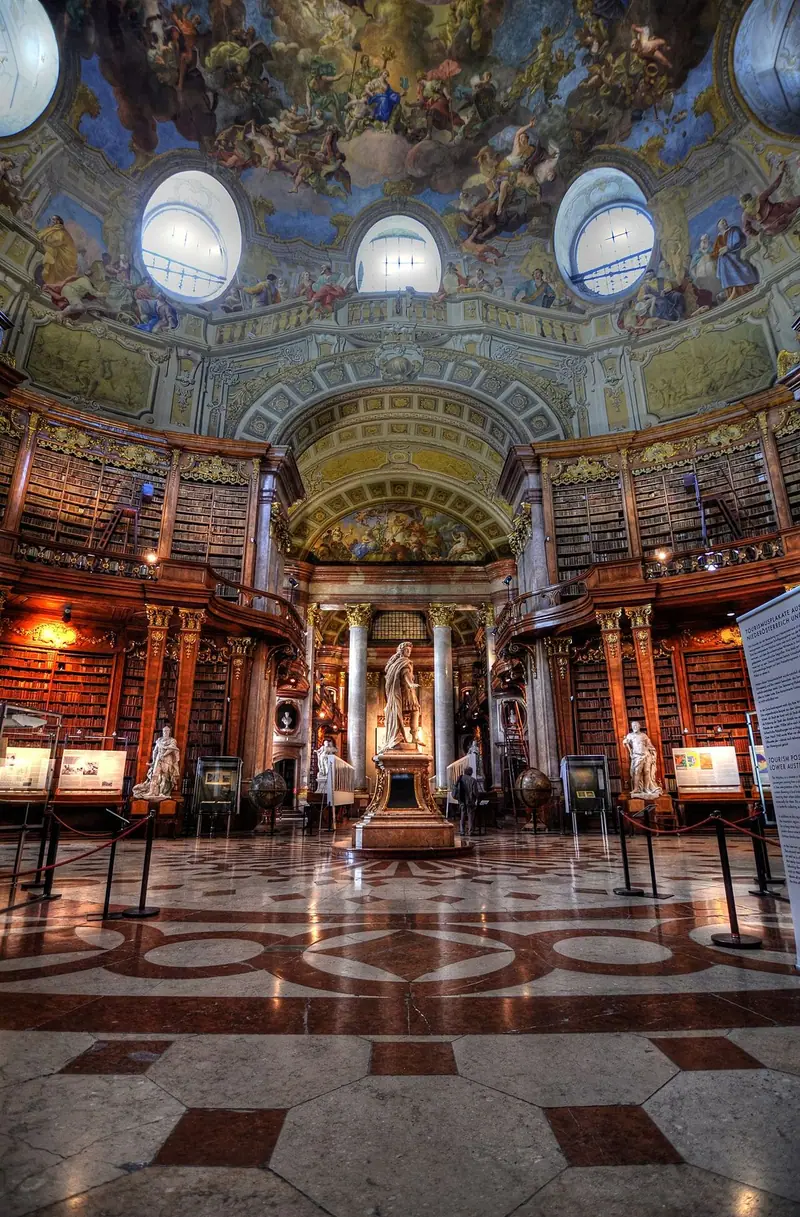 Habsburg8 stops · 13th century – 1918 CE
Hofburg audio guide
The courtyards of the Habsburgs’ winter palace in Vienna, from the Swiss Gate and the Imperial Treasury to the Spanish Riding School.
 Medieval7 stops · from 1077 CE
Hohensalzburg Fortress audio guide
Ride the funicular up to the prince-archbishops’ fortress above Salzburg, through its bastions to the Golden Hall.
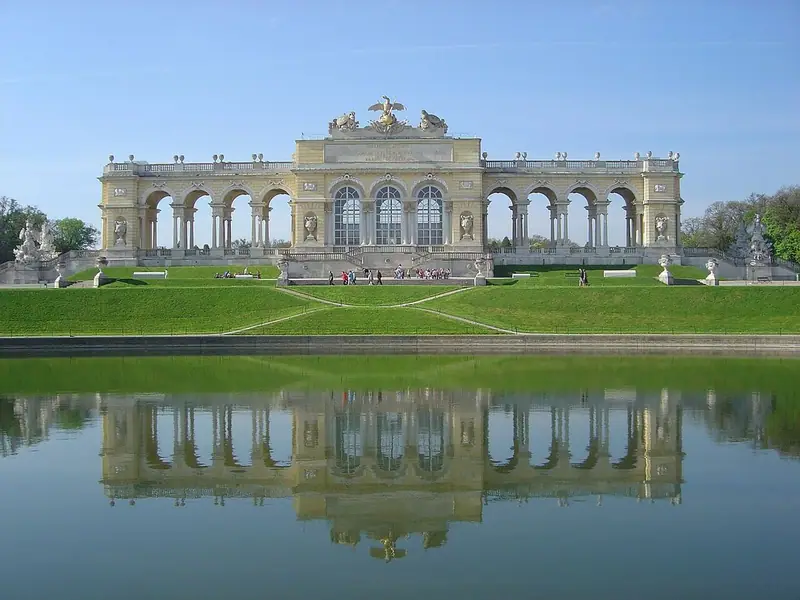 Habsburg8 stops · 1569–1918 CE
Schönbrunn Palace audio guide
Explore the Habsburgs’ summer palace from the Great Gallery and Franz Joseph’s apartments up through the gardens to the Gloriette.
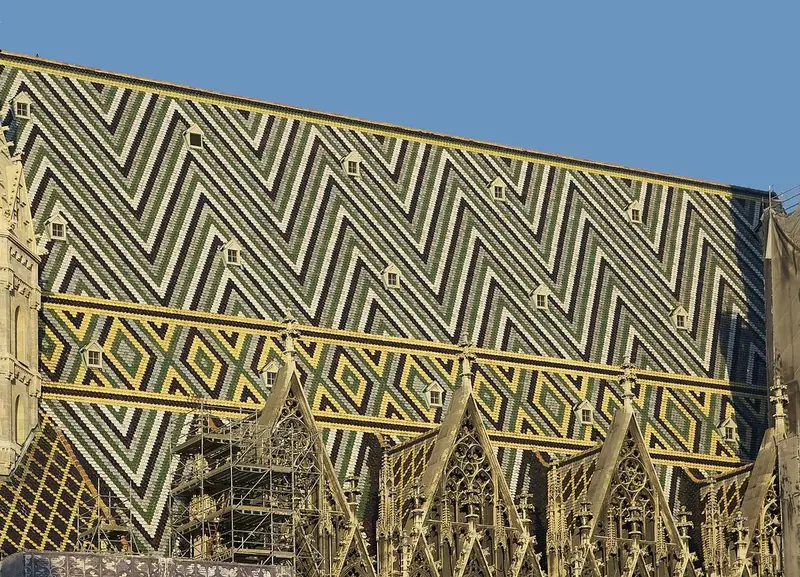 Gothic8 stops · 1147–1511 CE
St Stephen’s Cathedral audio guide
Circle the Stephansdom beneath its glittering tiled roof, from the Giant’s Door and the stone pulpit to the tomb of Frederick III and the south tower.
Every guide, in every country
Kunsthistorisches Museum and every other guide we publish, including future ones. One payment, no subscription.