Before you start
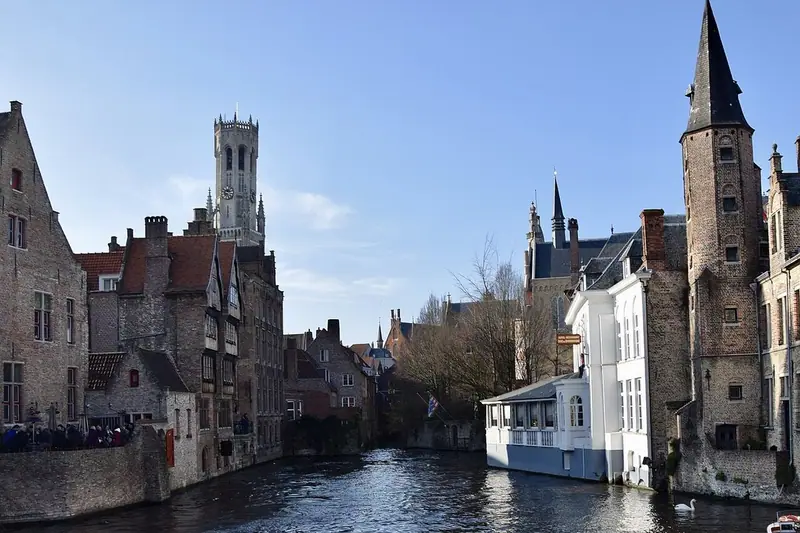
Bruges, in West Flanders, is one of the best-preserved medieval cities in Europe, a web of canals, cobbled lanes and brick gables around two great squares. Its historic centre was inscribed as a UNESCO World Heritage Site in 2000, and its beguinage is part of a separate World Heritage listing for the Flemish béguinages. The old city is compact and almost entirely walkable, but it is very busy in summer and at weekends, so arrive early or stay into the evening to see it at its quietest. This guide starts in the Markt beneath the Belfry, crosses to the Burg and the Basilica of the Holy Blood, follows the canals past the Rozenhoedkaai to the Groeninge Museum and the Church of Our Lady, and ends at the Beguinage and the Minnewater.
Use it as a self-guided tour of Bruges: 9 stops in visit order, each played when you’re ready, at your own pace.
 Free preview · Stop 1
The Markt
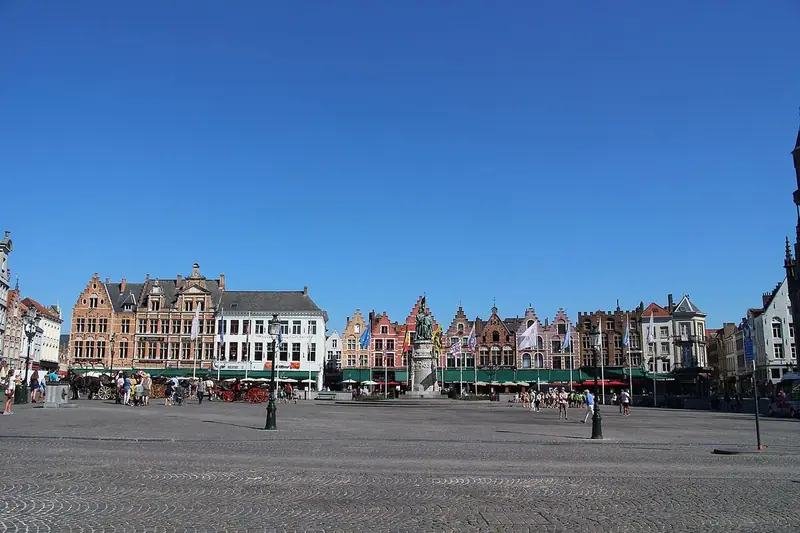
Begin in the Markt, the great market square at the heart of Bruges, where markets have been held since the Middle Ages. On the south side rise the Belfry and the market halls, while the other sides are lined with colourful step-gabled houses, many now restaurants, and on the east side the neo-Gothic Provincial Court, built in the late nineteenth century. In the centre stands a statue of Jan Breydel and Pieter de Coninck, leaders of the uprising of 1302, when the townspeople massacred the French garrison in the Bruges Matins, shortly before the Flemish victory over the French at the Battle of the Golden Spurs. Pause here to take in the square, which has been the stage for tournaments, executions and celebrations over the centuries. Horse-drawn carriages still set off from here on tours of the city.
Photo: Suicasmo · CC BY-SA 4.0 · Wikimedia Commons
What to see at Bruges: 9 stops, in visit order
- 01
 The MarktThe market squareFree preview
- 02
 The BelfryTower over the cityIn the guide
- 03
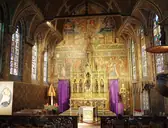 Basilica of the Holy BloodA precious relicIn the guide
- 04
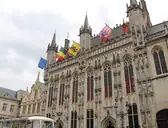 The BurgCity HallIn the guide
- 05
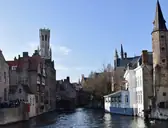 RozenhoedkaaiThe postcard viewIn the guide
- 06
 Groeninge MuseumThe Flemish PrimitivesIn the guide
- 07
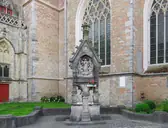 Church of Our LadyMichelangelo in BrugesIn the guide
- 08
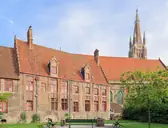 St John’s HospitalMedieval care and MemlingIn the guide
- 09
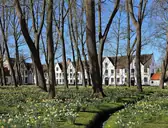 Beguinage and MinnewaterA peaceful endingIn the guide
Site map of Bruges
History of Bruges
Bruges grew from a ninth-century fortress of the Counts of Flanders, linked to the North Sea by a tidal inlet, the Zwin. By the thirteenth and fourteenth centuries it was one of the great trading cities of northern Europe, a centre of the cloth trade and home to merchants from Italy, Spain and the Hanseatic towns. Under the Dukes of Burgundy in the fifteenth century it was a centre of art, where painters such as Jan van Eyck and Hans Memling worked. As the Zwin silted up and trade moved to Antwerp, Bruges declined, which preserved much of its medieval fabric. Its rediscovery as a romantic ‘dead city’ in the nineteenth century began its modern life as a destination.
Bruges guide: questions
How many stops does the Bruges guide have?
9 stops, in visit order: 1. The Markt; 2. The Belfry; 3. Basilica of the Holy Blood; 4. The Burg; 5. Rozenhoedkaai; 6. Groeninge Museum; 7. Church of Our Lady; 8. St John’s Hospital; 9. Beguinage and Minnewater.
Can I do a self-guided tour of Bruges with this guide?
Yes. The guide is made for a self-guided tour: 9 stops in visit order, each with a photo, a story and a voice, so you can explore Bruges at your own pace, without joining a group. Download it before you go and it works offline.
How long is each guide?
The 9 stops add up to about 6 minutes of listening in total. You play each stop when you’re ready, so you can go at your own pace.
Does the guide work offline?
Yes, once it’s downloaded. The guide is a single self-contained web page (about 8.5 MB) with the photos, text and audio built in. Download it to your phone before you go (Wi-Fi is best); after that it opens in any modern browser on iPhone or Android, with no app, account or mobile signal needed.
Does it use GPS or need my location?
No. The guide doesn’t use GPS and doesn’t know where you are: you play each stop when you reach it. It works on iPhone and Android in any modern browser, and it’s in English.
What’s included?
One self-contained HTML guide: 9 stops in visit order, each with a photo, text and a voice, plus the story of who built the site.
Who built Bruges?
Bruges grew from a ninth-century fortress of the Counts of Flanders, linked to the North Sea by a tidal inlet, the Zwin. By the thirteenth and fourteenth centuries it was one of the great trading cities of northern Europe, a centre of the cloth trade and home to merchants from Italy, Spain and the Hanseatic towns.
Where is Bruges?
Bruges, in West Flanders, is one of the best-preserved medieval cities in Europe, a web of canals, cobbled lanes and brick gables around two great squares.
Is there a free audio guide to Bruges?
The first stop, The Markt, is free to read and hear on this page, so you can try the Bruges audio tour before you buy. The full guide, with all 9 stops, is a one-off purchase: download it once and it’s yours to keep, working offline.
Is the Bruges guide worth it?
If you’d like to know what you’re looking at, yes. For $10 you get 9 stops in visit order, each with a photo, a short history and a voice you play when you’re ready, plus a site map of the stops, and about 6 minutes of listening in all. It’s short on purpose, so you spend your time looking, not listening. It’s yours to keep, works offline and needs no app. The first stop is free on this page, so you can try it before you buy. If you’d like hours of detail, a guided tour will go deeper.
Audio guide or guided tour?
It depends how you like to visit. This guide lets you explore Bruges at your own pace, at any time, for a one-off price. A guided tour gives you a live expert you can ask questions, but at fixed times and usually for a higher price. Many people use both: a tour for the big picture, and the guide to read beforehand or to revisit the stops in their own time.
Is this the official Bruges guide?
No. It’s an independent guide by The Historian Guide, not affiliated with or endorsed by the operator of Bruges. For tickets and opening hours, check the official site operator before you go.
Does the guide include entry tickets or opening hours?
No. The guide is a digital companion only. Admission to Bruges is separate, so check the official site operator for current tickets and opening hours before you go.
- Stop 1 · The Markt: Suicasmo · CC BY-SA 4.0 · Wikimedia Commons · resized
- Stop 2 · The Belfry: Ank Kumar · CC BY-SA 4.0 · Wikimedia Commons · resized
- Stop 3 · Basilica of the Holy Blood: KL KL · CC BY-SA 3.0 · Wikimedia Commons · resized
- Stop 4 · The Burg: Fred Romero from Paris, France · CC BY 2.0 · Wikimedia Commons · resized
- Stop 5 · Rozenhoedkaai (also the cover): Ank Kumar · CC BY-SA 4.0 · Wikimedia Commons · resized
- Stop 6 · Groeninge Museum: Marc Ryckaert · CC BY 3.0 · Wikimedia Commons · resized
- Stop 7 · Church of Our Lady: Photo by CEphoto, Uwe Aranas or alternatively © CEphoto, Uwe Aranas · CC BY-SA 3.0 · Wikimedia Commons · resized
- Stop 8 · St John’s Hospital: Photo by CEphoto, Uwe Aranas or alternatively © CEphoto, Uwe Aranas · CC BY-SA 3.0 · Wikimedia Commons · resized
- Stop 9 · Beguinage and Minnewater: Marc Ryckaert · CC BY-SA 4.0 · Wikimedia Commons · resized


All photographs from Wikimedia Commons under the licences shown.
More guides in Belgium
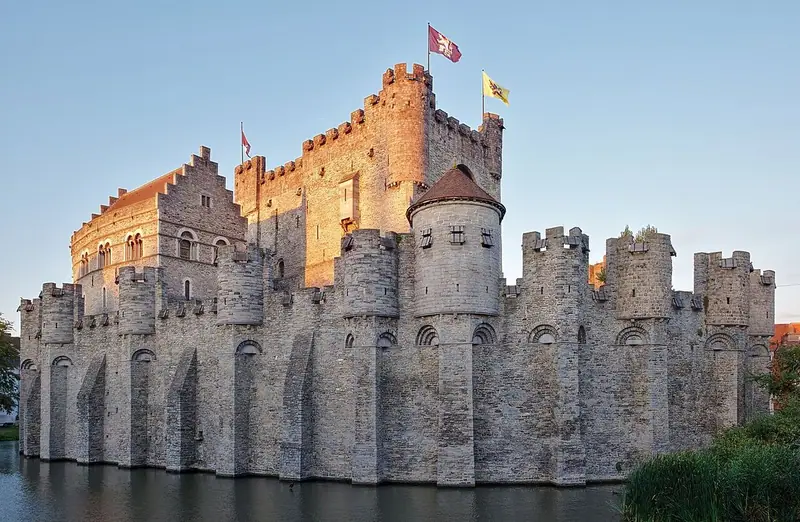 Medieval8 stops · 12th–15th century
Ghent audio guide
Ghent’s medieval heart, from St Bavo’s Cathedral and the Belfry to the Graslei and Korenlei quays and the castle of the Gravensteen.
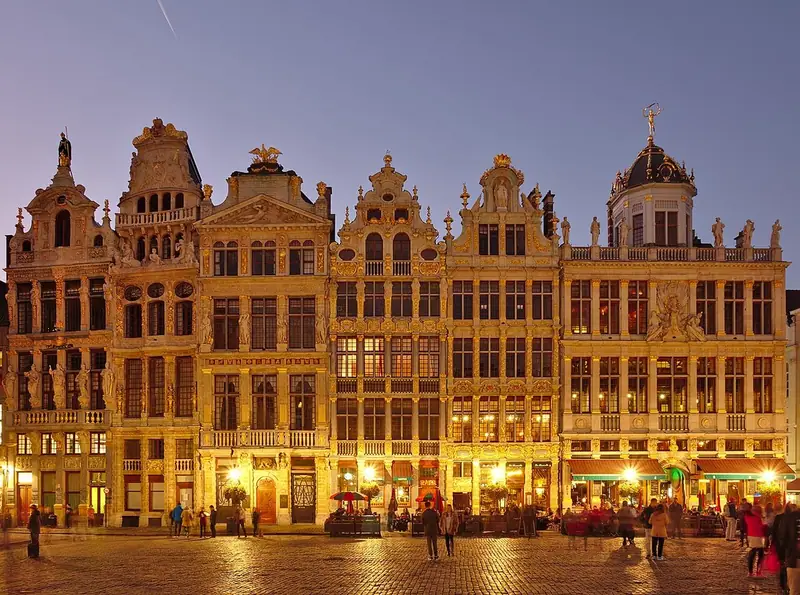 Gothic8 stops · 15th–17th century
Grand-Place, Brussels audio guide
Stand in one of Europe’s most beautiful squares, framed by the Gothic Town Hall and gilded guild houses, then seek out the Manneken Pis.
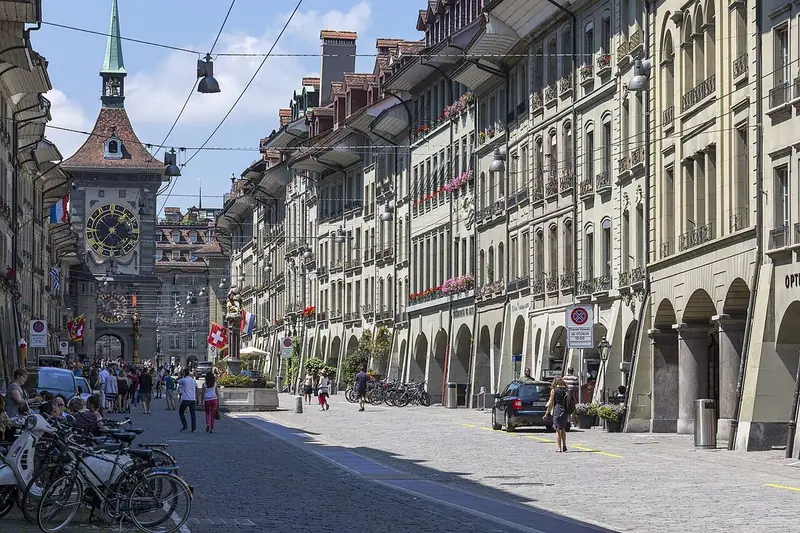 Medieval8 stops · founded 1191; rebuilt from 1405
Old City of Bern audio guide
The sandstone arcades of the Swiss capital, past the Zytglogge, the fountains and Bern Minster, down to the river and the bear park.
Every guide, in every country
Bruges and every other guide we publish, including future ones. One payment, no subscription.