Before you start
Old Quebec, the historic heart of Quebec City, stands on a cliff above the St Lawrence River at the point where the river narrows. It is the only city in North America north of Mexico to have kept its fortified walls, and the Historic District of Old Québec was inscribed as a UNESCO World Heritage Site in 1985. The old city has two parts: the Lower Town along the river, and the Upper Town on top of Cap Diamant, linked by steep streets, stairways and a funicular. Everything is walkable, but the climb between the two is steep, and pavements can be icy in winter. This guide starts in Place Royale in the Lower Town, climbs to Dufferin Terrace and the Château Frontenac, visits the cathedral and the seminary, and finishes along the walls at the Citadel.
Use it as a self-guided tour of Old Quebec: 9 stops in visit order, each played when you’re ready, at your own pace.
 Free preview · Stop 1
Place Royale
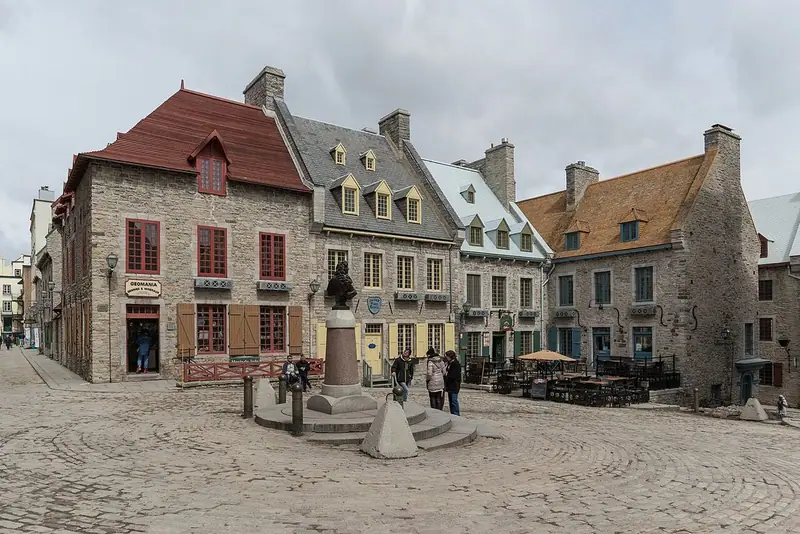
Begin in Place Royale, the small cobbled square in the Lower Town, close to the spot where Samuel de Champlain built his first fortified dwelling, the Habitation, in 1608. Under the French regime this was the city’s marketplace and the centre of its trade along the river. Look at the tall stone houses with steep roofs and big chimneys; many were rebuilt or restored in the twentieth century to recall the look of New France. In the middle stands a bust of Louis XIV, a copy of one set up here in 1686, which gave the square its name. On the side of a house nearby, look for the huge painted Fresque des Québécois, a trompe-l’œil mural showing figures from the city’s history. Take a moment to imagine the ships, furs and merchants that once crowded this busy waterfront.
Photo: DXR · CC BY-SA 4.0 · Wikimedia Commons
What to see at Old Quebec: 9 stops, in visit order
- 01
 Place RoyaleWhere Quebec beganFree preview
- 02
 Notre-Dame-des-VictoiresA church of thanksgivingIn the guide
- 03
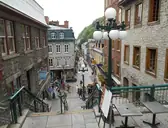 Breakneck StairsUp from the Lower TownIn the guide
- 04
 Dufferin TerraceThe forts under your feetIn the guide
- 05
 Château FrontenacA railway castleIn the guide
- 06
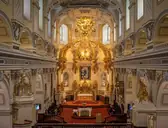 Notre-Dame Basilica-CathedralMother church of New FranceIn the guide
- 07
 Seminary of QuebecLaval’s schoolIn the guide
- 08
 Saint-Louis GateOn the wallsIn the guide
- 09
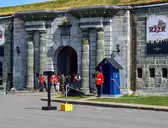 The CitadelStar fort on Cap DiamantIn the guide
Site map of Old Quebec
History of Old Quebec
Quebec was founded in 1608 by the French explorer Samuel de Champlain, on land long used by Indigenous peoples, and it became the capital of New France. French merchants, missionaries, soldiers and settlers built the Lower Town for trade and the Upper Town for church and government. In 1759, British forces under James Wolfe defeated the French under the Marquis de Montcalm on the Plains of Abraham, and in 1763 New France was ceded to Britain. The British strengthened the walls and built the Citadel, while the city remained overwhelmingly French-speaking. Quebec City has been the capital of the province of Quebec since Confederation in 1867, and it remains the heart of French-speaking North America.
Old Quebec guide: questions
How many stops does the Old Quebec guide have?
9 stops, in visit order: 1. Place Royale; 2. Notre-Dame-des-Victoires; 3. Breakneck Stairs; 4. Dufferin Terrace; 5. Château Frontenac; 6. Notre-Dame Basilica-Cathedral; 7. Seminary of Quebec; 8. Saint-Louis Gate; 9. The Citadel.
Can I do a self-guided tour of Old Quebec with this guide?
Yes. The guide is made for a self-guided tour: 9 stops in visit order, each with a photo, a story and a voice, so you can explore Old Quebec at your own pace, without joining a group. Download it before you go and it works offline.
How long is each guide?
The 9 stops add up to about 7 minutes of listening in total. You play each stop when you’re ready, so you can go at your own pace.
Does the guide work offline?
Yes, once it’s downloaded. The guide is a single self-contained web page (about 8.5 MB) with the photos, text and audio built in. Download it to your phone before you go (Wi-Fi is best); after that it opens in any modern browser on iPhone or Android, with no app, account or mobile signal needed.
Does it use GPS or need my location?
No. The guide doesn’t use GPS and doesn’t know where you are: you play each stop when you reach it. It works on iPhone and Android in any modern browser, and it’s in English.
What’s included?
One self-contained HTML guide: 9 stops in visit order, each with a photo, text and a voice, plus the story of who built the site.
Who built Old Quebec?
Quebec was founded in 1608 by the French explorer Samuel de Champlain, on land long used by Indigenous peoples, and it became the capital of New France. French merchants, missionaries, soldiers and settlers built the Lower Town for trade and the Upper Town for church and government.
Where is Old Quebec?
Old Quebec, the historic heart of Quebec City, stands on a cliff above the St Lawrence River at the point where the river narrows.
Is there a free audio guide to Old Quebec?
The first stop, Place Royale, is free to read and hear on this page, so you can try the Old Quebec audio tour before you buy. The full guide, with all 9 stops, is a one-off purchase: download it once and it’s yours to keep, working offline.
Is the Old Quebec guide worth it?
If you’d like to know what you’re looking at, yes. For $10 you get 9 stops in visit order, each with a photo, a short history and a voice you play when you’re ready, plus a site map of the stops, and about 7 minutes of listening in all. It’s short on purpose, so you spend your time looking, not listening. It’s yours to keep, works offline and needs no app. The first stop is free on this page, so you can try it before you buy. If you’d like hours of detail, a guided tour will go deeper.
Audio guide or guided tour?
It depends how you like to visit. This guide lets you explore Old Quebec at your own pace, at any time, for a one-off price. A guided tour gives you a live expert you can ask questions, but at fixed times and usually for a higher price. Many people use both: a tour for the big picture, and the guide to read beforehand or to revisit the stops in their own time.
Is this the official Old Quebec guide?
No. It’s an independent guide by The Historian Guide, not affiliated with or endorsed by the operator of Old Quebec. For tickets and opening hours, check the official site operator before you go.
Does the guide include entry tickets or opening hours?
No. The guide is a digital companion only. Admission to Old Quebec is separate, so check the official site operator for current tickets and opening hours before you go.
- Stop 1 · Place Royale: DXR · CC BY-SA 4.0 · Wikimedia Commons · resized
- Stop 2 · Notre-Dame-des-Victoires: Wilfredor · CC0 · Wikimedia Commons · resized
- Stop 3 · Breakneck Stairs: Jeangagnon · CC BY-SA 3.0 · Wikimedia Commons · resized
- Stop 4 · Dufferin Terrace: Wilfredor · CC0 · Wikimedia Commons · resized
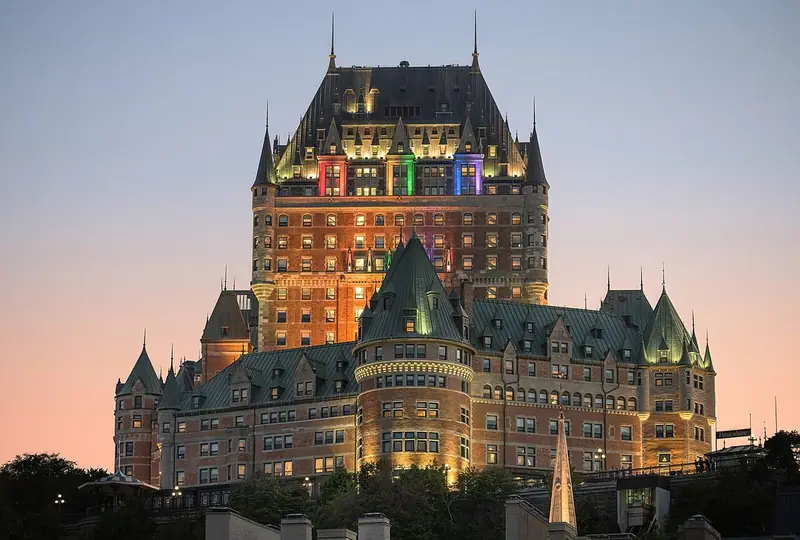
- Stop 5 · Château Frontenac (also the cover): Wilfredor · CC0 · Wikimedia Commons · resized
- Stop 6 · Notre-Dame Basilica-Cathedral: Wilfredor · CC0 · Wikimedia Commons · resized
- Stop 7 · Seminary of Quebec: Wilfredor · CC0 · Wikimedia Commons · resized
- Stop 8 · Saint-Louis Gate: DXR · CC BY-SA 4.0 · Wikimedia Commons · resized
- Stop 9 · The Citadel: The Cosmonaut · CC BY-SA 2.5 ca · Wikimedia Commons · resized


All photographs from Wikimedia Commons under the licences shown.
More guides in Canada
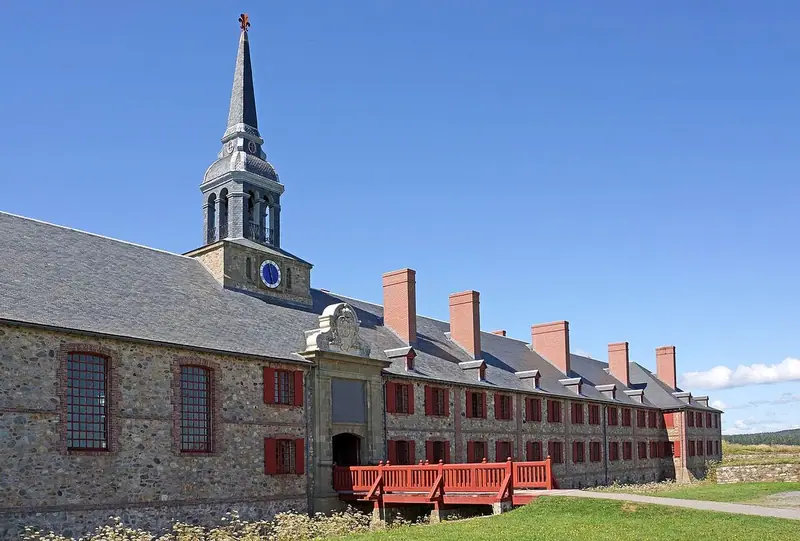 French Colonial8 stops · 1713–1758
Fortress of Louisbourg audio guide
Step into the summer of 1744 in a rebuilt French fortified town on Cape Breton’s Atlantic shore, from the Dauphin Gate to the King’s Bastion.
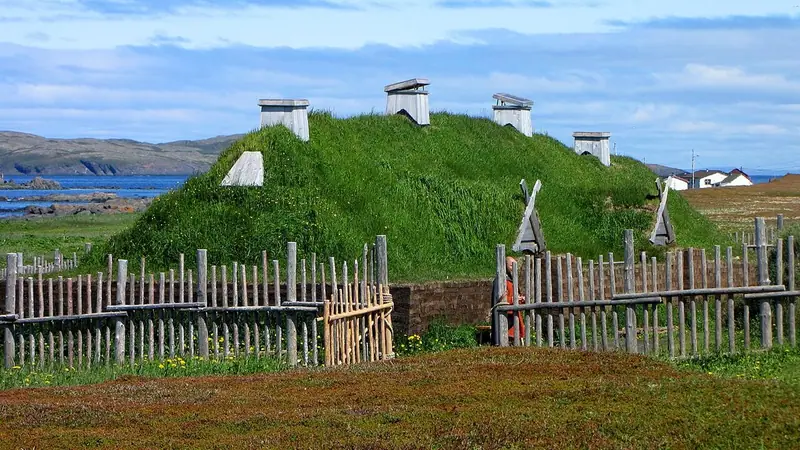 Norse7 stops · c. 1000 CE
L’Anse aux Meadows audio guide
Cross the meadow at Newfoundland’s northern tip to the only confirmed Norse site in North America, where Europeans first settled in the Americas around a thousand years ago.
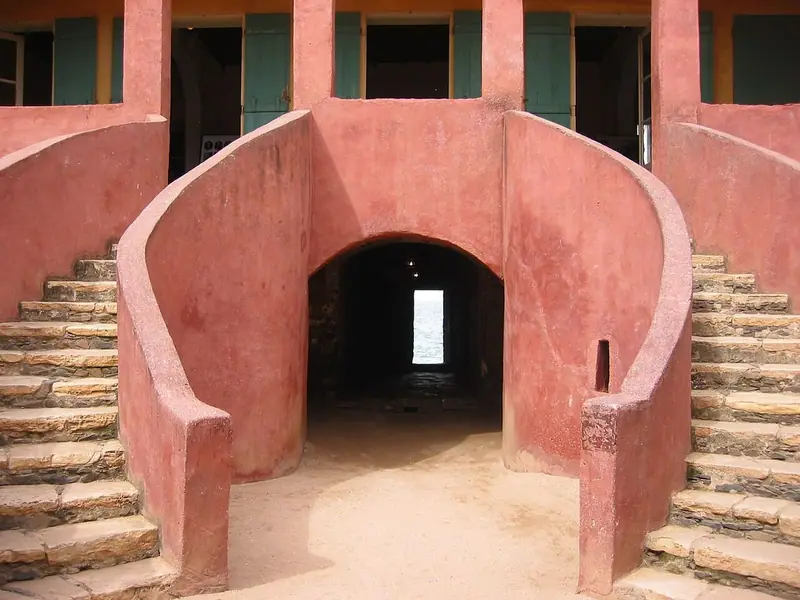 French Colonial7 stops · 17th–19th century
Gorée Island audio guide
Take the ferry to Gorée’s car-free lanes of colonial houses, to the House of Slaves and the Door of No Return.
Every guide, in every country
Old Quebec and every other guide we publish, including future ones. One payment, no subscription.