Before you start
The Ajanta Caves are cut into a curving cliff above the Waghora river, deep in a horseshoe-shaped gorge in northern Maharashtra, about a hundred kilometres north of Chhatrapati Sambhajinagar, formerly Aurangabad. There are thirty caves, Buddhist prayer halls and monasteries, carved out of the rock and decorated with sculpture and with wall paintings that are among the finest survivals of ancient Indian art. Ajanta has been a UNESCO World Heritage Site since 1983 and is cared for by the Archaeological Survey of India. Visitors leave their vehicles at the visitor centre and take a shuttle bus to the foot of the caves, then climb to a path that runs along the cliff. The caves are numbered in order along the path, not by age, and this guide follows that walking order, from Cave 1 to Cave 26.
Use it as a self-guided tour of the Ajanta Caves: 8 stops in visit order, each played when you’re ready, at your own pace.
 Free preview · Stop 1
Cave 1
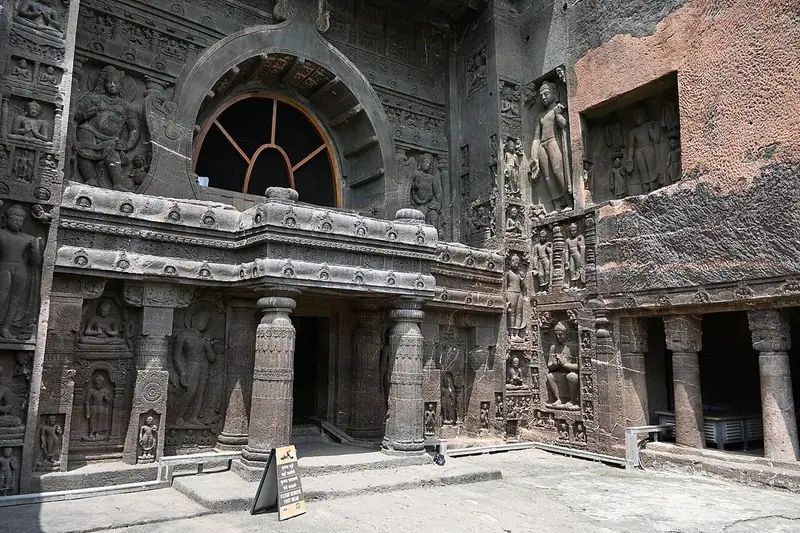
Start with Cave 1, one of the finest monasteries at Ajanta, from the later phase of the fifth century. Pause on the veranda to look at the carved pillars and the friezes above them. Inside is a large square hall surrounded by monks’ cells, with a shrine at the back containing a great seated Buddha. Let your eyes adjust to the low light, because the walls are covered with paintings. On either side of the shrine doorway are the two most famous figures at Ajanta: Padmapani, the bodhisattva holding a lotus, with his gentle, downcast gaze, and Vajrapani, holding a thunderbolt. Around the hall, paintings tell stories of the Buddha’s previous lives, the Jatakas, crowded with princes, dancers, animals and palaces. Lighting is kept low to protect the paintings, and flash photography is forbidden.
Photo: Photo Dharma from Sadao, Thailand · CC BY 2.0 · Wikimedia Commons
What to see at the Ajanta Caves: 8 stops, in visit order
- 01
 Cave 1The bodhisattvas of compassionFree preview
- 02
 Cave 2Painted ceilingsIn the guide
- 03
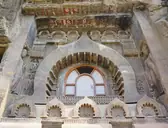 Cave 9An early prayer hallIn the guide
- 04
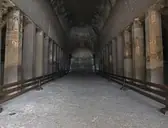 Cave 10Where Ajanta was rediscoveredIn the guide
- 05
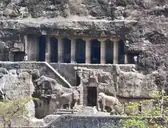 Cave 16The Vakataka minister’s monasteryIn the guide
- 06
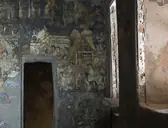 Cave 17Stories of past livesIn the guide
- 07
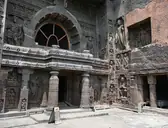 Cave 19A sculpted prayer hallIn the guide
- 08
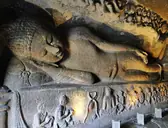 Cave 26The reclining BuddhaIn the guide
Site map of the Ajanta Caves
History of the Ajanta Caves
Ajanta was created by Buddhist monks and their patrons, kings, officials and merchants, in two main phases. UNESCO dates the first to the second and first centuries BCE, under the Satavahana dynasty, which ruled much of the Deccan from around this time into the early third century CE; these early caves are simple, and the Buddha is represented only by symbols such as the stupa. After a gap of about four centuries, work began again in the fifth century CE under the Vakatakas, a dynasty that ruled in the Deccan from the third century until the late fifth, and especially under their king Harishena and his feudatories. In this phase, the Buddha was shown in human form, and most of the famous paintings were made. The caves were later abandoned and overgrown, until a British officer, John Smith, came upon them while hunting a tiger in 1819.
Ajanta Caves guide: questions
How many stops does the Ajanta Caves guide have?
8 stops, in visit order: 1. Cave 1; 2. Cave 2; 3. Cave 9; 4. Cave 10; 5. Cave 16; 6. Cave 17; 7. Cave 19; 8. Cave 26.
Can I do a self-guided tour of the Ajanta Caves with this guide?
Yes. The guide is made for a self-guided tour: 8 stops in visit order, each with a photo, a story and a voice, so you can explore the Ajanta Caves at your own pace, without joining a group. Download it before you go and it works offline.
How long is each guide?
The 8 stops add up to about 7 minutes of listening in total. You play each stop when you’re ready, so you can go at your own pace.
Does the guide work offline?
Yes, once it’s downloaded. The guide is a single self-contained web page (about 8.9 MB) with the photos, text and audio built in. Download it to your phone before you go (Wi-Fi is best); after that it opens in any modern browser on iPhone or Android, with no app, account or mobile signal needed.
Does it use GPS or need my location?
No. The guide doesn’t use GPS and doesn’t know where you are: you play each stop when you reach it. It works on iPhone and Android in any modern browser, and it’s in English.
What’s included?
One self-contained HTML guide: 8 stops in visit order, each with a photo, text and a voice, plus the story of who built the site.
Who built the Ajanta Caves?
Ajanta was created by Buddhist monks and their patrons, kings, officials and merchants, in two main phases. UNESCO dates the first to the second and first centuries BCE, under the Satavahana dynasty, which ruled much of the Deccan from around this time into the early third century CE; these early caves are simple, and the Buddha is represented only by symbols such as the stupa.
Where is the Ajanta Caves?
The Ajanta Caves are cut into a curving cliff above the Waghora river, deep in a horseshoe-shaped gorge in northern Maharashtra, about a hundred kilometres north of Chhatrapati Sambhajinagar, formerly Aurangabad.
Is there a free audio guide to the Ajanta Caves?
The first stop, Cave 1, is free to read and hear on this page, so you can try the Ajanta Caves audio tour before you buy. The full guide, with all 8 stops, is a one-off purchase: download it once and it’s yours to keep, working offline.
Is the Ajanta Caves guide worth it?
If you’d like to know what you’re looking at, yes. For $10 you get 8 stops in visit order, each with a photo, a short history and a voice you play when you’re ready, plus a site map of the stops, and about 7 minutes of listening in all. It’s short on purpose, so you spend your time looking, not listening. It’s yours to keep, works offline and needs no app. The first stop is free on this page, so you can try it before you buy. If you’d like hours of detail, a guided tour will go deeper.
Audio guide or guided tour?
It depends how you like to visit. This guide lets you explore the Ajanta Caves at your own pace, at any time, for a one-off price. A guided tour gives you a live expert you can ask questions, but at fixed times and usually for a higher price. Many people use both: a tour for the big picture, and the guide to read beforehand or to revisit the stops in their own time.
Is this the official Ajanta Caves guide?
No. It’s an independent guide by The Historian Guide, not affiliated with or endorsed by the operator of the Ajanta Caves. For tickets and opening hours, check the official site operator before you go.
Does the guide include entry tickets or opening hours?
No. The guide is a digital companion only. Admission to the Ajanta Caves is separate, so check the official site operator for current tickets and opening hours before you go.
- Stop 1 · Cave 1: Photo Dharma from Sadao, Thailand · CC BY 2.0 · Wikimedia Commons · resized
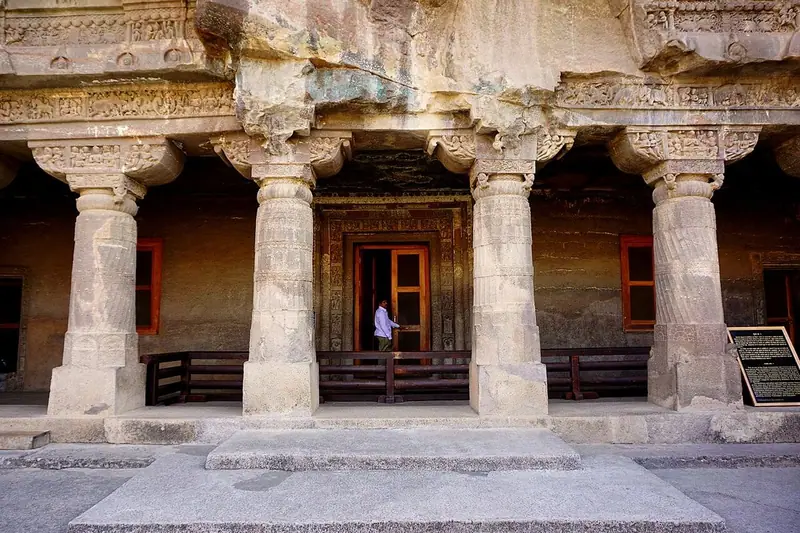
- Stop 2 · Cave 2: Photo Dharma from Sadao, Thailand · CC BY 2.0 · Wikimedia Commons · resized
- Stop 3 · Cave 9: Photo Dharma from Sadao, Thailand · CC BY 2.0 · Wikimedia Commons · resized
- Stop 4 · Cave 10: Biswas Dibyendu · CC0 · Wikimedia Commons · resized
- Stop 5 · Cave 16: Anupamg · CC BY-SA 4.0 · Wikimedia Commons · resized
- Stop 6 · Cave 17: Biswas Dibyendu · CC0 · Wikimedia Commons · resized
- Stop 7 · Cave 19 (also the cover): Vinayaraj · CC BY-SA 4.0 · Wikimedia Commons · resized
- Stop 8 · Cave 26: Ronakshah1990 · CC BY-SA 4.0 · Wikimedia Commons · resized


All photographs from Wikimedia Commons under the licences shown.
More guides in India
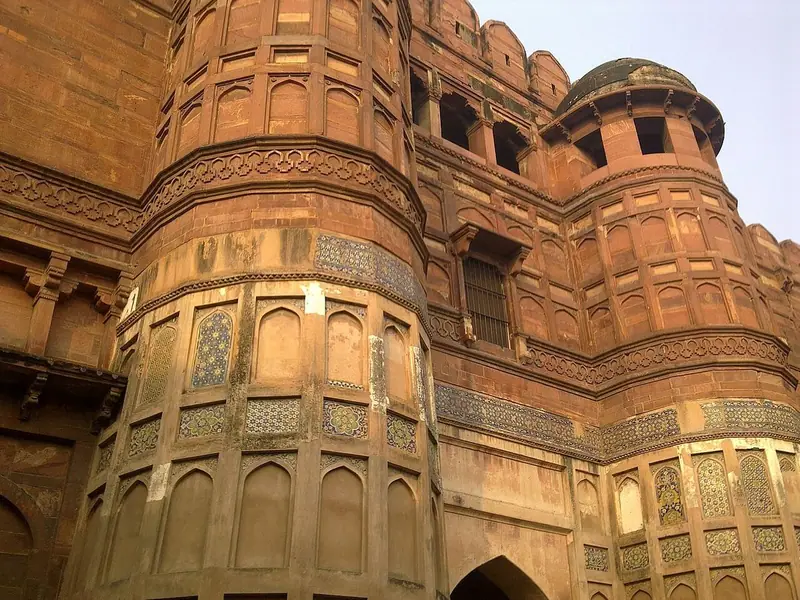 Mughal7 stops · 1565–1640s
Agra Fort audio guide
Red sandstone ramparts and marble palaces, with the Taj Mahal in view from the riverside terraces.
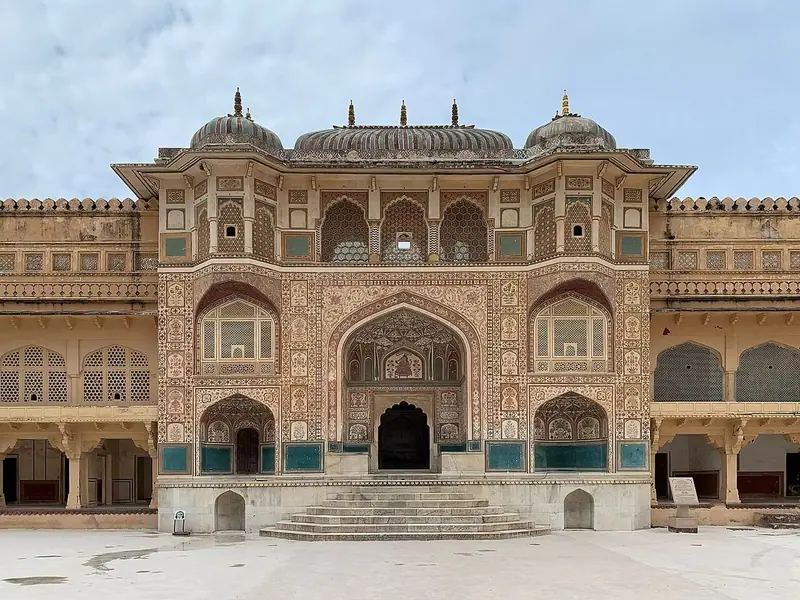 Rajput8 stops · 1592–18th century
Amber Fort audio guide
Up from Maota Lake through the great gates and courtyards to the Sheesh Mahal, palace of the Kachhwaha Rajputs.
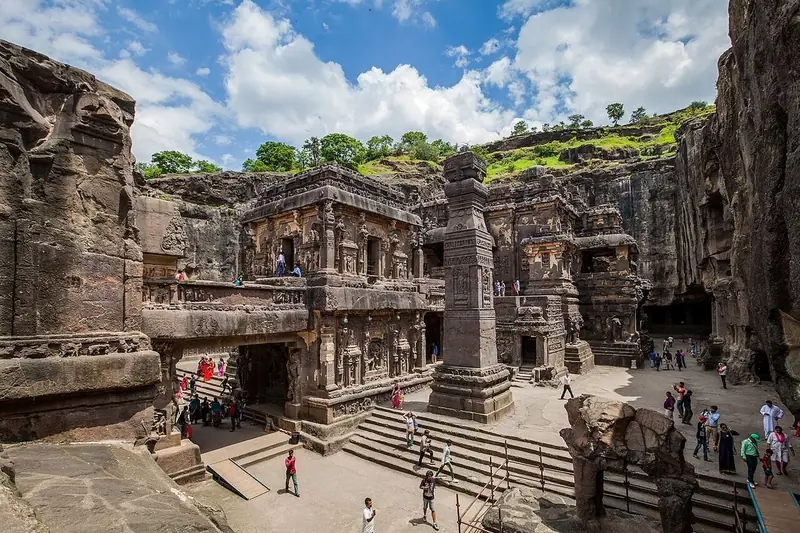 Deccan8 stops · c. 600–1000 CE
Ellora Caves audio guide
Thirty-four Buddhist, Hindu and Jain caves cut into a basalt escarpment, crowned by the Kailasa Temple.
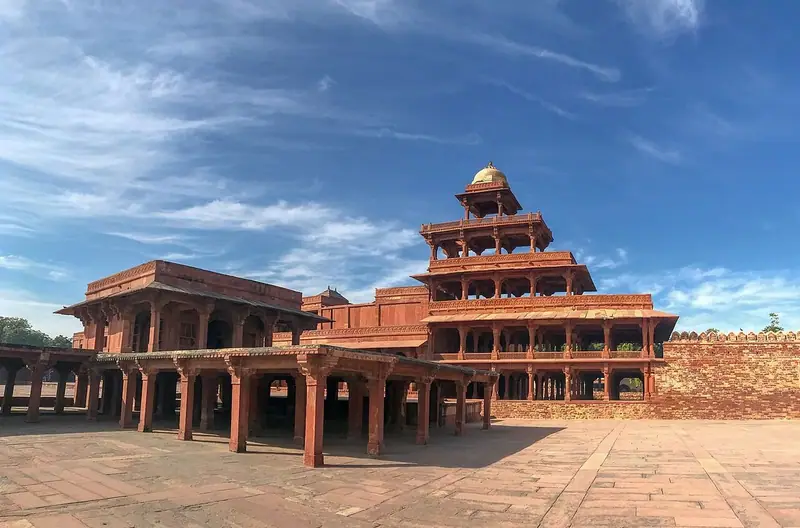 Mughal8 stops · 1571–1585
Fatehpur Sikri audio guide
Akbar’s short-lived red sandstone capital: the Panch Mahal, the Diwan-i-Khas and the tomb of Salim Chishti.
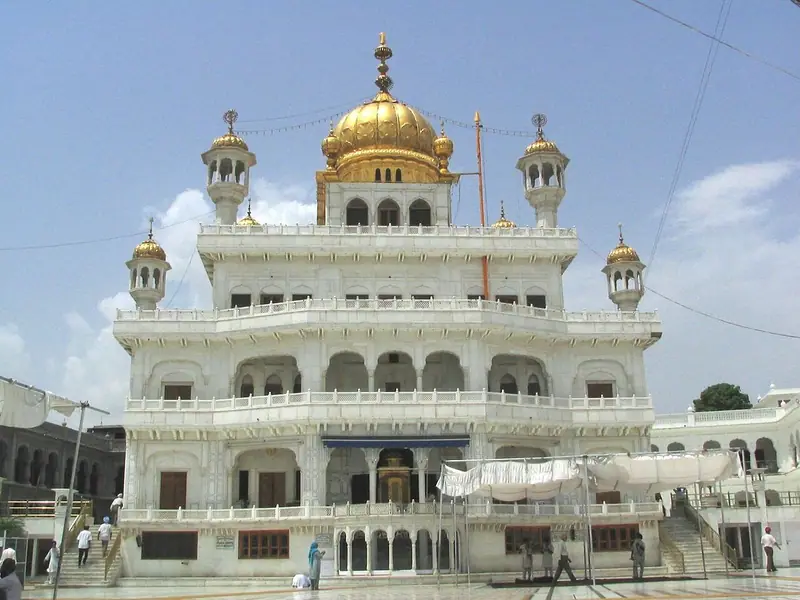 Sikh9 stops · Sikh Gurus and Sikh Empire
The Golden Temple audio guide
Follow the marble path around the sacred pool, cross the causeway to the gilded Harmandir Sahib, and share a meal at the Guru ka Langar.
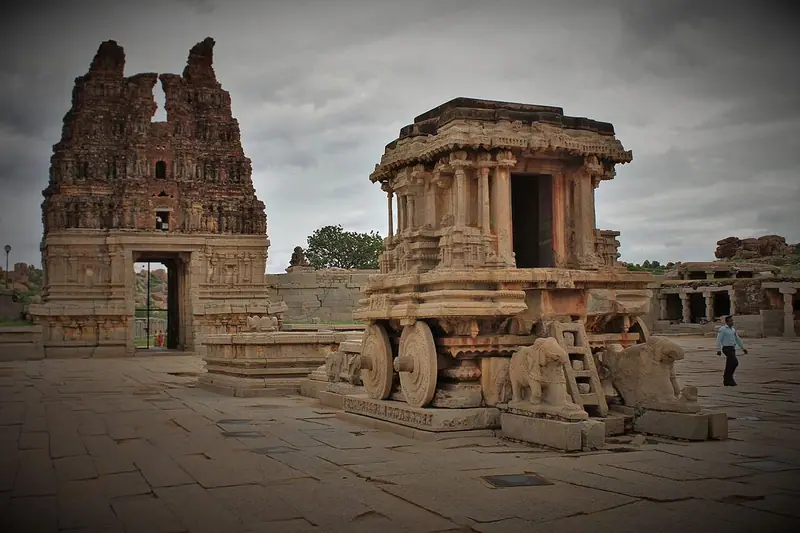 Vijayanagara8 stops · 1336–1565 CE
Hampi audio guide
Explore the City of Victory among granite boulders by the Tungabhadra, from the Virupaksha temple to the Lotus Mahal and the Vittala Temple.
Every guide, in every country
Ajanta Caves and every other guide we publish, including future ones. One payment, no subscription.