Before you start
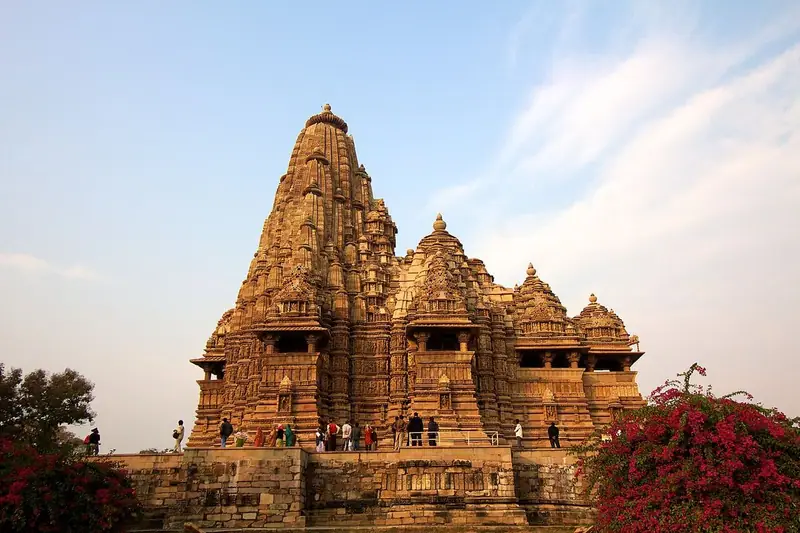
Khajuraho is a small town in the Bundelkhand region of Madhya Pradesh, in central India, famous for its group of medieval Hindu and Jain temples. Built of fine-grained sandstone, the temples rise from high platforms in a series of soaring spires, and their walls are covered with thousands of sculptures of gods and goddesses, celestial maidens, musicians, warriors and loving couples. The Khajuraho Group of Monuments has been a UNESCO World Heritage Site since 1986 and is cared for by the Archaeological Survey of India. The temples fall into western, eastern and southern groups; the finest are in the Western Group, set in a walled garden in the centre of town. This guide follows a loop around the Western Group, anticlockwise from the entrance, and ends at the living Matangeshvara temple just outside its walls.
Use it as a self-guided tour of Khajuraho: 7 stops in visit order, each played when you’re ready, at your own pace.
 Free preview · Stop 1
Varaha Shrine
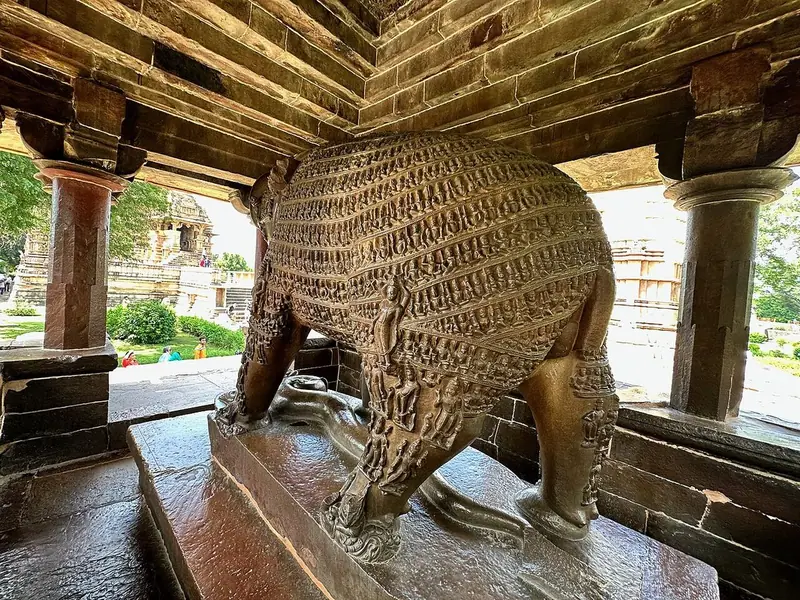
Just inside the entrance, opposite the Lakshmana temple, stands a small open pavilion on a high platform. It shelters a huge statue of Varaha, the boar incarnation of the god Vishnu, carved from a single block of polished sandstone. In Hindu myth, Vishnu took the form of a boar to rescue the earth goddess from the bottom of the cosmic ocean. Look closely at the boar’s body: it is covered with hundreds of tiny carved figures of gods, sages and other beings, arranged in neat rows, as if the whole universe were contained within him. Beneath his feet lies a coiled serpent. The shrine is one of the earlier monuments of the Western Group, from the early tenth century. Notice the simple pyramid-shaped roof of the pavilion, carried on plain pillars, a contrast with the elaborate temples around it.
Photo: Ms Sarah Welch · CC0 · Wikimedia Commons
What to see at Khajuraho: 7 stops, in visit order
- 01
 Varaha ShrineThe great boarFree preview
- 02
 Vishvanatha TempleShiva and his bullIn the guide
- 03
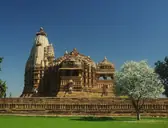 Chitragupta TempleTemple of the sun godIn the guide
- 04
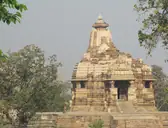 Devi JagadambiTemple of the goddessIn the guide
- 05
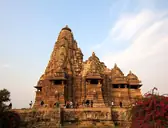 Kandariya MahadevaThe largest templeIn the guide
- 06
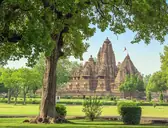 Lakshmana TempleThe earliest great templeIn the guide
- 07
 Matangeshvara TempleThe living templeIn the guide
Site map of Khajuraho
History of Khajuraho
The temples were built by the Chandellas, a Rajput dynasty who ruled the Bundelkhand region of central India. They rose to power in the ninth century, and their kingdom was at its height in the tenth and eleventh centuries, when kings such as Yashovarman and Dhanga built most of the great temples, roughly between 950 and 1050. For UNESCO, the temples are outstanding evidence of the Chandella culture, which thrived until the Delhi Sultanate was founded in the early thirteenth century. In 1203 the Delhi forces captured the Chandella stronghold of Kalinjar, and although Chandella rulers held on locally for another century, their power faded. Of the many temples once built at Khajuraho, around twenty-five survive. They were little known to the outside world until a British army engineer, T.
The full history continues in the guide.
Khajuraho guide: questions
How many stops does the Khajuraho guide have?
7 stops, in visit order: 1. Varaha Shrine; 2. Vishvanatha Temple; 3. Chitragupta Temple; 4. Devi Jagadambi; 5. Kandariya Mahadeva; 6. Lakshmana Temple; 7. Matangeshvara Temple.
Can I do a self-guided tour of Khajuraho with this guide?
Yes. The guide is made for a self-guided tour: 7 stops in visit order, each with a photo, a story and a voice, so you can explore Khajuraho at your own pace, without joining a group. Download it before you go and it works offline.
How long is each guide?
The 7 stops add up to about 7 minutes of listening in total. You play each stop when you’re ready, so you can go at your own pace.
Does the guide work offline?
Yes, once it’s downloaded. The guide is a single self-contained web page (about 8.0 MB) with the photos, text and audio built in. Download it to your phone before you go (Wi-Fi is best); after that it opens in any modern browser on iPhone or Android, with no app, account or mobile signal needed.
Does it use GPS or need my location?
No. The guide doesn’t use GPS and doesn’t know where you are: you play each stop when you reach it. It works on iPhone and Android in any modern browser, and it’s in English.
What’s included?
One self-contained HTML guide: 7 stops in visit order, each with a photo, text and a voice, plus the story of who built the site.
Who built Khajuraho?
The temples were built by the Chandellas, a Rajput dynasty who ruled the Bundelkhand region of central India. They rose to power in the ninth century, and their kingdom was at its height in the tenth and eleventh centuries, when kings such as Yashovarman and Dhanga built most of the great temples, roughly between 950 and 1050.
Where is Khajuraho?
Khajuraho is a small town in the Bundelkhand region of Madhya Pradesh, in central India, famous for its group of medieval Hindu and Jain temples.
Is there a free audio guide to Khajuraho?
The first stop, Varaha Shrine, is free to read and hear on this page, so you can try the Khajuraho audio tour before you buy. The full guide, with all 7 stops, is a one-off purchase: download it once and it’s yours to keep, working offline.
Is the Khajuraho guide worth it?
If you’d like to know what you’re looking at, yes. For $10 you get 7 stops in visit order, each with a photo, a short history and a voice you play when you’re ready, plus a site map of the stops, and about 7 minutes of listening in all. It’s short on purpose, so you spend your time looking, not listening. It’s yours to keep, works offline and needs no app. The first stop is free on this page, so you can try it before you buy. If you’d like hours of detail, a guided tour will go deeper.
Audio guide or guided tour?
It depends how you like to visit. This guide lets you explore Khajuraho at your own pace, at any time, for a one-off price. A guided tour gives you a live expert you can ask questions, but at fixed times and usually for a higher price. Many people use both: a tour for the big picture, and the guide to read beforehand or to revisit the stops in their own time.
Is this the official Khajuraho guide?
No. It’s an independent guide by The Historian Guide, not affiliated with or endorsed by the operator of Khajuraho. For tickets and opening hours, check the official site operator before you go.
Does the guide include entry tickets or opening hours?
No. The guide is a digital companion only. Admission to Khajuraho is separate, so check the official site operator for current tickets and opening hours before you go.
- Stop 1 · Varaha Shrine: Ms Sarah Welch · CC0 · Wikimedia Commons · resized
- Stop 2 · Vishvanatha Temple: Rohit Sharma · CC BY-SA 4.0 · Wikimedia Commons · resized
- Stop 3 · Chitragupta Temple: Amitabha Gupta · CC BY-SA 4.0 · Wikimedia Commons · resized
- Stop 4 · Devi Jagadambi: Rajenver · CC BY-SA 3.0 · Wikimedia Commons · resized
- Stop 5 · Kandariya Mahadeva (also the cover): Ramón from Llanera, España · CC BY-SA 2.0 · Wikimedia Commons · resized
- Stop 6 · Lakshmana Temple: Chetansoni · CC BY-SA 4.0 · Wikimedia Commons · resized
- Stop 7 · Matangeshvara Temple: Ms Sarah Welch · CC0 · Wikimedia Commons · resized


All photographs from Wikimedia Commons under the licences shown.
More guides in India
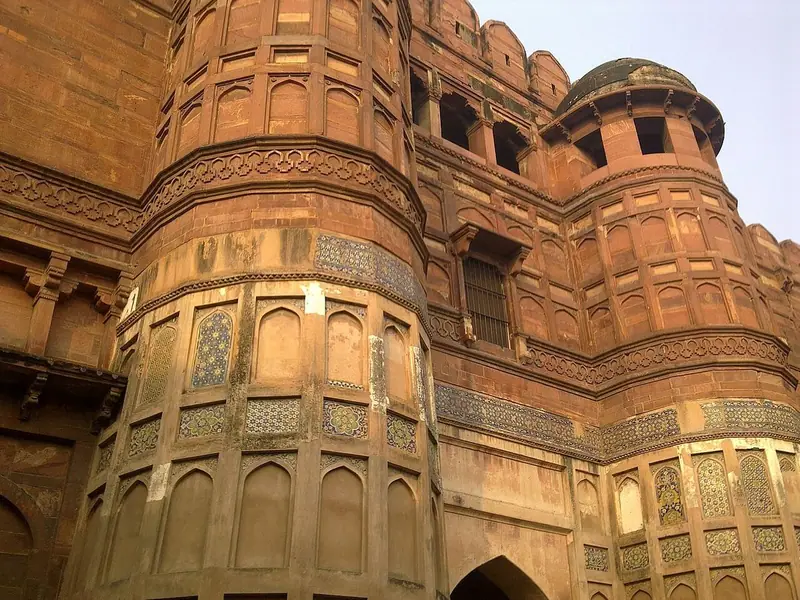 Mughal7 stops · 1565–1640s
Agra Fort audio guide
Red sandstone ramparts and marble palaces, with the Taj Mahal in view from the riverside terraces.
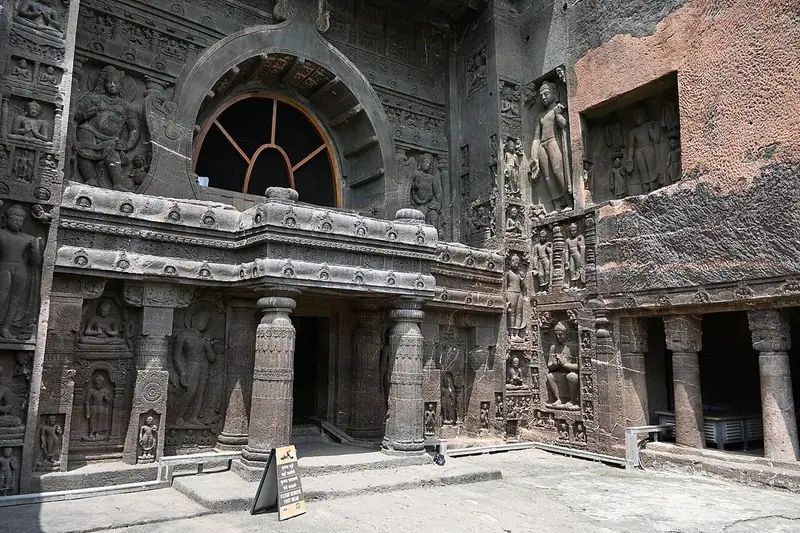 Deccan8 stops · 2nd century BCE – 5th century CE
Ajanta Caves audio guide
Thirty caves cut into a curving cliff above the Waghora river, their prayer halls and monasteries painted and carved by Buddhist monks and their patrons.
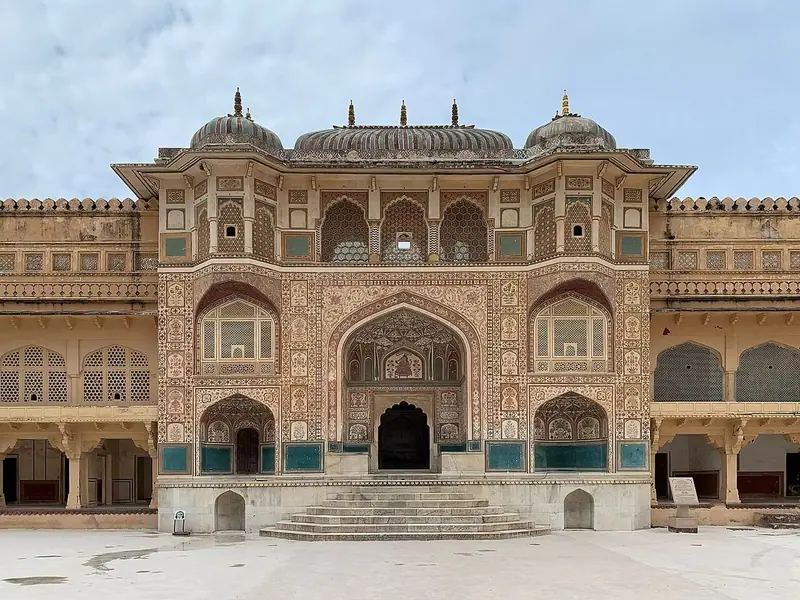 Rajput8 stops · 1592–18th century
Amber Fort audio guide
Up from Maota Lake through the great gates and courtyards to the Sheesh Mahal, palace of the Kachhwaha Rajputs.
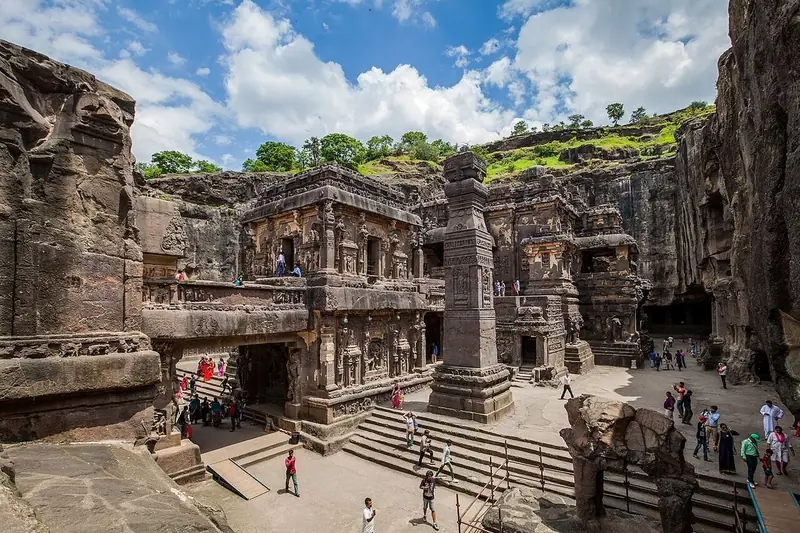 Deccan8 stops · c. 600–1000 CE
Ellora Caves audio guide
Thirty-four Buddhist, Hindu and Jain caves cut into a basalt escarpment, crowned by the Kailasa Temple.
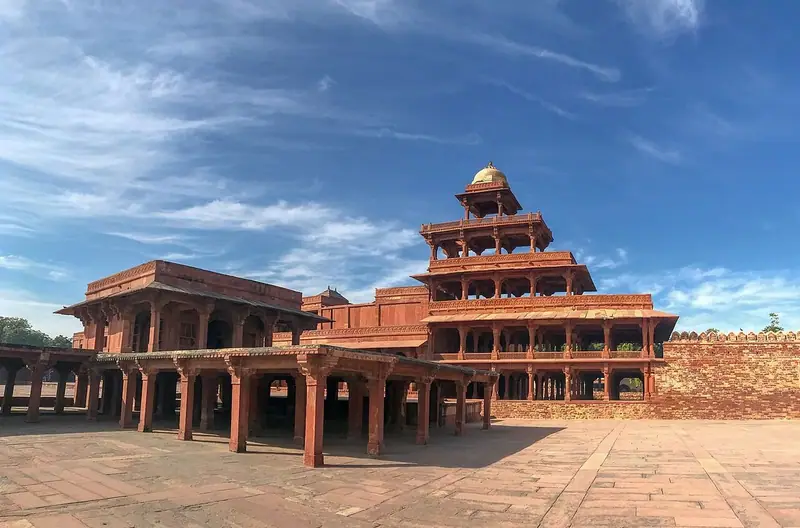 Mughal8 stops · 1571–1585
Fatehpur Sikri audio guide
Akbar’s short-lived red sandstone capital: the Panch Mahal, the Diwan-i-Khas and the tomb of Salim Chishti.
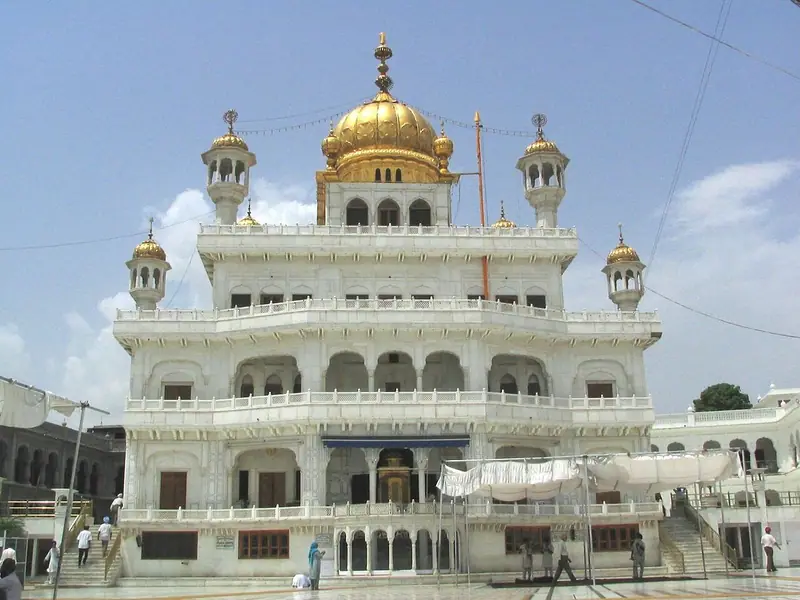 Sikh9 stops · Sikh Gurus and Sikh Empire
The Golden Temple audio guide
Follow the marble path around the sacred pool, cross the causeway to the gilded Harmandir Sahib, and share a meal at the Guru ka Langar.
Every guide, in every country
Khajuraho and every other guide we publish, including future ones. One payment, no subscription.