Before you start
Madaba is a market town on the plateau about thirty kilometres south-west of Amman, known as the City of Mosaics. Its treasures lie close together in the old centre and are easy to visit on foot in half a day, often combined with nearby Mount Nebo on the way to the Dead Sea. The visitor centre is beside the Madaba Archaeological Park, a few minutes’ walk from the Church of St George. St George’s is a working church, so dress modestly, with shoulders and knees covered, and be quiet during services. This guide begins at the Church of St George and its famous mosaic map, continues to the Archaeological Park with the Burnt Palace, the Church of the Virgin, the Hippolytus Hall and the Roman street, and ends at the Church of the Apostles, about half a kilometre further south.
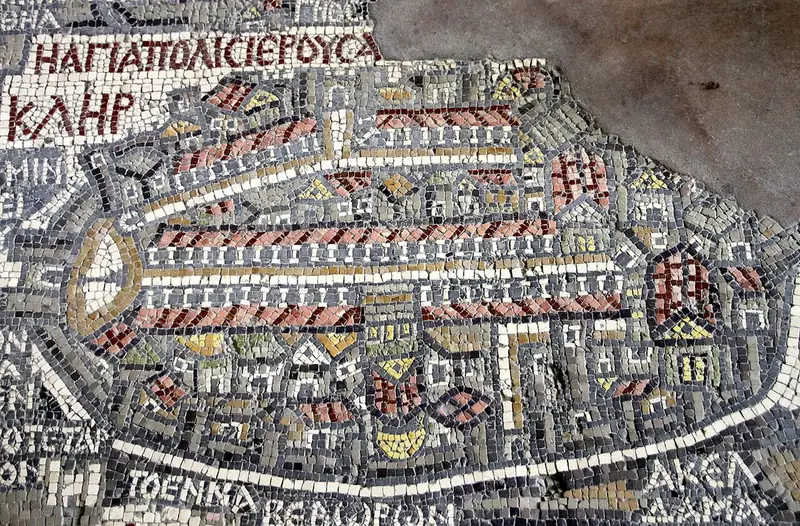
Use it as a self-guided tour of Madaba: 7 stops in visit order, each played when you’re ready, at your own pace.
 Free preview · Stop 1
Church of St George
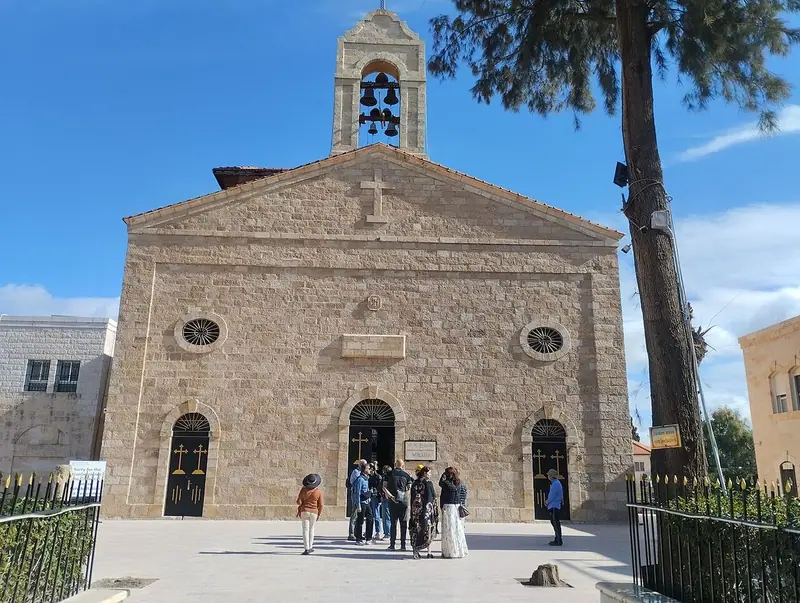
Begin at the Greek Orthodox Church of St George, often called the Church of the Map. In 1880 Christian families from al-Karak settled among the ruins of Madaba, and were allowed to build churches on the sites of ancient ones. While clearing this site in 1884, builders found remains of the mosaic floor of an early Byzantine church. The new church was built here in 1896, and the full extent of the mosaic was recognised only later that year, when the floor was being laid. Look at the church’s interior, with its icons and painted walls, before you turn to the mosaic itself, which lies in the floor near the front. The church is still used for worship by Madaba’s Orthodox community, so be respectful, especially during services. Notice how much of the floor is lost, and how carefully the surviving parts are protected.
Photo: Jotari · CC BY 4.0 · Wikimedia Commons
What to see at Madaba: 7 stops, in visit order
- 01
 Church of St GeorgeThe Church of the MapFree preview
- 02
 The Madaba MapThe Holy Land in stoneIn the guide
- 03
 The Burnt PalaceA Byzantine mansionIn the guide
- 04
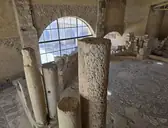 Church of the VirginA round nave and a messageIn the guide
- 05
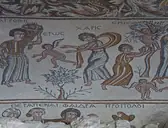 The Hippolytus HallA Greek tragedy in mosaicIn the guide
- 06
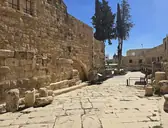 The Roman StreetPaving of the ancient townIn the guide
- 07
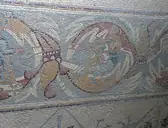 Church of the ApostlesThe personification of the SeaIn the guide
Site map of Madaba
History of Madaba
Madaba’s story goes back to the Bronze Age. In the Iron Age it was a Moabite border town, mentioned in the Bible and on the Mesha Stele, the inscription of a Moabite king. Under Rome it became part of the province of Arabia, created in 106 CE, and by the fifth century it had a Christian bishop. In the sixth and seventh centuries its Christian citizens built churches and houses with superb floor mosaics, a tradition that continued after the Muslim conquest of the 630s and into the Umayyad period. An earthquake in the mid-eighth century ruined the town, and it was later abandoned. In 1880, Christian families from al-Karak resettled the ruins, with permission to build churches on the sites of ancient ones, and in doing so they uncovered the mosaics you will see today, beginning with the great map in 1884.
Madaba guide: questions
How many stops does the Madaba guide have?
7 stops, in visit order: 1. Church of St George; 2. The Madaba Map; 3. The Burnt Palace; 4. Church of the Virgin; 5. The Hippolytus Hall; 6. The Roman Street; 7. Church of the Apostles.
Can I do a self-guided tour of Madaba with this guide?
Yes. The guide is made for a self-guided tour: 7 stops in visit order, each with a photo, a story and a voice, so you can explore Madaba at your own pace, without joining a group. Download it before you go and it works offline.
How long is each guide?
The 7 stops add up to about 5 minutes of listening in total. You play each stop when you’re ready, so you can go at your own pace.
Does the guide work offline?
Yes, once it’s downloaded. The guide is a single self-contained web page (about 7.7 MB) with the photos, text and audio built in. Download it to your phone before you go (Wi-Fi is best); after that it opens in any modern browser on iPhone or Android, with no app, account or mobile signal needed.
Does it use GPS or need my location?
No. The guide doesn’t use GPS and doesn’t know where you are: you play each stop when you reach it. It works on iPhone and Android in any modern browser, and it’s in English.
What’s included?
One self-contained HTML guide: 7 stops in visit order, each with a photo, text and a voice, plus the story of who built the site.
Who built Madaba?
Madaba’s story goes back to the Bronze Age. In the Iron Age it was a Moabite border town, mentioned in the Bible and on the Mesha Stele, the inscription of a Moabite king.
Where is Madaba?
Madaba is a market town on the plateau about thirty kilometres south-west of Amman, known as the City of Mosaics.
Is there a free audio guide to Madaba?
The first stop, Church of St George, is free to read and hear on this page, so you can try the Madaba audio tour before you buy. The full guide, with all 7 stops, is a one-off purchase: download it once and it’s yours to keep, working offline.
Is the Madaba guide worth it?
If you’d like to know what you’re looking at, yes. For $10 you get 7 stops in visit order, each with a photo, a short history and a voice you play when you’re ready, plus a site map of the stops, and about 5 minutes of listening in all. It’s short on purpose, so you spend your time looking, not listening. It’s yours to keep, works offline and needs no app. The first stop is free on this page, so you can try it before you buy. If you’d like hours of detail, a guided tour will go deeper.
Audio guide or guided tour?
It depends how you like to visit. This guide lets you explore Madaba at your own pace, at any time, for a one-off price. A guided tour gives you a live expert you can ask questions, but at fixed times and usually for a higher price. Many people use both: a tour for the big picture, and the guide to read beforehand or to revisit the stops in their own time.
Is this the official Madaba guide?
No. It’s an independent guide by The Historian Guide, not affiliated with or endorsed by the operator of Madaba. For tickets and opening hours, check the official site operator before you go.
Does the guide include entry tickets or opening hours?
No. The guide is a digital companion only. Admission to Madaba is separate, so check the official site operator for current tickets and opening hours before you go.
- Stop 1 · Church of St George: Jotari · CC BY 4.0 · Wikimedia Commons · resized
- Stop 2 · The Madaba Map (also the cover): Gerd Eichmann · CC BY-SA 4.0 · Wikimedia Commons · resized
- Stop 3 · The Burnt Palace: Dosseman · CC BY-SA 4.0 · Wikimedia Commons · resized
- Stop 4 · Church of the Virgin: Mohammad hajeer · CC BY 4.0 · Wikimedia Commons · resized
- Stop 5 · The Hippolytus Hall: Dosseman · CC BY-SA 4.0 · Wikimedia Commons · resized
- Stop 6 · The Roman Street: Mohammad hajeer · CC BY 4.0 · Wikimedia Commons · resized
- Stop 7 · Church of the Apostles: Dosseman · CC BY-SA 4.0 · Wikimedia Commons · resized


All photographs from Wikimedia Commons under the licences shown.
More guides in Jordan
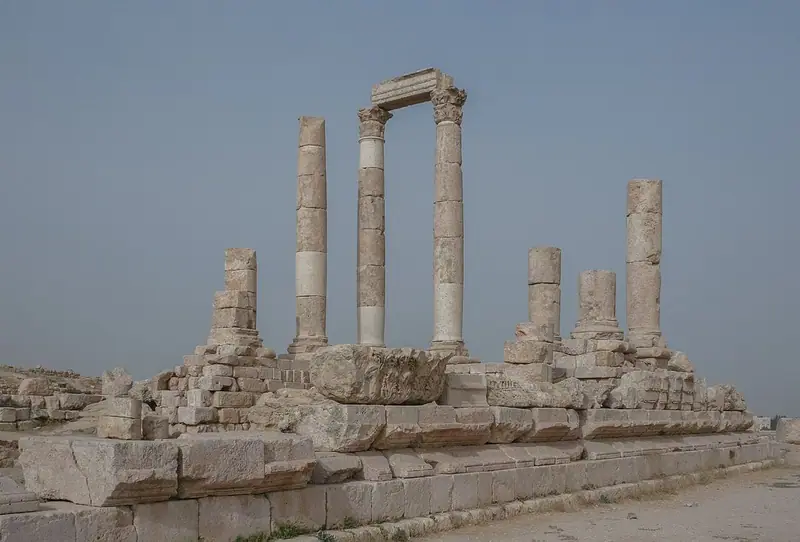 Roman7 stops · 2nd–8th century CE
Amman Citadel and Roman Theatre audio guide
From the Temple of Hercules and its colossal hand to the Umayyad palace, then down to the Roman Theatre carved into the hill.
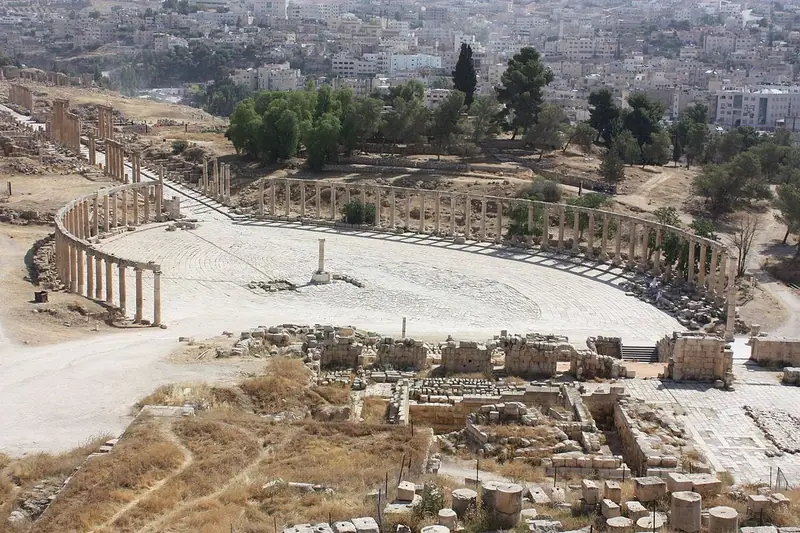 Roman8 stops · 1st–7th century CE
Jerash audio guide
Through Hadrian’s Arch to the Oval Plaza and down the colonnaded Cardo of Roman Gerasa.
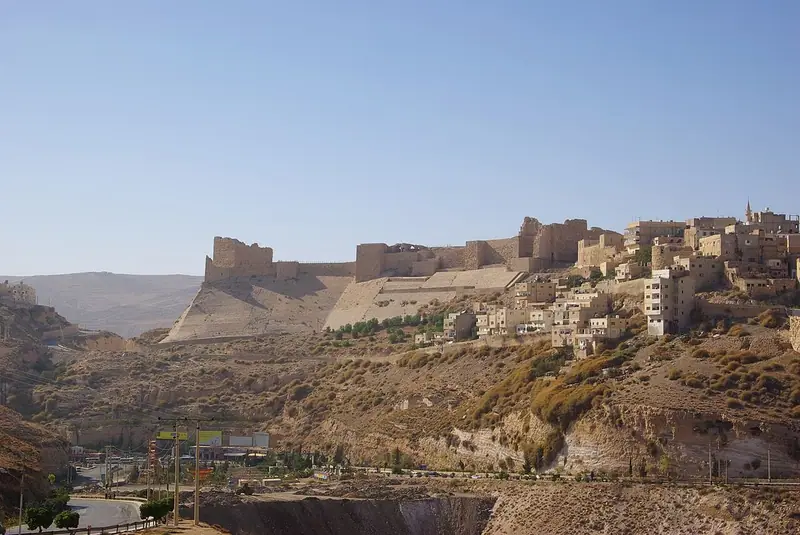 Crusader7 stops · from 1142 CE
Kerak Castle audio guide
Crusader galleries and Mamluk halls in one of the great castles of the Levant, high above the King’s Highway.
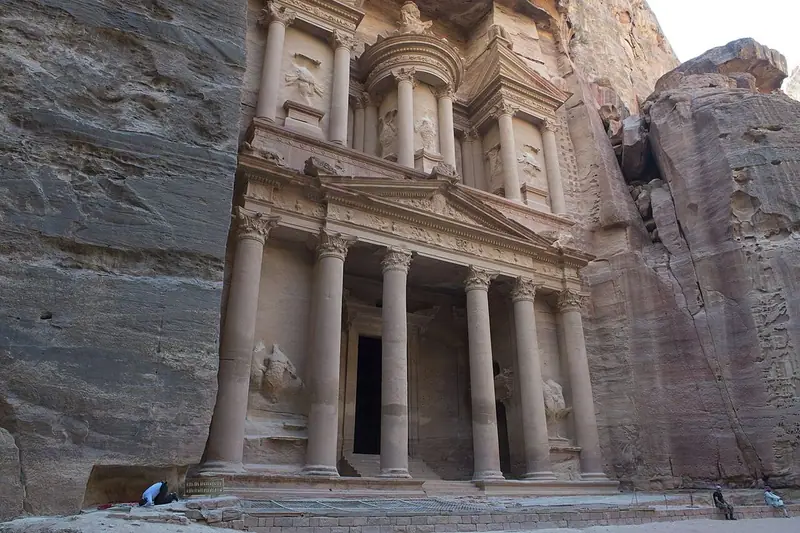 Nabataean9 stops · c. 1st century BCE – 2nd century CE
Petra audio guide
Through the narrow Siq to the Treasury, then on past the Royal Tombs to the climb up to the Monastery.
Every guide, in every country
Madaba and every other guide we publish, including future ones. One payment, no subscription.