Before you start
Petra lies in the sandstone mountains of southern Jordan, beside the town of Wadi Musa, about three hours’ drive south of Amman. It has been a UNESCO World Heritage Site since 1985 and is managed by the Petra Development and Tourism Region Authority. Everything is reached on foot from the visitor centre at the top of the town: the main trail runs gently downhill for several kilometres through the Siq to the city centre, and you must walk back up the same way at the end of the day, so pace yourself. Horses, horse-drawn carriages, donkeys and camels are offered along parts of the route. This guide follows the classic route from the entrance through the Siq to the Treasury, the theatre and the Royal Tombs, along the Colonnaded Street to Qasr al-Bint, and finally up the long stairway to the Monastery.
Use it as a self-guided tour of Petra: 9 stops in visit order, each played when you’re ready, at your own pace.
 Free preview · Stop 1
Bab as-Siq
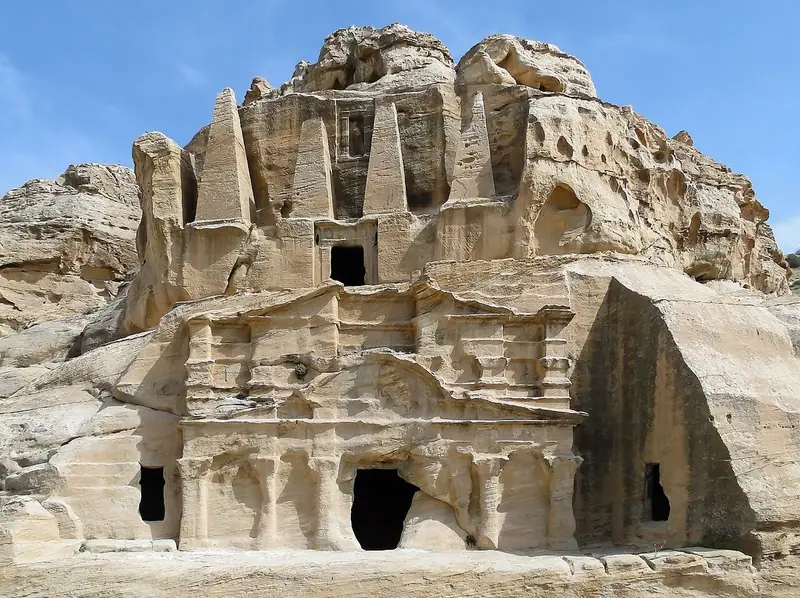
Begin on the open path that leads down from the visitor centre, known as Bab as-Siq, the gateway to the Siq. The first monuments appear on your right: three large, square blocks of carved rock called the Djinn Blocks, after the spirits of Arab folklore. Their purpose is uncertain, but they may be tombs or monuments to the dead. A little further, on the left, is the Obelisk Tomb, named after the four tall pyramids carved above its doorway, with a banqueting hall, or triclinium, cut into the rock beneath it, where families held feasts in honour of the dead. Both belong to the period when the Nabataeans were at their height. Look at the soft colours of the sandstone, which change from pale yellow to deep red, and notice the many smaller tombs cut into the rocks around you.
Photo: Bernard Gagnon · CC BY-SA 3.0 · Wikimedia Commons
What to see at Petra: 9 stops, in visit order
- 01
 Bab as-SiqThe gateway to the SiqFree preview
- 02
 The SiqA winding gorge into the cityIn the guide
- 03
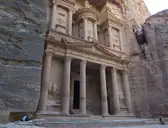 The TreasuryAl-KhaznehIn the guide
- 04
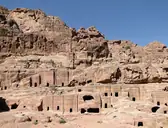 Street of FaçadesRows of rock-cut tombsIn the guide
- 05
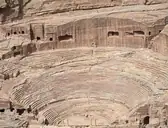 The TheatreCarved from the mountainIn the guide
- 06
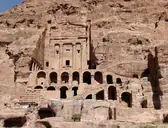 The Royal TombsUrn, Silk, Corinthian and PalaceIn the guide
- 07
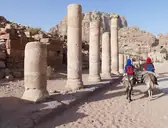 Colonnaded StreetThe heart of the cityIn the guide
- 08
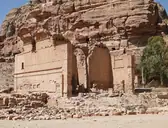 Qasr al-BintThe great temple of the NabataeansIn the guide
- 09
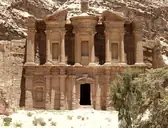 The MonasteryAd-DeirIn the guide
Site map of Petra
History of Petra
Petra was built by the Nabataeans, an Arab people who grew rich by controlling the caravan trade in incense, spices and other luxury goods between Arabia and the Mediterranean. They first appear in written history in 312 BCE, as nomads living in this region, and over the following centuries they settled, founded a kingdom with Petra as its capital, and carved its great tombs and temples, especially in the first centuries BCE and CE. Their kingdom ended in 106 CE, when the Roman emperor Trajan annexed it as the province of Arabia, but Petra remained an important city under Roman and later Byzantine rule, when it had churches and a bishop. A severe earthquake in 363 CE damaged it badly, and it slowly declined. Local Bedouin knew it well, but it was unknown in Europe until the Swiss traveller Johann Ludwig Burckhardt reached it in disguise in 1812.
Petra guide: questions
How many stops does the Petra guide have?
9 stops, in visit order: 1. Bab as-Siq; 2. The Siq; 3. The Treasury; 4. Street of Façades; 5. The Theatre; 6. The Royal Tombs; 7. Colonnaded Street; 8. Qasr al-Bint; 9. The Monastery.
Can I do a self-guided tour of Petra with this guide?
Yes. The guide is made for a self-guided tour: 9 stops in visit order, each with a photo, a story and a voice, so you can explore Petra at your own pace, without joining a group. Download it before you go and it works offline.
How long is each guide?
The 9 stops add up to about 6 minutes of listening in total. You play each stop when you’re ready, so you can go at your own pace.
Does the guide work offline?
Yes, once it’s downloaded. The guide is a single self-contained web page (about 8.5 MB) with the photos, text and audio built in. Download it to your phone before you go (Wi-Fi is best); after that it opens in any modern browser on iPhone or Android, with no app, account or mobile signal needed.
Does it use GPS or need my location?
No. The guide doesn’t use GPS and doesn’t know where you are: you play each stop when you reach it. It works on iPhone and Android in any modern browser, and it’s in English.
What’s included?
One self-contained HTML guide: 9 stops in visit order, each with a photo, text and a voice, plus the story of who built the site.
Who built Petra?
Petra was built by the Nabataeans, an Arab people who grew rich by controlling the caravan trade in incense, spices and other luxury goods between Arabia and the Mediterranean. They first appear in written history in 312 BCE, as nomads living in this region, and over the following centuries they settled, founded a kingdom with Petra as its capital, and carved its great tombs and temples, especially in the first centuries BCE and CE.
Where is Petra?
Petra lies in the sandstone mountains of southern Jordan, beside the town of Wadi Musa, about three hours’ drive south of Amman.
Is there a free audio guide to Petra?
The first stop, Bab as-Siq, is free to read and hear on this page, so you can try the Petra audio tour before you buy. The full guide, with all 9 stops, is a one-off purchase: download it once and it’s yours to keep, working offline.
Is the Petra guide worth it?
If you’d like to know what you’re looking at, yes. For $10 you get 9 stops in visit order, each with a photo, a short history and a voice you play when you’re ready, plus a site map of the stops, and about 6 minutes of listening in all. It’s short on purpose, so you spend your time looking, not listening. It’s yours to keep, works offline and needs no app. The first stop is free on this page, so you can try it before you buy. If you’d like hours of detail, a guided tour will go deeper.
Audio guide or guided tour?
It depends how you like to visit. This guide lets you explore Petra at your own pace, at any time, for a one-off price. A guided tour gives you a live expert you can ask questions, but at fixed times and usually for a higher price. Many people use both: a tour for the big picture, and the guide to read beforehand or to revisit the stops in their own time.
Is this the official Petra guide?
No. It’s an independent guide by The Historian Guide, not affiliated with or endorsed by the operator of Petra. For tickets and opening hours, check the official site operator before you go.
Does the guide include entry tickets or opening hours?
No. The guide is a digital companion only. Admission to Petra is separate, so check the official site operator for current tickets and opening hours before you go.
- Stop 1 · Bab as-Siq: Bernard Gagnon · CC BY-SA 3.0 · Wikimedia Commons · resized
- Stop 2 · The Siq: © Vyacheslav Argenberg · CC BY 4.0 · Wikimedia Commons · resized
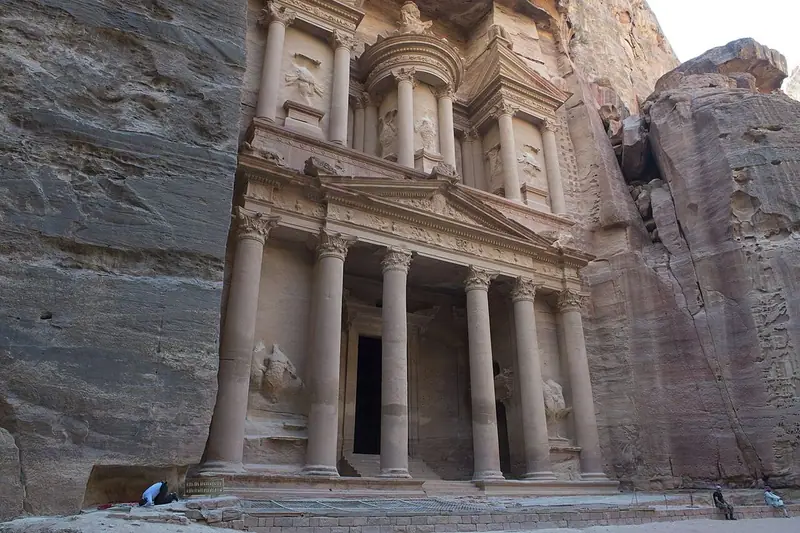
- Stop 3 · The Treasury (also the cover): Dosseman · CC BY-SA 4.0 · Wikimedia Commons · resized
- Stop 4 · Street of Façades: Bernard Gagnon · CC BY-SA 3.0 · Wikimedia Commons · resized
- Stop 5 · The Theatre: Dosseman · CC BY-SA 4.0 · Wikimedia Commons · resized
- Stop 6 · The Royal Tombs: Bernard Gagnon · CC BY-SA 3.0 · Wikimedia Commons · resized
- Stop 7 · Colonnaded Street: Ankur P · CC BY 2.0 · Wikimedia Commons · resized
- Stop 8 · Qasr al-Bint: Bernard Gagnon · CC BY-SA 3.0 · Wikimedia Commons · resized
- Stop 9 · The Monastery: © Vyacheslav Argenberg · CC BY 4.0 · Wikimedia Commons · resized


All photographs from Wikimedia Commons under the licences shown.
More guides in Jordan
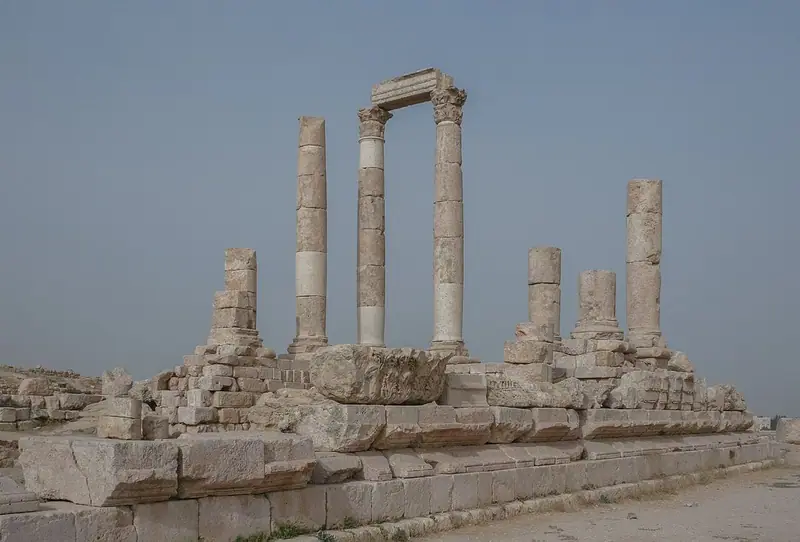 Roman7 stops · 2nd–8th century CE
Amman Citadel and Roman Theatre audio guide
From the Temple of Hercules and its colossal hand to the Umayyad palace, then down to the Roman Theatre carved into the hill.
 Roman8 stops · 1st–7th century CE
Jerash audio guide
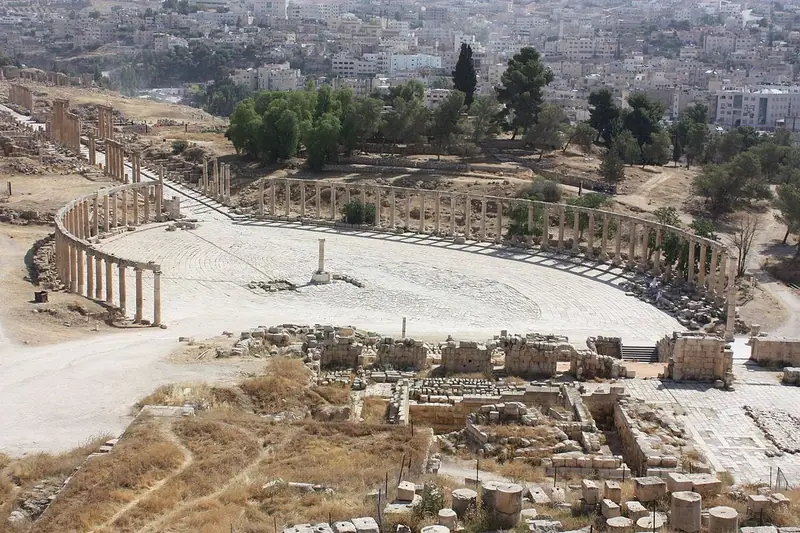
Through Hadrian’s Arch to the Oval Plaza and down the colonnaded Cardo of Roman Gerasa.
 Crusader7 stops · from 1142 CE
Kerak Castle audio guide
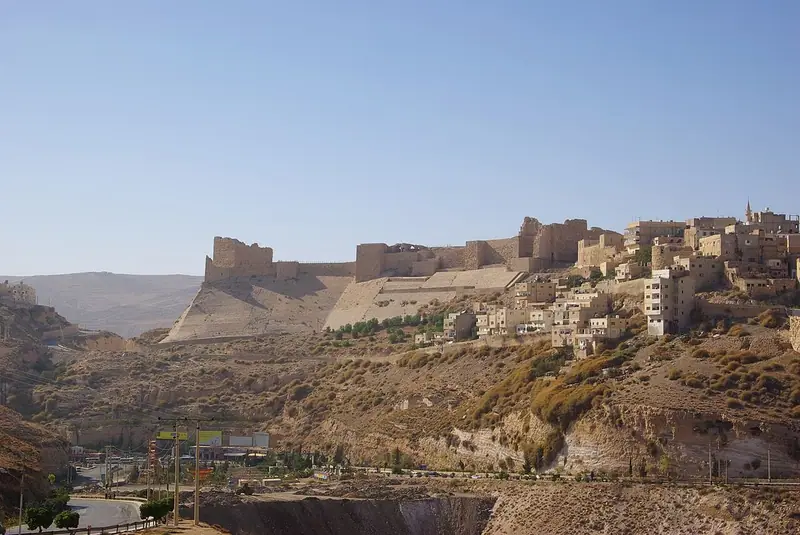
Crusader galleries and Mamluk halls in one of the great castles of the Levant, high above the King’s Highway.
 Byzantine7 stops · 6th–8th century CE
Madaba audio guide
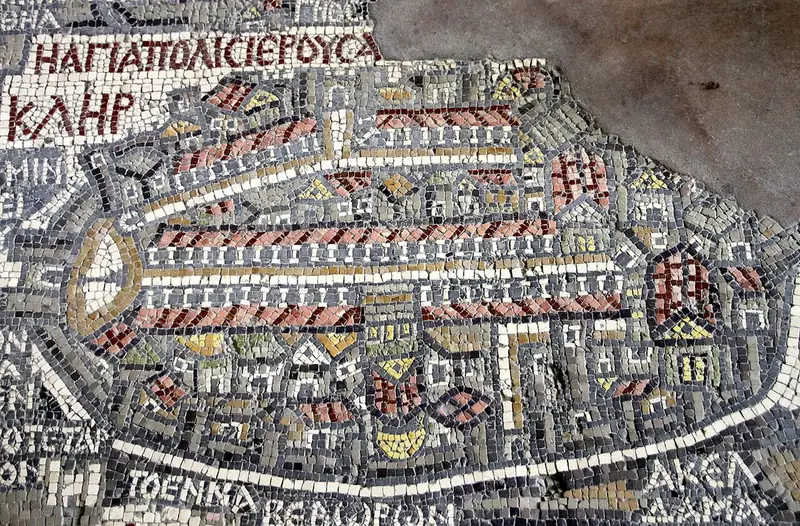
The City of Mosaics, home of the Madaba Map, laid in the floor of the Church of St George.
Every guide, in every country
Petra and every other guide we publish, including future ones. One payment, no subscription.