Before you start
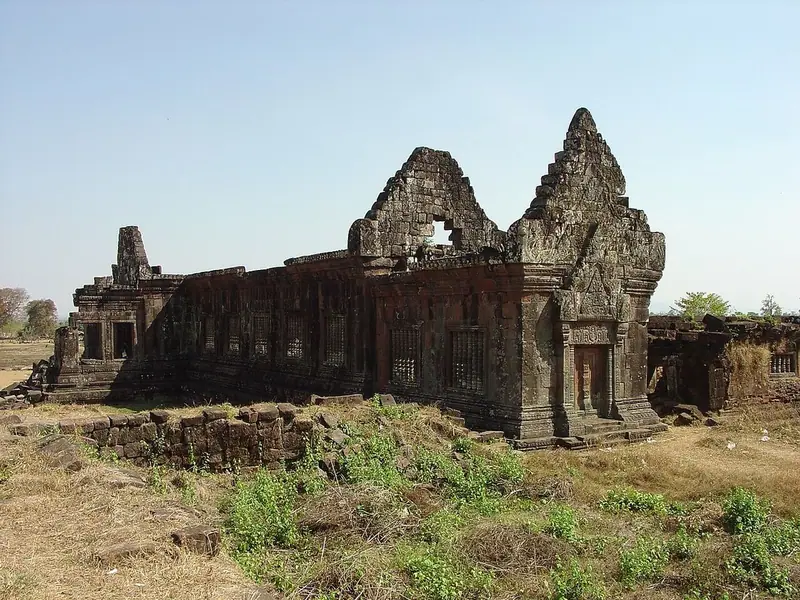
Vat Phou is a ruined Khmer temple at the foot of a mountain in southern Laos, a few kilometres from the town of Champasak and the Mekong River. Built mainly between the seventh and twelfth centuries, it is older than Angkor Wat, and was one of the great holy places of the Khmer world. It lies at the heart of a planned sacred landscape, which UNESCO lists as a World Heritage Site. This guide follows the long processional way from the great reservoir, past the two so-called palaces, and up the steep stairs to the sanctuary and the sacred spring. The climb to the top is steep and uneven, so start early, before the heat.
Use it as a self-guided tour of Vat Phou: 7 stops in visit order, each played when you’re ready, at your own pace.
 Free preview · Stop 1
The Great Reservoir
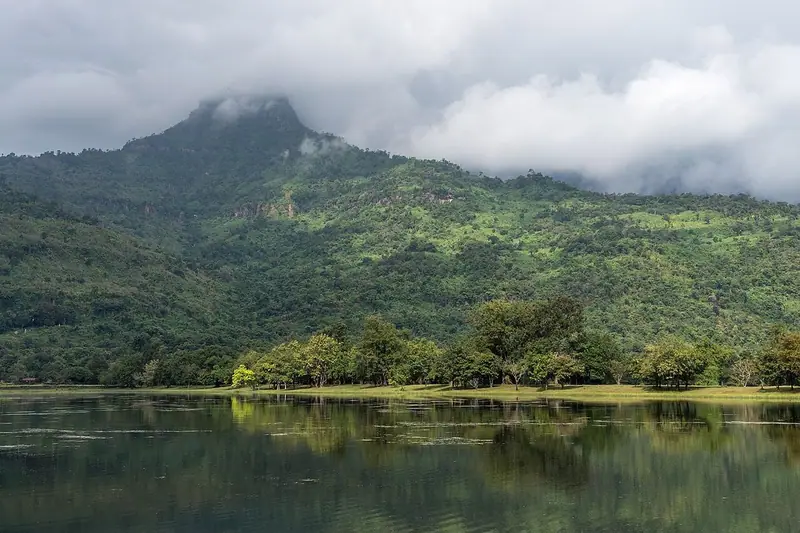
Begin by the great reservoir, or baray, at the start of the site, about six hundred metres long and two hundred wide. Look west along the line of the temple to the mountain beyond, Phou Kao, and find the natural pillar of rock on its summit. To the ancient builders, this was a linga, the symbol of Shiva, made by the god himself, and the mountain was his home. The Mekong, to the east, may have stood for the sacred River Ganges, or the ocean. The temple, the reservoirs, the roads and the cities around it were laid out along a line from the mountain towards the river, over some ten kilometres, as a picture of the Hindu universe. Reservoirs like this held water for the temple and its rituals, and perhaps for the fields around. Then walk to the start of the processional causeway.
Photo: Alexkom000 · CC BY 4.0 · Wikimedia Commons
What to see at Vat Phou: 7 stops, in visit order
- 01
 The Great ReservoirMountain and waterFree preview
- 02
 The Processional WayA road of pillarsIn the guide
- 03
 The PalacesLintels and pedimentsIn the guide
- 04
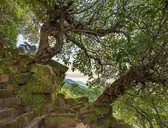 The StairwayThe climb to the godsIn the guide
- 05
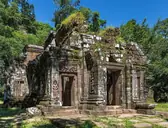 The SanctuaryShiva and BuddhaIn the guide
- 06
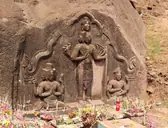 The Sacred SpringWater from the mountainIn the guide
- 07
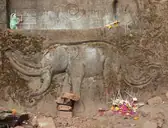 The Elephant and CrocodileCarved in the rockIn the guide
Site map of Vat Phou
History of Vat Phou
From around the fifth century, the plain of Champasak was the centre of an early kingdom, which inscriptions link with the people later known as the Khmer, with its capital at a city by the Mekong. The mountain above, with a natural pillar of rock on its summit, was seen as a sacred linga, the symbol of the god Shiva. Later the region became part of the Khmer Empire, centred on Angkor, in what is now Cambodia, which was at its height between the ninth and thirteenth centuries. As the empire declined, the Lao people moved into the region, and the temple became a Buddhist shrine, as it remains today.
Vat Phou guide: questions
How many stops does the Vat Phou guide have?
7 stops, in visit order: 1. The Great Reservoir; 2. The Processional Way; 3. The Palaces; 4. The Stairway; 5. The Sanctuary; 6. The Sacred Spring; 7. The Elephant and Crocodile.
Can I do a self-guided tour of Vat Phou with this guide?
Yes. The guide is made for a self-guided tour: 7 stops in visit order, each with a photo, a story and a voice, so you can explore Vat Phou at your own pace, without joining a group. Download it before you go and it works offline.
How long is each guide?
The 7 stops add up to about 5 minutes of listening in total. You play each stop when you’re ready, so you can go at your own pace.
Does the guide work offline?
Yes, once it’s downloaded. The guide is a single self-contained web page (about 7.5 MB) with the photos, text and audio built in. Download it to your phone before you go (Wi-Fi is best); after that it opens in any modern browser on iPhone or Android, with no app, account or mobile signal needed.
Does it use GPS or need my location?
No. The guide doesn’t use GPS and doesn’t know where you are: you play each stop when you reach it. It works on iPhone and Android in any modern browser, and it’s in English.
What’s included?
One self-contained HTML guide: 7 stops in visit order, each with a photo, text and a voice, plus the story of who built the site.
Who built Vat Phou?
From around the fifth century, the plain of Champasak was the centre of an early kingdom, which inscriptions link with the people later known as the Khmer, with its capital at a city by the Mekong. The mountain above, with a natural pillar of rock on its summit, was seen as a sacred linga, the symbol of the god Shiva.
Where is Vat Phou?
Vat Phou is a ruined Khmer temple at the foot of a mountain in southern Laos, a few kilometres from the town of Champasak and the Mekong River.
Is there a free audio guide to Vat Phou?
The first stop, The Great Reservoir, is free to read and hear on this page, so you can try the Vat Phou audio tour before you buy. The full guide, with all 7 stops, is a one-off purchase: download it once and it’s yours to keep, working offline.
Is the Vat Phou guide worth it?
If you’d like to know what you’re looking at, yes. For $10 you get 7 stops in visit order, each with a photo, a short history and a voice you play when you’re ready, plus a site map of the stops, and about 5 minutes of listening in all. It’s short on purpose, so you spend your time looking, not listening. It’s yours to keep, works offline and needs no app. The first stop is free on this page, so you can try it before you buy. If you’d like hours of detail, a guided tour will go deeper.
Audio guide or guided tour?
It depends how you like to visit. This guide lets you explore Vat Phou at your own pace, at any time, for a one-off price. A guided tour gives you a live expert you can ask questions, but at fixed times and usually for a higher price. Many people use both: a tour for the big picture, and the guide to read beforehand or to revisit the stops in their own time.
Is this the official Vat Phou guide?
No. It’s an independent guide by The Historian Guide, not affiliated with or endorsed by the operator of Vat Phou. For tickets and opening hours, check the official site operator before you go.
Does the guide include entry tickets or opening hours?
No. The guide is a digital companion only. Admission to Vat Phou is separate, so check the official site operator for current tickets and opening hours before you go.
- Stop 1 · The Great Reservoir: Alexkom000 · CC BY 4.0 · Wikimedia Commons · resized
- Stop 2 · The Processional Way: Basile Morin · CC BY-SA 4.0 · Wikimedia Commons · resized
- Stop 3 · The Palaces (also the cover): Michael Gunther · CC BY-SA 4.0 · Wikimedia Commons · resized
- Stop 4 · The Stairway: Basile Morin · CC BY-SA 4.0 · Wikimedia Commons · resized
- Stop 5 · The Sanctuary: Basile Morin · CC BY-SA 4.0 · Wikimedia Commons · resized
- Stop 6 · The Sacred Spring: GuillaumeG · CC BY-SA 3.0 · Wikimedia Commons · resized
- Stop 7 · The Elephant and Crocodile: GuillaumeG · CC BY-SA 3.0 · Wikimedia Commons · resized


All photographs from Wikimedia Commons under the licences shown.
More guides in Laos
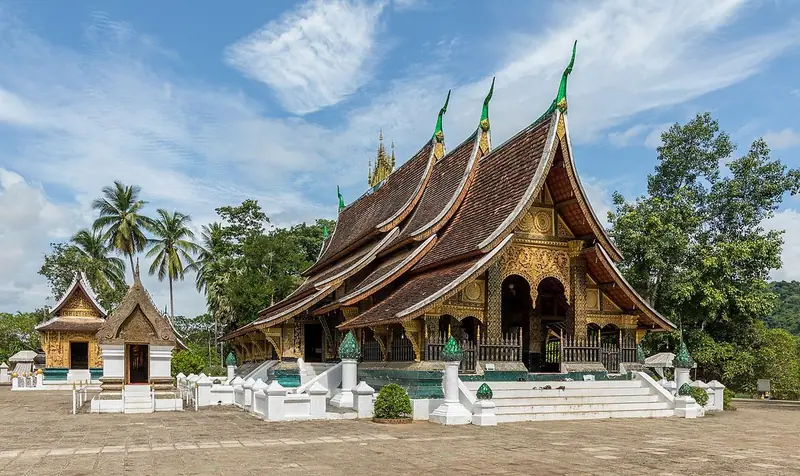 Lao8 stops · 14th–20th century
Luang Prabang audio guide
A peninsula of gilded temples and saffron-robed monks where the Nam Khan meets the Mekong, from Mount Phousi to Wat Xieng Thong.
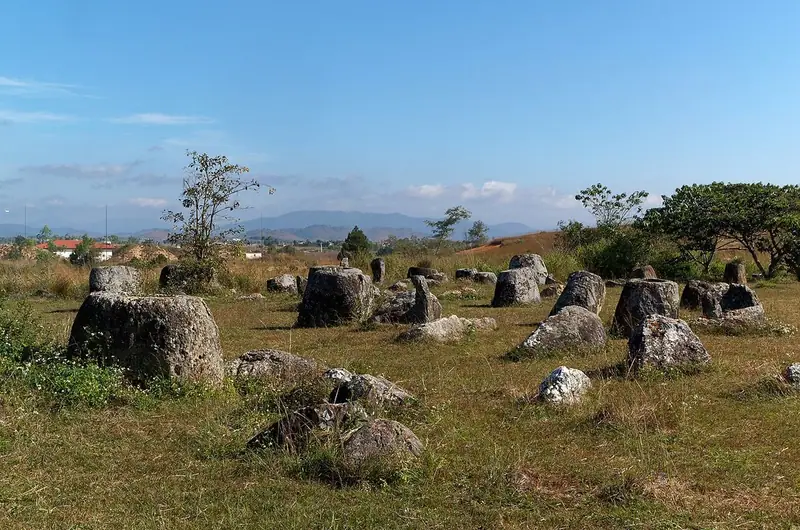 Iron Age7 stops · c. 500 BCE – 500 CE
Plain of Jars audio guide
Thousands of Iron Age stone jars on the hills of the Xiangkhouang Plateau: the great jar field of Site 1, Colani’s crematorium cave, the wooded Site 2 and Site 3 above the rice fields.
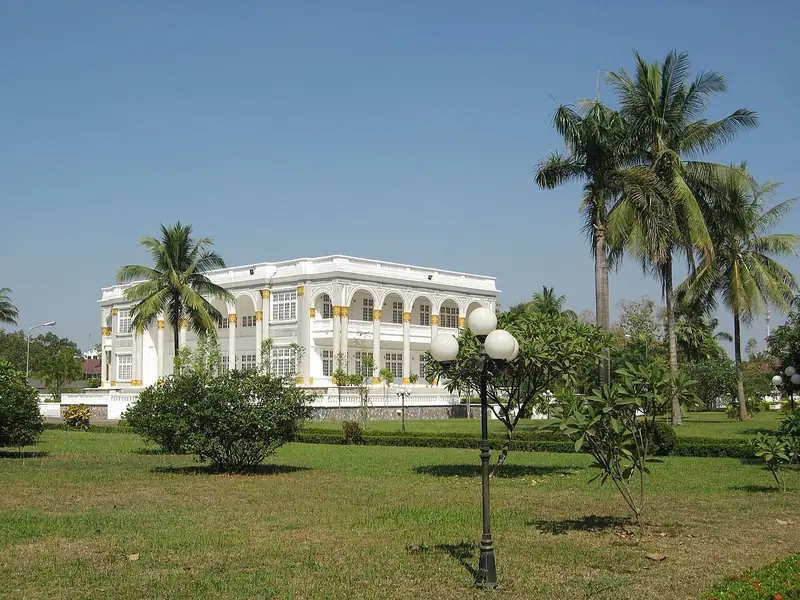 Lao7 stops · 1560–1828
Vientiane audio guide
From the Mekong riverbank to the royal temples of Lan Xang, the Black Stupa and the Victory Gate, ending at the golden That Luang.
Every guide, in every country
Vat Phou and every other guide we publish, including future ones. One payment, no subscription.