Before you start
Rabat, Morocco’s capital, stands at the mouth of the Bou Regreg river on the Atlantic coast, facing the old town of Salé across the water. In 2012 UNESCO inscribed its historic monuments and its twentieth-century city together as a World Heritage Site. This guide joins its two most famous historic landmarks: the Hassan Tower, with the Mausoleum of Mohammed V beside it, and the Kasbah of the Udayas, a walled citadel on the hill above the river mouth. They are about two kilometres apart, a pleasant walk along the river or a short ride by petit taxi. The mausoleum is a royal tomb and a place of prayer, so dress modestly, keep your voice low and follow the guards’ instructions. Inside the kasbah, people live in the lanes, so be respectful when taking photographs, and politely decline offers from unofficial guides at the gate.
Use it as a self-guided tour of Historic Rabat: 6 stops in visit order, each played when you’re ready, at your own pace.
 Free preview · Stop 1
Hassan Tower
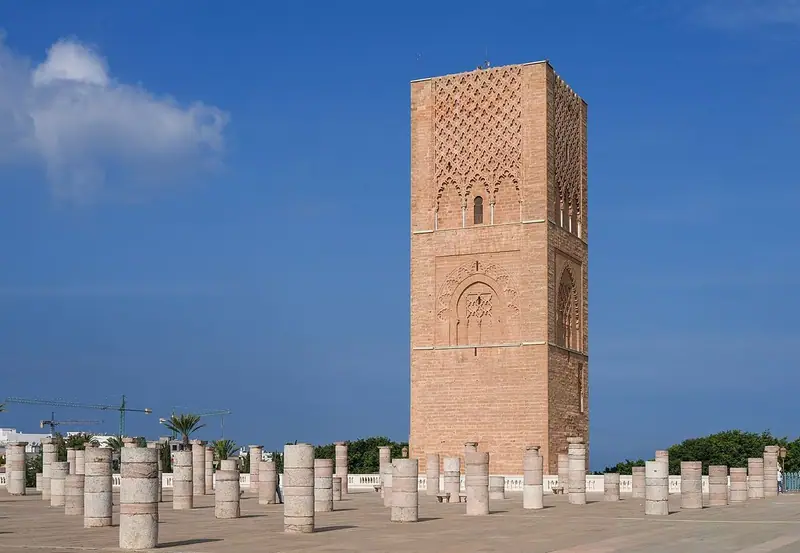
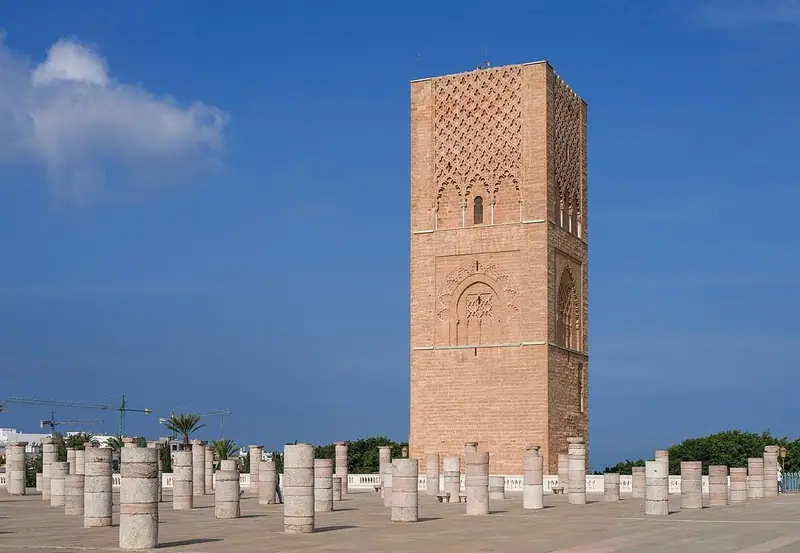
Begin on the great esplanade of the Hassan Tower, the minaret of a mosque that was never finished. The Almohad caliph Ya’qub al-Mansur began the mosque around 1191 as the centrepiece of his new capital. It measured about 183 by 139 metres; if completed, it would have been the largest mosque in the western Islamic world, larger even than the Great Mosque of Cordoba. When al-Mansur died in 1199 the work stopped, and the minaret was left standing at 44 metres. Like the Giralda in Seville, it was modelled on the Koutoubia in Marrakech, and inside, ramps rather than stairs lead to the top. Notice how each face is decorated with a different pattern of carved arches. Around you stand the stumps of 348 columns, which once supported the roof. Over the centuries most materials were carried away, and the 1755 earthquake caused further damage.
Photo: Timothy A. Gonsalves · CC BY-SA 4.0 · Wikimedia Commons
What to see at Historic Rabat: 6 stops, in visit order
- 01
 Hassan TowerAn unfinished giantFree preview
- 02
 Mausoleum of Mohammed VA royal tombIn the guide
- 03
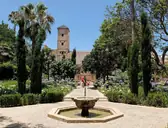 Andalusian GardenA garden and a palaceIn the guide
- 04
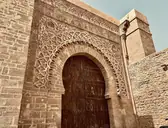 Bab OudayaThe great gateIn the guide
- 05
 Rue Jamaa and the Old MosqueBlue and white lanesIn the guide
- 06
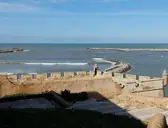 The Signal PlatformCorsairs and the river mouthIn the guide
Site map of Historic Rabat
History of Historic Rabat
Historic Rabat was shaped above all by the Almohads, a Berber religious movement from the High Atlas that became a caliphate ruling Morocco, much of North Africa and al-Andalus, from the capture of Marrakech in 1147 until the fall of the dynasty in 1269. Around 1150 the first Almohad caliph, Abd al-Mu’min, built a fortress with a palace and a mosque on the hill at the river mouth. His grandson, Ya’qub al-Mansur, planned a vast fortified capital here, Ribat al-Fath, with new walls, monumental gates and an enormous mosque, but work stopped when he died in 1199. In the seventeenth century, Muslim refugees expelled from Spain settled in the kasbah and ran a corsair republic until the Alaouite sultan Moulay Rashid brought it under his control in 1666. Later Alaouite rulers added palaces and gardens, and Rabat became the capital in 1912.
Historic Rabat guide: questions
How many stops does the Historic Rabat guide have?
6 stops, in visit order: 1. Hassan Tower; 2. Mausoleum of Mohammed V; 3. Andalusian Garden; 4. Bab Oudaya; 5. Rue Jamaa and the Old Mosque; 6. The Signal Platform.
Can I do a self-guided tour of Historic Rabat with this guide?
Yes. The guide is made for a self-guided tour: 6 stops in visit order, each with a photo, a story and a voice, so you can explore Historic Rabat at your own pace, without joining a group. Download it before you go and it works offline.
How long is each guide?
The 6 stops add up to about 5 minutes of listening in total. You play each stop when you’re ready, so you can go at your own pace.
Does the guide work offline?
Yes, once it’s downloaded. The guide is a single self-contained web page (about 6.2 MB) with the photos, text and audio built in. Download it to your phone before you go (Wi-Fi is best); after that it opens in any modern browser on iPhone or Android, with no app, account or mobile signal needed.
Does it use GPS or need my location?
No. The guide doesn’t use GPS and doesn’t know where you are: you play each stop when you reach it. It works on iPhone and Android in any modern browser, and it’s in English.
What’s included?
One self-contained HTML guide: 6 stops in visit order, each with a photo, text and a voice, plus the story of who built the site.
Who built Historic Rabat?
Historic Rabat was shaped above all by the Almohads, a Berber religious movement from the High Atlas that became a caliphate ruling Morocco, much of North Africa and al-Andalus, from the capture of Marrakech in 1147 until the fall of the dynasty in 1269. Around 1150 the first Almohad caliph, Abd al-Mu’min, built a fortress with a palace and a mosque on the hill at the river mouth.
Where is Historic Rabat?
Rabat, Morocco’s capital, stands at the mouth of the Bou Regreg river on the Atlantic coast, facing the old town of Salé across the water.
Is there a free audio guide to Historic Rabat?
The first stop, Hassan Tower, is free to read and hear on this page, so you can try the Historic Rabat audio tour before you buy. The full guide, with all 6 stops, is a one-off purchase: download it once and it’s yours to keep, working offline.
Is the Historic Rabat guide worth it?
If you’d like to know what you’re looking at, yes. For $10 you get 6 stops in visit order, each with a photo, a short history and a voice you play when you’re ready, plus a site map of the stops, and about 5 minutes of listening in all. It’s short on purpose, so you spend your time looking, not listening. It’s yours to keep, works offline and needs no app. The first stop is free on this page, so you can try it before you buy. If you’d like hours of detail, a guided tour will go deeper.
Audio guide or guided tour?
It depends how you like to visit. This guide lets you explore Historic Rabat at your own pace, at any time, for a one-off price. A guided tour gives you a live expert you can ask questions, but at fixed times and usually for a higher price. Many people use both: a tour for the big picture, and the guide to read beforehand or to revisit the stops in their own time.
Is this the official Historic Rabat guide?
No. It’s an independent guide by The Historian Guide, not affiliated with or endorsed by the operator of Historic Rabat. For tickets and opening hours, check the official site operator before you go.
Does the guide include entry tickets or opening hours?
No. The guide is a digital companion only. Admission to Historic Rabat is separate, so check the official site operator for current tickets and opening hours before you go.
- Stop 1 · Hassan Tower (also the cover): Timothy A. Gonsalves · CC BY-SA 4.0 · Wikimedia Commons · resized
- Stop 2 · Mausoleum of Mohammed V: IssamBarhoumi · CC BY-SA 4.0 · Wikimedia Commons · resized
- Stop 3 · Andalusian Garden: R Prazeres · CC BY-SA 4.0 · Wikimedia Commons · resized
- Stop 4 · Bab Oudaya: Taloubant · CC BY-SA 4.0 · Wikimedia Commons · resized
- Stop 5 · Rue Jamaa and the Old Mosque: Carlos ZGZ from Paris, France · CC0 · Wikimedia Commons · resized
- Stop 6 · The Signal Platform: Robert Prazeres · CC BY-SA 4.0 · Wikimedia Commons · resized


All photographs from Wikimedia Commons under the licences shown.
More guides in Morocco
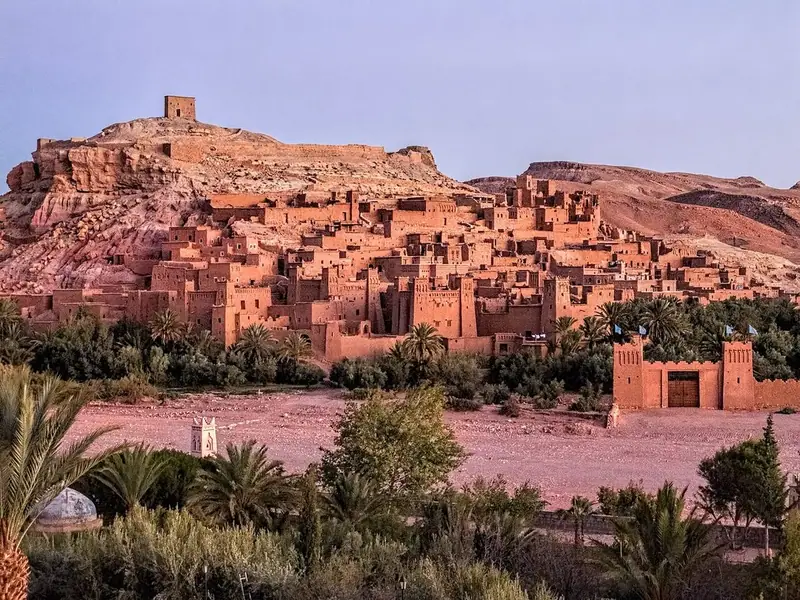 Amazigh6 stops · 17th–20th century
Aït Benhaddou audio guide
An earthen village of tower houses climbing a hill above the Ounila River, once a stop on the caravan road across the Atlas.
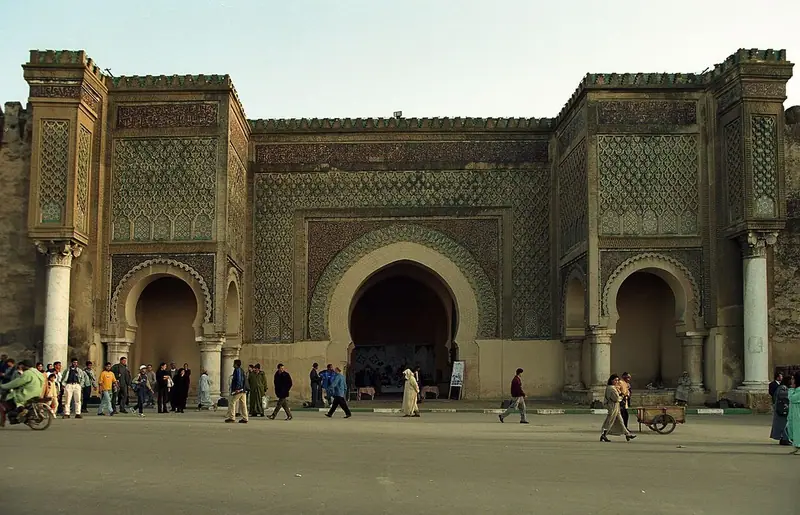 Alaouite8 stops · 1672–1727
Historic Meknes audio guide
Moulay Ismail’s imperial capital, from the great gate of Bab Mansour to his mausoleum, the vast granaries and the Agdal basin.
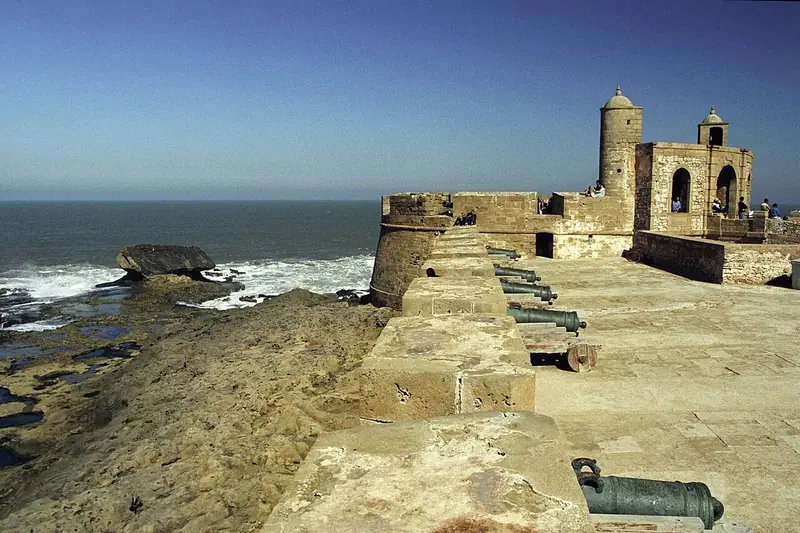 Alaouite8 stops · 1760s–19th century
Medina of Essaouira audio guide
Old Mogador on the Atlantic: blue boats in the harbour, cannons on the sea ramparts, the kasbah of the consuls and the old Jewish quarter.
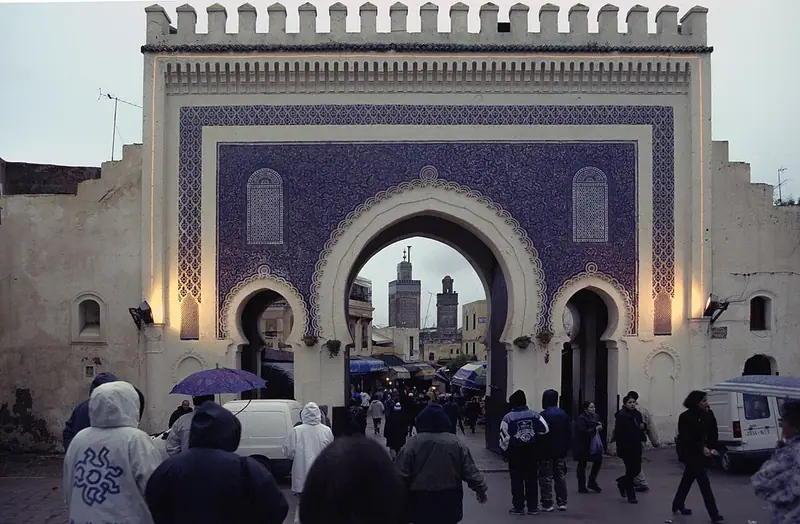 Marinid8 stops · 789–14th century
Medina of Fez audio guide
Through Bab Bou Jeloud into the lanes of Fes el-Bali, past jewel-box madrasas to the Chouara tannery.
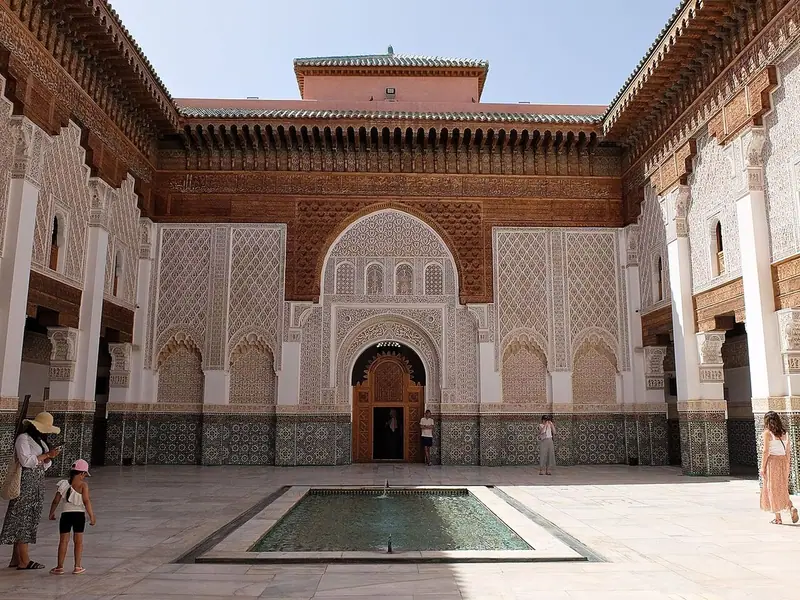 Almoravid & Almohad7 stops · c. 1070–16th century
Medina of Marrakech audio guide
From the Koutoubia minaret to Jemaa el-Fnaa, then into the souks and the courtyard of the Ben Youssef Madrasa.
 Roman8 stops · c. 40–285 CE
Volubilis audio guide
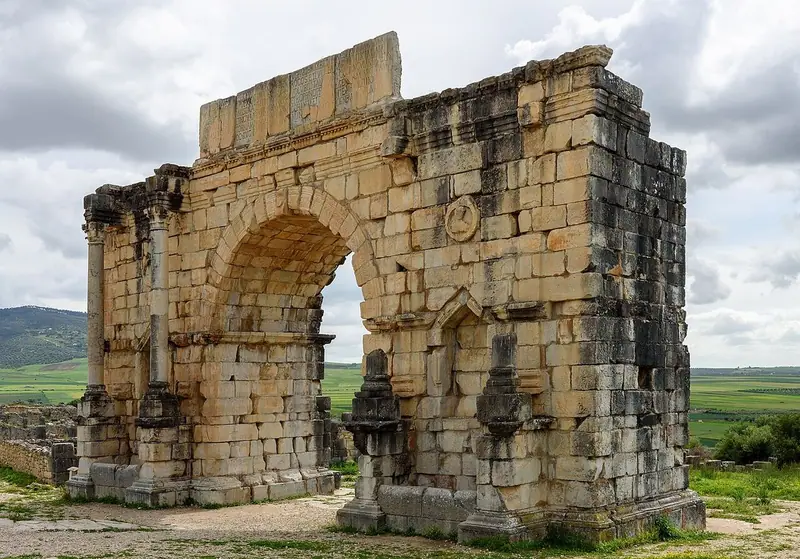
Mosaic-floored houses, the Capitoline Temple and the Arch of Caracalla on a ridge below the Zerhoun.
Every guide, in every country
Historic Rabat and every other guide we publish, including future ones. One payment, no subscription.