Before you start
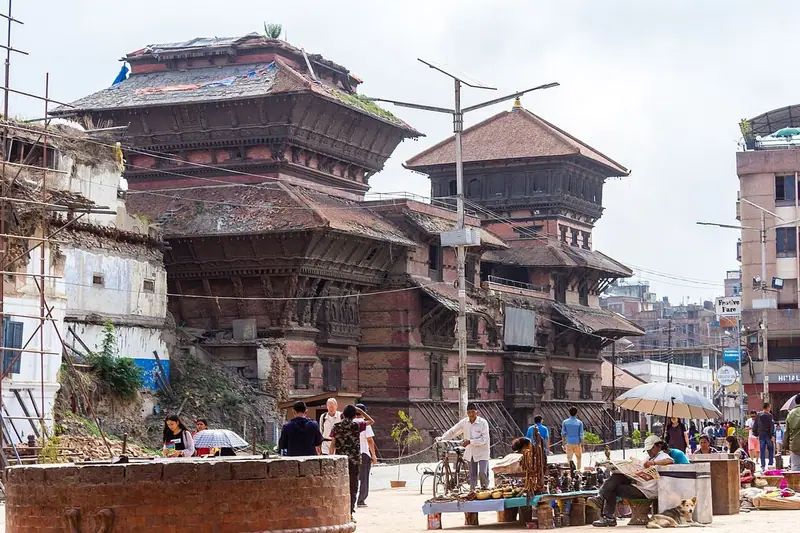
Kathmandu Durbar Square is the old royal heart of Nepal’s capital, a cluster of tiered temples, palace courtyards and shrines in front of the palace of the kings of Kathmandu. Its brick and carved wooden buildings, the work of the Newar craftsmen of the Kathmandu Valley, are part of a UNESCO World Heritage Site. The route starts at the rebuilt Kasthamandap, visits the house of the living goddess Kumari, the Jagannath Temple and the fierce Kal Bhairav, passes through the Hanuman Gate into the palace, and ends in Basantapur Square. The great earthquake of 2015 brought down several buildings; some have been rebuilt, and work goes on.
Use it as a self-guided tour of Kathmandu Durbar Square: 8 stops in visit order, each played when you’re ready, at your own pace.
 Free preview · Stop 1
Kasthamandap
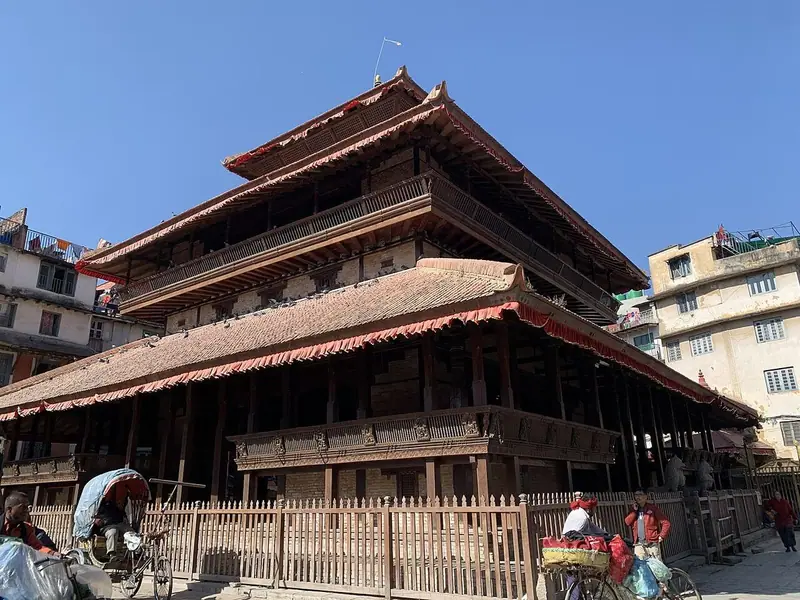
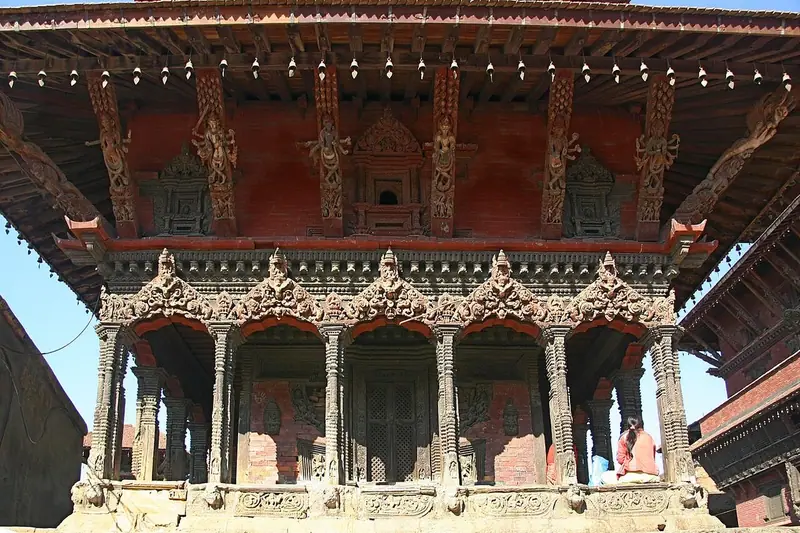
Begin at Kasthamandap, at the south-western end of the square. Its name means wooden pavilion, and it is said that the name of Kathmandu itself comes from it. It was a large three-tiered building of timber, open at the ground floor, which served as a shelter for travellers and a meeting place, with a shrine to the saint Gorakhnath inside. Tradition held that it was built from the wood of a single tree. On the twenty-fifth of April 2015, a great earthquake struck Nepal, and Kasthamandap collapsed completely. Archaeologists who dug beneath it afterwards, working with British universities, found that its oldest foundations date back to the seventh century. It has since been rebuilt by the people of Kathmandu, using traditional methods and materials. Look at the new carved timbers, and remember the lives lost in the earthquake.
Photo: Chainwit · CC BY 4.0 · Wikimedia Commons
What to see at Kathmandu Durbar Square: 8 stops, in visit order
- 01
 KasthamandapThe wooden shelterFree preview
- 02
 Kumari GharHouse of the living goddessIn the guide
- 03
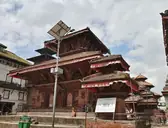 The Jagannath TempleCarved roof strutsIn the guide
- 04
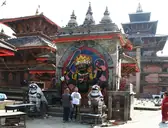 Kal BhairavThe fierce godIn the guide
- 05
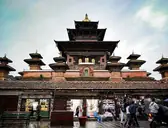 Taleju TempleThe royal goddessIn the guide
- 06
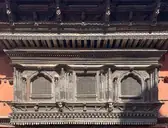 The Hanuman GateGuardian of the palaceIn the guide
- 07
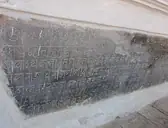 Pratap Malla’s InscriptionMany languages in stoneIn the guide
- 08
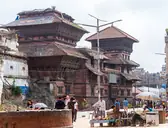 BasantapurThe nine-storey palaceIn the guide
Site map of Kathmandu Durbar Square
History of Kathmandu Durbar Square
The Kathmandu Valley has been home to the Newar people for well over a thousand years. Under the Licchavi kings, from around the fourth century to the ninth, its towns, temples and trade flourished. From the twelfth century the Malla kings ruled, and in the fifteenth century the valley was split into rival kingdoms based at Kathmandu, Patan and Bhaktapur, which competed to build ever finer palaces and temples. In 1768 Prithvi Narayan Shah, king of Gorkha, conquered the valley and made Kathmandu the capital of a united Nepal. His Shah dynasty reigned until the monarchy was abolished in 2008.
Kathmandu Durbar Square guide: questions
How many stops does the Kathmandu Durbar Square guide have?
8 stops, in visit order: 1. Kasthamandap; 2. Kumari Ghar; 3. The Jagannath Temple; 4. Kal Bhairav; 5. Taleju Temple; 6. The Hanuman Gate; 7. Pratap Malla’s Inscription; 8. Basantapur.
Can I do a self-guided tour of Kathmandu Durbar Square with this guide?
Yes. The guide is made for a self-guided tour: 8 stops in visit order, each with a photo, a story and a voice, so you can explore Kathmandu Durbar Square at your own pace, without joining a group. Download it before you go and it works offline.
How long is each guide?
The 8 stops add up to about 6 minutes of listening in total. You play each stop when you’re ready, so you can go at your own pace.
Does the guide work offline?
Yes, once it’s downloaded. The guide is a single self-contained web page (about 7.6 MB) with the photos, text and audio built in. Download it to your phone before you go (Wi-Fi is best); after that it opens in any modern browser on iPhone or Android, with no app, account or mobile signal needed.
Does it use GPS or need my location?
No. The guide doesn’t use GPS and doesn’t know where you are: you play each stop when you reach it. It works on iPhone and Android in any modern browser, and it’s in English.
What’s included?
One self-contained HTML guide: 8 stops in visit order, each with a photo, text and a voice, plus the story of who built the site.
Who built Kathmandu Durbar Square?
The Kathmandu Valley has been home to the Newar people for well over a thousand years. Under the Licchavi kings, from around the fourth century to the ninth, its towns, temples and trade flourished.
Where is Kathmandu Durbar Square?
Kathmandu Durbar Square is the old royal heart of Nepal’s capital, a cluster of tiered temples, palace courtyards and shrines in front of the palace of the kings of Kathmandu.
Is there a free audio guide to Kathmandu Durbar Square?
The first stop, Kasthamandap, is free to read and hear on this page, so you can try the Kathmandu Durbar Square audio tour before you buy. The full guide, with all 8 stops, is a one-off purchase: download it once and it’s yours to keep, working offline.
Is the Kathmandu Durbar Square guide worth it?
If you’d like to know what you’re looking at, yes. For $10 you get 8 stops in visit order, each with a photo, a short history and a voice you play when you’re ready, plus a site map of the stops, and about 6 minutes of listening in all. It’s short on purpose, so you spend your time looking, not listening. It’s yours to keep, works offline and needs no app. The first stop is free on this page, so you can try it before you buy. If you’d like hours of detail, a guided tour will go deeper.
Audio guide or guided tour?
It depends how you like to visit. This guide lets you explore Kathmandu Durbar Square at your own pace, at any time, for a one-off price. A guided tour gives you a live expert you can ask questions, but at fixed times and usually for a higher price. Many people use both: a tour for the big picture, and the guide to read beforehand or to revisit the stops in their own time.
Is this the official Kathmandu Durbar Square guide?
No. It’s an independent guide by The Historian Guide, not affiliated with or endorsed by the operator of Kathmandu Durbar Square. For tickets and opening hours, check the official site operator before you go.
Does the guide include entry tickets or opening hours?
No. The guide is a digital companion only. Admission to Kathmandu Durbar Square is separate, so check the official site operator for current tickets and opening hours before you go.
- Stop 1 · Kasthamandap: Chainwit. · CC BY 4.0 · Wikimedia Commons · resized
- Stop 2 · Kumari Ghar: Faj2323 · CC BY-SA 4.0 · Wikimedia Commons · resized
- Stop 3 · The Jagannath Temple: Shadow Ayush · CC BY-SA 4.0 · Wikimedia Commons · resized
- Stop 4 · Kal Bhairav: Gerd Eichmann · CC BY-SA 4.0 · Wikimedia Commons · resized
- Stop 5 · Taleju Temple: Aayusha Dangol · CC BY-SA 4.0 · Wikimedia Commons · resized
- Stop 6 · The Hanuman Gate: Chainwit. · CC BY-SA 4.0 · Wikimedia Commons · resized
- Stop 7 · Pratap Malla’s Inscription: Ganesh Paudel · CC BY-SA 3.0 · Wikimedia Commons · resized
- Stop 8 · Basantapur (also the cover): Bijay chaurasia · CC BY-SA 4.0 · Wikimedia Commons · resized


All photographs from Wikimedia Commons under the licences shown.
More guides in Nepal
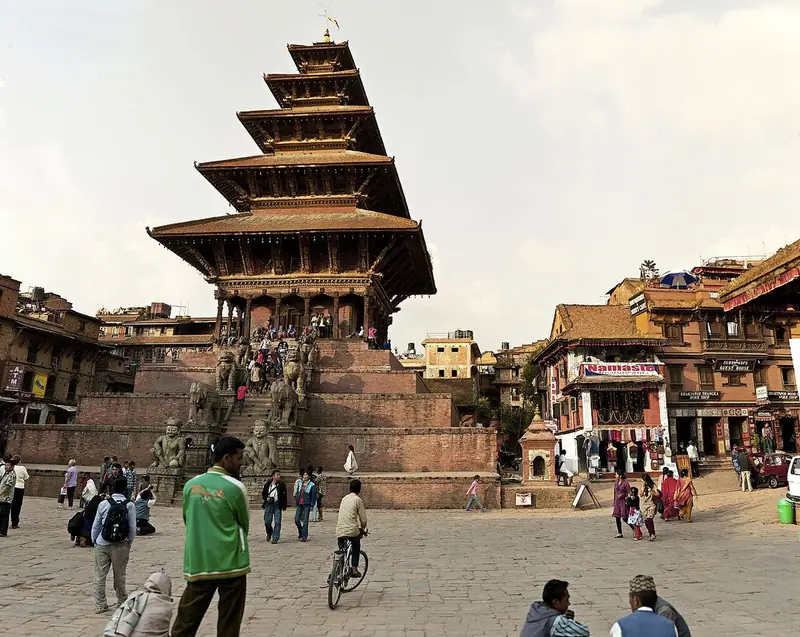 Newar8 stops · 12th–18th century
Bhaktapur audio guide
Brick lanes and temple squares in the best preserved of the Kathmandu Valley’s royal cities, from Durbar Square to the Nyatapola Temple.
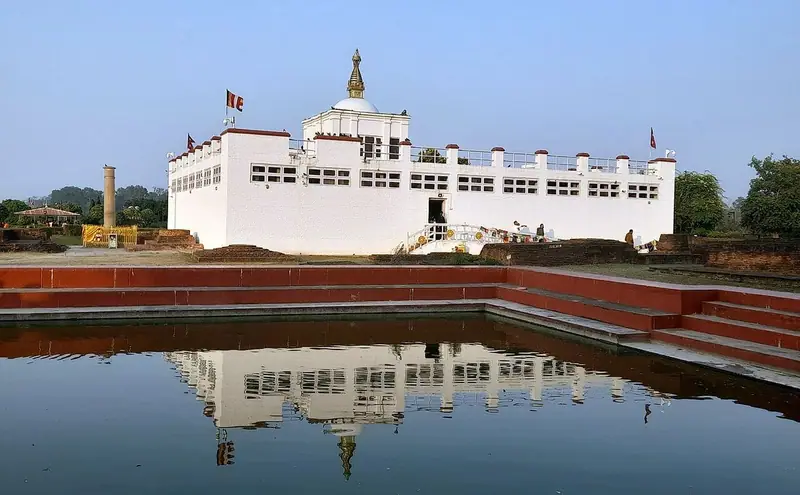 Maurya8 stops · c. 6th century BCE – 15th century CE
Lumbini audio guide
Stand at the birthplace of the Buddha, beside the Maya Devi Temple, Ashoka’s inscribed pillar and the sacred pool, then follow the canal past monasteries of many nations to the World Peace Pagoda.
 Newar7 stops · 17th–18th century
Patan Durbar Square audio guide
The palace square of the Malla kings of Patan, from the stone Krishna Mandir and the royal bath of Sundari Chowk to the bronzes of the Patan Museum and the Golden Temple.
Every guide, in every country
Kathmandu Durbar Square and every other guide we publish, including future ones. One payment, no subscription.