Before you start
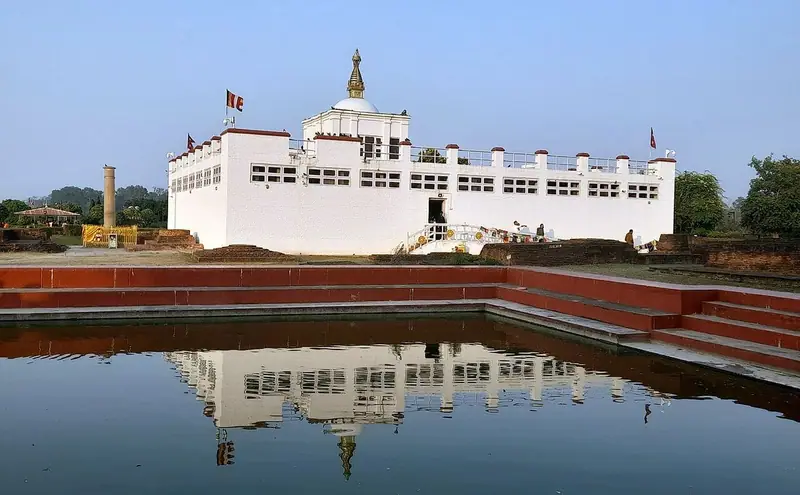
Lumbini lies on the Terai plains of southern Nepal, close to the border with India, and it is revered by Buddhists as the place where the Buddha was born. Its heart, the Sacred Garden, holds the Maya Devi Temple, the stone pillar raised by the emperor Ashoka and the ruins of ancient monasteries and stupas, and it is a UNESCO World Heritage Site. This route starts in the Sacred Garden, visits the temple, the pillar and the sacred pool, then follows the long central canal north through the monastic zones to the World Peace Pagoda. The whole site is nearly five kilometres from end to end, so allow plenty of time, and consider a bicycle or a cycle rickshaw for the northern part.
Use it as a self-guided tour of Lumbini: 8 stops in visit order, each played when you’re ready, at your own pace.
 Free preview · Stop 1
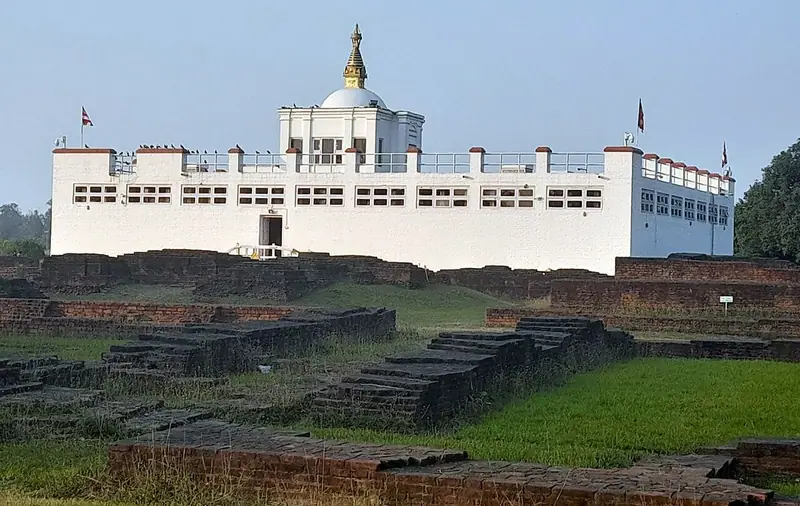
The Sacred Garden
Begin in the Sacred Garden, the protected heart of Lumbini, at the southern end of the master plan drawn up by Kenzo Tange. Tange meant the whole site to lead visitors from the busy world in the north to a place of peace here in the south, and he surrounded the garden with trees and water. Around the temple, look at the low brick foundations in the grass. These are the excavated remains of Buddhist monasteries, known as viharas, and of stupas, the domed memorial shrines of Buddhism. According to UNESCO, the monasteries date from the third century BCE to the fifth century CE, and the stupas from the third century BCE to the fifteenth century CE. Together they show that monks and pilgrims came here for well over a thousand years. Pilgrims from many countries still chant and meditate in the garden, from early morning until evening.
Photo: Rangan Datta Wiki · CC BY-SA 4.0 · Wikimedia Commons
What to see at Lumbini: 8 stops, in visit order
- 01
 The Sacred GardenRuins of the first pilgrimsFree preview
- 02
 The Maya Devi TempleThe marker stone of the birthIn the guide
- 03
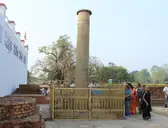 The Ashoka PillarThe emperor’s testimonyIn the guide
- 04
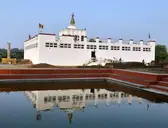 The PuskariniThe sacred poolIn the guide
- 05
 The Eternal Peace FlameWhere the canal beginsIn the guide
- 06
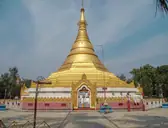 The East Monastic ZoneThe Theravada templesIn the guide
- 07
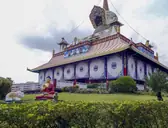 The West Monastic ZoneTemples of the north and eastIn the guide
- 08
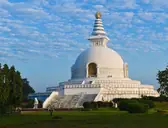 The World Peace PagodaPeace at the northern endIn the guide
Site map of Lumbini
History of Lumbini
In the Buddha’s time, Lumbini lay in the lands of the Shakya people, whose chief town was Kapilavastu, not far away. Buddhist tradition tells that Queen Maya gave birth to Prince Siddhartha Gautama here, in a garden, while travelling to her family home at Devadaha. Nepal dates the birth to 623 BCE; many scholars place it later, and the dates are still debated. In 249 BCE, by the traditional reckoning, the Mauryan emperor Ashoka came here on pilgrimage and set up an inscribed stone pillar. Chinese pilgrims described the site in the fifth and seventh centuries, but its name and place were later lost, until the pillar was identified in 1896. Today’s layout follows a master plan by the Japanese architect Kenzo Tange, approved in 1978, and Lumbini was inscribed as a World Heritage Site in 1997.
Lumbini guide: questions
How many stops does the Lumbini guide have?
8 stops, in visit order: 1. The Sacred Garden; 2. The Maya Devi Temple; 3. The Ashoka Pillar; 4. The Puskarini; 5. The Eternal Peace Flame; 6. The East Monastic Zone; 7. The West Monastic Zone; 8. The World Peace Pagoda.
Can I do a self-guided tour of Lumbini with this guide?
Yes. The guide is made for a self-guided tour: 8 stops in visit order, each with a photo, a story and a voice, so you can explore Lumbini at your own pace, without joining a group. Download it before you go and it works offline.
How long do you need at Lumbini?
We suggest allowing 3–4 hours. The 8 stops add up to about 6 minutes of listening, and you play each one when you’re ready, so you can linger wherever you like.
How long is each guide?
The 8 stops add up to about 6 minutes of listening in total. You play each stop when you’re ready, so you can go at your own pace.
Does the guide work offline?
Yes, once it’s downloaded. The guide is a single self-contained web page (about 6.9 MB) with the photos, text and audio built in. Download it to your phone before you go (Wi-Fi is best); after that it opens in any modern browser on iPhone or Android, with no app, account or mobile signal needed.
Does it use GPS or need my location?
No. The guide doesn’t use GPS and doesn’t know where you are: you play each stop when you reach it. It works on iPhone and Android in any modern browser, and it’s in English.
What’s included?
One self-contained HTML guide: 8 stops in visit order, each with a photo, text and a voice, plus the story of who built the site.
Who built Lumbini?
In the Buddha’s time, Lumbini lay in the lands of the Shakya people, whose chief town was Kapilavastu, not far away. Buddhist tradition tells that Queen Maya gave birth to Prince Siddhartha Gautama here, in a garden, while travelling to her family home at Devadaha.
Where is Lumbini?
Lumbini lies on the Terai plains of southern Nepal, close to the border with India, and it is revered by Buddhists as the place where the Buddha was born.
Is there a free audio guide to Lumbini?
The first stop, The Sacred Garden, is free to read and hear on this page, so you can try the Lumbini audio tour before you buy. The full guide, with all 8 stops, is a one-off purchase: download it once and it’s yours to keep, working offline.
Is the Lumbini guide worth it?
If you’d like to know what you’re looking at, yes. For $10 you get 8 stops in visit order, each with a photo, a short history and a voice you play when you’re ready, plus a site map of the stops, and about 6 minutes of listening in all. It’s short on purpose, so you spend your time looking, not listening. It’s yours to keep, works offline and needs no app. The first stop is free on this page, so you can try it before you buy. If you’d like hours of detail, a guided tour will go deeper.
Audio guide or guided tour?
It depends how you like to visit. This guide lets you explore Lumbini at your own pace, at any time, for a one-off price. A guided tour gives you a live expert you can ask questions, but at fixed times and usually for a higher price. Many people use both: a tour for the big picture, and the guide to read beforehand or to revisit the stops in their own time.
Is this the official Lumbini guide?
No. It’s an independent guide by The Historian Guide, not affiliated with or endorsed by the operator of Lumbini. For tickets and opening hours, check the official site operator before you go.
Does the guide include entry tickets or opening hours?
No. The guide is a digital companion only. Admission to Lumbini is separate, so check the official site operator for current tickets and opening hours before you go.
- Stop 1 · The Sacred Garden: Rangan Datta Wiki · CC BY-SA 4.0 · Wikimedia Commons · resized
- Stop 2 · The Maya Devi Temple: Ricky Partel · CC BY-SA 4.0 · Wikimedia Commons · resized
- Stop 3 · The Ashoka Pillar: Sanu N · CC BY-SA 4.0 · Wikimedia Commons · resized
- Stop 4 · The Puskarini (also the cover): Rangan Datta Wiki · CC BY-SA 4.0 · Wikimedia Commons · resized
- Stop 5 · The Eternal Peace Flame: Imsurit · CC BY-SA 4.0 · Wikimedia Commons · resized
- Stop 6 · The East Monastic Zone: Pnabin61 · CC BY-SA 4.0 · Wikimedia Commons · resized
- Stop 7 · The West Monastic Zone: Pnabin61 · CC BY-SA 4.0 · Wikimedia Commons · resized
- Stop 8 · The World Peace Pagoda: Chaudhary.creation · CC BY-SA 4.0 · Wikimedia Commons · resized


All photographs from Wikimedia Commons under the licences shown.
More guides in Nepal
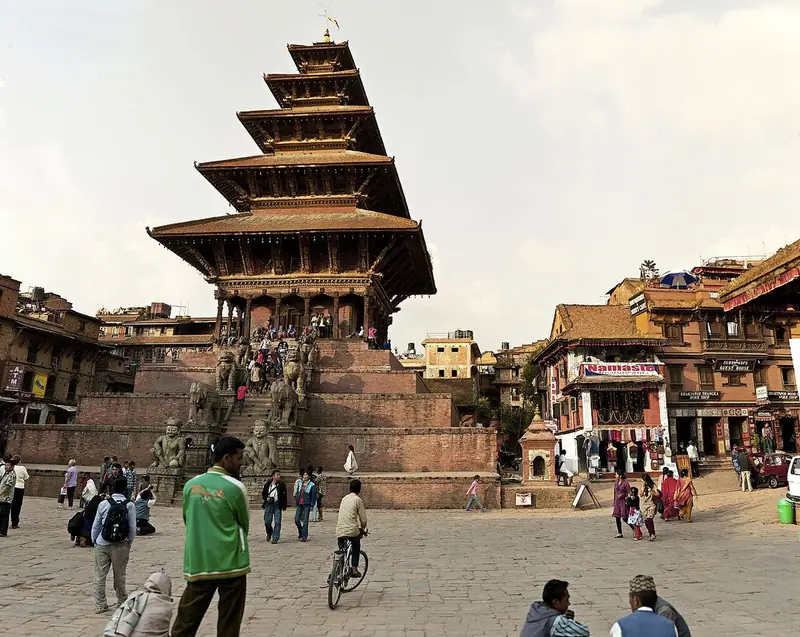 Newar8 stops · 12th–18th century
Bhaktapur audio guide
Brick lanes and temple squares in the best preserved of the Kathmandu Valley’s royal cities, from Durbar Square to the Nyatapola Temple.
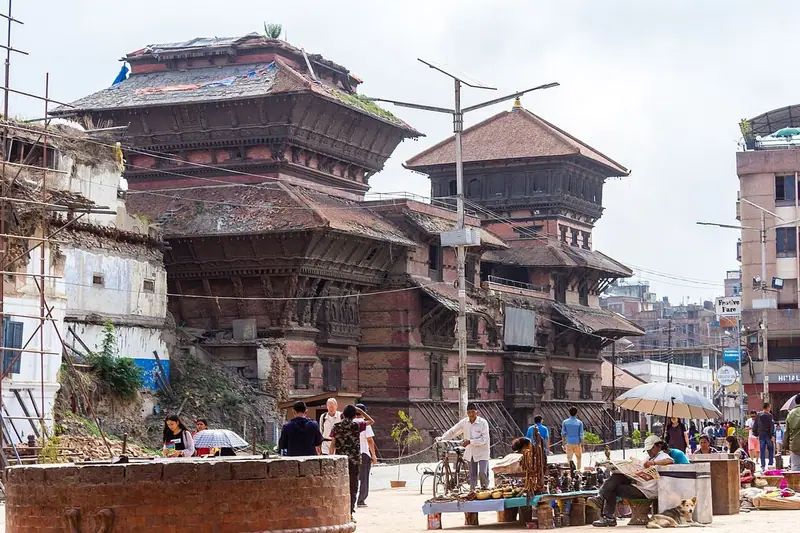 Newar8 stops · c. 7th–18th century
Kathmandu Durbar Square audio guide
Explore the tiered temples and palace courtyards of Kathmandu’s old royal heart, from the Kasthamandap to the house of the living goddess Kumari.
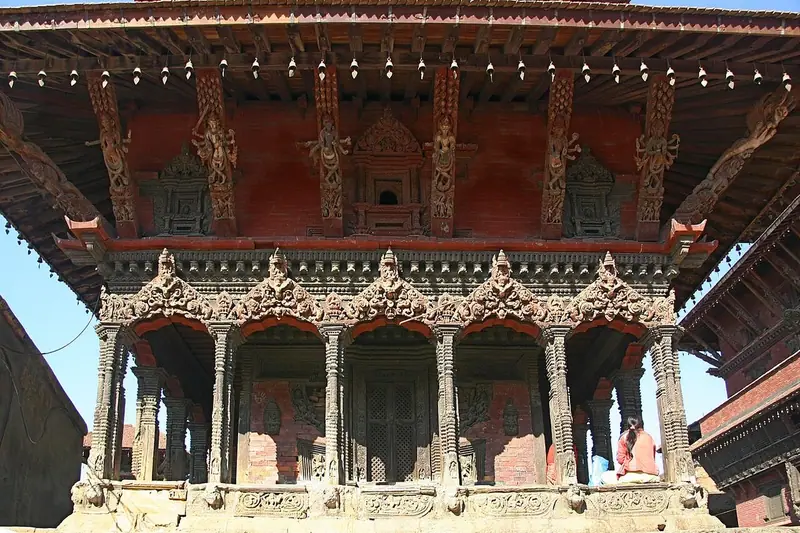 Newar7 stops · 17th–18th century
Patan Durbar Square audio guide
The palace square of the Malla kings of Patan, from the stone Krishna Mandir and the royal bath of Sundari Chowk to the bronzes of the Patan Museum and the Golden Temple.
Every guide, in every country
Lumbini and every other guide we publish, including future ones. One payment, no subscription.