Before you start
The Blue Mosque, officially the Sultan Ahmed Mosque, Sultanahmet Camii, faces Hagia Sophia across the gardens of Sultanahmet, on the historic peninsula of Istanbul. Beside it lies the long open square of the ancient Hippodrome, and a few minutes’ walk to the north is the Basilica Cistern. All three are part of the Historic Areas of Istanbul, a UNESCO World Heritage Site since 1985. The mosque is a working place of worship, open to visitors outside prayer times: dress modestly, with women covering their hair, shoulders and knees, men in long trousers, and shoes removed at the door. This guide follows a natural route: the mosque courtyard and prayer hall, then out through the west gate onto the Hippodrome, south to the Walled Obelisk and back north past the Serpent Column, the Obelisk of Theodosius and the German Fountain, to the Milion and down into the Basilica Cistern.
Use it as a self-guided tour of the Blue Mosque: 9 stops in visit order, each played when you’re ready, at your own pace.
 Free preview · Stop 1
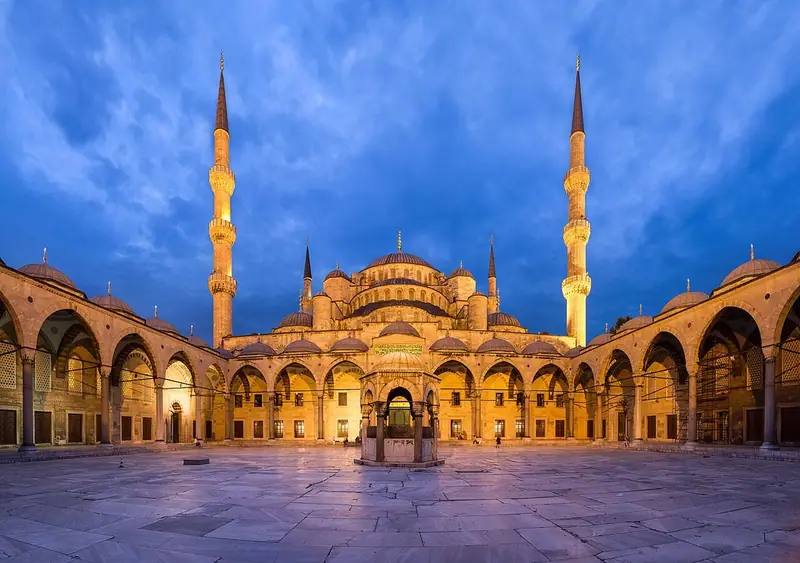
The Courtyard
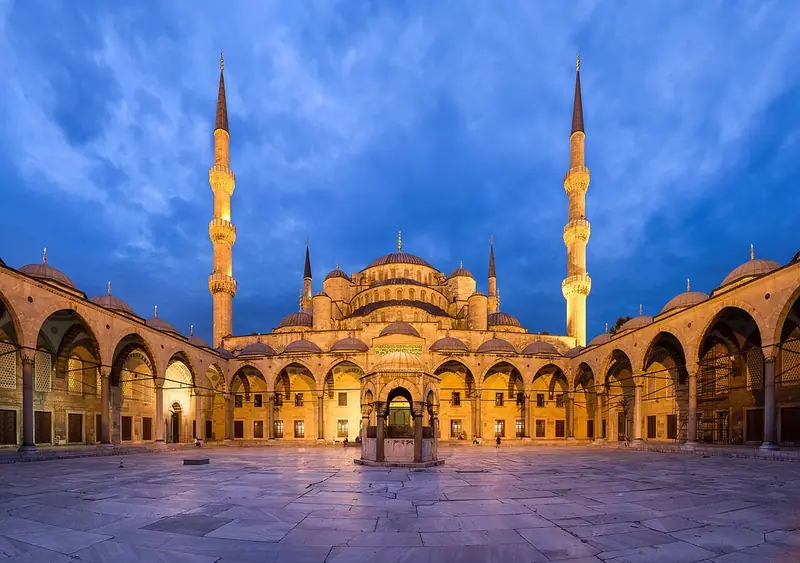
Begin in the great courtyard on the west side of the mosque, entered through a monumental gateway. It is almost as large as the prayer hall itself, surrounded by a domed arcade, with a hexagonal fountain in the middle, now decorative; worshippers wash at the taps along the outside walls before prayer. From here you get the finest view of the building rising in a cascade of domes and half-domes towards the central dome, with four minarets at the corners of the prayer hall and two more at the far corners of the courtyard. Six minarets were very unusual; legend says the sultan asked for gold minarets, altın, and the architect heard six, altı, but the story is probably just that. Tourists use a separate entrance on the side of the mosque, where you remove your shoes and carry them in a bag, and scarves are available.
Photo: Benh LIEU SONG (Flickr) · CC BY-SA 3.0 · Wikimedia Commons
What to see at the Blue Mosque: 9 stops, in visit order
- 01
 The CourtyardAvluFree preview
- 02
 The Prayer HallHarimIn the guide
- 03
 The Walled ObeliskÖrme DikilitaşIn the guide
- 04
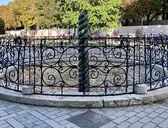 The Serpent ColumnYılanlı SütunIn the guide
- 05
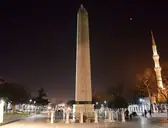 Obelisk of TheodosiusDikilitaşIn the guide
- 06
 The German FountainAlman ÇeşmesiIn the guide
- 07
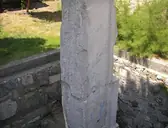 The MilionMilyon TaşıIn the guide
- 08
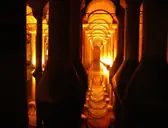 The Basilica CisternYerebatan SarnıcıIn the guide
- 09
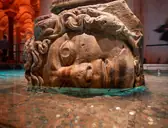 The Medusa HeadsMedusa BaşlarıIn the guide
Site map of the Blue Mosque
History of the Blue Mosque
The Blue Mosque was built between 1609 and 1616 for Sultan Ahmed I, who came to the throne as a teenager, by his court architect Sedefkâr Mehmed Ağa, a pupil of the great Mimar Sinan. It was a work of the Ottoman Empire, which lasted from about 1299 to 1922 and had made Constantinople its capital after Mehmed II conquered the city in 1453. But the mosque stands on far older ground. The Hippodrome was laid out by the Roman emperor Septimius Severus around 200 CE and enlarged by Constantine the Great when he refounded the city as Constantinople in 330, the start of the Byzantine Empire, which lasted until 1453. The Basilica Cistern was built by the Byzantine emperor Justinian I in the sixth century.
The full history continues in the guide.
Blue Mosque guide: questions
How many stops does the Blue Mosque guide have?
9 stops, in visit order: 1. The Courtyard; 2. The Prayer Hall; 3. The Walled Obelisk; 4. The Serpent Column; 5. Obelisk of Theodosius; 6. The German Fountain; 7. The Milion; 8. The Basilica Cistern; 9. The Medusa Heads.
Can I do a self-guided tour of the Blue Mosque with this guide?
Yes. The guide is made for a self-guided tour: 9 stops in visit order, each with a photo, a story and a voice, so you can explore the Blue Mosque at your own pace, without joining a group. Download it before you go and it works offline.
How long is each guide?
The 9 stops add up to about 8 minutes of listening in total. You play each stop when you’re ready, so you can go at your own pace.
Does the guide work offline?
Yes, once it’s downloaded. The guide is a single self-contained web page (about 9.2 MB) with the photos, text and audio built in. Download it to your phone before you go (Wi-Fi is best); after that it opens in any modern browser on iPhone or Android, with no app, account or mobile signal needed.
Does it use GPS or need my location?
No. The guide doesn’t use GPS and doesn’t know where you are: you play each stop when you reach it. It works on iPhone and Android in any modern browser, and it’s in English.
What’s included?
One self-contained HTML guide: 9 stops in visit order, each with a photo, text and a voice, plus the story of who built the site.
Who built the Blue Mosque?
The Blue Mosque was built between 1609 and 1616 for Sultan Ahmed I, who came to the throne as a teenager, by his court architect Sedefkâr Mehmed Ağa, a pupil of the great Mimar Sinan. It was a work of the Ottoman Empire, which lasted from about 1299 to 1922 and had made Constantinople its capital after Mehmed II conquered the city in 1453.
Where is the Blue Mosque?
The Blue Mosque, officially the Sultan Ahmed Mosque, Sultanahmet Camii, faces Hagia Sophia across the gardens of Sultanahmet, on the historic peninsula of Istanbul.
Is there a free audio guide to the Blue Mosque?
The first stop, The Courtyard, is free to read and hear on this page, so you can try the Blue Mosque audio tour before you buy. The full guide, with all 9 stops, is a one-off purchase: download it once and it’s yours to keep, working offline.
Is the Blue Mosque guide worth it?
If you’d like to know what you’re looking at, yes. For $10 you get 9 stops in visit order, each with a photo, a short history and a voice you play when you’re ready, plus a site map of the stops, and about 8 minutes of listening in all. It’s short on purpose, so you spend your time looking, not listening. It’s yours to keep, works offline and needs no app. The first stop is free on this page, so you can try it before you buy. If you’d like hours of detail, a guided tour will go deeper.
Audio guide or guided tour?
It depends how you like to visit. This guide lets you explore the Blue Mosque at your own pace, at any time, for a one-off price. A guided tour gives you a live expert you can ask questions, but at fixed times and usually for a higher price. Many people use both: a tour for the big picture, and the guide to read beforehand or to revisit the stops in their own time.
Is this the official Blue Mosque guide?
No. It’s an independent guide by The Historian Guide, not affiliated with or endorsed by the operator of the Blue Mosque. For tickets and opening hours, check the official site operator before you go.
Does the guide include entry tickets or opening hours?
No. The guide is a digital companion only. Admission to the Blue Mosque is separate, so check the official site operator for current tickets and opening hours before you go.
- Stop 1 · The Courtyard (also the cover): Benh LIEU SONG (Flickr) · CC BY-SA 3.0 · Wikimedia Commons · resized
- Stop 2 · The Prayer Hall: Ank Kumar · CC BY-SA 4.0 · Wikimedia Commons · resized
- Stop 3 · The Walled Obelisk: Dmityr A. Mottl · CC BY-SA 4.0 · Wikimedia Commons · resized
- Stop 4 · The Serpent Column: Dudva · CC BY-SA 4.0 · Wikimedia Commons · resized
- Stop 5 · Obelisk of Theodosius: Ank Kumar · CC BY-SA 4.0 · Wikimedia Commons · resized
- Stop 6 · The German Fountain: Radosław Botev · CC BY 3.0 pl · Wikimedia Commons · resized
- Stop 7 · The Milion: Gryffindor · Public domain · Wikimedia Commons · resized
- Stop 8 · The Basilica Cistern: Enkode · CC BY-SA 4.0 · Wikimedia Commons · resized
- Stop 9 · The Medusa Heads: Nan Palmero · CC BY 2.0 · Wikimedia Commons · resized


All photographs from Wikimedia Commons under the licences shown.
More guides in Turkey
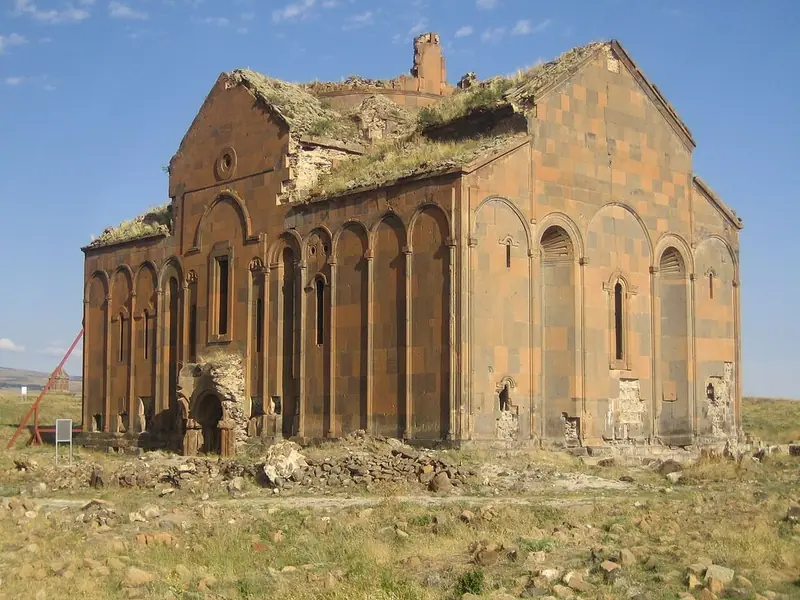 Armenian8 stops · 10th – 14th century CE
Ani audio guide
The ruined capital of medieval Armenia above a border gorge: Trdat’s cathedral, the frescoed church of Tigran Honents, the half-fallen Holy Redeemer and the minaret of Manuchihr.
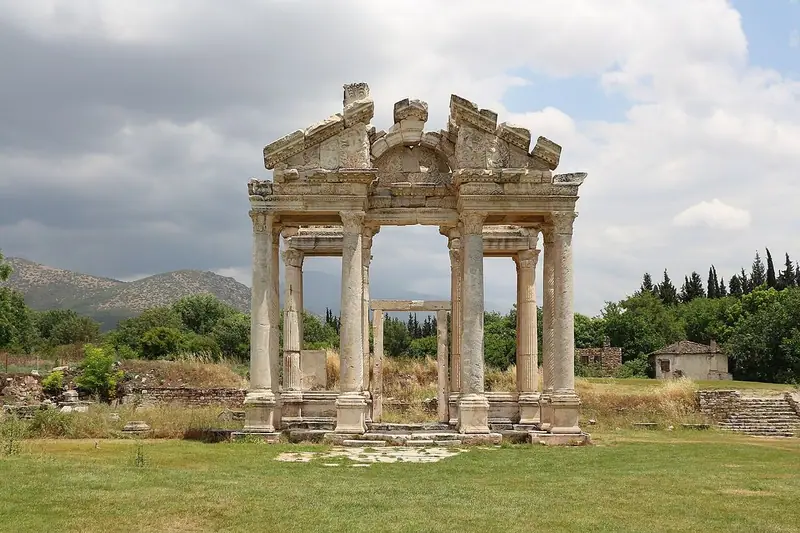 Roman8 stops · 1st century BCE – 4th century CE
Aphrodisias audio guide
The city of Aphrodite: the Tetrapylon gate, the stadium, the theatre and the sculpted reliefs of the Sebasteion.
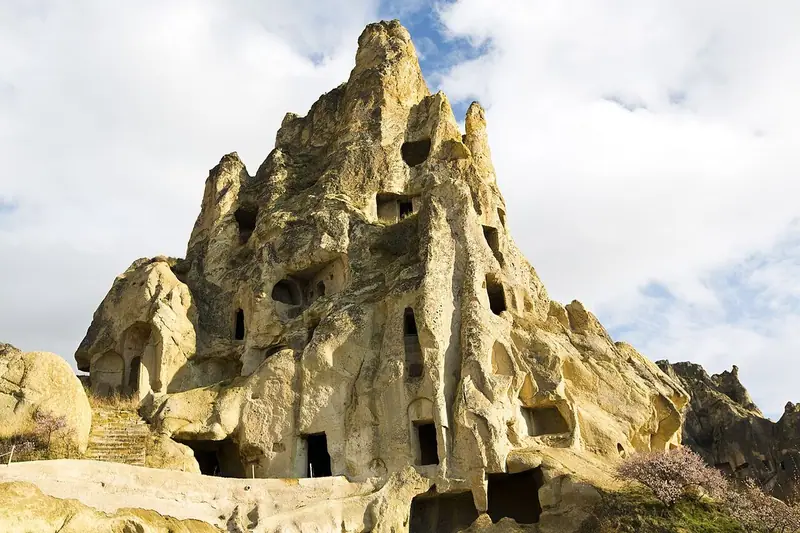 Byzantine8 stops · 10th–12th century
Cappadocia audio guide
Monks' churches and chapels cut into the soft rock of Göreme, among Cappadocia’s fairy chimneys.
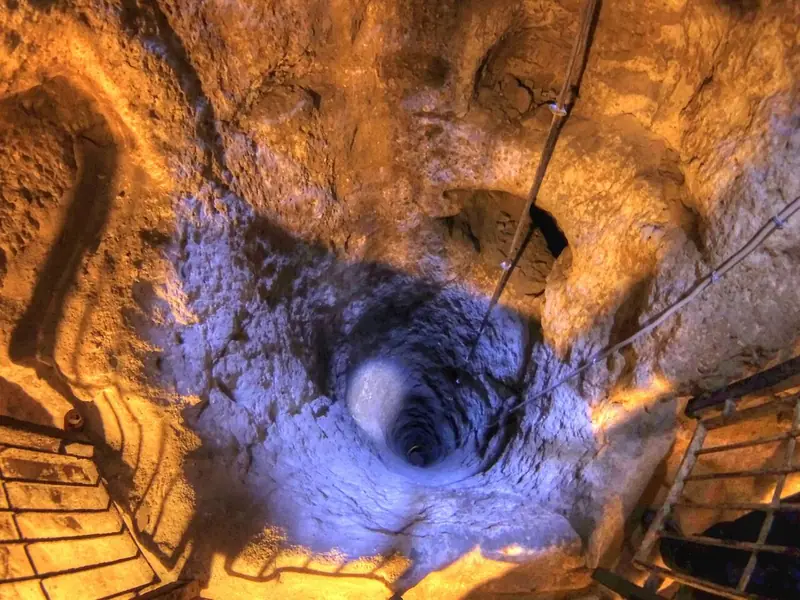 Byzantine7 stops · expanded c. 780–1180 CE
Derinkuyu audio guide
Descend through stables, kitchens and rolling stone doors into an underground city cut deep into the tuff.
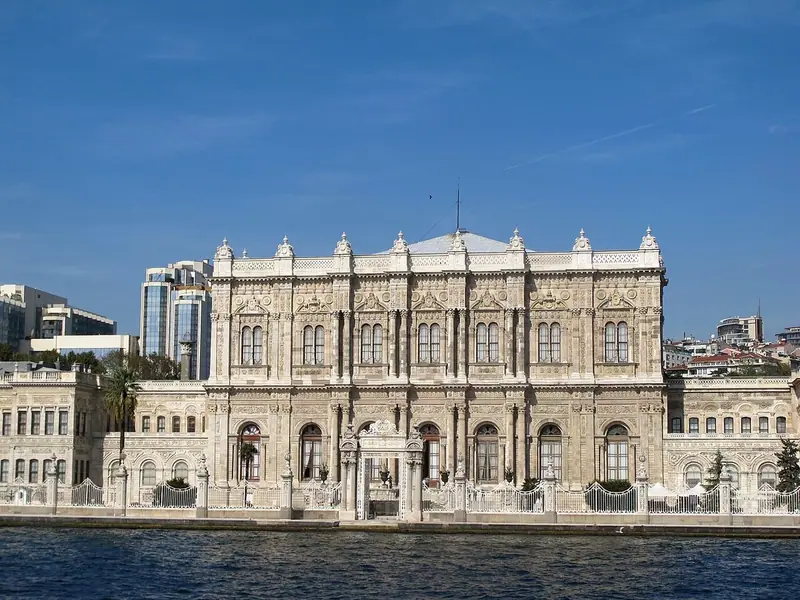 Ottoman8 stops · Late Ottoman
Dolmabahçe Palace audio guide
Climb the crystal staircase of the sultans’ palace of gold and crystal on the Bosphorus, to the vast domed Ceremonial Hall and Atatürk’s room.
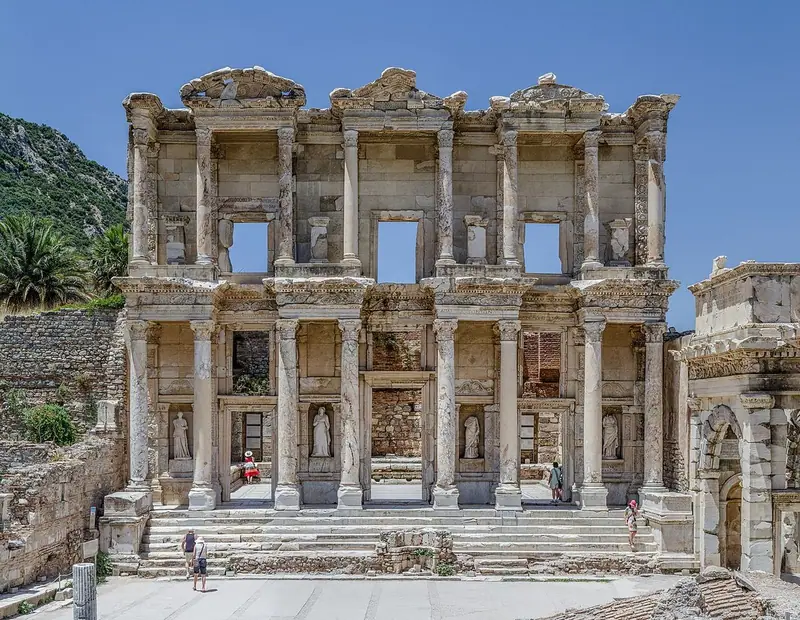 Roman9 stops · 3rd century BCE – 4th century CE
Ephesus audio guide
Down Curetes Street past the Terrace Houses to the Library of Celsus and the Great Theatre.
Every guide, in every country
Blue Mosque and every other guide we publish, including future ones. One payment, no subscription.