Before you start
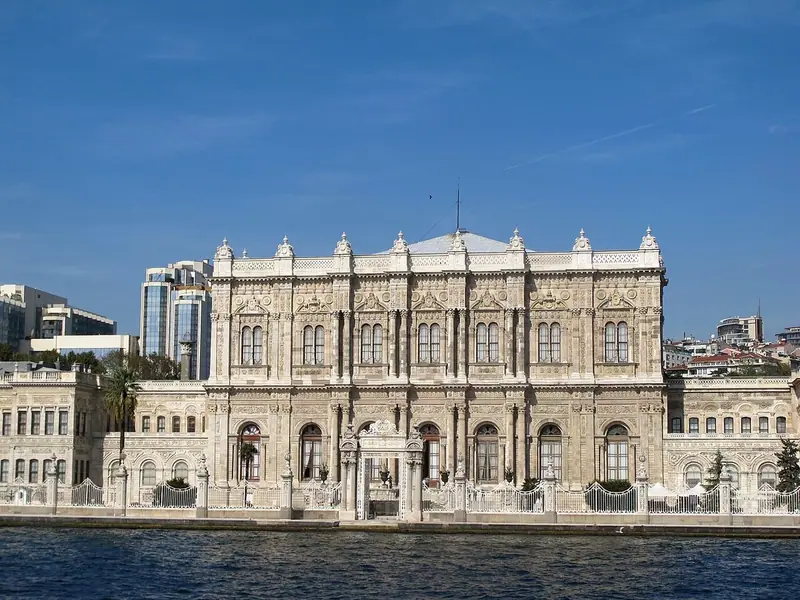
Dolmabahçe Palace, on the European shore of the Bosphorus, was built in the 1840s and 1850s for the Ottoman sultans, who left the old Topkapı Palace to live in European style. It is a palace of gold and crystal, with a vast domed ceremonial hall and a staircase of crystal balusters. Here, too, Mustafa Kemal Atatürk, founder of the Turkish Republic, died in 1938. The tour starts at the clock tower, passes through the palace gates and gardens, and follows the visitor route inside. Allow about two to three hours.
Use it as a self-guided tour of Dolmabahçe Palace: 8 stops in visit order, each played when you’re ready, at your own pace.
 Free preview · Stop 1
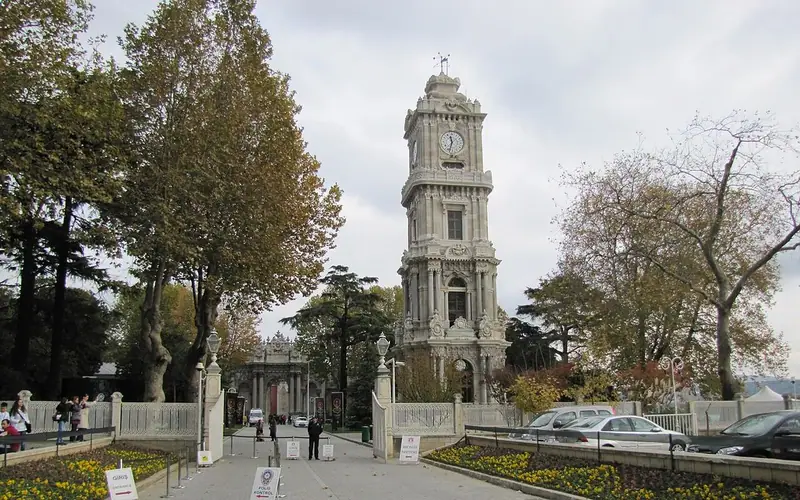
The Clock Tower
Begin in the square in front of the palace, beside the tall clock tower. It was built between 1890 and 1895 for Sultan Abdülhamid the Second, designed by the court architect Sarkis Balyan, in a mixture of European styles. Its clock was made in Paris. Clock towers were being raised across the Ottoman Empire at this time, as symbols of modern, punctual government. Look to your right at the Dolmabahçe Mosque, beside the water, built in the 1850s for the sultan’s mother, Bezmiâlem Valide Sultan, in an ornate baroque style. Behind you runs the busy waterfront of Beşiktaş. The name Dolmabahçe means filled garden, because the palace stands on land reclaimed from a bay of the Bosphorus. Now walk to the gate.
Photo: Mimar77 · CC BY-SA 3.0 · Wikimedia Commons
What to see at Dolmabahçe Palace: 8 stops, in visit order
- 01
 The Clock TowerTime on the BosphorusFree preview
- 02
 The Gate of the SultanAn entrance of carved stoneIn the guide
- 03
 The Bosphorus FrontPalace on the waterIn the guide
- 04
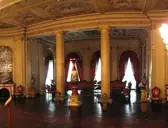 The Medhal HallWhere visitors waitedIn the guide
- 05
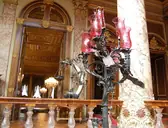 The Crystal StaircaseCrystal, brass and mahoganyIn the guide
- 06
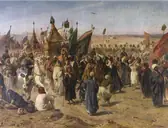 The Paintings of the PalaceAivazovsky and the SurreIn the guide
- 07
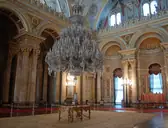 The Ceremonial HallUnder the great domeIn the guide
- 08
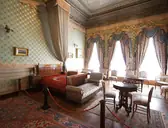 The Harem and Atatürk’s RoomThe clocks at five past nineIn the guide
History of Dolmabahçe Palace
Sultan Abdülmecid the First ordered the palace, which was built between 1843 and 1853 by the Balyan family, Armenian architects to the Ottoman court. It cost a vast sum, which added to the empire’s growing debts. Six sultans lived here, until the caliphate was abolished in 1924 and the palace passed to the new Turkish Republic. Atatürk used it as his residence in Istanbul, and it is now a museum.
Dolmabahçe Palace guide: questions
How many stops does the Dolmabahçe Palace guide have?
8 stops, in visit order: 1. The Clock Tower; 2. The Gate of the Sultan; 3. The Bosphorus Front; 4. The Medhal Hall; 5. The Crystal Staircase; 6. The Paintings of the Palace; 7. The Ceremonial Hall; 8. The Harem and Atatürk’s Room.
Can I do a self-guided tour of Dolmabahçe Palace with this guide?
Yes. The guide is made for a self-guided tour: 8 stops in visit order, each with a photo, a story and a voice, so you can explore Dolmabahçe Palace at your own pace, without joining a group. Download it before you go and it works offline.
How long is each guide?
The 8 stops add up to about 5 minutes of listening in total. You play each stop when you’re ready, so you can go at your own pace.
Does the guide work offline?
Yes, once it’s downloaded. The guide is a single self-contained web page (about 6.8 MB) with the photos, text and audio built in. Download it to your phone before you go (Wi-Fi is best); after that it opens in any modern browser on iPhone or Android, with no app, account or mobile signal needed.
Does it use GPS or need my location?
No. The guide doesn’t use GPS and doesn’t know where you are: you play each stop when you reach it. It works on iPhone and Android in any modern browser, and it’s in English.
What’s included?
One self-contained HTML guide: 8 stops in visit order, each with a photo, text and a voice, plus the story of who built the site.
Who built Dolmabahçe Palace?
Sultan Abdülmecid the First ordered the palace, which was built between 1843 and 1853 by the Balyan family, Armenian architects to the Ottoman court. It cost a vast sum, which added to the empire’s growing debts.
Is there a free audio guide to Dolmabahçe Palace?
The first stop, The Clock Tower, is free to read and hear on this page, so you can try the Dolmabahçe Palace audio tour before you buy. The full guide, with all 8 stops, is a one-off purchase: download it once and it’s yours to keep, working offline.
Is the Dolmabahçe Palace guide worth it?
If you’d like to know what you’re looking at, yes. For $10 you get 8 stops in visit order, each with a photo, a short history and a voice you play when you’re ready, about 5 minutes of listening in all. It’s short on purpose, so you spend your time looking, not listening. It’s yours to keep, works offline and needs no app. The first stop is free on this page, so you can try it before you buy. If you’d like hours of detail, a guided tour will go deeper.
Audio guide or guided tour?
It depends how you like to visit. This guide lets you explore Dolmabahçe Palace at your own pace, at any time, for a one-off price. A guided tour gives you a live expert you can ask questions, but at fixed times and usually for a higher price. Many people use both: a tour for the big picture, and the guide to read beforehand or to revisit the stops in their own time.
Is this the official Dolmabahçe Palace guide?
No. It’s an independent guide by The Historian Guide, not affiliated with or endorsed by the operator of Dolmabahçe Palace. For tickets and opening hours, check the official site operator before you go.
Does the guide include entry tickets or opening hours?
No. The guide is a digital companion only. Admission to Dolmabahçe Palace is separate, so check the official site operator for current tickets and opening hours before you go.
- Stop 1 · The Clock Tower: Mimar77 · CC BY-SA 3.0 · Wikimedia Commons · resized
- Stop 2 · The Gate of the Sultan: Julian Lupyan · CC0 · Wikimedia Commons · resized
- Stop 3 · The Bosphorus Front (also the cover): Acediscovery · CC BY 4.0 · Wikimedia Commons · resized
- Stop 4 · The Medhal Hall: Gryffindor · CC BY-SA 4.0 · Wikimedia Commons · resized
- Stop 5 · The Crystal Staircase: KLMircea · CC BY-SA 2.0 · Wikimedia Commons · resized
- Stop 6 · The Paintings of the Palace: Stefano Ussi (1822-1901) · Public domain · Wikimedia Commons · resized
- Stop 7 · The Ceremonial Hall: Dan from Brussels, Europe · CC BY-SA 2.0 · Wikimedia Commons · resized
- Stop 8 · The Harem and Atatürk’s Room: Sitomon · CC BY-SA 2.0 · Wikimedia Commons · resized


All photographs from Wikimedia Commons under the licences shown.
More guides in Turkey
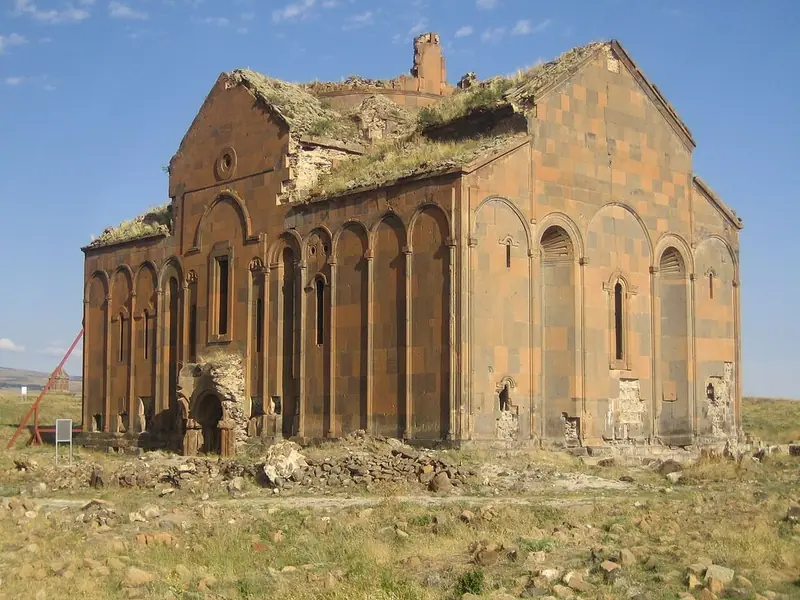 Armenian8 stops · 10th – 14th century CE
Ani audio guide
The ruined capital of medieval Armenia above a border gorge: Trdat’s cathedral, the frescoed church of Tigran Honents, the half-fallen Holy Redeemer and the minaret of Manuchihr.
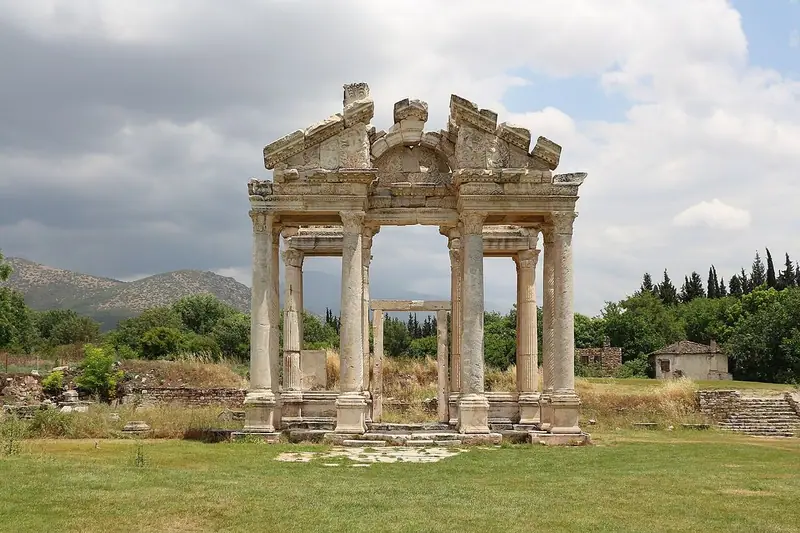 Roman8 stops · 1st century BCE – 4th century CE
Aphrodisias audio guide
The city of Aphrodite: the Tetrapylon gate, the stadium, the theatre and the sculpted reliefs of the Sebasteion.
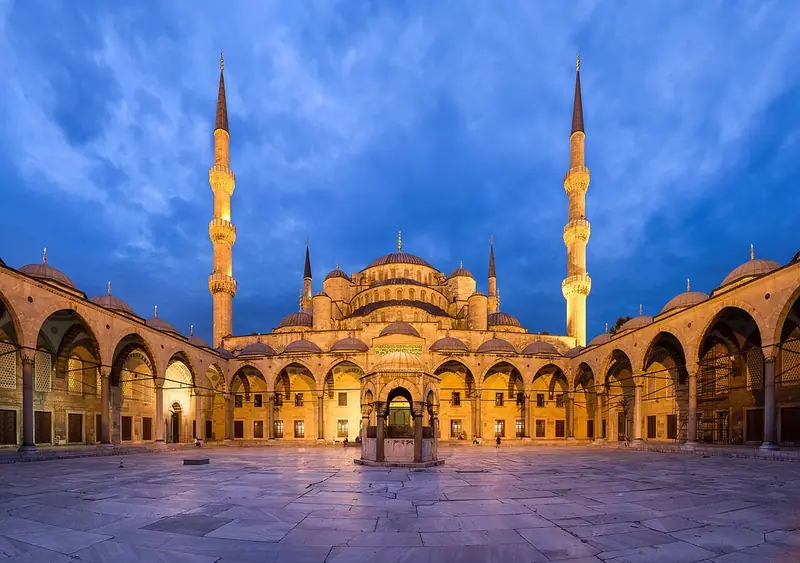 Ottoman9 stops · 1609–1616
Blue Mosque audio guide
Sultan Ahmed’s mosque facing Hagia Sophia, beside the obelisks and Serpent Column of the ancient Hippodrome.
 Byzantine8 stops · 10th–12th century
Cappadocia audio guide
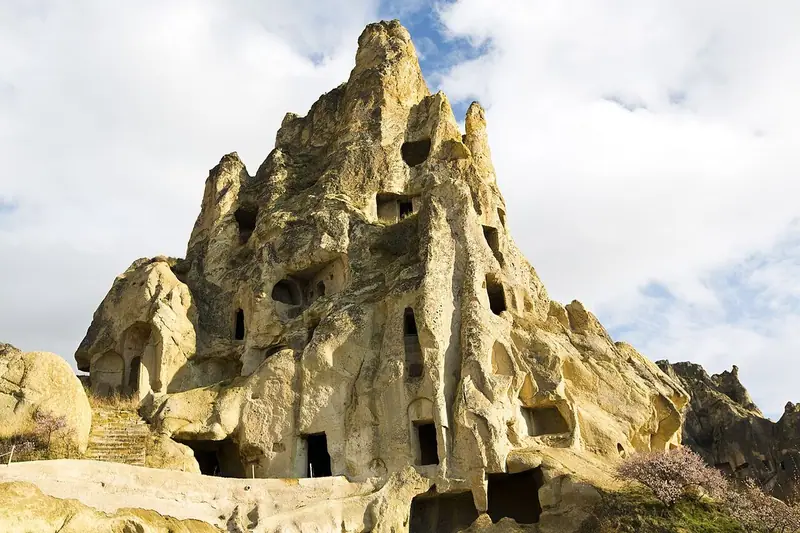
Monks' churches and chapels cut into the soft rock of Göreme, among Cappadocia’s fairy chimneys.
 Byzantine7 stops · expanded c. 780–1180 CE
Derinkuyu audio guide
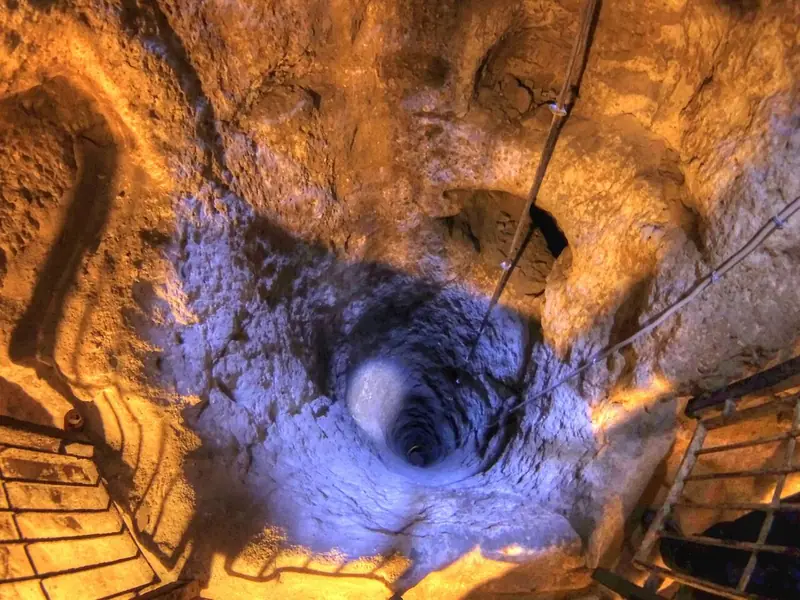
Descend through stables, kitchens and rolling stone doors into an underground city cut deep into the tuff.
 Roman9 stops · 3rd century BCE – 4th century CE
Ephesus audio guide
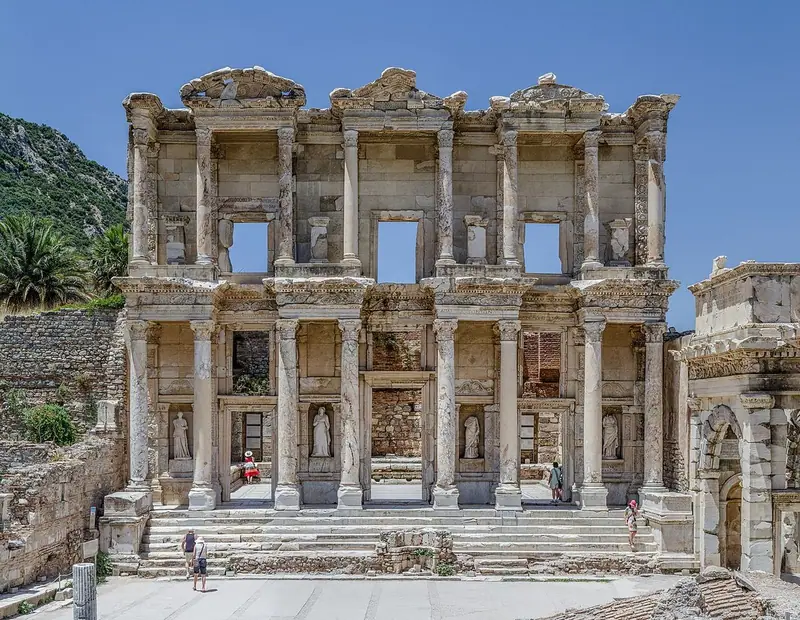
Down Curetes Street past the Terrace Houses to the Library of Celsus and the Great Theatre.
Every guide, in every country
Dolmabahçe Palace and every other guide we publish, including future ones. One payment, no subscription.