Before you start
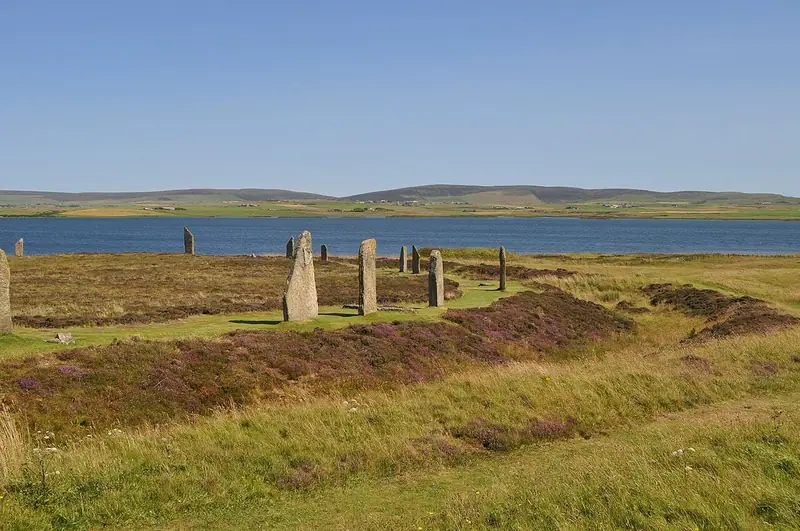
The Heart of Neolithic Orkney is a cluster of prehistoric monuments on Mainland, the biggest island of Orkney, off Scotland’s northern coast. UNESCO gave them World Heritage status in December 1999. Four sites make up the inscription: the village of Skara Brae on the Bay of Skaill, the great chambered cairn of Maeshowe, and two stone circles, the Standing Stones of Stenness and the Ring of Brodgar. The last three lie close together around the Lochs of Stenness and Harray, while Skara Brae is a short drive away on the west coast. This guide begins at Skara Brae and then crosses to the lochs, reaching the Ring of Brodgar first and working south-east past the Ness of Brodgar, the stones of Stenness and the Barnhouse settlement, before ending at Maeshowe. The sites are a few kilometres apart and are best linked by road.
Use it as a self-guided tour of the Heart of Neolithic Orkney: 9 stops in visit order, each played when you’re ready, at your own pace.
 Free preview · Stop 1
Skara Brae
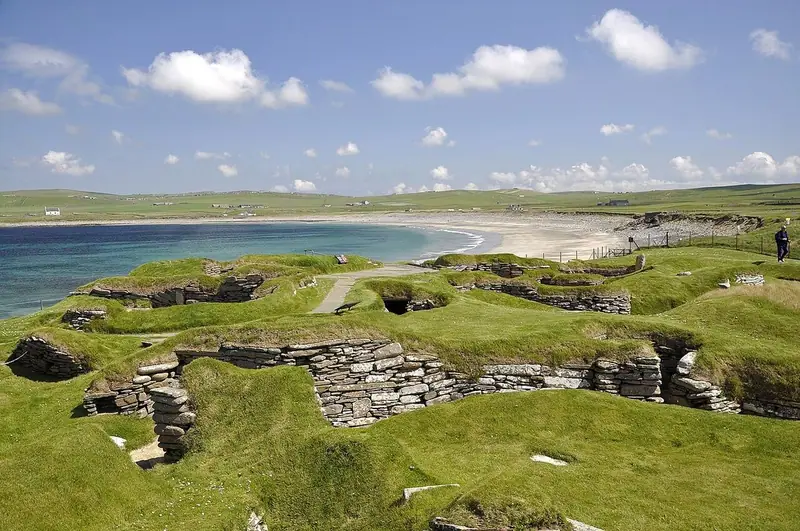
Begin at Skara Brae, on the Bay of Skaill on the west coast of Mainland. In the winter of 1850 a severe storm stripped the earth from a large mound here and revealed the outline of a village of small stone houses without roofs. William Graham Watt of Skaill House, a self-taught geologist, began to dig, but work stopped in 1868. After another storm damaged one of the houses in 1924, the archaeologist Gordon Childe of the University of Edinburgh excavated the site from 1927. Radiocarbon dates show that people lived here from about 3180 BCE for some six hundred years. Today ten structures and four passageways can be seen, and the village is often described as the most complete Neolithic settlement in Europe. When it was occupied, the sea lay farther away than it does now.
Photo: Stuart Wilding · CC BY-SA 2.0 · Wikimedia Commons
What to see at the Heart of Neolithic Orkney: 9 stops, in visit order
- 01
 Skara BraeThe village in the dunesFree preview
- 02
 A Stone HomeBeds, hearth and dresserIn the guide
- 03
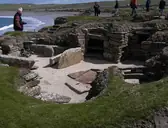 House 8A workshop apartIn the guide
- 04
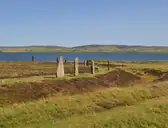 The Ring of BrodgarA great circle between the lochsIn the guide
- 05
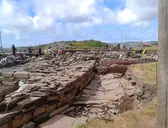 The Ness of BrodgarA complex beneath the turfIn the guide
- 06
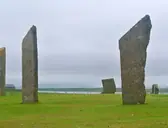 The Standing Stones of StennessPerhaps the oldest henge in Britain and IrelandIn the guide
- 07
 BarnhouseA village by the lochIn the guide
- 08
 MaeshoweThe great chambered cairnIn the guide
- 09
 The Passage and the RunesNorse visitors in the tombIn the guide
Site map of the Heart of Neolithic Orkney
History of the Heart of Neolithic Orkney
The monuments were raised by farming communities in the late fourth and the third millennia BCE, around five thousand years ago. They kept cattle, pigs and sheep, grew barley and gathered food from the sea, and they made a distinctive style of pottery known as grooved ware, which has been found at Skara Brae, Barnhouse and Stenness alike. Orkney has little timber, but its flagstone splits easily into flat slabs, and with it they built houses, furniture, tombs and great standing stones. Historic Environment Scotland, which cares for the sites, has compared them with the first cities of the Indus and the early mastabas of Egypt. Thousands of years later, in the twelfth century, Norse visitors broke into Maeshowe and carved runes on its walls, and local traditions about the stones survived into modern times.
Heart of Neolithic Orkney guide: questions
How many stops does the Heart of Neolithic Orkney guide have?
9 stops, in visit order: 1. Skara Brae; 2. A Stone Home; 3. House 8; 4. The Ring of Brodgar; 5. The Ness of Brodgar; 6. The Standing Stones of Stenness; 7. Barnhouse; 8. Maeshowe; 9. The Passage and the Runes.
Can I do a self-guided tour of the Heart of Neolithic Orkney with this guide?
Yes. The guide is made for a self-guided tour: 9 stops in visit order, each with a photo, a story and a voice, so you can explore the Heart of Neolithic Orkney at your own pace, without joining a group. Download it before you go and it works offline.
How long do you need at the Heart of Neolithic Orkney?
We suggest allowing most of a day. The 9 stops add up to about 6 minutes of listening, and you play each one when you’re ready, so you can linger wherever you like.
How long is each guide?
The 9 stops add up to about 6 minutes of listening in total. You play each stop when you’re ready, so you can go at your own pace.
Does the guide work offline?
Yes, once it’s downloaded. The guide is a single self-contained web page (about 8.3 MB) with the photos, text and audio built in. Download it to your phone before you go (Wi-Fi is best); after that it opens in any modern browser on iPhone or Android, with no app, account or mobile signal needed.
Does it use GPS or need my location?
No. The guide doesn’t use GPS and doesn’t know where you are: you play each stop when you reach it. It works on iPhone and Android in any modern browser, and it’s in English.
What’s included?
One self-contained HTML guide: 9 stops in visit order, each with a photo, text and a voice, plus the story of who built the site.
Who built the Heart of Neolithic Orkney?
The monuments were raised by farming communities in the late fourth and the third millennia BCE, around five thousand years ago. They kept cattle, pigs and sheep, grew barley and gathered food from the sea, and they made a distinctive style of pottery known as grooved ware, which has been found at Skara Brae, Barnhouse and Stenness alike.
Where is the Heart of Neolithic Orkney?
The Heart of Neolithic Orkney is a cluster of prehistoric monuments on Mainland, the biggest island of Orkney, off Scotland’s northern coast.
Is there a free audio guide to the Heart of Neolithic Orkney?
The first stop, Skara Brae, is free to read and hear on this page, so you can try the Heart of Neolithic Orkney audio tour before you buy. The full guide, with all 9 stops, is a one-off purchase: download it once and it’s yours to keep, working offline.
Is the Heart of Neolithic Orkney guide worth it?
If you’d like to know what you’re looking at, yes. For $10 you get 9 stops in visit order, each with a photo, a short history and a voice you play when you’re ready, plus a site map of the stops, and about 6 minutes of listening in all. It’s short on purpose, so you spend your time looking, not listening. It’s yours to keep, works offline and needs no app. The first stop is free on this page, so you can try it before you buy. If you’d like hours of detail, a guided tour will go deeper.
Audio guide or guided tour?
It depends how you like to visit. This guide lets you explore the Heart of Neolithic Orkney at your own pace, at any time, for a one-off price. A guided tour gives you a live expert you can ask questions, but at fixed times and usually for a higher price. Many people use both: a tour for the big picture, and the guide to read beforehand or to revisit the stops in their own time.
Is this the official Heart of Neolithic Orkney guide?
No. It’s an independent guide by The Historian Guide, not affiliated with or endorsed by the operator of the Heart of Neolithic Orkney. For tickets and opening hours, check the official site operator before you go.
Does the guide include entry tickets or opening hours?
No. The guide is a digital companion only. Admission to the Heart of Neolithic Orkney is separate, so check the official site operator for current tickets and opening hours before you go.
- Stop 1 · Skara Brae: Skara Brae by Stuart Wilding · CC BY-SA 2.0 · Wikimedia Commons · resized
- Stop 2 · A Stone Home: Skara Brae - Dwelling No.1 - The 'cupboard' by Rob Farrow · CC BY-SA 2.0 · Wikimedia Commons · resized
- Stop 3 · House 8: Wknight94 · CC BY-SA 3.0 · Wikimedia Commons · resized
- Stop 4 · The Ring of Brodgar (also the cover): Stevekeiretsu · CC BY-SA 3.0 · Wikimedia Commons · resized
- Stop 5 · The Ness of Brodgar: S Marshall · CC BY-SA 4.0 · Wikimedia Commons · resized
- Stop 6 · The Standing Stones of Stenness: Wilson44691 · CC0 · Wikimedia Commons · resized
- Stop 7 · Barnhouse: Ymblanter · CC BY-SA 4.0 · Wikimedia Commons · resized
- Stop 8 · Maeshowe: Beep boop beep · CC BY-SA 4.0 · Wikimedia Commons · resized
- Stop 9 · The Passage and the Runes: Gaius Cornelius · CC BY-SA 4.0 · Wikimedia Commons · resized


All photographs from Wikimedia Commons under the licences shown.
More guides in United Kingdom
 Edwardian8 stops · 1295–1330
Beaumaris audio guide
Explore Edward I’s never-finished castle at the entrance to the Menai Strait, one of the most perfectly planned in Europe, then the old gaol and pier.
 Stuart and Georgian England9 stops · 1705 – 1722 (construction)
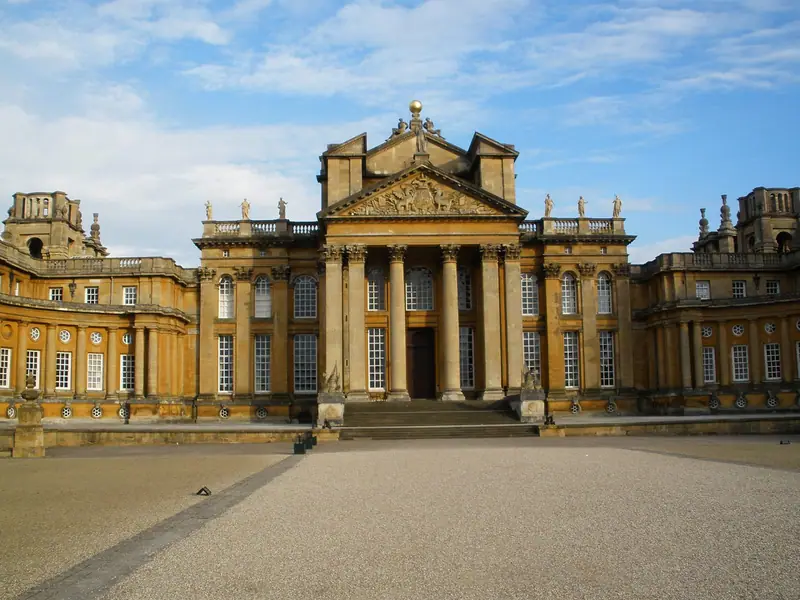
Blenheim Palace audio guide
The Baroque palace built for the Duke of Marlborough after the Battle of Blenheim, birthplace of Winston Churchill, set in a landscape park by Capability Brown.
 Georgian and Victorian Britain8 stops · Georgian and Victorian
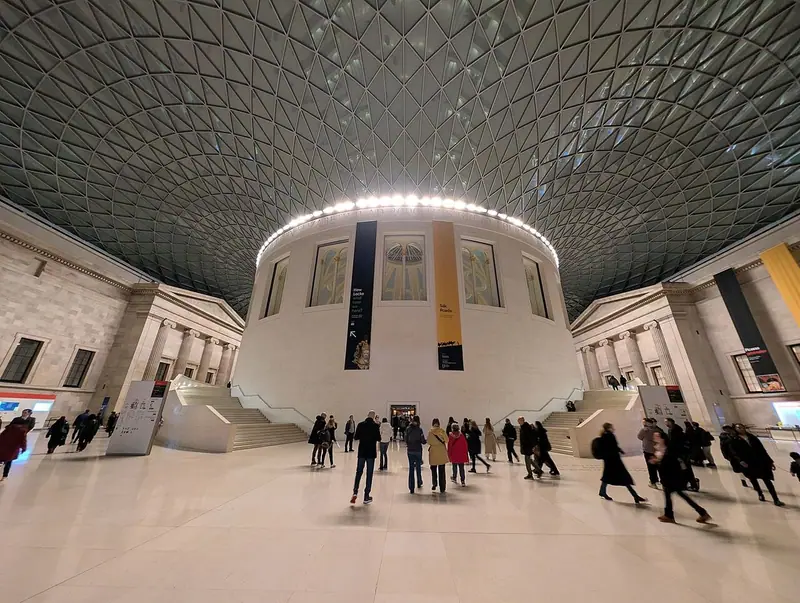
The British Museum audio guide
Pass the portico and the Great Court to the Rosetta Stone, the winged bulls of Assyria, the Parthenon Sculptures and the Lewis Chessmen.
 Plantagenet7 stops · 1283–1330
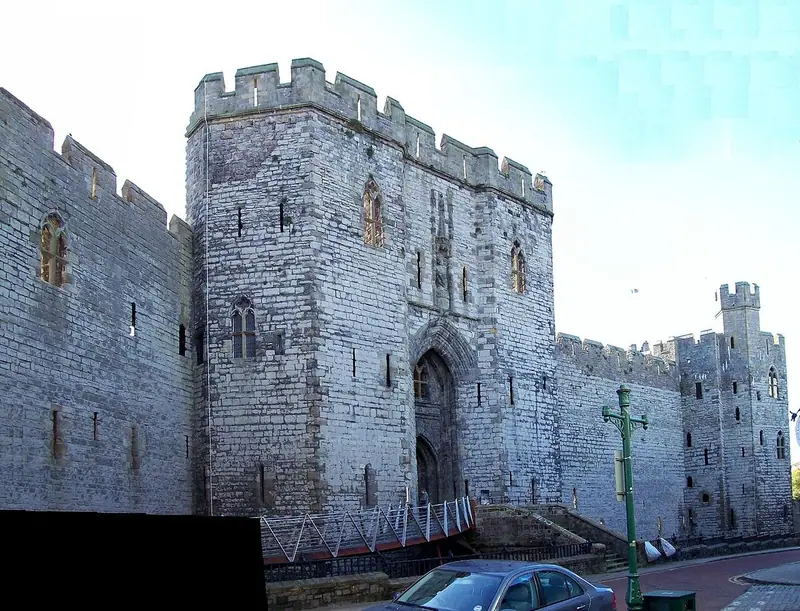
Caernarfon Castle audio guide
Edward I’s fortress-palace on the Menai Strait, with its banded walls and the Eagle Tower.
 Gothic8 stops · 1070–1503
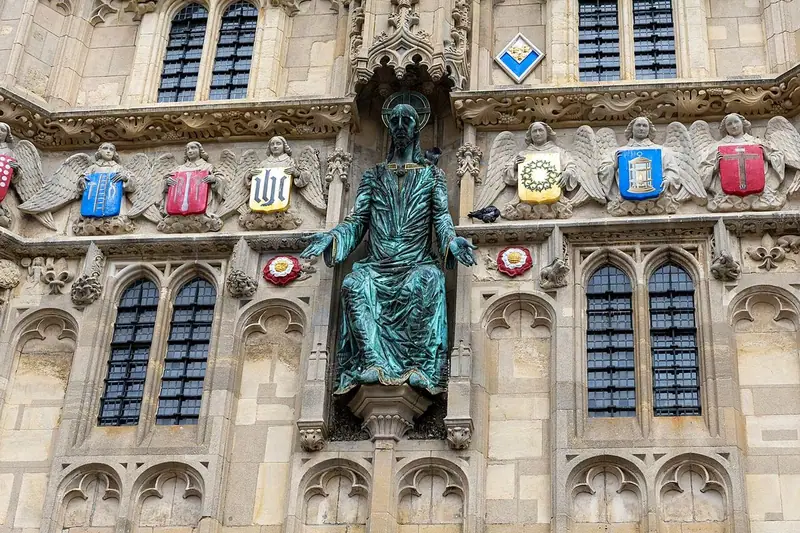
Canterbury Cathedral audio guide
Stand where Thomas Becket was murdered, then descend to the crypt and rise to the Trinity Chapel.
 Plantagenet8 stops · 1283–1289
Conwy Castle and Town Walls audio guide
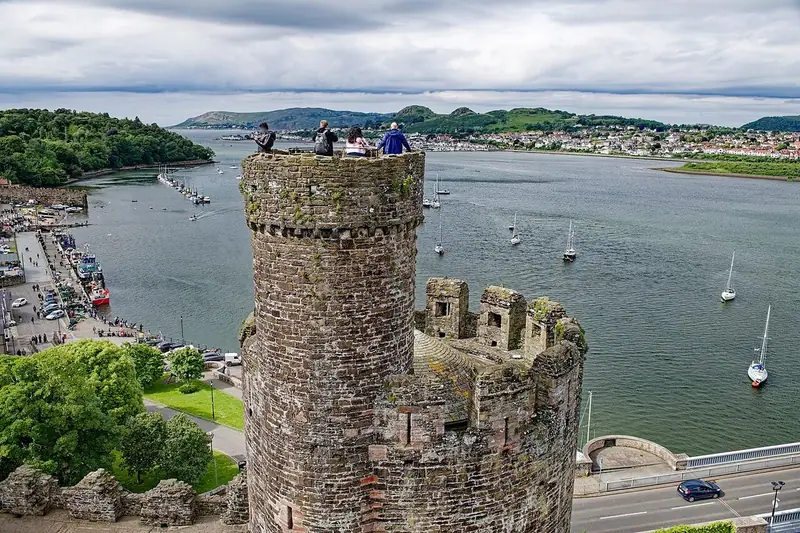
The walls of one of Europe’s finest medieval walled towns, and the mighty castle of Edward I above the River Conwy.
Every guide, in every country
Heart of Neolithic Orkney and every other guide we publish, including future ones. One payment, no subscription.