Before you start
The National Gallery on Trafalgar Square holds one of the finest collections of Western European painting in the world, from the thirteenth century to 1900. It belongs to the nation, and entry to the collection is free. The route begins on the portico, crosses the mosaic floors of the entrance hall, and visits masterpieces by Van Eyck, Holbein, Velázquez, Turner, Constable and Van Gogh. Allow two to three hours. The gallery sometimes moves paintings, so check the floor plan for the ones you most want to see.
Use it as a self-guided tour of the National Gallery: 8 stops in visit order, each played when you’re ready, at your own pace.
 Free preview · Stop 1
The Portico
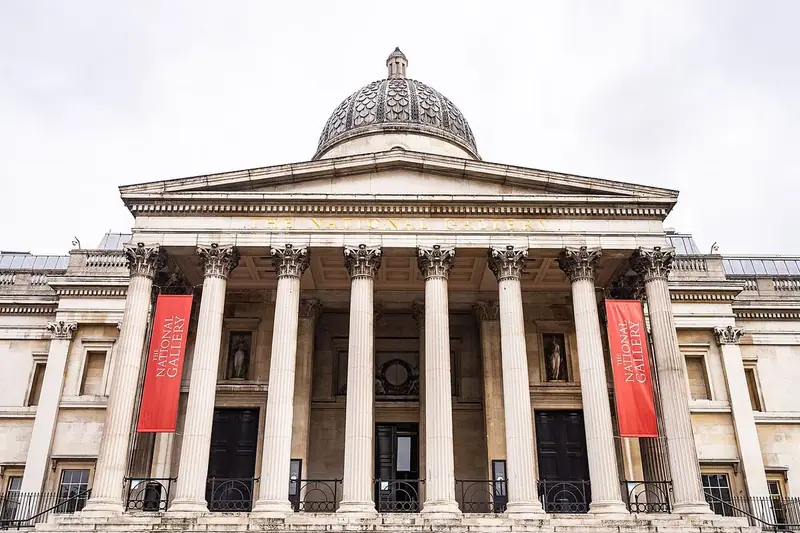
Begin on the terrace in front of the gallery, beneath its portico of columns. This front by William Wilkins, finished in 1838, is the only part of his building that remains largely unchanged. The columns are said to have been reused from Carlton House, the demolished palace of King George the Fourth. Turn round and look out over Trafalgar Square, laid out in the early nineteenth century, with Nelson’s Column at its centre. The site was chosen on purpose. It stood between the wealthy West End and the poorer districts to the east, so that people of all classes could visit. To your left, beyond the main building, is the Sainsbury Wing, opened in 1991. An earlier design for it was dropped after the Prince of Wales called it a monstrous carbuncle. Now go in through the main doors.
Photo: Wei-Te Wong from Taipei City, Taiwan, Republic of China · CC BY-SA 2.0 · Wikimedia Commons
What to see at the National Gallery: 8 stops, in visit order
- 01
 The PorticoLooking over Trafalgar SquareFree preview
- 02
 The Entrance HallMosaics underfootIn the guide
- 03
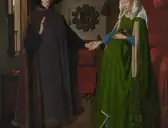 The Arnolfini PortraitA mirror in BrugesIn the guide
- 04
 The AmbassadorsA skull in disguiseIn the guide
- 05
 The Rokeby VenusVelázquez and the suffragetteIn the guide
- 06
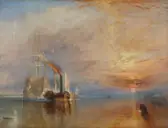 Turner and ConstableTwo views of EnglandIn the guide
- 07
 The ImpressionistsPainting the momentIn the guide
- 08
 SunflowersVan Gogh’s yellowIn the guide
History of the National Gallery
Unlike most great European galleries, the National Gallery did not begin with a royal collection. In 1824 the government bought thirty-eight paintings from the estate of the banker John Julius Angerstein, and showed them in his house on Pall Mall. Gifts from Sir George Beaumont and others followed. The architect William Wilkins designed the present building on the new Trafalgar Square, and it opened in 1838. Its first director, Sir Charles Eastlake, bought many early Italian and Netherlandish paintings. The building was enlarged many times, and in 1991 the Sainsbury Wing by Robert Venturi and Denise Scott Brown was added to the west.
The National Gallery guide: questions
How many stops does the National Gallery guide have?
8 stops, in visit order: 1. The Portico; 2. The Entrance Hall; 3. The Arnolfini Portrait; 4. The Ambassadors; 5. The Rokeby Venus; 6. Turner and Constable; 7. The Impressionists; 8. Sunflowers.
Can I do a self-guided tour of the National Gallery with this guide?
Yes. The guide is made for a self-guided tour: 8 stops in visit order, each with a photo, a story and a voice, so you can explore the National Gallery at your own pace, without joining a group. Download it before you go and it works offline.
How long is each guide?
The 8 stops add up to about 6 minutes of listening in total. You play each stop when you’re ready, so you can go at your own pace.
Does the guide work offline?
Yes, once it’s downloaded. The guide is a single self-contained web page (about 7.3 MB) with the photos, text and audio built in. Download it to your phone before you go (Wi-Fi is best); after that it opens in any modern browser on iPhone or Android, with no app, account or mobile signal needed.
Does it use GPS or need my location?
No. The guide doesn’t use GPS and doesn’t know where you are: you play each stop when you reach it. It works on iPhone and Android in any modern browser, and it’s in English.
What’s included?
One self-contained HTML guide: 8 stops in visit order, each with a photo, text and a voice, plus the story of who built the site.
Who built the National Gallery?
Unlike most great European galleries, the National Gallery did not begin with a royal collection. In 1824 the government bought thirty-eight paintings from the estate of the banker John Julius Angerstein, and showed them in his house on Pall Mall.
Is there a free audio guide to the National Gallery?
The first stop, The Portico, is free to read and hear on this page, so you can try the National Gallery audio tour before you buy. The full guide, with all 8 stops, is a one-off purchase: download it once and it’s yours to keep, working offline.
Is the National Gallery guide worth it?
If you’d like to know what you’re looking at, yes. For $10 you get 8 stops in visit order, each with a photo, a short history and a voice you play when you’re ready, about 6 minutes of listening in all. It’s short on purpose, so you spend your time looking, not listening. It’s yours to keep, works offline and needs no app. The first stop is free on this page, so you can try it before you buy. If you’d like hours of detail, a guided tour will go deeper.
Audio guide or guided tour?
It depends how you like to visit. This guide lets you explore the National Gallery at your own pace, at any time, for a one-off price. A guided tour gives you a live expert you can ask questions, but at fixed times and usually for a higher price. Many people use both: a tour for the big picture, and the guide to read beforehand or to revisit the stops in their own time.
Is this the official National Gallery guide?
No. It’s an independent guide by The Historian Guide, not affiliated with or endorsed by the operator of the National Gallery. For tickets and opening hours, check the official site operator before you go.
Does the guide include entry tickets or opening hours?
No. The guide is a digital companion only. Admission to the National Gallery is separate, so check the official site operator for current tickets and opening hours before you go.
- Stop 1 · The Portico: Wei-Te Wong from Taipei City, Taiwan, Republic of China · CC BY-SA 2.0 · Wikimedia Commons · resized
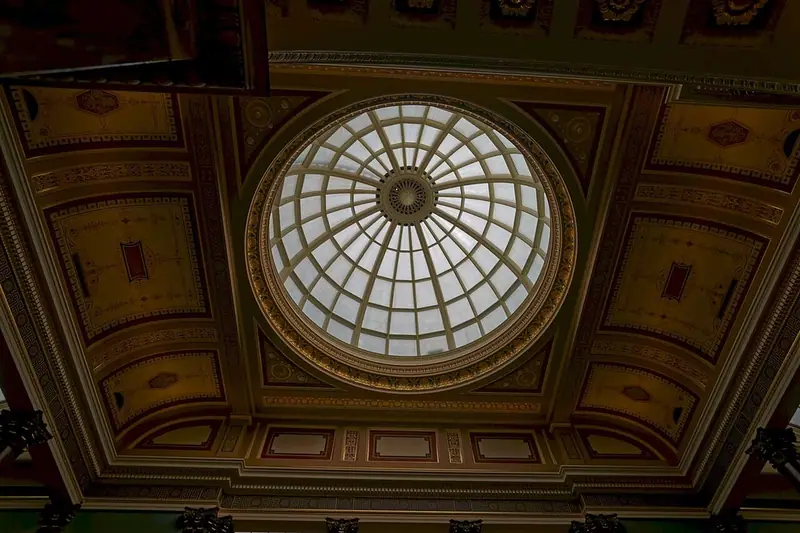
- Stop 2 · The Entrance Hall (also the cover): Txllxt TxllxT · CC BY-SA 4.0 · Wikimedia Commons · resized
- Stop 3 · The Arnolfini Portrait: Jan van Eyck · Public domain · Wikimedia Commons · resized
- Stop 4 · The Ambassadors: Hans Holbein the Younger · Public domain · Wikimedia Commons · resized
- Stop 5 · The Rokeby Venus: Diego Velázquez · Public domain · Wikimedia Commons · resized
- Stop 6 · Turner and Constable: J. M. W. Turner · Public domain · Wikimedia Commons · resized
- Stop 7 · The Impressionists: Georges Seurat · Public domain · Wikimedia Commons · resized
- Stop 8 · Sunflowers: Vincent van Gogh · Public domain · Wikimedia Commons · resized


All photographs from Wikimedia Commons under the licences shown.
More guides in United Kingdom
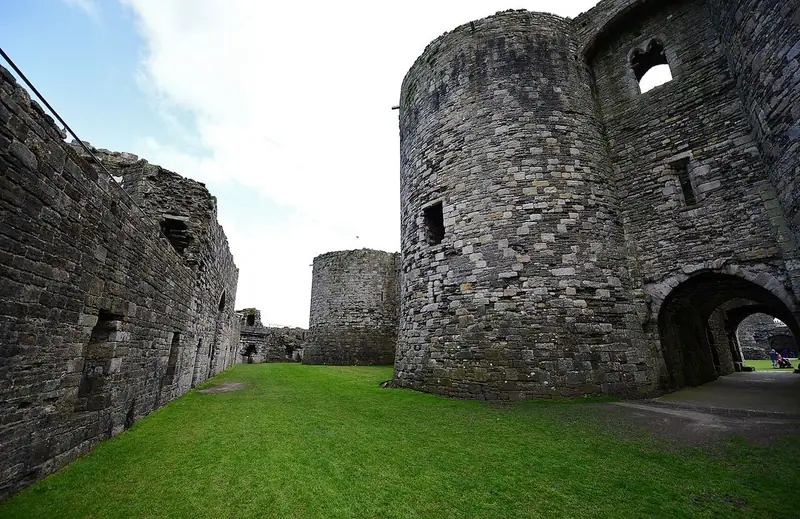 Edwardian8 stops · 1295–1330
Beaumaris audio guide
Explore Edward I’s never-finished castle at the entrance to the Menai Strait, one of the most perfectly planned in Europe, then the old gaol and pier.
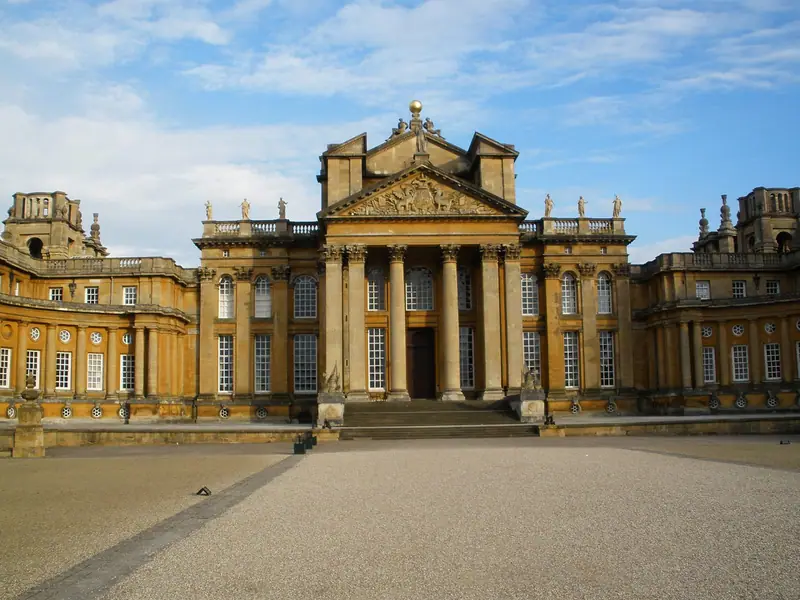 Stuart and Georgian England9 stops · 1705 – 1722 (construction)
Blenheim Palace audio guide
The Baroque palace built for the Duke of Marlborough after the Battle of Blenheim, birthplace of Winston Churchill, set in a landscape park by Capability Brown.
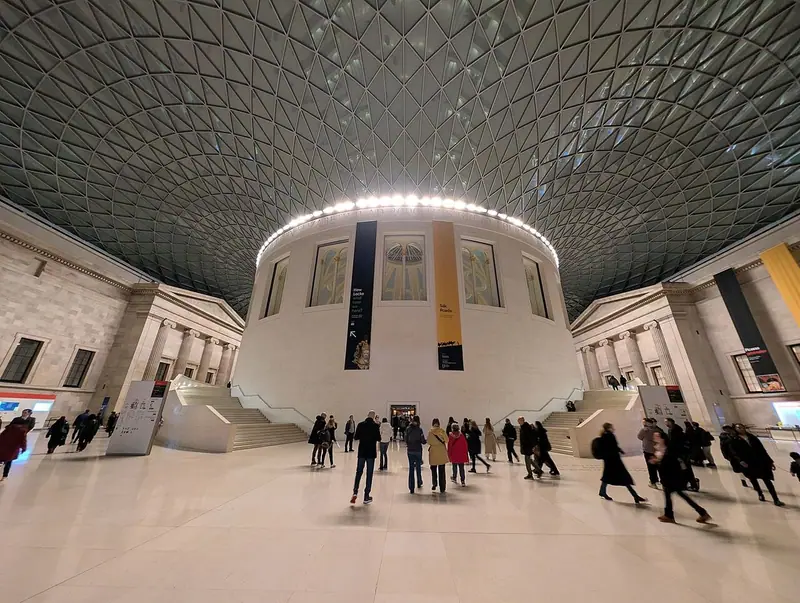 Georgian and Victorian Britain8 stops · Georgian and Victorian
The British Museum audio guide
Pass the portico and the Great Court to the Rosetta Stone, the winged bulls of Assyria, the Parthenon Sculptures and the Lewis Chessmen.
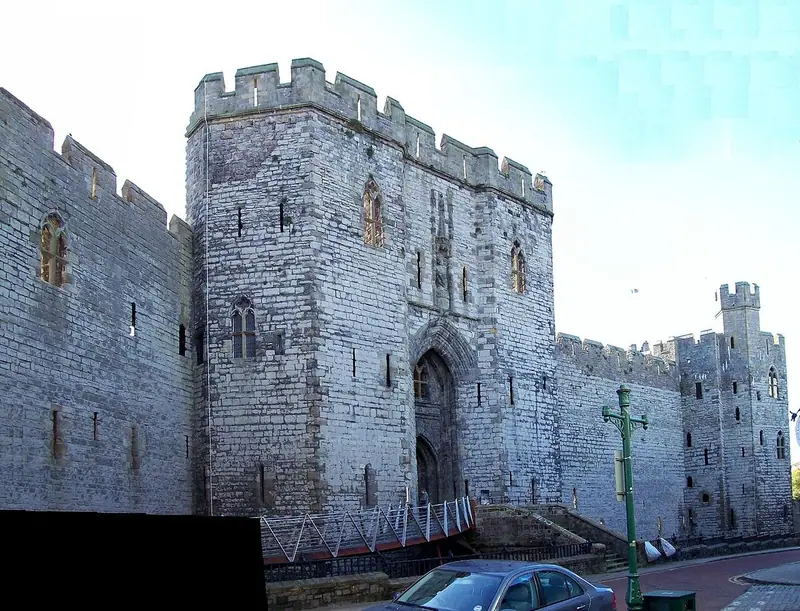 Plantagenet7 stops · 1283–1330
Caernarfon Castle audio guide
Edward I’s fortress-palace on the Menai Strait, with its banded walls and the Eagle Tower.
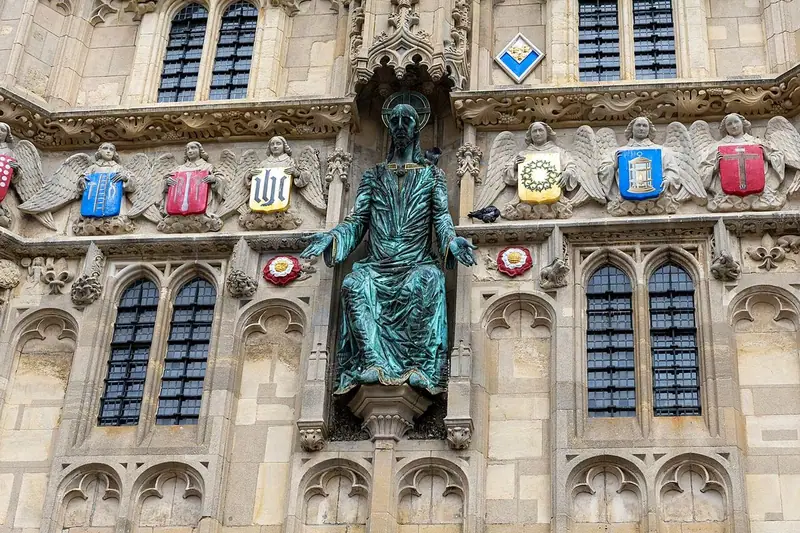 Gothic8 stops · 1070–1503
Canterbury Cathedral audio guide
Stand where Thomas Becket was murdered, then descend to the crypt and rise to the Trinity Chapel.
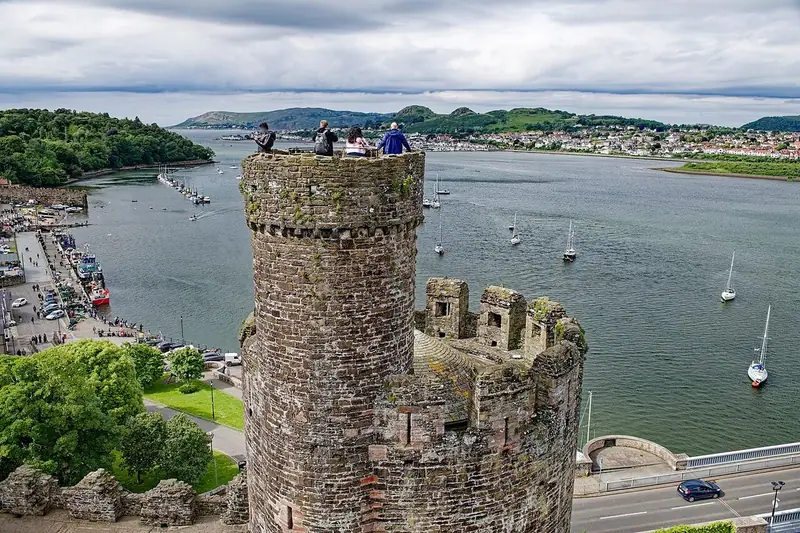 Plantagenet8 stops · 1283–1289
Conwy Castle and Town Walls audio guide
The walls of one of Europe’s finest medieval walled towns, and the mighty castle of Edward I above the River Conwy.
Every guide, in every country
The National Gallery and every other guide we publish, including future ones. One payment, no subscription.