Before you start
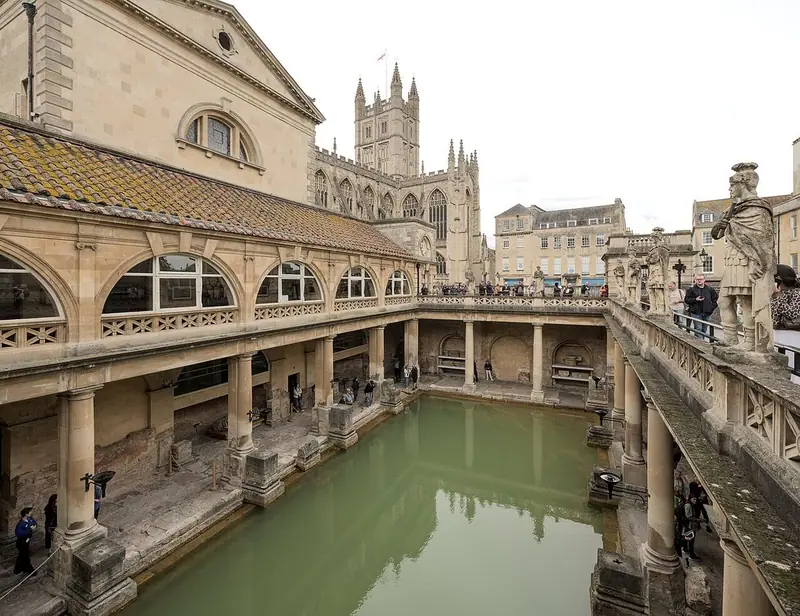
The Roman Baths lie in the centre of the city of Bath, in Somerset, next to Bath Abbey and about ten minutes’ walk from Bath Spa railway station. Hot water rises naturally here, more than a million litres a day at about 46 degrees Celsius, and it still flows through the ancient baths. The site is run by Bath and North East Somerset Council and lies within the City of Bath World Heritage Site, inscribed by UNESCO in 1987. The visit is a one-way route that begins on the Victorian terrace above the Great Bath and then goes down, below today’s streets, to the remains of the Roman temple and bathing complex. This guide follows that route: the terrace, the temple pediment, the temple courtyard, the head of Minerva, the Sacred Spring, the Great Bath, and the East and West Baths.
Use it as a self-guided tour of the Roman Baths: 7 stops in visit order, each played when you’re ready, at your own pace.
 Free preview · Stop 1
The Terrace
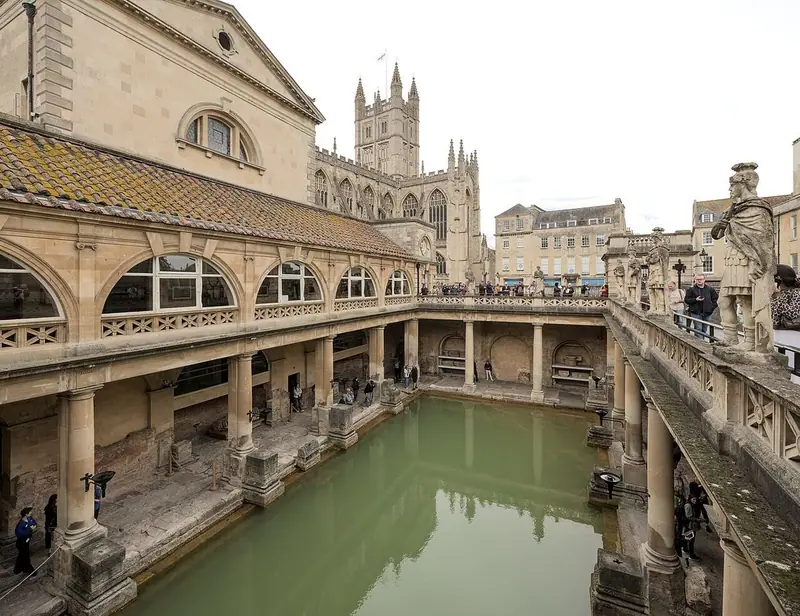
Begin on the terrace that runs around the top of the Great Bath, open to the sky. This is not Roman: the terrace and its row of statues were built by the Victorians, and the statues, of Roman emperors and governors of Britain, date from 1894. They are the Victorian idea of a Roman past. The ground level of the city has risen by several metres since Roman times, so the Romans walked far below you, at the level of the steaming green water. Look across to the tower of Bath Abbey and, at the far end, to the Georgian Pump Room, where fashionable visitors came to take the waters in the eighteenth century. Lean over the balustrade and you can see the whole plan of the bath, with its steps, its pillar bases and the walkways around the pool.
Photo: Daniel Lu · CC BY-SA 4.0 · Wikimedia Commons
What to see at the Roman Baths: 7 stops, in visit order
- 01
 The TerraceAbove the Great BathFree preview
- 02
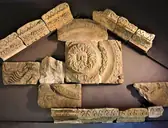 The Temple PedimentThe Gorgon’s headIn the guide
- 03
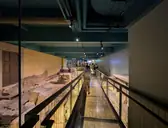 The Temple CourtyardWhere sacrifices were madeIn the guide
- 04
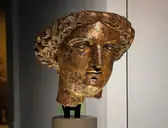 The Head of MinervaGilt bronze from the templeIn the guide
- 05
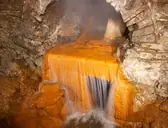 The Sacred SpringWhere the hot water risesIn the guide
- 06
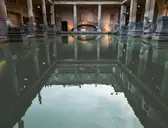 The Great BathThe heart of the complexIn the guide
- 07
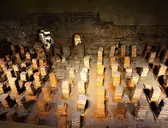 The East and West BathsHeated rooms and plunge poolsIn the guide
History of the Roman Baths
The baths and temple were built by the Romans and the people of Roman Britain. Roman civilisation grew from the city of Rome, traditionally founded in 753 BCE, into an empire that ruled the Mediterranean and much of Europe; the western half of the empire ended in 476 CE. The Romans invaded Britain in 43 CE under the emperor Claudius, and Britain remained a Roman province until the early fifth century. Here, at a hot spring already sacred to the local Celtic goddess Sulis, they built a temple to Sulis Minerva, joining her with the Roman goddess Minerva, probably in the decades after the conquest, and then a great bathing complex. The town that grew up around them was called Aquae Sulis. After Roman rule ended the buildings decayed and were buried, and they were uncovered from the eighteenth century onwards, with major excavations in Victorian times.
Roman Baths guide: questions
How many stops does the Roman Baths guide have?
7 stops, in visit order: 1. The Terrace; 2. The Temple Pediment; 3. The Temple Courtyard; 4. The Head of Minerva; 5. The Sacred Spring; 6. The Great Bath; 7. The East and West Baths.
Can I do a self-guided tour of the Roman Baths with this guide?
Yes. The guide is made for a self-guided tour: 7 stops in visit order, each with a photo, a story and a voice, so you can explore the Roman Baths at your own pace, without joining a group. Download it before you go and it works offline.
How long is each guide?
The 7 stops add up to about 5 minutes of listening in total. You play each stop when you’re ready, so you can go at your own pace.
Does the guide work offline?
Yes, once it’s downloaded. The guide is a single self-contained web page (about 6.1 MB) with the photos, text and audio built in. Download it to your phone before you go (Wi-Fi is best); after that it opens in any modern browser on iPhone or Android, with no app, account or mobile signal needed.
Does it use GPS or need my location?
No. The guide doesn’t use GPS and doesn’t know where you are: you play each stop when you reach it. It works on iPhone and Android in any modern browser, and it’s in English.
What’s included?
One self-contained HTML guide: 7 stops in visit order, each with a photo, text and a voice, plus the story of who built the site.
Who built the Roman Baths?
The baths and temple were built by the Romans and the people of Roman Britain. Roman civilisation grew from the city of Rome, traditionally founded in 753 BCE, into an empire that ruled the Mediterranean and much of Europe; the western half of the empire ended in 476 CE.
Where is the Roman Baths?
The Roman Baths lie in the centre of the city of Bath, in Somerset, next to Bath Abbey and about ten minutes’ walk from Bath Spa railway station.
Is there a free audio guide to the Roman Baths?
The first stop, The Terrace, is free to read and hear on this page, so you can try the Roman Baths audio tour before you buy. The full guide, with all 7 stops, is a one-off purchase: download it once and it’s yours to keep, working offline.
Is the Roman Baths guide worth it?
If you’d like to know what you’re looking at, yes. For $10 you get 7 stops in visit order, each with a photo, a short history and a voice you play when you’re ready, about 5 minutes of listening in all. It’s short on purpose, so you spend your time looking, not listening. It’s yours to keep, works offline and needs no app. The first stop is free on this page, so you can try it before you buy. If you’d like hours of detail, a guided tour will go deeper.
Audio guide or guided tour?
It depends how you like to visit. This guide lets you explore the Roman Baths at your own pace, at any time, for a one-off price. A guided tour gives you a live expert you can ask questions, but at fixed times and usually for a higher price. Many people use both: a tour for the big picture, and the guide to read beforehand or to revisit the stops in their own time.
Is this the official Roman Baths guide?
No. It’s an independent guide by The Historian Guide, not affiliated with or endorsed by the operator of the Roman Baths. For tickets and opening hours, check the official site operator before you go.
Does the guide include entry tickets or opening hours?
No. The guide is a digital companion only. Admission to the Roman Baths is separate, so check the official site operator for current tickets and opening hours before you go.
- Stop 1 · The Terrace (also the cover): Daniel Lu (User:dllu) · CC BY-SA 4.0 · Wikimedia Commons · resized
- Stop 2 · The Temple Pediment: Joyofmuseums · CC BY-SA 4.0 · Wikimedia Commons · resized
- Stop 3 · The Temple Courtyard: Andy Li · CC0 · Wikimedia Commons · resized
- Stop 4 · The Head of Minerva: Andy Li · CC0 · Wikimedia Commons · resized
- Stop 5 · The Sacred Spring: -JvL- · CC BY 2.0 · Wikimedia Commons · resized
- Stop 6 · The Great Bath: Grand Parc - Bordeaux, France from France · CC BY 2.0 · Wikimedia Commons · resized
- Stop 7 · The East and West Baths: Joyofmuseums · CC BY-SA 4.0 · Wikimedia Commons · resized


All photographs from Wikimedia Commons under the licences shown.
More guides in United Kingdom
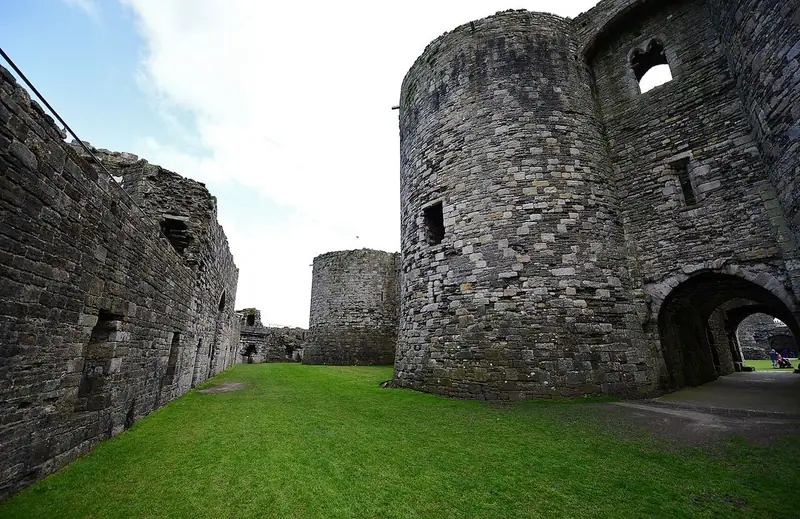 Edwardian8 stops · 1295–1330
Beaumaris audio guide
Explore Edward I’s never-finished castle at the entrance to the Menai Strait, one of the most perfectly planned in Europe, then the old gaol and pier.
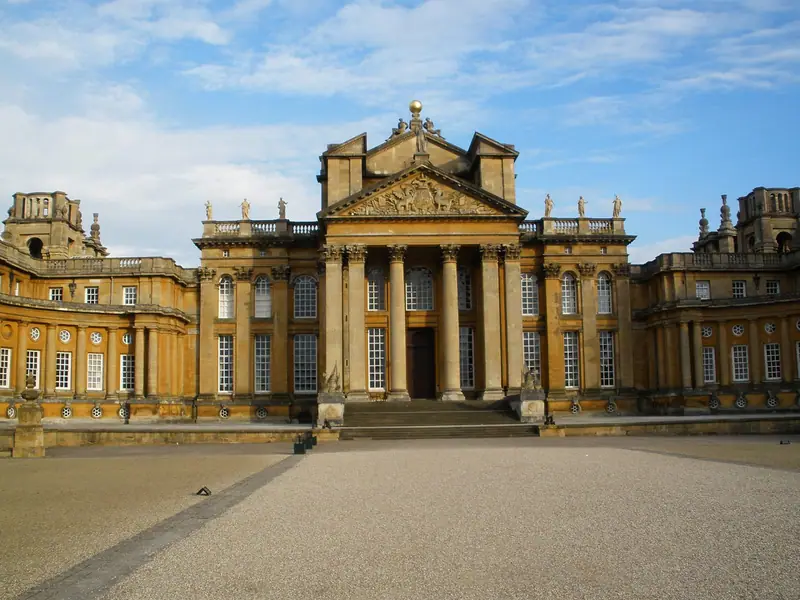 Stuart and Georgian England9 stops · 1705 – 1722 (construction)
Blenheim Palace audio guide
The Baroque palace built for the Duke of Marlborough after the Battle of Blenheim, birthplace of Winston Churchill, set in a landscape park by Capability Brown.
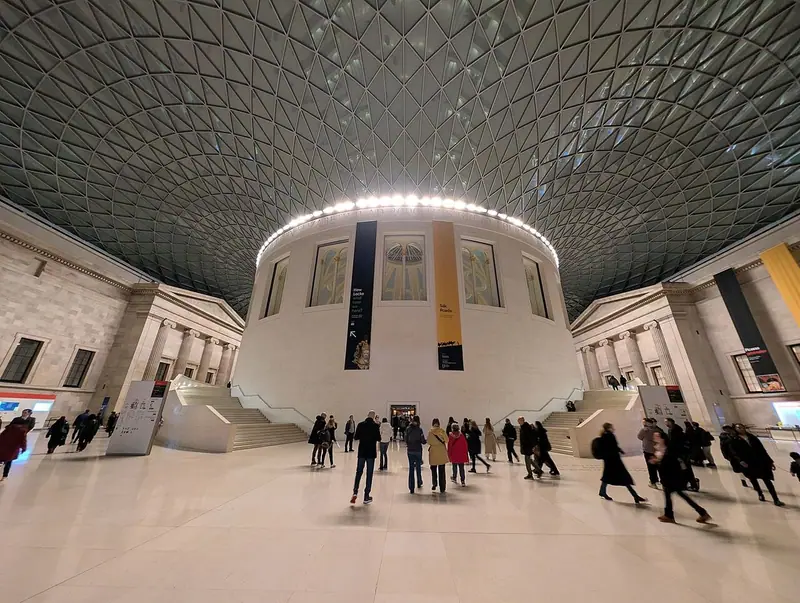 Georgian and Victorian Britain8 stops · Georgian and Victorian
The British Museum audio guide
Pass the portico and the Great Court to the Rosetta Stone, the winged bulls of Assyria, the Parthenon Sculptures and the Lewis Chessmen.
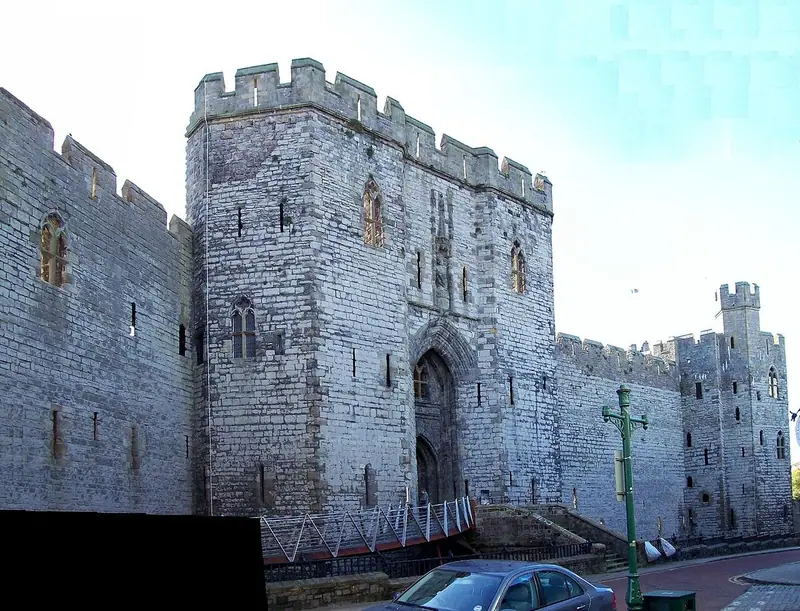 Plantagenet7 stops · 1283–1330
Caernarfon Castle audio guide
Edward I’s fortress-palace on the Menai Strait, with its banded walls and the Eagle Tower.
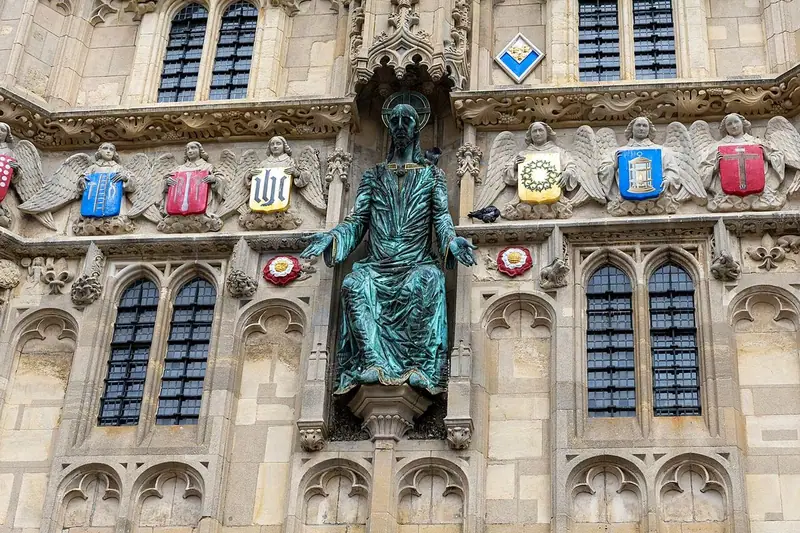 Gothic8 stops · 1070–1503
Canterbury Cathedral audio guide
Stand where Thomas Becket was murdered, then descend to the crypt and rise to the Trinity Chapel.
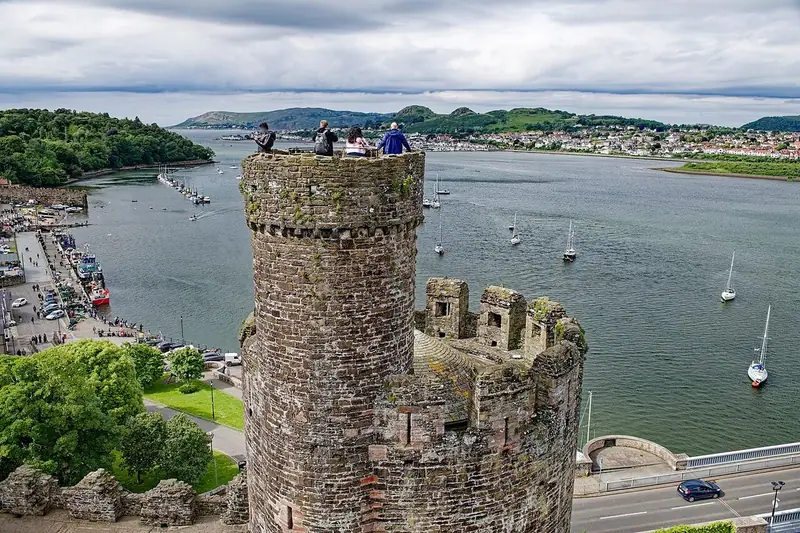 Plantagenet8 stops · 1283–1289
Conwy Castle and Town Walls audio guide
The walls of one of Europe’s finest medieval walled towns, and the mighty castle of Edward I above the River Conwy.
Every guide, in every country
Roman Baths and every other guide we publish, including future ones. One payment, no subscription.