Before you start
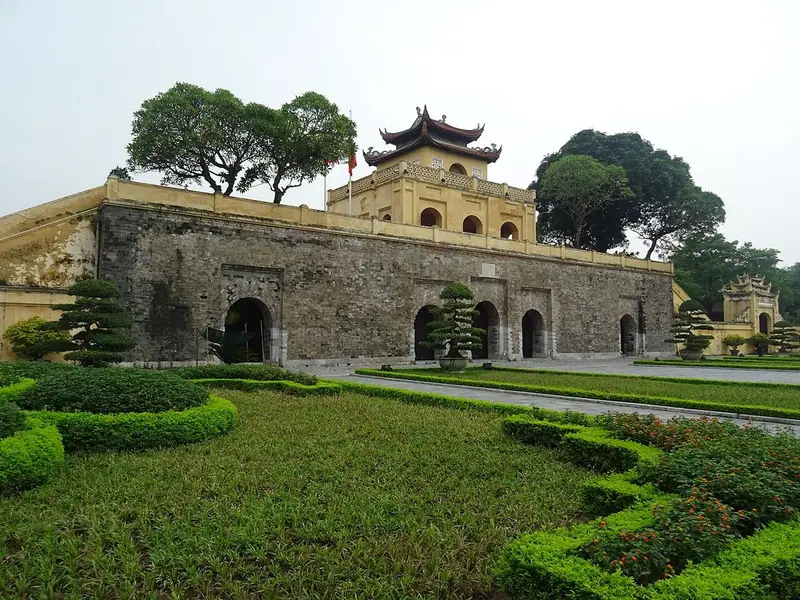
The Imperial Citadel of Thăng Long, in the Ba Đình area of central Hà Nội, was the seat of Vietnamese kings for almost eight centuries. UNESCO describes the site as a centre of political power for almost thirteen centuries, from a Chinese fortress of the seventh century to the present day. In 2010 the Central Sector of the citadel was inscribed as a World Heritage Site, in the year Hà Nội celebrated a thousand years since the founding of Thăng Long. Few old buildings survive above ground, because the French demolished most of the citadel in the late nineteenth century, but excavations have uncovered layer upon layer of palaces beneath. This route begins at the Flag Tower, passes through the main gate to the throne hall and the rear palace, visits the North Gate, and ends at the archaeological site at 18 Hoàng Diệu Street.
Use it as a self-guided tour of the Imperial Citadel of Thăng Long: 7 stops in visit order, each played when you’re ready, at your own pace.
 Free preview · Stop 1
The Flag Tower
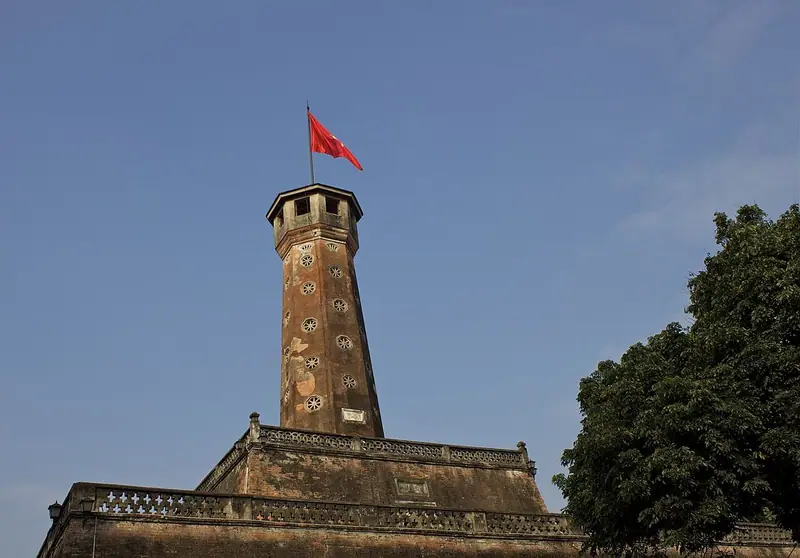
Begin on Điện Biên Phủ Street, in front of the Flag Tower of Hà Nội. It was built in 1812, under the Nguyễn emperor Gia Long, as part of his rebuilding of the citadel. The tower stands on a base of three square, stepped terraces, and the tower itself, a tapering octagonal column of brick, is more than thirty metres high, with a flagpole on top. Look for the small windows in the brickwork. It is said to stand on the foundations of a gate of the Lê dynasty palace. Unlike most of the citadel, it was spared by the French, who used it as a military post, and it has become one of the symbols of the city. Today the national flag flies from it. Then walk the short distance to the citadel’s main gate.
Photo: Chelsea Hicks · CC BY 2.0 · Wikimedia Commons
What to see at the Imperial Citadel of Thăng Long: 7 stops, in visit order
- 01
 The Flag TowerSymbol of Hà NộiFree preview
- 02
 Đoan MônThe main gateIn the guide
- 03
 The Dragon Steps of Kính ThiênThe throne hall of the LêIn the guide
- 04
 Building D67Headquarters of a warIn the guide
- 05
 Hậu LâuThe rear palaceIn the guide
- 06
 The North GateScars of battleIn the guide
- 07
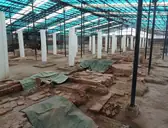 18 Hoàng Diệu StreetThirteen centuries undergroundIn the guide
Site map of the Imperial Citadel of Thăng Long
History of the Imperial Citadel of Thăng Long
The citadel was founded by the Lý dynasty, which ruled the kingdom of Đại Việt from 1009 to 1225, and was rebuilt by the dynasties that followed. In 1010 Emperor Lý Thái Tổ moved his capital here, onto the site of an earlier Chinese fortress, and named the city Thăng Long, the Ascending Dragon. The Trần, Lê and Mạc dynasties all ruled from the citadel and rebuilt its palaces. It remained the seat of the court until 1789, and in 1802 the Nguyễn dynasty moved the capital to Huế. In 1805 Emperor Gia Long rebuilt the citadel on a smaller scale, with walls in the European manner. After the French took control, they demolished most of it at the end of the nineteenth century, and from 1954 the Vietnamese army made its headquarters here.
Imperial Citadel of Thăng Long guide: questions
How many stops does the Imperial Citadel of Thăng Long guide have?
7 stops, in visit order: 1. The Flag Tower; 2. Đoan Môn; 3. The Dragon Steps of Kính Thiên; 4. Building D67; 5. Hậu Lâu; 6. The North Gate; 7. 18 Hoàng Diệu Street.
Can I do a self-guided tour of the Imperial Citadel of Thăng Long with this guide?
Yes. The guide is made for a self-guided tour: 7 stops in visit order, each with a photo, a story and a voice, so you can explore the Imperial Citadel of Thăng Long at your own pace, without joining a group. Download it before you go and it works offline.
How long is each guide?
The 7 stops add up to about 5 minutes of listening in total. You play each stop when you’re ready, so you can go at your own pace.
Does the guide work offline?
Yes, once it’s downloaded. The guide is a single self-contained web page (about 6.8 MB) with the photos, text and audio built in. Download it to your phone before you go (Wi-Fi is best); after that it opens in any modern browser on iPhone or Android, with no app, account or mobile signal needed.
Does it use GPS or need my location?
No. The guide doesn’t use GPS and doesn’t know where you are: you play each stop when you reach it. It works on iPhone and Android in any modern browser, and it’s in English.
What’s included?
One self-contained HTML guide: 7 stops in visit order, each with a photo, text and a voice, plus the story of who built the site.
Who built the Imperial Citadel of Thăng Long?
The citadel was founded by the Lý dynasty, which ruled the kingdom of Đại Việt from 1009 to 1225, and was rebuilt by the dynasties that followed. In 1010 Emperor Lý Thái Tổ moved his capital here, onto the site of an earlier Chinese fortress, and named the city Thăng Long, the Ascending Dragon.
Where is the Imperial Citadel of Thăng Long?
The Imperial Citadel of Thăng Long, in the Ba Đình area of central Hà Nội, was the seat of Vietnamese kings for almost eight centuries.
Is there a free audio guide to the Imperial Citadel of Thăng Long?
The first stop, The Flag Tower, is free to read and hear on this page, so you can try the Imperial Citadel of Thăng Long audio tour before you buy. The full guide, with all 7 stops, is a one-off purchase: download it once and it’s yours to keep, working offline.
Is the Imperial Citadel of Thăng Long guide worth it?
If you’d like to know what you’re looking at, yes. For $10 you get 7 stops in visit order, each with a photo, a short history and a voice you play when you’re ready, plus a site map of the stops, and about 5 minutes of listening in all. It’s short on purpose, so you spend your time looking, not listening. It’s yours to keep, works offline and needs no app. The first stop is free on this page, so you can try it before you buy. If you’d like hours of detail, a guided tour will go deeper.
Audio guide or guided tour?
It depends how you like to visit. This guide lets you explore the Imperial Citadel of Thăng Long at your own pace, at any time, for a one-off price. A guided tour gives you a live expert you can ask questions, but at fixed times and usually for a higher price. Many people use both: a tour for the big picture, and the guide to read beforehand or to revisit the stops in their own time.
Is this the official Imperial Citadel of Thăng Long guide?
No. It’s an independent guide by The Historian Guide, not affiliated with or endorsed by the operator of the Imperial Citadel of Thăng Long. For tickets and opening hours, check the official site operator before you go.
Does the guide include entry tickets or opening hours?
No. The guide is a digital companion only. Admission to the Imperial Citadel of Thăng Long is separate, so check the official site operator for current tickets and opening hours before you go.
- Stop 1 · The Flag Tower: Chelsea Hicks · CC BY 2.0 · Wikimedia Commons · resized
- Stop 2 · Đoan Môn (also the cover): Christophe95 · CC BY-SA 4.0 · Wikimedia Commons · resized
- Stop 3 · The Dragon Steps of Kính Thiên: Gryffindor · CC BY-SA 3.0 · Wikimedia Commons · resized
- Stop 4 · Building D67: Christophe95 · CC BY-SA 4.0 · Wikimedia Commons · resized
- Stop 5 · Hậu Lâu: Christophe95 · CC BY-SA 4.0 · Wikimedia Commons · resized
- Stop 6 · The North Gate: Nguyễn Thanh Quang · CC BY-SA 3.0 · Wikimedia Commons · resized
- Stop 7 · 18 Hoàng Diệu Street: Christophe95 · CC BY-SA 4.0 · Wikimedia Commons · resized


All photographs from Wikimedia Commons under the licences shown.
More guides in Vietnam
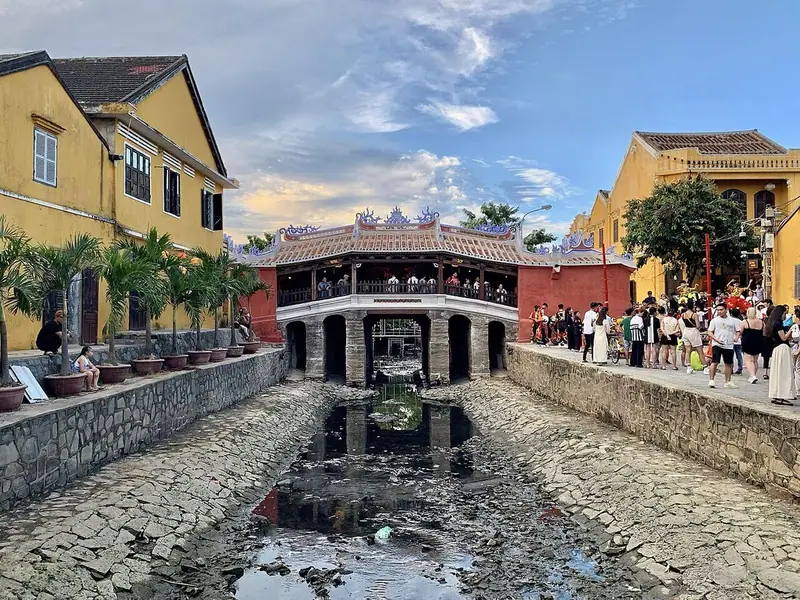 Vietnamese6 stops · 16th–19th century CE
Hội An Ancient Town audio guide
A riverside trading port of merchant houses and assembly halls, from the Japanese Covered Bridge to the Fujian Assembly Hall.
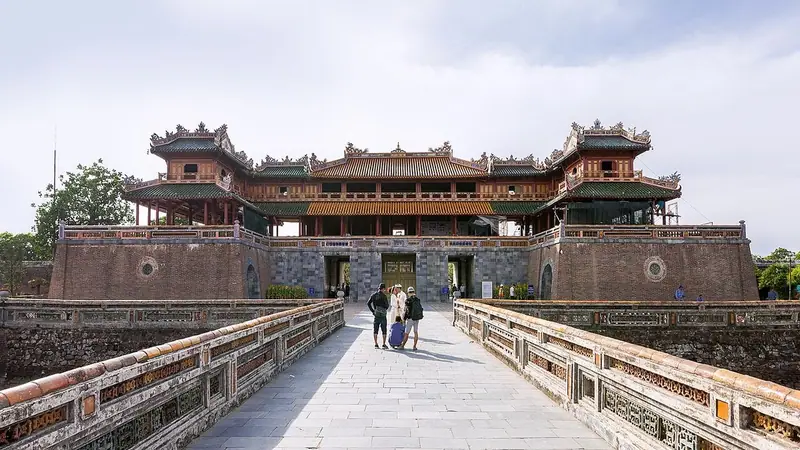 Nguyễn7 stops · 1802–1945 CE
Imperial City of Huế audio guide
Pass the Meridian Gate into the walled palace of Vietnam’s last emperors, to the Hall of Supreme Harmony and the Purple Forbidden City.
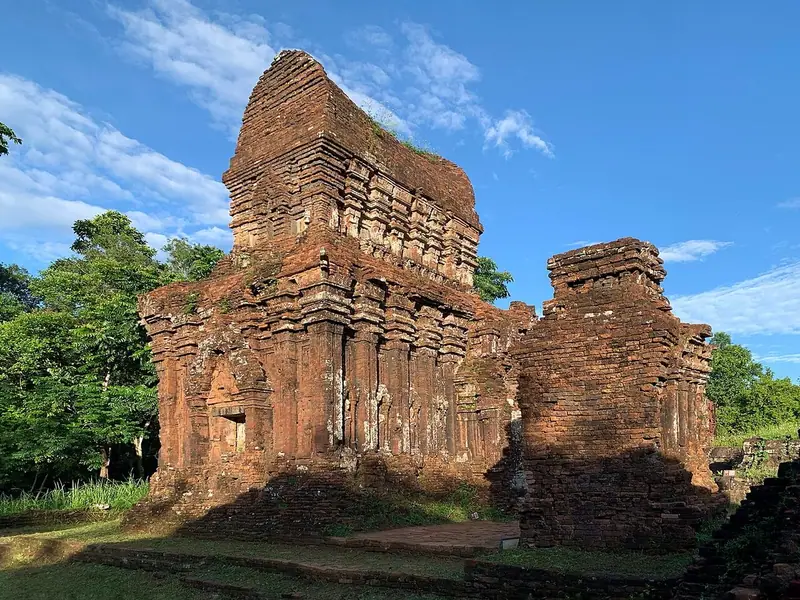 Champa7 stops · c. 400–1243 CE
Mỹ Sơn Sanctuary audio guide
Explore the ruined brick Hindu temples of Champa’s holiest valley, ringed by mountains in central Vietnam.
 Vietnamese6 stops · 1070–1779 CE
Temple of Literature audio guide
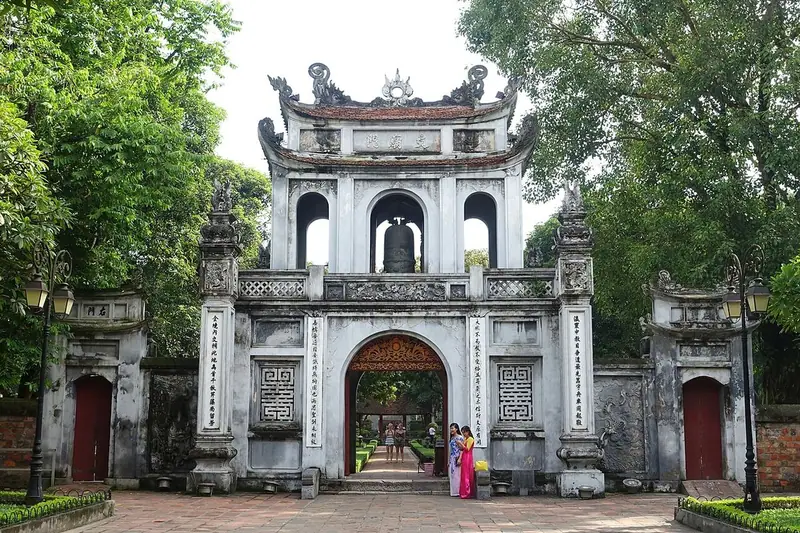
Pass through the courtyards of Vietnam’s first university to the Constellation of Literature Pavilion and the stelae of the doctors.
Every guide, in every country
Imperial Citadel of Thăng Long and every other guide we publish, including future ones. One payment, no subscription.