Before you start
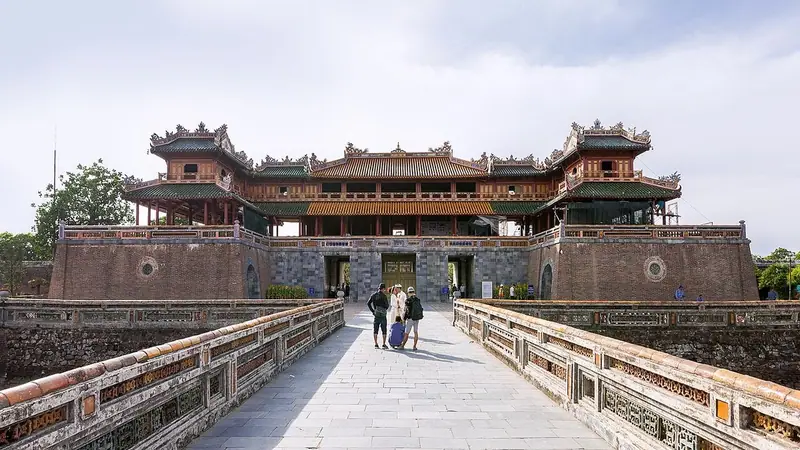
The Imperial City of Huế is the walled palace complex of the Nguyễn emperors, who ruled Vietnam from this city between 1802 and 1945. It stands inside the great citadel on the north bank of the Perfume River, a fortress with walls nearly ten kilometres around, surrounded by a moat. Within the citadel, a second wall and moat enclose the Imperial City, and within that lay the Purple Forbidden City, the private world of the emperor and his household. In 1993 UNESCO inscribed the Complex of Huế Monuments as a World Heritage Site. Much was destroyed in the wars of the twentieth century, and restoration is still under way, so some buildings may be closed or covered in scaffolding. This route begins at the Flag Tower, passes through the Meridian Gate and follows the central axis north, before returning through the palaces and temples on the western side.
Use it as a self-guided tour of the Imperial City of Huế: 7 stops in visit order, each played when you’re ready, at your own pace.
 Free preview · Stop 1
The Flag Tower and the Nine Holy Cannons
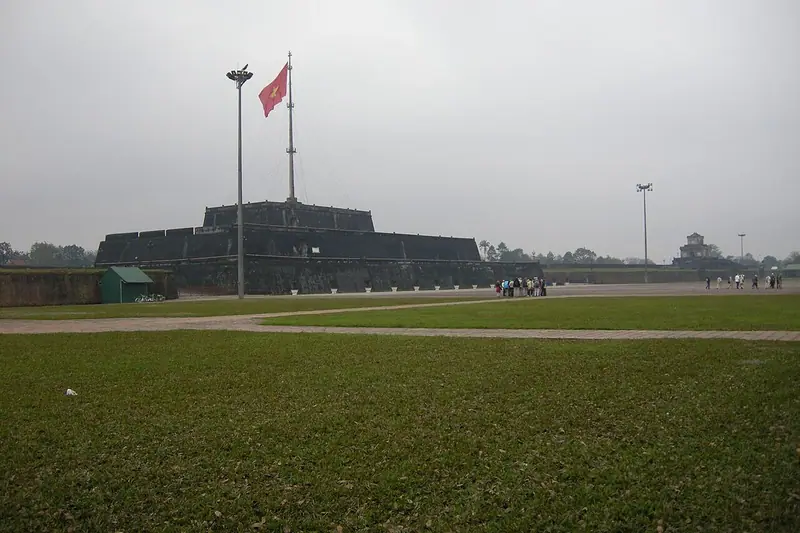
Begin at the Flag Tower, which rises from the southern wall of the citadel, facing the Perfume River. It was built in 1807, under Gia Long, as a stepped brick platform of three tiers, together about seventeen and a half metres high. The original flagpole was wooden; it was replaced several times, and the present concrete pole, put up in 1948, brings the total height to about thirty-seven metres. Here the emperor’s banner flew on ceremonial occasions, and in August 1945 the flag of the new Democratic Republic of Vietnam replaced it. Nearby, in two groups near the citadel’s southern gates, stand the Nine Holy Cannons. Gia Long had them cast in 1803 and 1804 from bronze collected after his victory over the Tây Sơn. Named after the four seasons and the five elements, they were never meant to be fired, and they are now a national treasure.
Photo: Vyacheslav Argenberg · CC BY 4.0 · Wikimedia Commons
What to see at the Imperial City of Huế: 7 stops, in visit order
- 01
 The Flag Tower and the Nine Holy CannonsSymbols of the citadelFree preview
- 02
 The Meridian GateThe emperor’s entranceIn the guide
- 03
 The Hall of Supreme HarmonyThe throne hallIn the guide
- 04
 The Purple Forbidden CityThe emperor’s private worldIn the guide
- 05
 Kiến Trung PalaceThe last emperors’ homeIn the guide
- 06
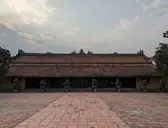 Diên Thọ PalaceThe residence of the queen mothersIn the guide
- 07
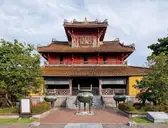 Thế Miếu and the Nine UrnsTemple of the emperorsIn the guide
Site map of the Imperial City of Huế
History of the Imperial City of Huế
The Imperial City was built by the Nguyễn dynasty, the last ruling dynasty of Vietnam, which reigned from 1802 to 1945. In 1802 Nguyễn Phúc Ánh defeated the rival Tây Sơn dynasty, united the country and took the title Emperor Gia Long. He chose Huế, long the seat of his family, the Nguyễn lords, as his capital, and work on the citadel and palace began in 1803 and 1804. Gia Long modelled his court on Chinese ideas of statecraft and his palace partly on the Forbidden City in Beijing, while the walls followed European ideas of fortification. His son, Emperor Minh Mạng, reorganised and enlarged the palace in the 1830s. Thirteen emperors reigned here, though from the 1880s real power lay with the French.
The full history continues in the guide.
Imperial City of Huế guide: questions
How many stops does the Imperial City of Huế guide have?
7 stops, in visit order: 1. The Flag Tower and the Nine Holy Cannons; 2. The Meridian Gate; 3. The Hall of Supreme Harmony; 4. The Purple Forbidden City; 5. Kiến Trung Palace; 6. Diên Thọ Palace; 7. Thế Miếu and the Nine Urns.
Can I do a self-guided tour of the Imperial City of Huế with this guide?
Yes. The guide is made for a self-guided tour: 7 stops in visit order, each with a photo, a story and a voice, so you can explore the Imperial City of Huế at your own pace, without joining a group. Download it before you go and it works offline.
How long is each guide?
The 7 stops add up to about 6 minutes of listening in total. You play each stop when you’re ready, so you can go at your own pace.
Does the guide work offline?
Yes, once it’s downloaded. The guide is a single self-contained web page (about 6.9 MB) with the photos, text and audio built in. Download it to your phone before you go (Wi-Fi is best); after that it opens in any modern browser on iPhone or Android, with no app, account or mobile signal needed.
Does it use GPS or need my location?
No. The guide doesn’t use GPS and doesn’t know where you are: you play each stop when you reach it. It works on iPhone and Android in any modern browser, and it’s in English.
What’s included?
One self-contained HTML guide: 7 stops in visit order, each with a photo, text and a voice, plus the story of who built the site.
Who built the Imperial City of Huế?
The Imperial City was built by the Nguyễn dynasty, the last ruling dynasty of Vietnam, which reigned from 1802 to 1945. In 1802 Nguyễn Phúc Ánh defeated the rival Tây Sơn dynasty, united the country and took the title Emperor Gia Long.
Where is the Imperial City of Huế?
The Imperial City of Huế is the walled palace complex of the Nguyễn emperors, who ruled Vietnam from this city between 1802 and 1945.
Is there a free audio guide to the Imperial City of Huế?
The first stop, The Flag Tower and the Nine Holy Cannons, is free to read and hear on this page, so you can try the Imperial City of Huế audio tour before you buy. The full guide, with all 7 stops, is a one-off purchase: download it once and it’s yours to keep, working offline.
Is the Imperial City of Huế guide worth it?
If you’d like to know what you’re looking at, yes. For $10 you get 7 stops in visit order, each with a photo, a short history and a voice you play when you’re ready, plus a site map of the stops, and about 6 minutes of listening in all. It’s short on purpose, so you spend your time looking, not listening. It’s yours to keep, works offline and needs no app. The first stop is free on this page, so you can try it before you buy. If you’d like hours of detail, a guided tour will go deeper.
Audio guide or guided tour?
It depends how you like to visit. This guide lets you explore the Imperial City of Huế at your own pace, at any time, for a one-off price. A guided tour gives you a live expert you can ask questions, but at fixed times and usually for a higher price. Many people use both: a tour for the big picture, and the guide to read beforehand or to revisit the stops in their own time.
Is this the official Imperial City of Huế guide?
No. It’s an independent guide by The Historian Guide, not affiliated with or endorsed by the operator of the Imperial City of Huế. For tickets and opening hours, check the official site operator before you go.
Does the guide include entry tickets or opening hours?
No. The guide is a digital companion only. Admission to the Imperial City of Huế is separate, so check the official site operator for current tickets and opening hours before you go.
- Stop 1 · The Flag Tower and the Nine Holy Cannons: © Vyacheslav Argenberg · CC BY 4.0 · Wikimedia Commons · resized
- Stop 2 · The Meridian Gate (also the cover): This Photo was taken by Supanut Arunoprayote. Feel free… · CC BY 4.0 · Wikimedia Commons · resized
- Stop 3 · The Hall of Supreme Harmony: This Photo was taken by Supanut Arunoprayote. Feel free… · CC BY 4.0 · Wikimedia Commons · resized
- Stop 4 · The Purple Forbidden City: Christophe95 · CC BY-SA 4.0 · Wikimedia Commons · resized
- Stop 5 · Kiến Trung Palace: Chainwit. · CC BY 4.0 · Wikimedia Commons · resized
- Stop 6 · Diên Thọ Palace: Vano111ru · CC BY-SA 4.0 · Wikimedia Commons · resized
- Stop 7 · Thế Miếu and the Nine Urns: This Photo was taken by Supanut Arunoprayote. Feel free… · CC BY 4.0 · Wikimedia Commons · resized


All photographs from Wikimedia Commons under the licences shown.
More guides in Vietnam
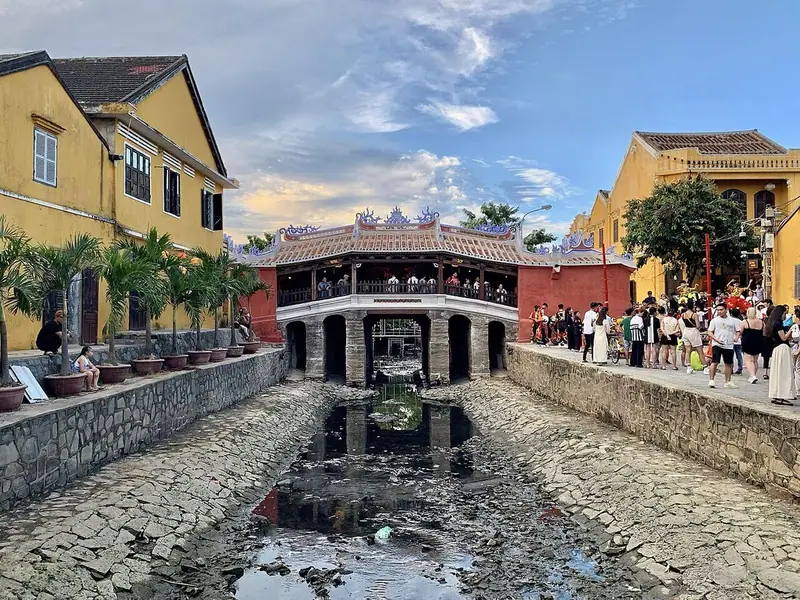 Vietnamese6 stops · 16th–19th century CE
Hội An Ancient Town audio guide
A riverside trading port of merchant houses and assembly halls, from the Japanese Covered Bridge to the Fujian Assembly Hall.
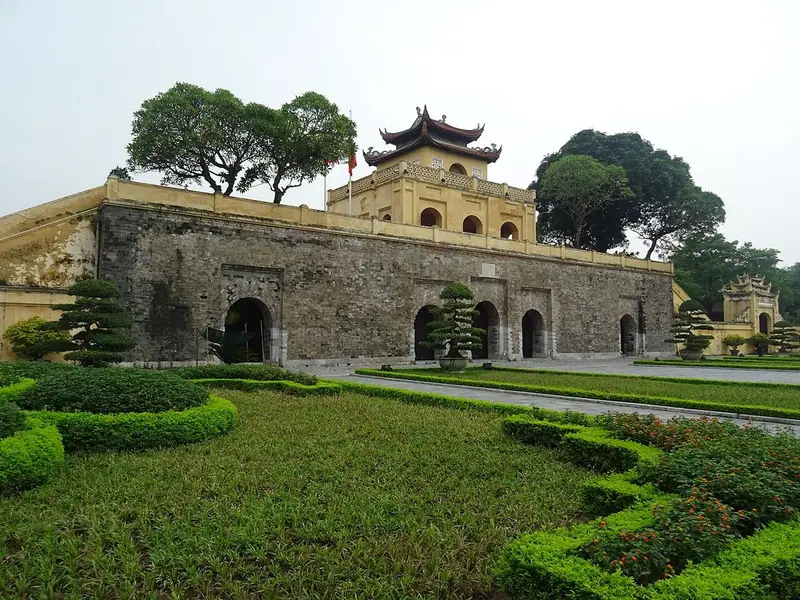 Vietnamese7 stops · 1010–1802 CE
Imperial Citadel of Thăng Long audio guide
Explore the seat of Vietnamese kings for almost eight centuries in central Hà Nội, from the Flag Tower and Đoan Môn to the Dragon Steps.
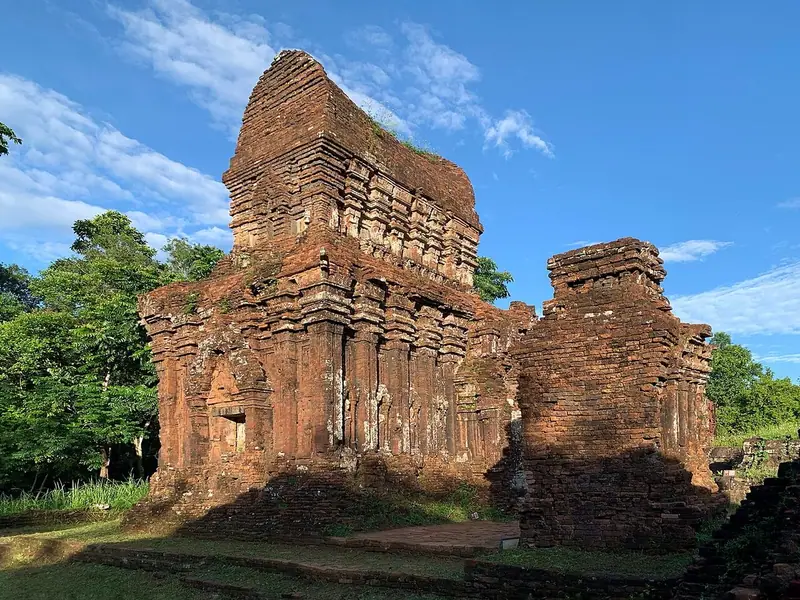 Champa7 stops · c. 400–1243 CE
Mỹ Sơn Sanctuary audio guide
Explore the ruined brick Hindu temples of Champa’s holiest valley, ringed by mountains in central Vietnam.
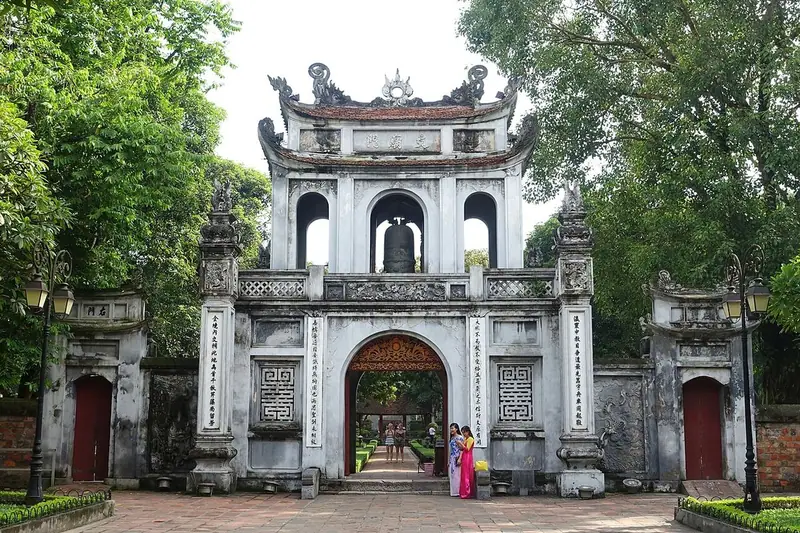 Vietnamese6 stops · 1070–1779 CE
Temple of Literature audio guide
Pass through the courtyards of Vietnam’s first university to the Constellation of Literature Pavilion and the stelae of the doctors.
Every guide, in every country
Imperial City of Huế and every other guide we publish, including future ones. One payment, no subscription.