
Before you start
Badaling, about 80 kilometres north-west of central Beijing, is the most visited section of the Great Wall of China. Here the wall climbs steeply along the crests of the mountains on either side of a narrow pass, its battlements and watchtowers built of grey brick and stone. In 1957 Badaling became the first section of the Great Wall to open to tourists, and it has received many world leaders, including President Richard Nixon of the United States in 1972. The Great Wall has been a UNESCO World Heritage Site since 1987. This guide begins at the fortified pass at the foot of the wall, then follows the northern section uphill, tower by tower, to its highest point. The climb is steep in places, with uneven steps, so go at your own pace and take time to enjoy the views.
Use it as a self-guided tour of the Great Wall at Badaling: 6 stops in visit order, each played when you’re ready, at your own pace.
 Free preview · Stop 1
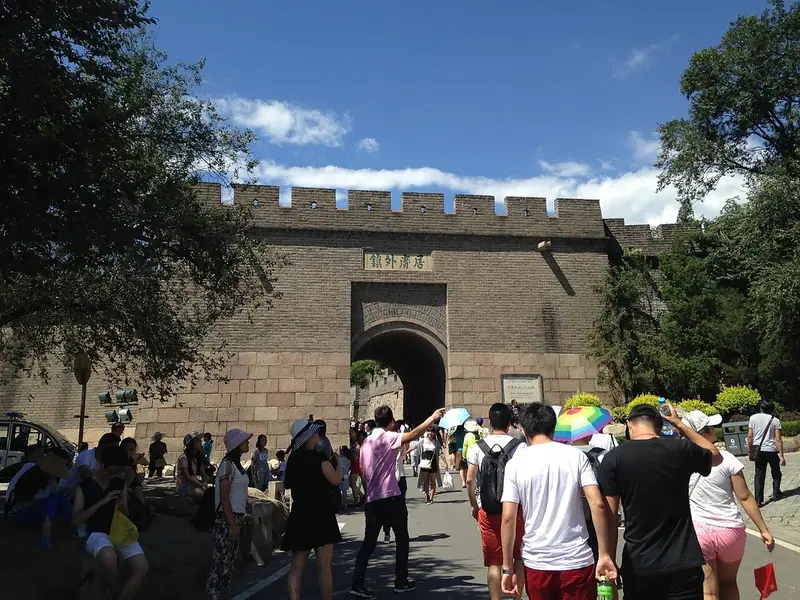
Guancheng Fortress
Begin at the small fortress, known as the Guancheng, which guards the pass at the foot of the wall. It was built by the Ming to protect the Juyong Pass to the south, one of the main routes from the northern steppe to Beijing. The fortress has two gates. Look at the inscription above the eastern gate, which reads Juyong Wai Zhen, meaning the outer garrison of Juyong. The western gate faces the direction from which an attack would come, and its inscription, added in the sixteenth century, means the lock and key of the northern gate. Notice how the walls of the fortress connect directly to the Great Wall rising on either side. Soldiers, horses and supplies could move from here up onto the wall. From the gate, look up at the line of towers climbing the mountains to the north and the south.
Photo: Soramimi · CC BY-SA 4.0 · Wikimedia Commons
What to see at the Great Wall at Badaling: 6 stops, in visit order
- 01
 Guancheng FortressThe pass and its gatesFree preview
- 02
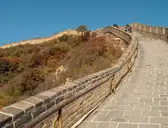 The WallHow it was builtIn the guide
- 03
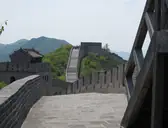 WatchtowersLiving on the wallIn the guide
- 04
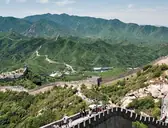 Beacon TowersFire and smokeIn the guide
- 05
 Northern SectionThe steep climbIn the guide
- 06
 North Eighth TowerThe highest pointIn the guide
Site map of the Great Wall at Badaling
History of the Great Wall at Badaling
The Great Wall was not built at one time but over some two thousand years. UNESCO records that it was built from the third century BCE to the seventeenth century CE by successive Chinese empires, along their northern frontier, as a defence against the peoples of the steppe. States of the Warring States period built the first long walls. After unifying China in 221 BCE, the first emperor of the Qin dynasty linked many of them together, and the Han dynasty extended the defences far to the west. The wall at Badaling was built by the Ming dynasty, which ruled China from 1368 to 1644. Facing repeated threats from the Mongols to the north, the Ming built thousands of kilometres of new walls of brick and stone, and the section at Badaling dates from the early sixteenth century.
The full history continues in the guide.
Great Wall at Badaling guide: questions
How many stops does the Great Wall at Badaling guide have?
6 stops, in visit order: 1. Guancheng Fortress; 2. The Wall; 3. Watchtowers; 4. Beacon Towers; 5. Northern Section; 6. North Eighth Tower.
Can I do a self-guided tour of the Great Wall at Badaling with this guide?
Yes. The guide is made for a self-guided tour: 6 stops in visit order, each with a photo, a story and a voice, so you can explore the Great Wall at Badaling at your own pace, without joining a group. Download it before you go and it works offline.
How long is each guide?
The 6 stops add up to about 5 minutes of listening in total. You play each stop when you’re ready, so you can go at your own pace.
Does the guide work offline?
Yes, once it’s downloaded. The guide is a single self-contained web page (about 6.8 MB) with the photos, text and audio built in. Download it to your phone before you go (Wi-Fi is best); after that it opens in any modern browser on iPhone or Android, with no app, account or mobile signal needed.
Does it use GPS or need my location?
No. The guide doesn’t use GPS and doesn’t know where you are: you play each stop when you reach it. It works on iPhone and Android in any modern browser, and it’s in English.
What’s included?
One self-contained HTML guide: 6 stops in visit order, each with a photo, text and a voice, plus the story of who built the site.
Who built the Great Wall at Badaling?
The Great Wall was not built at one time but over some two thousand years. UNESCO records that it was built from the third century BCE to the seventeenth century CE by successive Chinese empires, along their northern frontier, as a defence against the peoples of the steppe.
Where is the Great Wall at Badaling?
Badaling, about 80 kilometres north-west of central Beijing, is the most visited section of the Great Wall of China.
Is there a free audio guide to the Great Wall at Badaling?
The first stop, Guancheng Fortress, is free to read and hear on this page, so you can try the Great Wall at Badaling audio tour before you buy. The full guide, with all 6 stops, is a one-off purchase: download it once and it’s yours to keep, working offline.
Is the Great Wall at Badaling guide worth it?
If you’d like to know what you’re looking at, yes. For $10 you get 6 stops in visit order, each with a photo, a short history and a voice you play when you’re ready, plus a site map of the stops, and about 5 minutes of listening in all. It’s short on purpose, so you spend your time looking, not listening. It’s yours to keep, works offline and needs no app. The first stop is free on this page, so you can try it before you buy. If you’d like hours of detail, a guided tour will go deeper.
Audio guide or guided tour?
It depends how you like to visit. This guide lets you explore the Great Wall at Badaling at your own pace, at any time, for a one-off price. A guided tour gives you a live expert you can ask questions, but at fixed times and usually for a higher price. Many people use both: a tour for the big picture, and the guide to read beforehand or to revisit the stops in their own time.
Is this the official Great Wall at Badaling guide?
No. It’s an independent guide by The Historian Guide, not affiliated with or endorsed by the operator of the Great Wall at Badaling. For tickets and opening hours, check the official site operator before you go.
Does the guide include entry tickets or opening hours?
No. The guide is a digital companion only. Admission to the Great Wall at Badaling is separate, so check the official site operator for current tickets and opening hours before you go.
- Stop 1 · Guancheng Fortress: そらみみ · CC BY-SA 4.0 · Wikimedia Commons · resized
- Stop 2 · The Wall: Reinhold Möller · CC BY-SA 4.0 · Wikimedia Commons · resized
- Stop 3 · Watchtowers: Dcrjsr · CC BY-SA 3.0 · Wikimedia Commons · resized
- Stop 4 · Beacon Towers (also the cover): Photo by CEphoto, Uwe Aranas or alternatively © CEphoto, Uwe Aranas · CC BY-SA 3.0 · Wikimedia Commons · resized
- Stop 5 · Northern Section: Photo by CEphoto, Uwe Aranas or alternatively © CEphoto, Uwe Aranas · CC BY-SA 3.0 · Wikimedia Commons · resized
- Stop 6 · North Eighth Tower: そらみみ · CC BY-SA 4.0 · Wikimedia Commons · resized


All photographs from Wikimedia Commons under the licences shown.
More guides in China
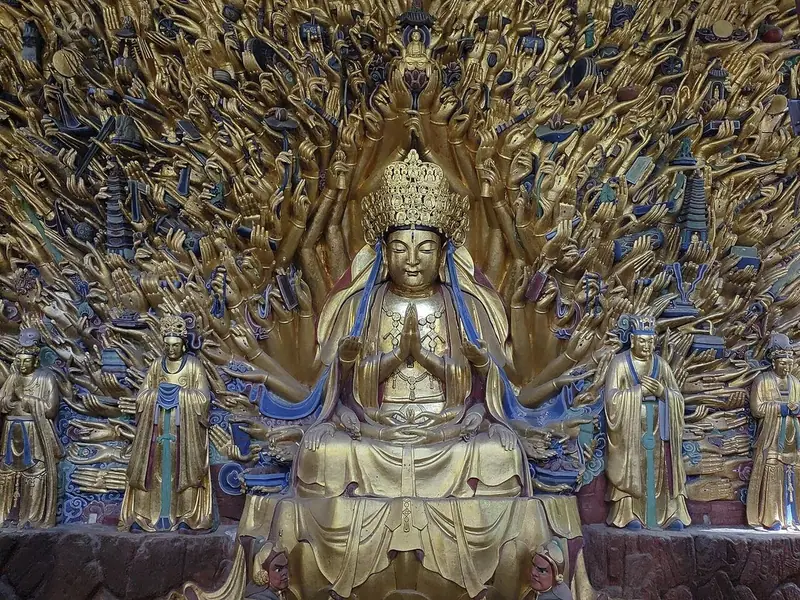 Song9 stops · 892 – c. 1249 CE
Dazu Rock Carvings audio guide
Buddhist cliff carvings of the Tang and Song: the niches of Beishan and the great horseshoe of Baodingshan, with its Wheel of Rebirth, Thousand-Armed Guanyin and Reclining Buddha.
 Ming8 stops · 1406–1912 CE
The Forbidden City audio guide
Follow the central axis of China’s imperial palace through its gates and halls of harmony, roofed in the emperor’s golden-yellow tiles.
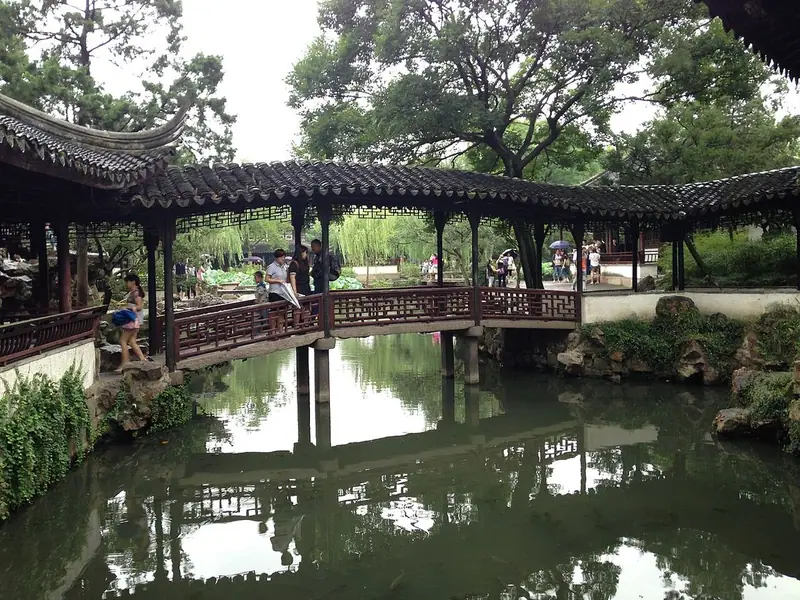 Ming7 stops · from c. 1510 CE
Humble Administrator’s Garden audio guide
Suzhou’s largest classical garden, a landscape in miniature of ponds, islands, bridges and pavilions, each framing a composed view.
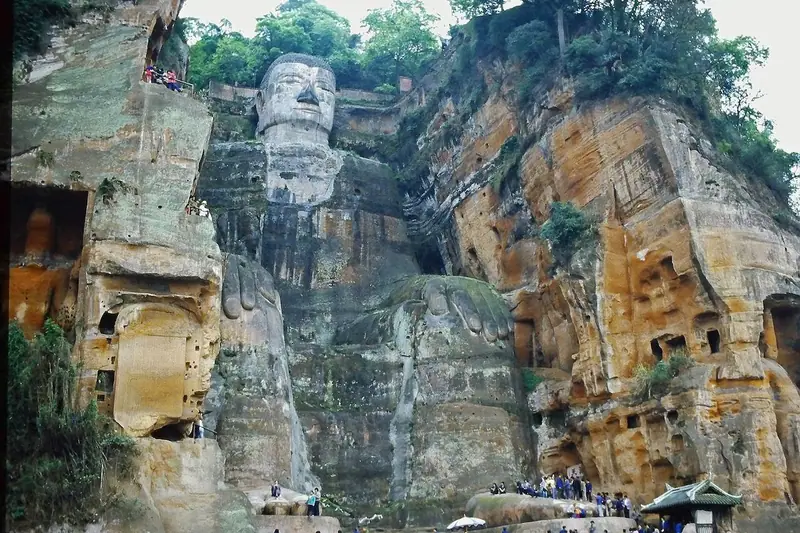 Tang6 stops · early 8th century – 803 CE
Leshan Giant Buddha audio guide
Climb down the Nine-Turn Plank Road beside the 71-metre Giant Buddha, carved into a red sandstone cliff where three rivers meet.
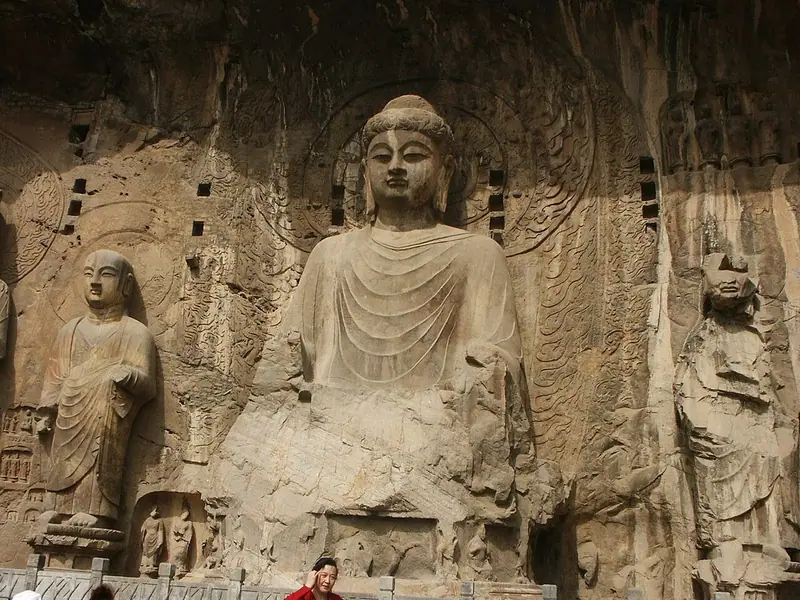 Tang7 stops · 494–907 CE
Longmen Grottoes audio guide
Follow the Yi River past limestone cliffs honeycombed with Buddhist caves and niches to the colossal statues of the Fengxian Temple.
 Portuguese9 stops · 1557 – 1999 (Portuguese administration)
Macao audio guide
Chinese temples and Portuguese churches, squares and fortresses side by side in a port under Portuguese administration for more than four centuries.
Every guide, in every country
Great Wall at Badaling and every other guide we publish, including future ones. One payment, no subscription.