Before you start
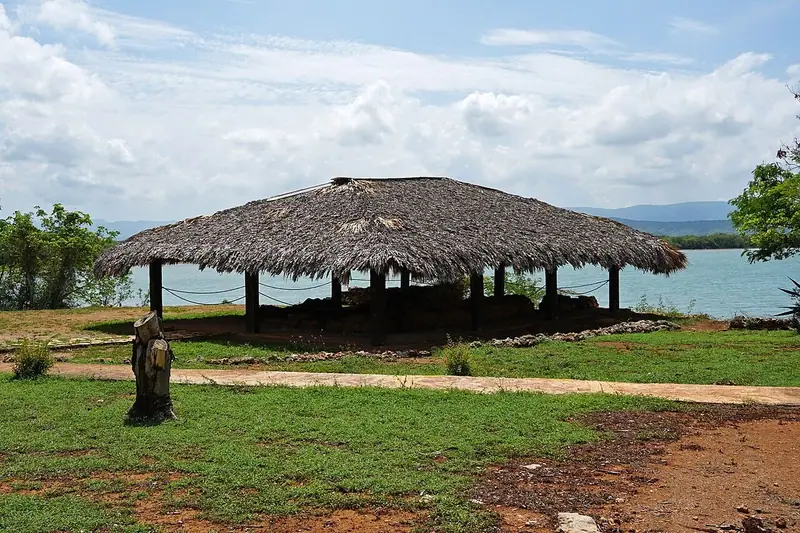
On a low bluff above a quiet bay on the north coast of the Dominican Republic lie the stone foundations of La Isabela. Christopher Columbus founded it on his second voyage, around the turn of 1493 and 1494, and it is usually described as the first lasting European town in the Americas. The route follows the ruins of the admiral’s house, the storehouse, the church and the cemetery, then visits the museum and the modern Temple of the Americas. Allow two hours. The site is open and exposed, with little shade.
Use it as a self-guided tour of La Isabela: 8 stops in visit order, each played when you’re ready, at your own pace.
 Free preview · Stop 1
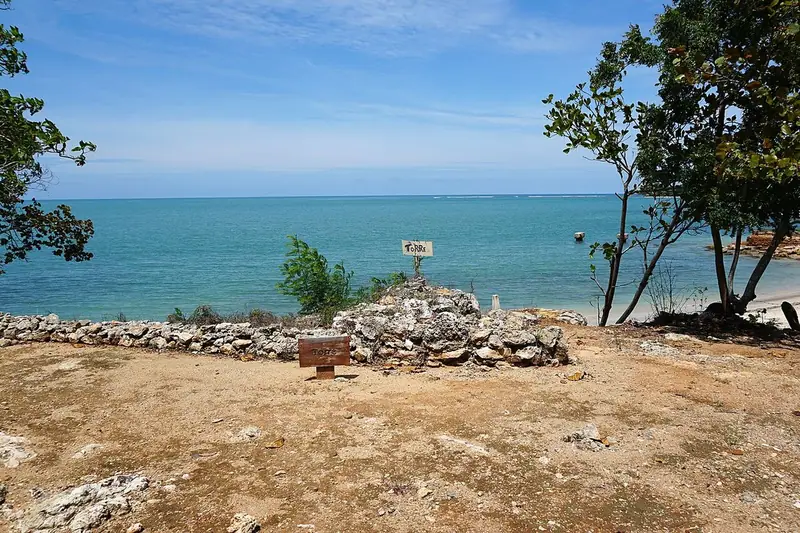
The Bay of Isabela
Begin on the bluff, looking out over the bay. Columbus’s fleet of seventeen ships anchored here at the end of 1493. On board were sailors, soldiers, carpenters, stonemasons, priests and nobles. The ships carried livestock and supplies as well: pigs and horses, wheat and sugar cane, and weapons. Without meaning to, they brought rats and germs too. The first known epidemic to spread from Europe to the Americas broke out here among the settlers. Then, in June 1495, a violent storm swept in, the kind the Taíno called a hurricane. Several of the ships went down where they lay at anchor, the flagship Marie-Galante among them. Cannon and anchors of the period have been recovered from the bay; anything else lies hidden under the silt. Underwater archaeologists have continued to search the bay in recent years. Now turn to the ruins behind you.
Photo: Mariordo (Mario Roberto Durán Ortiz) · CC BY-SA 4.0 · Wikimedia Commons
What to see at La Isabela: 8 stops, in visit order
- 01
 The Bay of IsabelaWhere the fleet anchoredFree preview
- 02
 The Admiral’s HouseColumbus’s only known homeIn the guide
- 03
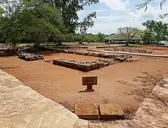 The ChurchThe first MassIn the guide
- 04
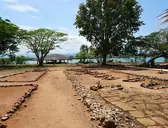 The CemeteryThe first Christian gravesIn the guide
- 05
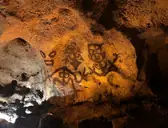 The Taíno WorldA people pushed asideIn the guide
- 06
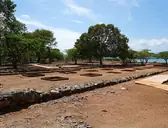 The Royal StorehouseFood, tools and powderIn the guide
- 07
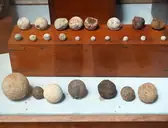 The MuseumPottery, coins and cemísIn the guide
- 08
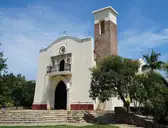 The Temple of the AmericasRemembering the first MassIn the guide
Site map of La Isabela
History of La Isabela
Long before the Spaniards came, this island was home to the Taíno, farming and fishing peoples ruled by chiefs called caciques. In 1492 Columbus left a small group of men at La Navidad, in what is now Haiti. When he returned the next year, he found it destroyed and his men dead. He sailed east with seventeen ships and more than a thousand men, and founded a new town here, named after Queen Isabella of Castile. It was meant as a base to search for gold. Instead it suffered disease, hunger, hurricanes and mutiny.
The full history continues in the guide.
La Isabela guide: questions
How many stops does the La Isabela guide have?
8 stops, in visit order: 1. The Bay of Isabela; 2. The Admiral’s House; 3. The Church; 4. The Cemetery; 5. The Taíno World; 6. The Royal Storehouse; 7. The Museum; 8. The Temple of the Americas.
Can I do a self-guided tour of La Isabela with this guide?
Yes. The guide is made for a self-guided tour: 8 stops in visit order, each with a photo, a story and a voice, so you can explore La Isabela at your own pace, without joining a group. Download it before you go and it works offline.
How long is each guide?
The 8 stops add up to about 6 minutes of listening in total. You play each stop when you’re ready, so you can go at your own pace.
Does the guide work offline?
Yes, once it’s downloaded. The guide is a single self-contained web page (about 8.0 MB) with the photos, text and audio built in. Download it to your phone before you go (Wi-Fi is best); after that it opens in any modern browser on iPhone or Android, with no app, account or mobile signal needed.
Does it use GPS or need my location?
No. The guide doesn’t use GPS and doesn’t know where you are: you play each stop when you reach it. It works on iPhone and Android in any modern browser, and it’s in English.
What’s included?
One self-contained HTML guide: 8 stops in visit order, each with a photo, text and a voice, plus the story of who built the site.
Who built La Isabela?
Long before the Spaniards came, this island was home to the Taíno, farming and fishing peoples ruled by chiefs called caciques. In 1492 Columbus left a small group of men at La Navidad, in what is now Haiti.
Where is La Isabela?
On a low bluff above a quiet bay on the north coast of the Dominican Republic lie the stone foundations of La Isabela.
Is there a free audio guide to La Isabela?
The first stop, The Bay of Isabela, is free to read and hear on this page, so you can try the La Isabela audio tour before you buy. The full guide, with all 8 stops, is a one-off purchase: download it once and it’s yours to keep, working offline.
Is the La Isabela guide worth it?
If you’d like to know what you’re looking at, yes. For $10 you get 8 stops in visit order, each with a photo, a short history and a voice you play when you’re ready, plus a site map of the stops, and about 6 minutes of listening in all. It’s short on purpose, so you spend your time looking, not listening. It’s yours to keep, works offline and needs no app. The first stop is free on this page, so you can try it before you buy. If you’d like hours of detail, a guided tour will go deeper.
Audio guide or guided tour?
It depends how you like to visit. This guide lets you explore La Isabela at your own pace, at any time, for a one-off price. A guided tour gives you a live expert you can ask questions, but at fixed times and usually for a higher price. Many people use both: a tour for the big picture, and the guide to read beforehand or to revisit the stops in their own time.
Is this the official La Isabela guide?
No. It’s an independent guide by The Historian Guide, not affiliated with or endorsed by the operator of La Isabela. For tickets and opening hours, check the official site operator before you go.
Does the guide include entry tickets or opening hours?
No. The guide is a digital companion only. Admission to La Isabela is separate, so check the official site operator for current tickets and opening hours before you go.
- Stop 1 · The Bay of Isabela: Mariordo (Mario Roberto Durán Ortiz) · CC BY-SA 4.0 · Wikimedia Commons · resized
- Stop 2 · The Admiral’s House (also the cover): Mariordo (Mario Roberto Durán Ortiz) · CC BY-SA 4.0 · Wikimedia Commons · resized
- Stop 3 · The Church: Mariordo (Mario Roberto Durán Ortiz) · CC BY-SA 4.0 · Wikimedia Commons · resized
- Stop 4 · The Cemetery: Mariordo (Mario Roberto Durán Ortiz) · CC BY-SA 4.0 · Wikimedia Commons · resized
- Stop 5 · The Taíno World: Danu Widjajanto · CC BY-SA 4.0 · Wikimedia Commons · resized
- Stop 6 · The Royal Storehouse: Mariordo (Mario Roberto Durán Ortiz) · CC BY-SA 4.0 · Wikimedia Commons · resized
- Stop 7 · The Museum: Mariordo (Mario Roberto Durán Ortiz) · CC BY-SA 4.0 · Wikimedia Commons · resized
- Stop 8 · The Temple of the Americas: Mariordo (Mario Roberto Durán Ortiz) · CC BY-SA 4.0 · Wikimedia Commons · resized


All photographs from Wikimedia Commons under the licences shown.
More guides in Dominican Republic
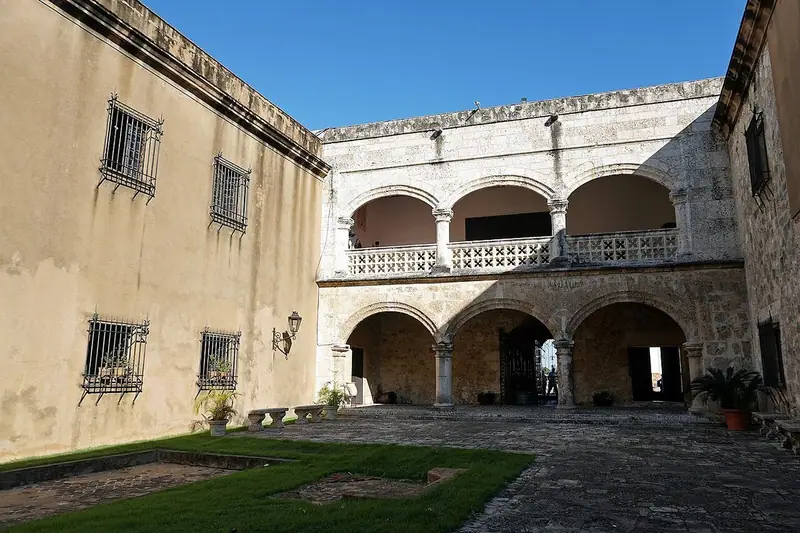 Spanish Colonial8 stops · 1502 – 18th century
Colonial Santo Domingo audio guide
The oldest European buildings in the New World, from the first cathedral and the Fortaleza Ozama to the Alcázar de Colón.
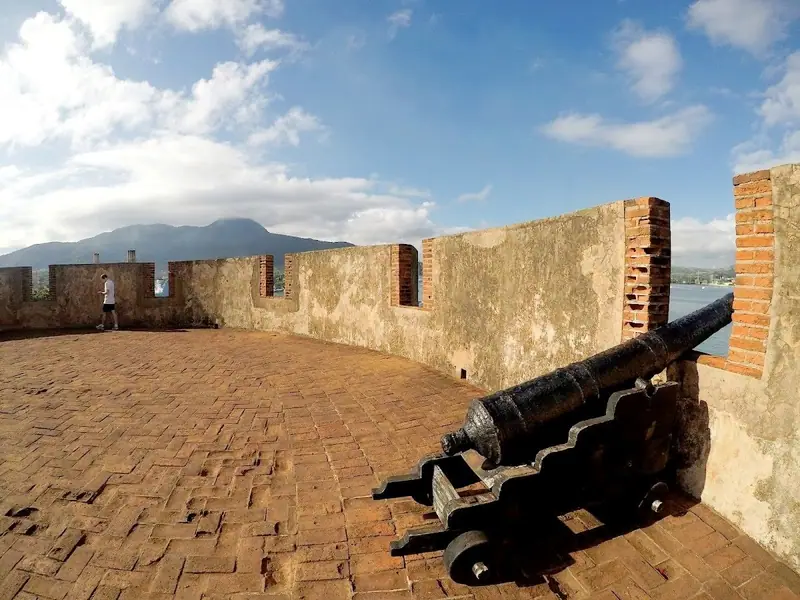 Spanish Colonial7 stops · 1577 (fort); 1865 onwards (Victorian town)
Puerto Plata audio guide
From the central park among Victorian gingerbread houses to the cathedral, the amber museum and the Fortaleza San Felipe on the Malecón.
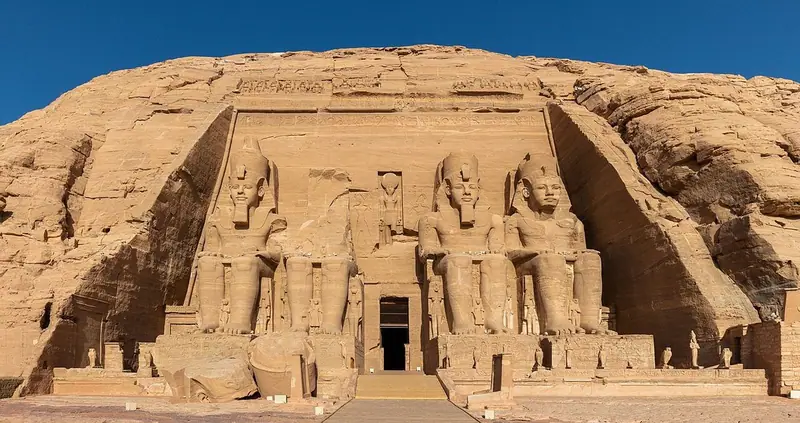 Ancient Egyptian8 stops · 13th century BCE
Abu Simbel audio guide
Ramesses II’s colossal temple façade, the Temple of Nefertari, and how both were rescued from the waters of Lake Nasser.
Every guide, in every country
La Isabela and every other guide we publish, including future ones. One payment, no subscription.