Before you start
The white domes of the Sacré-Cœur crown Montmartre, the highest hill in Paris. The basilica is one of the most visited places in the city, and the hill around it was once a village of vineyards, windmills and quarries, then the home of painters from Renoir to Picasso. The route climbs to the basilica, goes inside and up to its dome, then wanders through the old village to the twelfth-century church of Saint-Pierre, the Place du Tertre, the Montmartre Museum, the last windmills and Picasso’s old studio. Allow three hours. The streets are steep and cobbled, so wear good shoes.
Use it as a self-guided tour of Sacré-Cœur and Montmartre: 8 stops in visit order, each played when you’re ready, at your own pace.
 Free preview · Stop 1
Square Louise-Michel
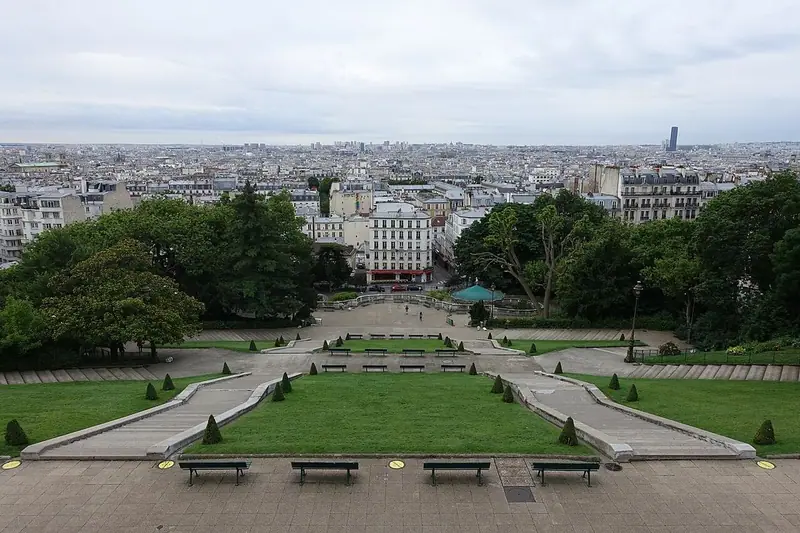
Begin at the foot of the hill, in the gardens below the basilica. You can climb the long flights of steps, or take the funicular railway alongside. In 2004 the city renamed these gardens after Louise Michel, a teacher and anarchist who fought for the Paris Commune. It was a pointed choice, as you will soon hear. Montmartre is around a hundred and thirty metres high, and for centuries it was a village apart from Paris. Beneath your feet the hill is riddled with old gypsum quarries. Mining went on here from Roman times until 1860, and the stone was baked and ground into plaster. Those tunnels made the hill unstable. Builders of the basilica had to sink deep shafts to reach solid ground. Climb to the terrace in front of the church and turn around for the view.
Photo: Guilhem Vellut from Paris, France · CC BY 2.0 · Wikimedia Commons
What to see at Sacré-Cœur and Montmartre: 8 stops, in visit order
- 01
 Square Louise-MichelThe climb to the summitFree preview
- 02
 The BasilicaA vow after a defeatIn the guide
- 03
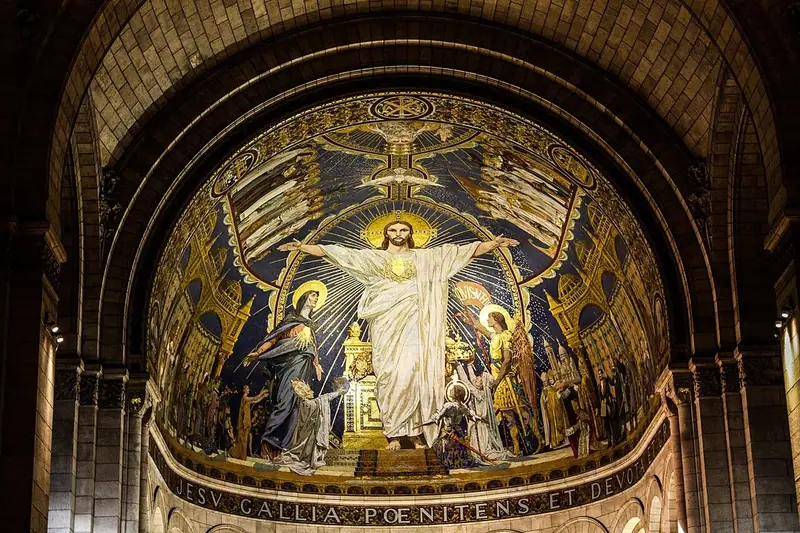
 The Great MosaicChrist with open armsIn the guide
- 04
 The Dome and the SavoyardeThe great bell of FranceIn the guide
- 05
 Saint-Pierre de MontmartreThe older church on the hillIn the guide
- 06
 Place du TertrePainters at their easelsIn the guide
- 07
 The Montmartre MuseumRenoir’s garden and the vinesIn the guide
- 08
 The Moulin and the Bateau-LavoirWhere Cubism was bornIn the guide
Site map of Sacré-Cœur and Montmartre
History of Sacré-Cœur and Montmartre
Montmartre stood outside Paris until 1860. Tradition holds that Saint Denis, the first bishop of Paris, was beheaded here around 250, and in the twelfth century King Louis the Sixth founded a royal abbey on the summit. For centuries the hill was farmed by its villagers, who grew wine, ground flour in windmills and dug gypsum for plaster of Paris. In 1870 France was defeated by Prussia, and the following spring the Paris Commune rose up on this hill. Catholics vowed to build a church to the Sacred Heart of Jesus as an act of penance for the nation. Work began in 1875 and the basilica was consecrated in 1919.
The full history continues in the guide.
Sacré-Cœur and Montmartre guide: questions
How many stops does the Sacré-Cœur and Montmartre guide have?
8 stops, in visit order: 1. Square Louise-Michel; 2. The Basilica; 3. The Great Mosaic; 4. The Dome and the Savoyarde; 5. Saint-Pierre de Montmartre; 6. Place du Tertre; 7. The Montmartre Museum; 8. The Moulin and the Bateau-Lavoir.
Can I do a self-guided tour of Sacré-Cœur and Montmartre with this guide?
Yes. The guide is made for a self-guided tour: 8 stops in visit order, each with a photo, a story and a voice, so you can explore Sacré-Cœur and Montmartre at your own pace, without joining a group. Download it before you go and it works offline.
How long is each guide?
The 8 stops add up to about 6 minutes of listening in total. You play each stop when you’re ready, so you can go at your own pace.
Does the guide work offline?
Yes, once it’s downloaded. The guide is a single self-contained web page (about 7.7 MB) with the photos, text and audio built in. Download it to your phone before you go (Wi-Fi is best); after that it opens in any modern browser on iPhone or Android, with no app, account or mobile signal needed.
Does it use GPS or need my location?
No. The guide doesn’t use GPS and doesn’t know where you are: you play each stop when you reach it. It works on iPhone and Android in any modern browser, and it’s in English.
What’s included?
One self-contained HTML guide: 8 stops in visit order, each with a photo, text and a voice, plus the story of who built the site.
Who built Sacré-Cœur and Montmartre?
Montmartre stood outside Paris until 1860. Tradition holds that Saint Denis, the first bishop of Paris, was beheaded here around 250, and in the twelfth century King Louis the Sixth founded a royal abbey on the summit.
Where is Sacré-Cœur and Montmartre?
The white domes of the Sacré-Cœur crown Montmartre, the highest hill in Paris.
Is there a free audio guide to Sacré-Cœur and Montmartre?
The first stop, Square Louise-Michel, is free to read and hear on this page, so you can try the Sacré-Cœur and Montmartre audio tour before you buy. The full guide, with all 8 stops, is a one-off purchase: download it once and it’s yours to keep, working offline.
Is the Sacré-Cœur and Montmartre guide worth it?
If you’d like to know what you’re looking at, yes. For $10 you get 8 stops in visit order, each with a photo, a short history and a voice you play when you’re ready, plus a site map of the stops, and about 6 minutes of listening in all. It’s short on purpose, so you spend your time looking, not listening. It’s yours to keep, works offline and needs no app. The first stop is free on this page, so you can try it before you buy. If you’d like hours of detail, a guided tour will go deeper.
Audio guide or guided tour?
It depends how you like to visit. This guide lets you explore Sacré-Cœur and Montmartre at your own pace, at any time, for a one-off price. A guided tour gives you a live expert you can ask questions, but at fixed times and usually for a higher price. Many people use both: a tour for the big picture, and the guide to read beforehand or to revisit the stops in their own time.
Is this the official Sacré-Cœur and Montmartre guide?
No. It’s an independent guide by The Historian Guide, not affiliated with or endorsed by the operator of Sacré-Cœur and Montmartre. For tickets and opening hours, check the official site operator before you go.
Does the guide include entry tickets or opening hours?
No. The guide is a digital companion only. Admission to Sacré-Cœur and Montmartre is separate, so check the official site operator for current tickets and opening hours before you go.
- Stop 1 · Square Louise-Michel: Guilhem Vellut from Paris, France · CC BY 2.0 · Wikimedia Commons · resized
- Stop 2 · The Basilica: iMahesh · CC BY-SA 4.0 · Wikimedia Commons · resized
- Stop 3 · The Great Mosaic (also the cover): Shadowgate from Novara, ITALY · CC BY 2.0 · Wikimedia Commons · resized
- Stop 4 · The Dome and the Savoyarde: Pline · CC BY-SA 3.0 · Wikimedia Commons · resized
- Stop 5 · Saint-Pierre de Montmartre: Guilhem Vellut from Paris, France · CC BY 2.0 · Wikimedia Commons · resized
- Stop 6 · Place du Tertre: Jami430 · CC BY-SA 4.0 · Wikimedia Commons · resized
- Stop 7 · The Montmartre Museum: GFreihalter · CC BY-SA 4.0 · Wikimedia Commons · resized
- Stop 8 · The Moulin and the Bateau-Lavoir: Shadowgate from Novara, ITALY · CC BY 2.0 · Wikimedia Commons · resized


All photographs from Wikimedia Commons under the licences shown.
More guides in France
 Napoleonic France8 stops · Napoleonic era
Arc de Triomphe audio guide
Cross beneath the traffic to Napoleon’s arch, read its carved victories and the names of its generals, then climb to the rooftop terrace.
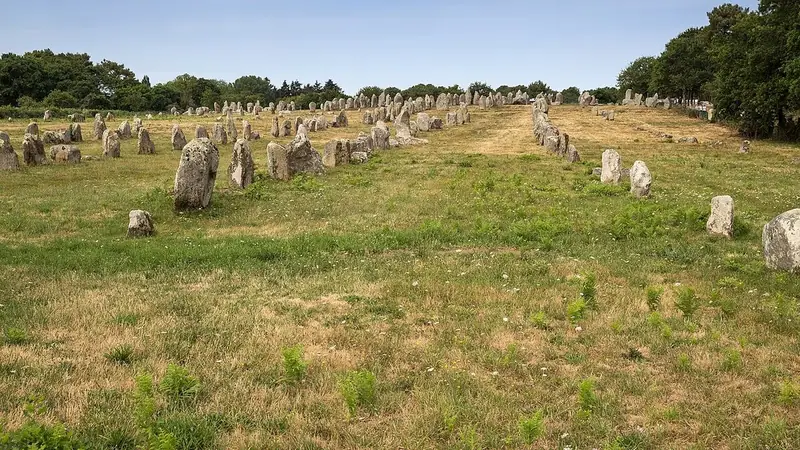 Neolithic10 stops · c. 5000 – 2300 BCE (megalith building)
Carnac Megaliths audio guide
Thousands of standing stones in rows, giant mounds and decorated tombs: the alignments of Carnac, the broken menhir of Locmariaquer and the carved cairn of Gavrinis.
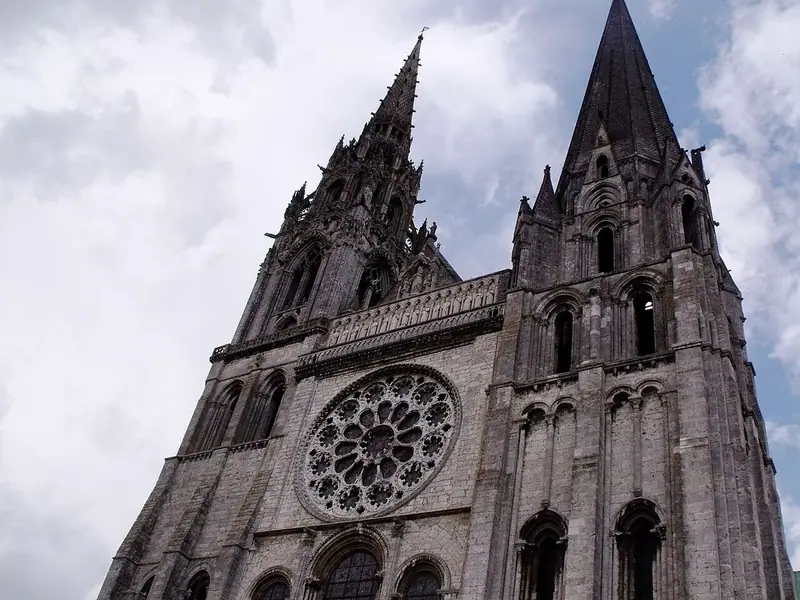 Gothic8 stops · 12th–13th century CE
Chartres Cathedral audio guide
Step through the Royal Portal into a Gothic cathedral rebuilt after the fire of 1194, with its labyrinth and the deep Chartres blue of its glass.
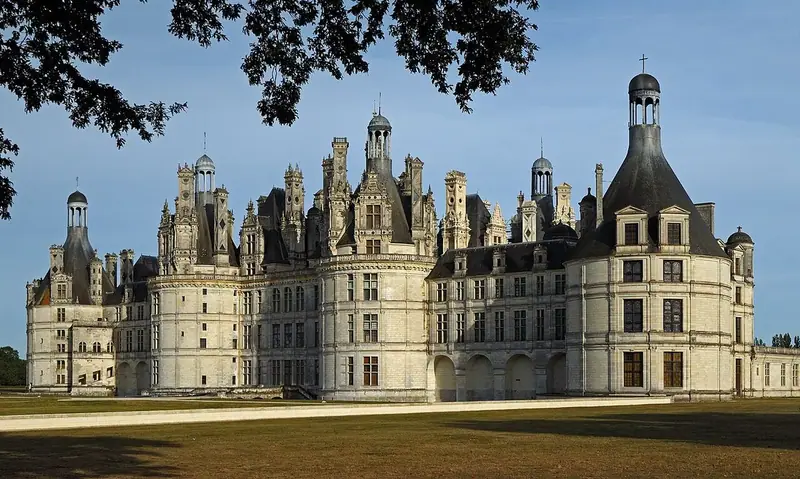 Renaissance8 stops · from 1519 CE
Château de Chambord audio guide
Climb the double-helix staircase of François I’s great hunting château to roof terraces crowded with chimneys and turrets, above a vast walled forest park.
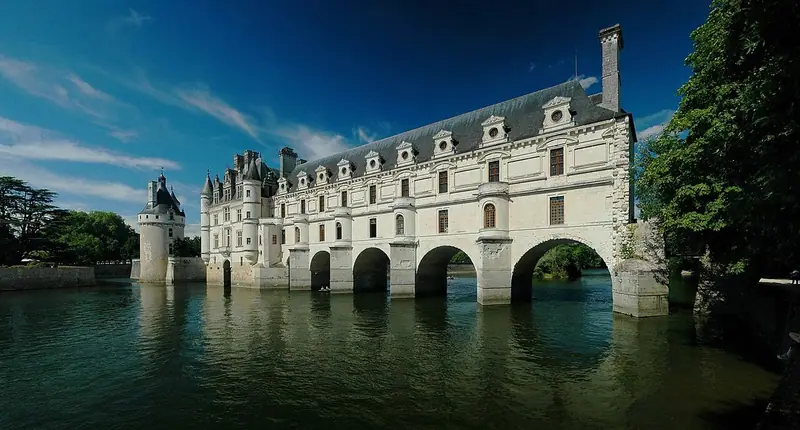 Renaissance8 stops · 1513–1521 CE
Château de Chenonceau audio guide
Cross the River Cher on the long gallery of the château built under Katherine Briçonnet’s eye and later home to Diane de Poitiers.
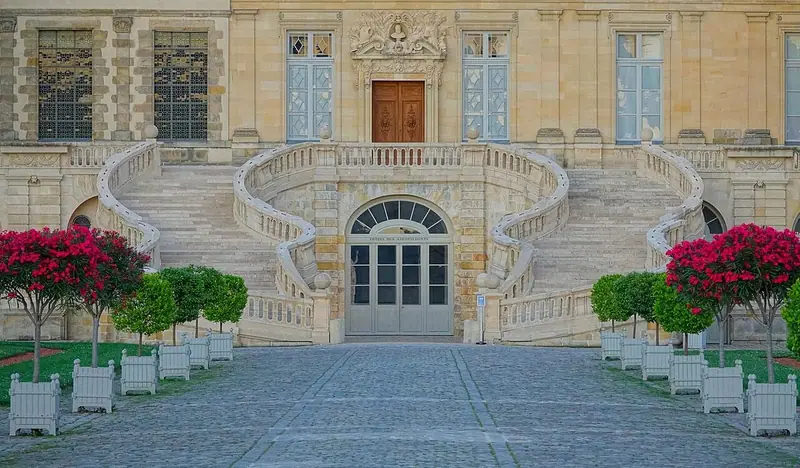 Renaissance8 stops · from 1528 CE
Château de Fontainebleau audio guide
From the Courtyard of Farewells through François I’s Renaissance gallery to the throne room and Napoleon’s apartments.
Every guide, in every country
Sacré-Cœur and Montmartre and every other guide we publish, including future ones. One payment, no subscription.