Before you start
Hattusa lies on a steep, rocky hillside above the village of Boğazkale in Çorum Province, in the highlands of central Anatolia, within the great loop of the Kızılırmak river. It is a drive of a few hours east of Ankara, and most visitors come by car or on a tour. UNESCO inscribed Hattusa as a World Heritage Site in 1986. The ancient city covered about 1.8 square kilometres, and its monuments are spread far apart on a circuit road of several kilometres, so most people drive between the stops. There is little shade; summers are hot and winters cold, so dress for the season, bring water, a hat and sun cream, and wear sturdy shoes. Please do not climb on walls or carvings. The route starts in the lower city near the entrance, climbs to the gates of the upper city, returns past the royal citadel, and ends at the rock sanctuary of Yazılıkaya.
Use it as a self-guided tour of Hattusa: 9 stops in visit order, each played when you’re ready, at your own pace.
 Free preview · Stop 1
City Walls
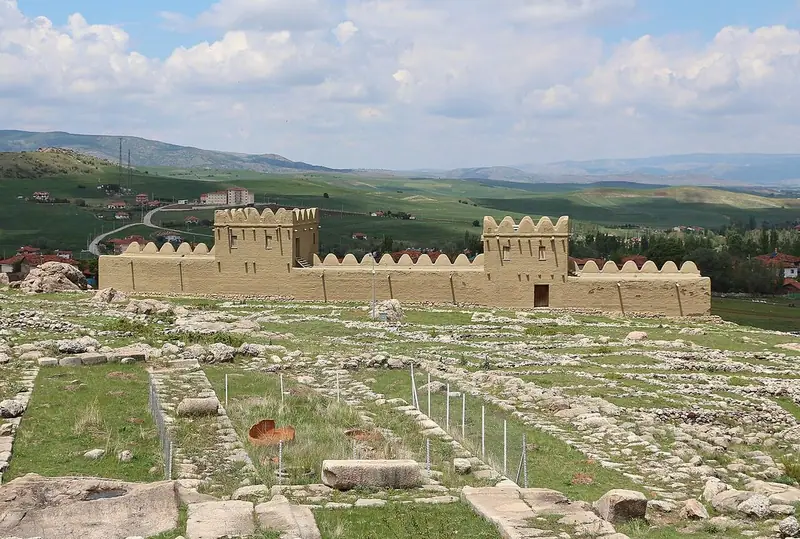
Begin at the rebuilt stretch of city wall near the entrance. Between 2003 and 2005 German archaeologists rebuilt a 65-metre section, with three lengths of wall seven to eight metres high and two towers of twelve to thirteen metres, using ancient materials and methods. They made 64,000 mud bricks, each about 45 centimetres square and weighing around 34 kilograms, from 2,700 tonnes of earth and 100 tonnes of straw. The design followed clay models of the walls that the Hittites themselves fixed as decoration to the rims of large cult vessels. The original defences had a stone base perhaps three or four metres high, a mud-brick wall above and battlements on top. The outer walls ran for 6.6 kilometres, with more than a hundred towers. The team calculated that the Hittites would have needed around a thousand workers to build one kilometre of wall a year.
Photo: Bernard Gagnon · CC BY-SA 3.0 · Wikimedia Commons
What to see at Hattusa: 9 stops, in visit order
- 01
 City WallsMud brick, rebuilt the Hittite wayFree preview
- 02
 Great TempleThe house of the Storm God and the Sun GoddessIn the guide
- 03
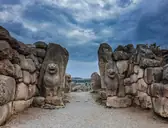 Lion GateGuardians of the south-western gateIn the guide
- 04
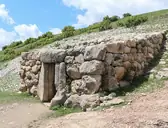 Yerkapı and the Sphinx GateA stone rampart and a tunnel beneath itIn the guide
- 05
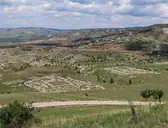 Upper City TemplesA city of a thousand godsIn the guide
- 06
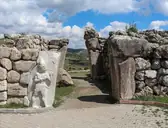 King’s GateA warrior god with horned helmetIn the guide
- 07
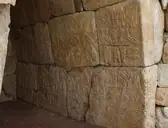 Nişantaş and the Hieroglyph ChamberThe last Great King speaksIn the guide
- 08
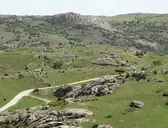 BüyükkaleThe citadel of the Great KingsIn the guide
- 09
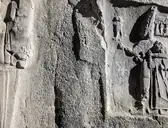 YazılıkayaThe gods in processionIn the guide
Site map of Hattusa
History of Hattusa
Hattusa was built by the Hittites, a Bronze Age people of Anatolia who spoke the oldest recorded Indo-European language. A settlement of the earlier Hattian people stood here before them, and in the nineteenth and eighteenth centuries BCE Assyrian merchants kept a trading quarter in the lower town. Around 1700 BCE the city was burnt by King Anitta of Kussara, who laid a curse on anyone who settled it again. Yet around 1650 BCE a Hittite king made it his capital and took the name Hattusili, the man from Hattusa. From here the Hittite kings built an empire that rivalled Egypt, Babylon and Assyria. After the Battle of Kadesh against Ramesses II, the two powers agreed a peace treaty in 1259 or 1258 BCE, and a copy on clay was found at Hattusa.
The full history continues in the guide.
Hattusa guide: questions
How many stops does the Hattusa guide have?
9 stops, in visit order: 1. City Walls; 2. Great Temple; 3. Lion Gate; 4. Yerkapı and the Sphinx Gate; 5. Upper City Temples; 6. King’s Gate; 7. Nişantaş and the Hieroglyph Chamber; 8. Büyükkale; 9. Yazılıkaya.
Can I do a self-guided tour of Hattusa with this guide?
Yes. The guide is made for a self-guided tour: 9 stops in visit order, each with a photo, a story and a voice, so you can explore Hattusa at your own pace, without joining a group. Download it before you go and it works offline.
How long do you need at Hattusa?
We suggest allowing 5–6 hours. The 9 stops add up to about 7 minutes of listening, and you play each one when you’re ready, so you can linger wherever you like.
How long is each guide?
The 9 stops add up to about 7 minutes of listening in total. You play each stop when you’re ready, so you can go at your own pace.
Does the guide work offline?
Yes, once it’s downloaded. The guide is a single self-contained web page (about 9.5 MB) with the photos, text and audio built in. Download it to your phone before you go (Wi-Fi is best); after that it opens in any modern browser on iPhone or Android, with no app, account or mobile signal needed.
Does it use GPS or need my location?
No. The guide doesn’t use GPS and doesn’t know where you are: you play each stop when you reach it. It works on iPhone and Android in any modern browser, and it’s in English.
What’s included?
One self-contained HTML guide: 9 stops in visit order, each with a photo, text and a voice, plus the story of who built the site.
Who built Hattusa?
Hattusa was built by the Hittites, a Bronze Age people of Anatolia who spoke the oldest recorded Indo-European language. A settlement of the earlier Hattian people stood here before them, and in the nineteenth and eighteenth centuries BCE Assyrian merchants kept a trading quarter in the lower town.
Where is Hattusa?
Hattusa lies on a steep, rocky hillside above the village of Boğazkale in Çorum Province, in the highlands of central Anatolia, within the great loop of the Kızılırmak river.
Is there a free audio guide to Hattusa?
The first stop, City Walls, is free to read and hear on this page, so you can try the Hattusa audio tour before you buy. The full guide, with all 9 stops, is a one-off purchase: download it once and it’s yours to keep, working offline.
Is the Hattusa guide worth it?
If you’d like to know what you’re looking at, yes. For $10 you get 9 stops in visit order, each with a photo, a short history and a voice you play when you’re ready, plus a site map of the stops, and about 7 minutes of listening in all. It’s short on purpose, so you spend your time looking, not listening. It’s yours to keep, works offline and needs no app. The first stop is free on this page, so you can try it before you buy. If you’d like hours of detail, a guided tour will go deeper.
Audio guide or guided tour?
It depends how you like to visit. This guide lets you explore Hattusa at your own pace, at any time, for a one-off price. A guided tour gives you a live expert you can ask questions, but at fixed times and usually for a higher price. Many people use both: a tour for the big picture, and the guide to read beforehand or to revisit the stops in their own time.
Is this the official Hattusa guide?
No. It’s an independent guide by The Historian Guide, not affiliated with or endorsed by the operator of Hattusa. For tickets and opening hours, check the official site operator before you go.
Does the guide include entry tickets or opening hours?
No. The guide is a digital companion only. Admission to Hattusa is separate, so check the official site operator for current tickets and opening hours before you go.
- Stop 1 · City Walls: Bernard Gagnon · CC BY-SA 3.0 · Wikimedia Commons · resized
- Stop 2 · Great Temple: Murat Özsoy 1958 · CC BY-SA 4.0 · Wikimedia Commons · resized
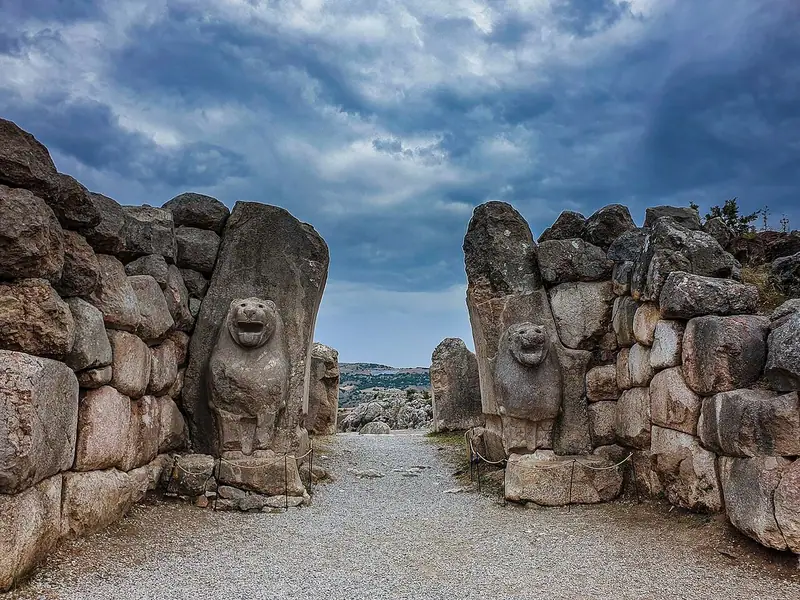
- Stop 3 · Lion Gate (also the cover): KapuskaCoFabli · CC BY-SA 4.0 · Wikimedia Commons · resized
- Stop 4 · Yerkapı and the Sphinx Gate: Bernard Gagnon · CC BY-SA 3.0 · Wikimedia Commons · resized
- Stop 5 · Upper City Temples: Bernard Gagnon · CC BY-SA 3.0 · Wikimedia Commons · resized
- Stop 6 · King’s Gate: Bernard Gagnon · CC BY-SA 3.0 · Wikimedia Commons · resized
- Stop 7 · Nişantaş and the Hieroglyph Chamber: Blcksprt · CC BY-SA 4.0 · Wikimedia Commons · resized
- Stop 8 · Büyükkale: Ingeborg Simon · CC BY-SA 3.0 · Wikimedia Commons · resized
- Stop 9 · Yazılıkaya: Murat Özsoy 1958 · CC BY-SA 4.0 · Wikimedia Commons · resized


All photographs from Wikimedia Commons under the licences shown.
More guides in Turkey
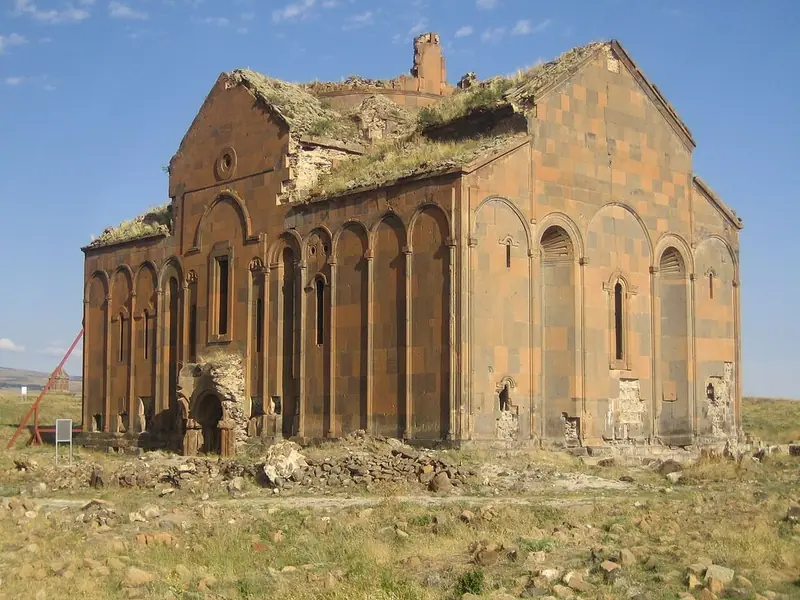 Armenian8 stops · 10th – 14th century CE
Ani audio guide
The ruined capital of medieval Armenia above a border gorge: Trdat’s cathedral, the frescoed church of Tigran Honents, the half-fallen Holy Redeemer and the minaret of Manuchihr.
 Roman8 stops · 1st century BCE – 4th century CE
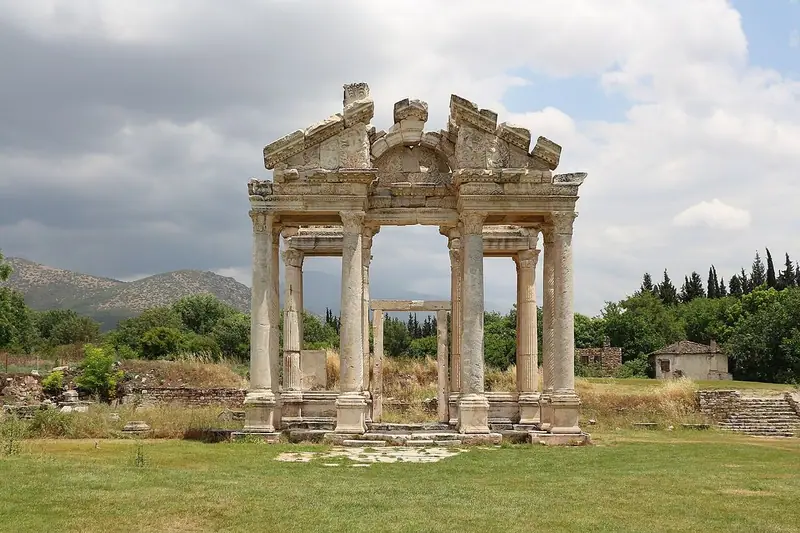
Aphrodisias audio guide
The city of Aphrodite: the Tetrapylon gate, the stadium, the theatre and the sculpted reliefs of the Sebasteion.
 Ottoman9 stops · 1609–1616
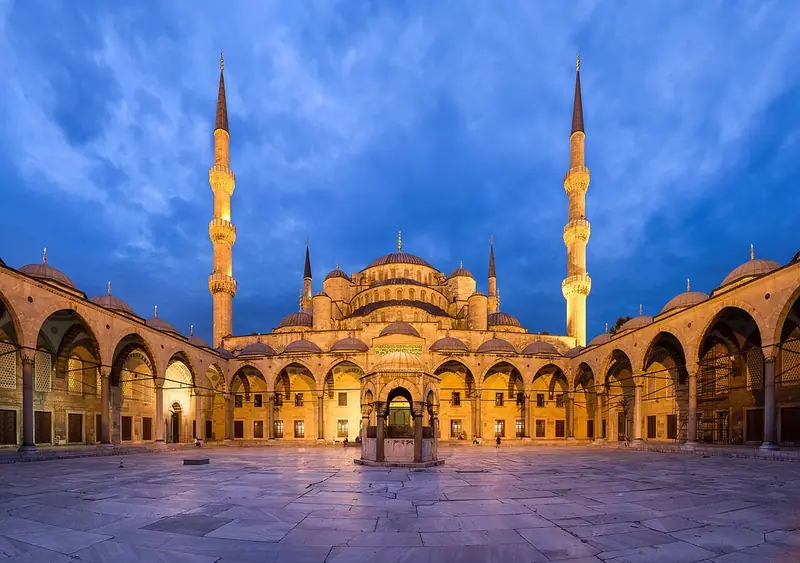
Blue Mosque audio guide
Sultan Ahmed’s mosque facing Hagia Sophia, beside the obelisks and Serpent Column of the ancient Hippodrome.
 Byzantine8 stops · 10th–12th century
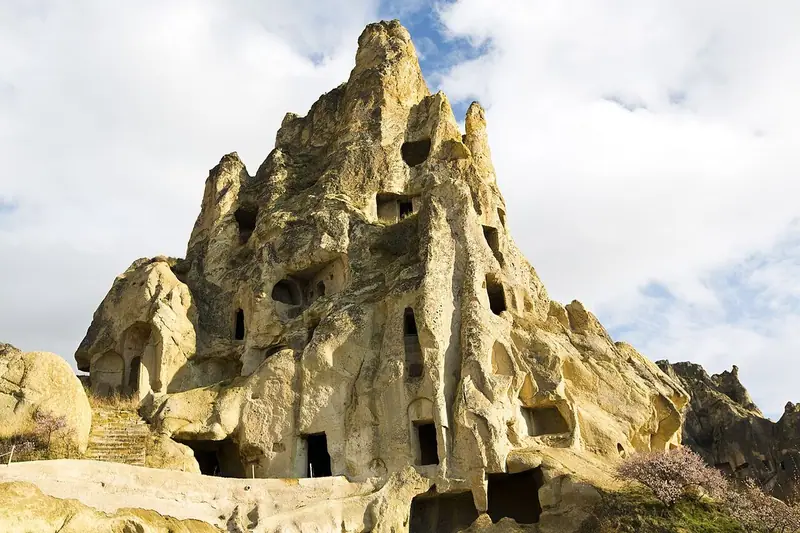
Cappadocia audio guide
Monks' churches and chapels cut into the soft rock of Göreme, among Cappadocia’s fairy chimneys.
 Byzantine7 stops · expanded c. 780–1180 CE
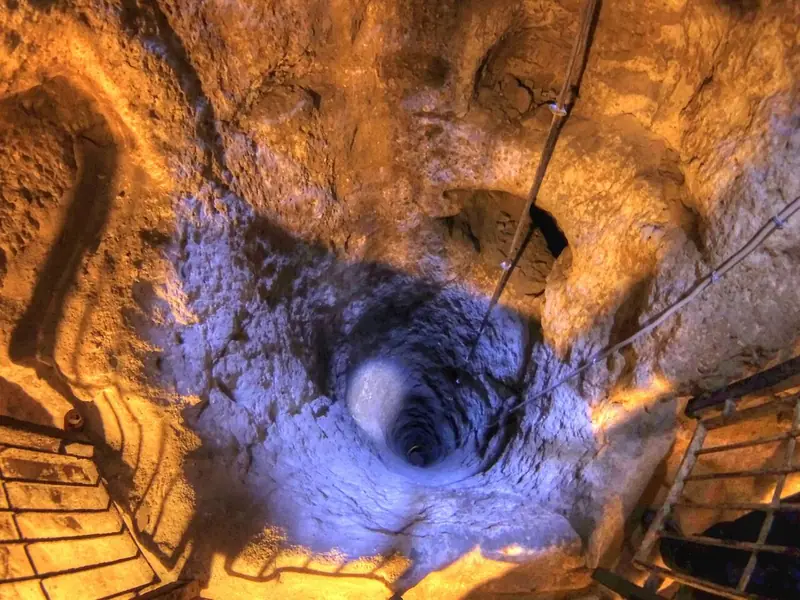
Derinkuyu audio guide
Descend through stables, kitchens and rolling stone doors into an underground city cut deep into the tuff.
 Ottoman8 stops · Late Ottoman
Dolmabahçe Palace audio guide
Climb the crystal staircase of the sultans’ palace of gold and crystal on the Bosphorus, to the vast domed Ceremonial Hall and Atatürk’s room.
Every guide, in every country
Hattusa and every other guide we publish, including future ones. One payment, no subscription.