Before you start
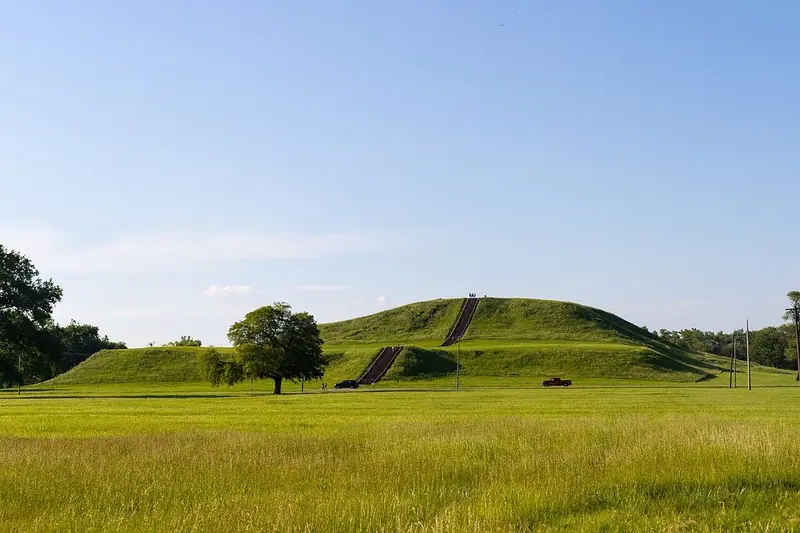
On the broad floodplain of the Mississippi, across the river from St Louis, lie the remains of the largest pre-Columbian settlement north of Mexico. Between about 1050 and 1150, Cahokia may have been home to ten to twenty thousand people, as many as many European cities of the time, and its great earthen mounds still rise above the fields. UNESCO inscribed Cahokia Mounds State Historic Site as a World Heritage Site in 1982, as the pre-eminent centre of the Mississippian culture. This guide begins at the museum, follows the line of the palisade to Monks Mound, climbs it, crosses the Grand Plaza, and ends at the reconstructed circle of posts known as Woodhenge.
Use it as a self-guided tour of Cahokia Mounds: 8 stops in visit order, each played when you’re ready, at your own pace.
 Free preview · Stop 1
The Museum
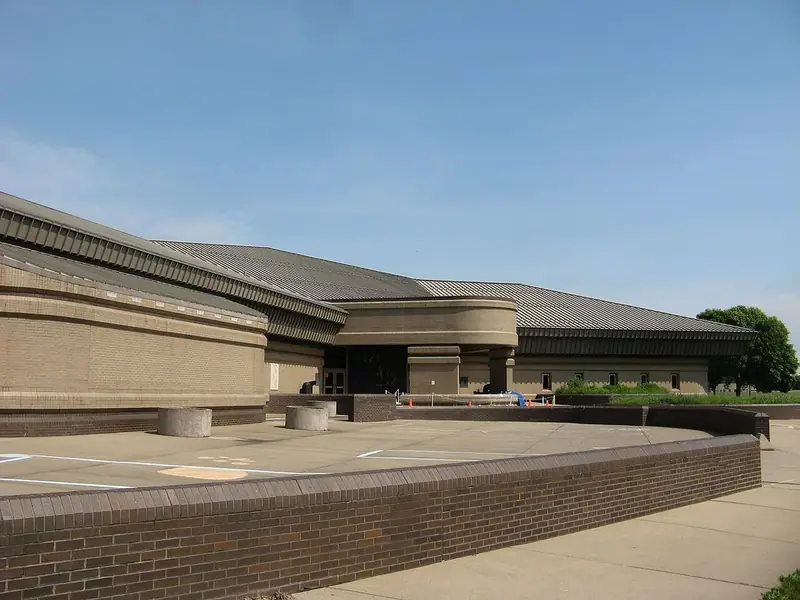
Begin at the museum and interpretive centre, which opened in 1989 near the heart of the ancient city. Its displays introduce the people who lived here, their houses, crafts, food and beliefs, and the long history of archaeology at the site, and help you picture the many mounds, plazas and thousands of thatched houses that once covered this plain. The site was first protected by the state of Illinois as a park in 1923, but in the twentieth century highways, houses and farmland destroyed many of the roughly one hundred and twenty mounds that once stood here. The protected site still includes fifty-one platform, ridgetop and conical mounds, along with areas where people lived and worked. Treat the whole site with respect: the mounds were sacred places and some contain burials, so keep to the paths, as many Native Americans regard it as an ancestral place.
Photo: hakkun · CC BY-SA 3.0 · Wikimedia Commons
What to see at Cahokia Mounds: 8 stops, in visit order
- 01
 The MuseumA city in the floodplainFree preview
- 02
 The PalisadeA city walled inIn the guide
- 03
 Monks MoundThe largest earthwork in the AmericasIn the guide
- 04
 The Summit of Monks MoundA house for a leaderIn the guide
- 05
 The Grand PlazaWhere the city gatheredIn the guide
- 06
 Mound 72The Birdman burialIn the guide
- 07
 Mounds of Many ShapesPlatforms, cones and ridgesIn the guide
- 08
 WoodhengeA calendar of cedar postsIn the guide
Site map of Cahokia Mounds
History of Cahokia Mounds
Cahokia was built by people of the Mississippian culture, farmers who grew maize, squash and other crops in the rich soils of the river valley known as the American Bottom. Around 1050 a small village was transformed, within a generation, into a planned city laid out on a north-south grid, with a central plaza, more than a hundred mounds and thousands of houses. Its leaders organised the labour of thousands of people, and its influence and trade reached across much of the continent. From the late twelfth century people began to leave, and by about 1350 the city was abandoned, for reasons still debated. Its original name is unknown: it takes its name from the Cahokia, an Illinois people who lived nearby when French explorers arrived centuries later. Many Native American nations, including the Osage, regard the site as part of their heritage and still hold it sacred.
Cahokia Mounds guide: questions
How many stops does the Cahokia Mounds guide have?
8 stops, in visit order: 1. The Museum; 2. The Palisade; 3. Monks Mound; 4. The Summit of Monks Mound; 5. The Grand Plaza; 6. Mound 72; 7. Mounds of Many Shapes; 8. Woodhenge.
Can I do a self-guided tour of Cahokia Mounds with this guide?
Yes. The guide is made for a self-guided tour: 8 stops in visit order, each with a photo, a story and a voice, so you can explore Cahokia Mounds at your own pace, without joining a group. Download it before you go and it works offline.
How long do you need at Cahokia Mounds?
We suggest allowing about 2–3 hours. The 8 stops add up to about 6 minutes of listening, and you play each one when you’re ready, so you can linger wherever you like.
How long is each guide?
The 8 stops add up to about 6 minutes of listening in total. You play each stop when you’re ready, so you can go at your own pace.
Does the guide work offline?
Yes, once it’s downloaded. The guide is a single self-contained web page (about 7.4 MB) with the photos, text and audio built in. Download it to your phone before you go (Wi-Fi is best); after that it opens in any modern browser on iPhone or Android, with no app, account or mobile signal needed.
Does it use GPS or need my location?
No. The guide doesn’t use GPS and doesn’t know where you are: you play each stop when you reach it. It works on iPhone and Android in any modern browser, and it’s in English.
What’s included?
One self-contained HTML guide: 8 stops in visit order, each with a photo, text and a voice, plus the story of who built the site.
Who built Cahokia Mounds?
Cahokia was built by people of the Mississippian culture, farmers who grew maize, squash and other crops in the rich soils of the river valley known as the American Bottom. Around 1050 a small village was transformed, within a generation, into a planned city laid out on a north-south grid, with a central plaza, more than a hundred mounds and thousands of houses.
Is there a free audio guide to Cahokia Mounds?
The first stop, The Museum, is free to read and hear on this page, so you can try the Cahokia Mounds audio tour before you buy. The full guide, with all 8 stops, is a one-off purchase: download it once and it’s yours to keep, working offline.
Is the Cahokia Mounds guide worth it?
If you’d like to know what you’re looking at, yes. For $10 you get 8 stops in visit order, each with a photo, a short history and a voice you play when you’re ready, plus a site map of the stops, and about 6 minutes of listening in all. It’s short on purpose, so you spend your time looking, not listening. It’s yours to keep, works offline and needs no app. The first stop is free on this page, so you can try it before you buy. If you’d like hours of detail, a guided tour will go deeper.
Audio guide or guided tour?
It depends how you like to visit. This guide lets you explore Cahokia Mounds at your own pace, at any time, for a one-off price. A guided tour gives you a live expert you can ask questions, but at fixed times and usually for a higher price. Many people use both: a tour for the big picture, and the guide to read beforehand or to revisit the stops in their own time.
Is this the official Cahokia Mounds guide?
No. It’s an independent guide by The Historian Guide, not affiliated with or endorsed by the operator of Cahokia Mounds. For tickets and opening hours, check the official site operator before you go.
Does the guide include entry tickets or opening hours?
No. The guide is a digital companion only. Admission to Cahokia Mounds is separate, so check the official site operator for current tickets and opening hours before you go.
- Stop 1 · The Museum: hakkun · CC BY-SA 3.0 · Wikimedia Commons · resized
- Stop 2 · The Palisade: Wisconsin Denizen · CC BY 2.0 · Wikimedia Commons · resized
- Stop 3 · Monks Mound (also the cover): Skubasteve834 · CC BY 4.0 · Wikimedia Commons · resized
- Stop 4 · The Summit of Monks Mound: Antony-22 · CC BY-SA 4.0 · Wikimedia Commons · resized
- Stop 5 · The Grand Plaza: QuartierLatin1968 · CC BY-SA 3.0 · Wikimedia Commons · resized
- Stop 6 · Mound 72: HeldonR · CC0 · Wikimedia Commons · resized
- Stop 7 · Mounds of Many Shapes: Antony-22 · CC BY-SA 4.0 · Wikimedia Commons · resized
- Stop 8 · Woodhenge: hakkun · CC BY-SA 3.0 · Wikimedia Commons · resized


All photographs from Wikimedia Commons under the licences shown.
More guides in United States
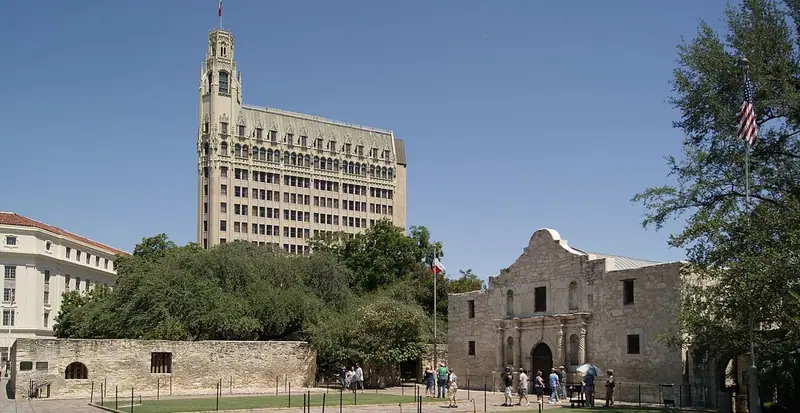 Spanish Colonial7 stops · 1718–1782
Alamo and San Antonio Missions audio guide
From the battle-scarred Alamo to Mission San José and the Espada Aqueduct, the five missions that made San Antonio.
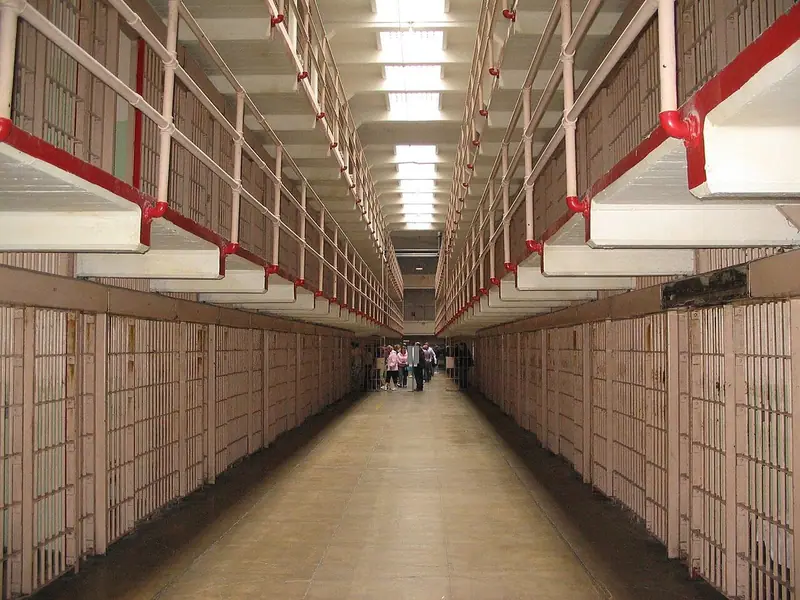 Modern8 stops · 1853–1963
Alcatraz audio guide
Step off the boat into the cellhouse, walk D Block and the yard, and hear the story of the 1962 escape.
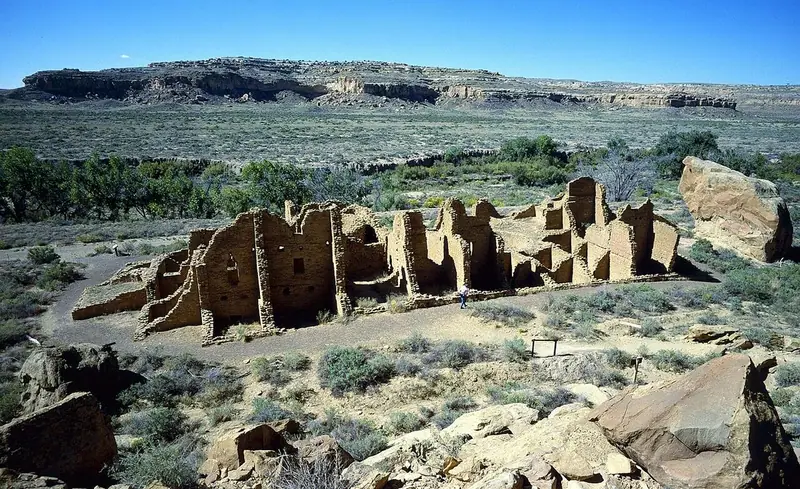 Ancestral Puebloan8 stops · c. 850–1150 CE
Chaco Canyon audio guide
The great houses of Pueblo Bonito and Chetro Ketl, planned buildings of stone that rose several storeys high.
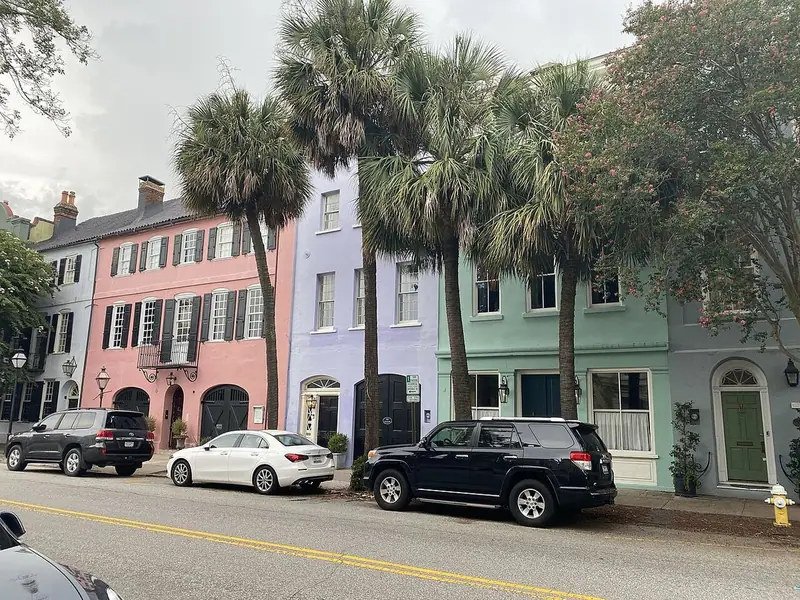 Colonial American12 stops · 17th–20th century CE
Charleston audio guide
Mother Emanuel and Beth Elohim, St Philip’s and the Huguenot Church, the Old Slave Mart, the Four Corners of Law, Rainbow Row and the Battery.
 Colonial American8 stops · 1699–1780
Colonial Williamsburg audio guide
Duke of Gloucester Street, from the Capitol to the Governor’s Palace, in the restored capital of colonial Virginia.
 Colonial American9 stops · 1660s–1790s
Freedom Trail audio guide
Follow the red line from Boston Common past Faneuil Hall and Paul Revere’s house to the USS Constitution.
Every guide, in every country
Cahokia Mounds and every other guide we publish, including future ones. One payment, no subscription.